Artwork
The Penitent Mary Magdalene
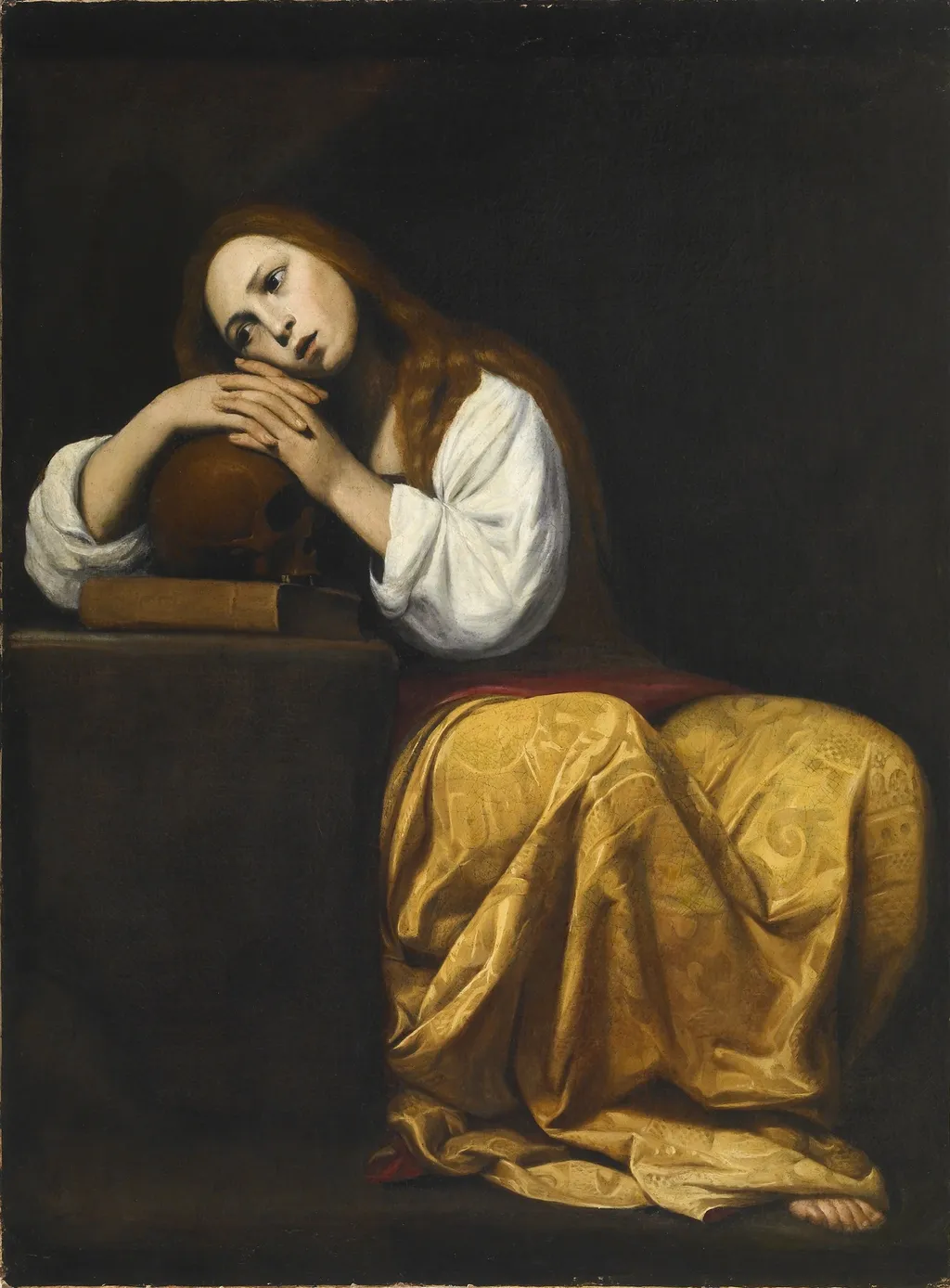
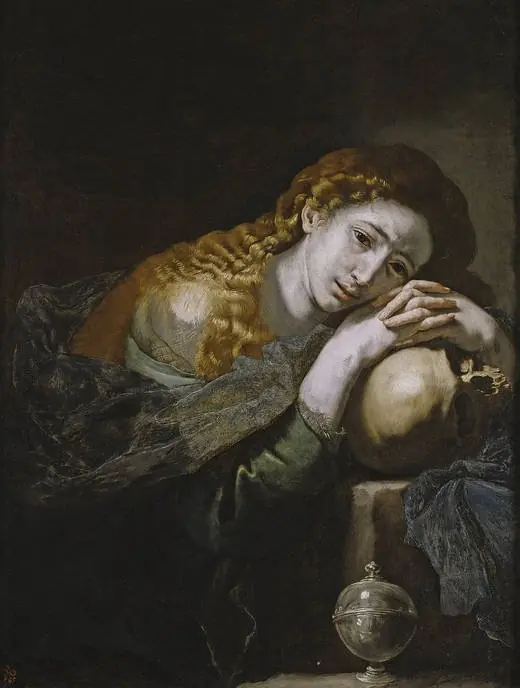
The Penitent Mary Magdalene is an oil painting by the Early Baroque Italian artist Giacomo Galli. It dates from 1630 and is held in the collection of the Walters Art Museum.
About this work
Overview
Created around 1630 by the Roman painter Giacomo Galli, known as Lo Spadarino, this oil painting presents a contemplative Mary Magdalene.
Created around 1630 by the Roman painter Giacomo Galli, known as Lo Spadarino, this oil painting presents a contemplative Mary Magdalene. The figure is seated before a dark brown backdrop, her head bowed and hand supporting her cheek, while a skull rests on a nearby ledge. The composition emphasizes the contrast between illuminated flesh and deep shadow, characteristic of early Baroque devotional works.
Subject & Meaning
The work portrays Mary Magdalene in a moment of penitence, holding a book that suggests scriptural reflection. The presence of the skull functions as a memento mori, reminding viewers of mortality and the possibility of spiritual redemption. Her modest attire—a loose white shirt over a dark dress—underscores humility and the renunciation of worldly vanity.
Technique & Style
Galli employs chiaroscuro to model the figure, allowing light to catch the folds of the clothing and the contours of the skull, while the surrounding darkness recedes. The rendering of fabric achieves a near‑tactile three‑dimensionality, and the subtle gradations of tone create a dramatic yet restrained atmosphere typical of early seventeenth‑century Roman Baroque painting.
History & Provenance
The painting entered the collection of the Walters Art Museum, where it remains on display. Giacomo Galli, active as both painter and engraver in early 1600s Rome, is documented for works on similar devotional subjects, situating this piece within his broader output and the period’s religious artistic commissions.
Own this work as a print
Artist & collection
Artist
Giacomo Galli, commonly known as "Lo Spadarino" (1597–1649) was an Italian painter and engraver of the Papal city of Rome in the early seventeenth century.