Artwork
Penitent Magdalene
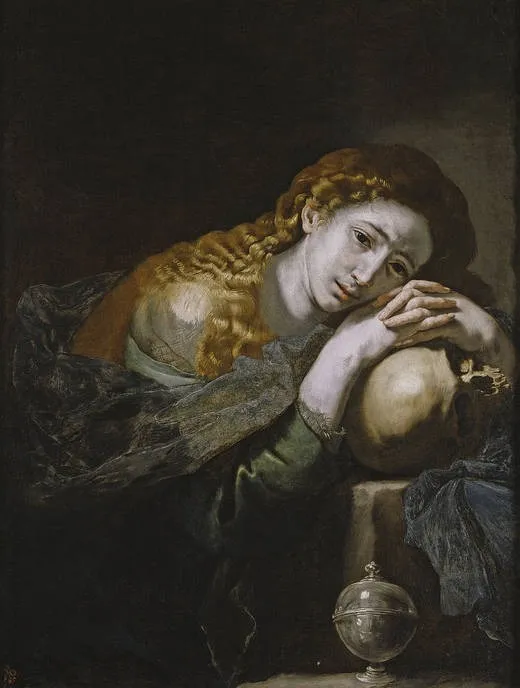
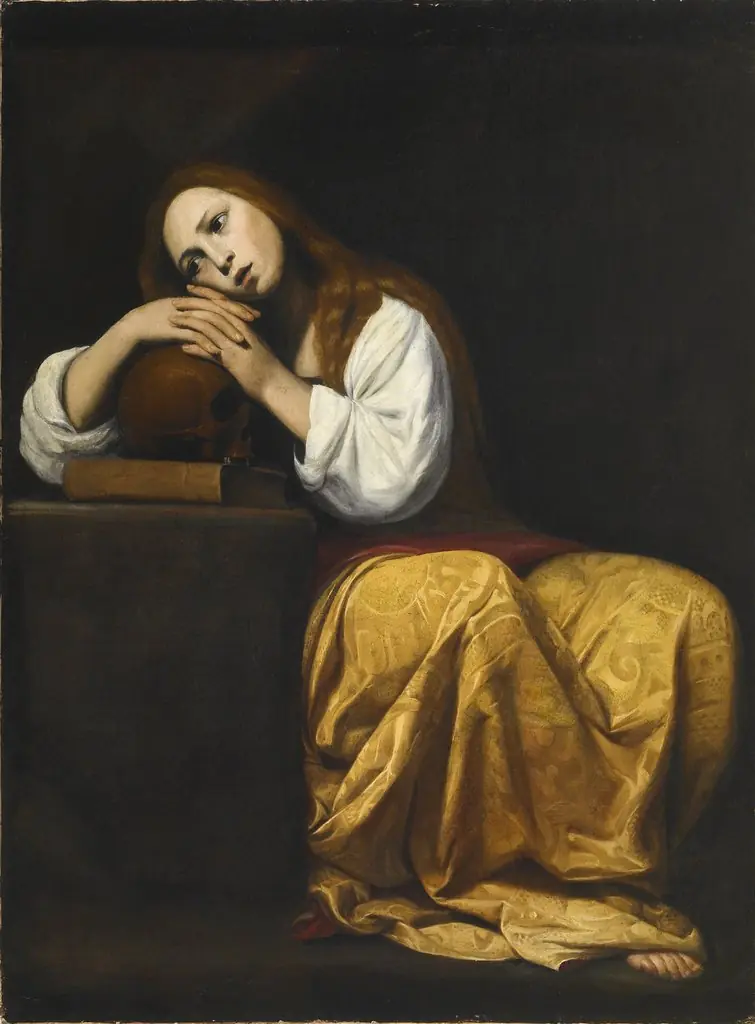
Penitent Magdalene is an oil painting by the Early Baroque Italian artist Jusepe de Ribera. It dates from 1635 and is held in the collection of the Museo del Prado.
About this work
Overview
Jusepe de Ribera’s *Penitent Magdalene* (1635) is an oil painting that belongs to the early Italian Baroque period. Executed while the Spanish artist was based in Naples, the work is now part of the Museo del Prado’s collection.
Subject & Meaning
The composition presents a solitary female figure identified as Mary Magdalene, seated beside a skull placed on a low pedestal. Her gaze falls toward the ground, and her expression conveys solemn contemplation, suggesting themes of repentance, mortality and spiritual reflection.
Technique & Style
Ribera employs a dramatic chiaroscuro, contrasting the dark, almost black background with the luminous pallor of the woman’s skin and the stark whiteness of the skull. The careful modeling of light gives the figure a three‑dimensional presence and emphasizes the tactile qualities of the robe and hair.
History & Provenance
Painted in 1635 during Ribera’s productive Neapolitan phase, the canvas entered the Spanish royal collection before being transferred to the Prado Museum, where it remains on public display.
Context
The work reflects the Baroque fascination with religious subjects rendered in a realistic, emotionally charged manner. By depicting Magdalene in a moment of private penance, Ribera aligns with Counter‑Reformation ideals that encouraged personal meditation on sin and redemption.
Artist & collection
Artist
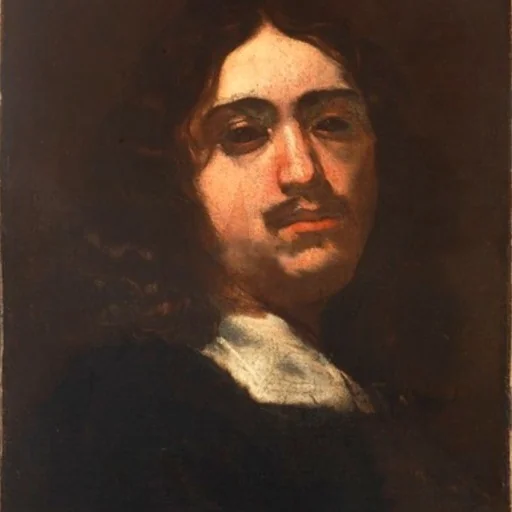
Jusepe de Ribera (Valencian: ; baptised 17 February 1591 – 3 November 1652) was a Spanish painter and printmaker.