Artwork
Personification of Architecture with the Genius of the Fine Arts
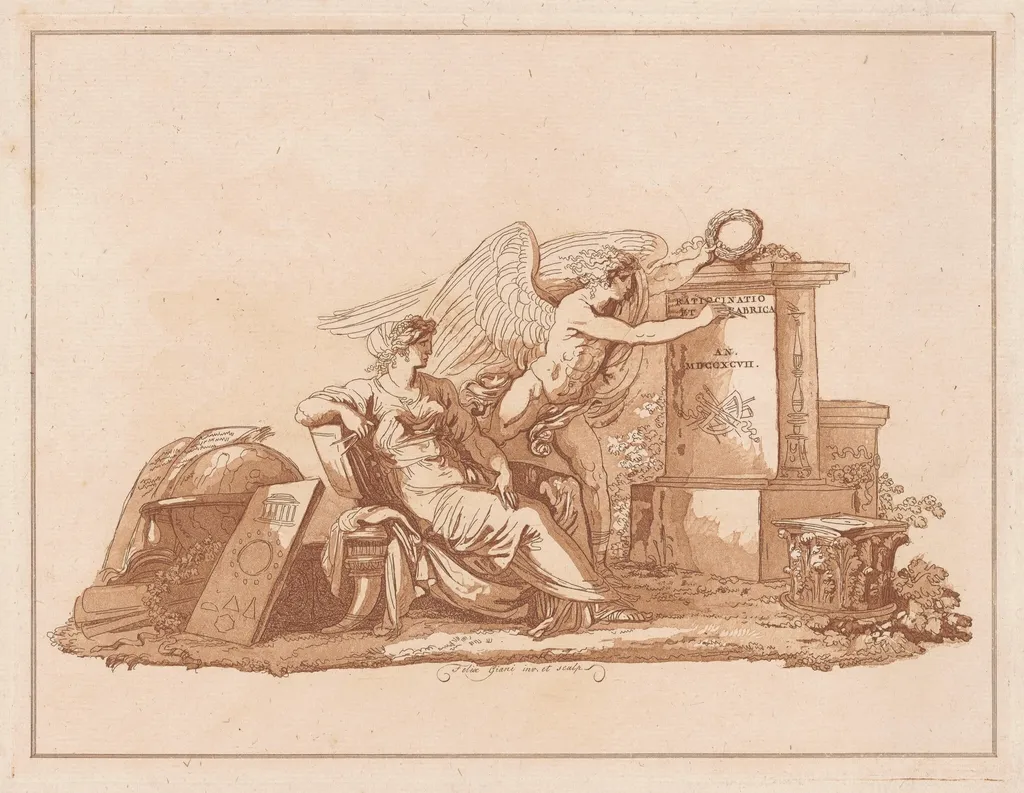
Personification of Architecture with the Genius of the Fine Arts is an ink print by the Romanticist artist Felice Giani. It dates from 1797 and is held in the collection of the National Gallery of Art.
About this work
The winged figure might stand for creativity or inspiration, while the seated woman could represent architecture.
This picture shows two figures in a classical setting. One looks like a woman holding a scroll, sitting on a broken column. The other is a winged figure placing a wreath on a stone altar. Behind them are ruins, tools, and a half-buried temple. The whole scene is drawn in a warm brown color, almost like a sketch.
The winged figure might stand for creativity or inspiration, while the seated woman could represent architecture. The year "MDCCXCVII" (1797) is carved on the altar, matching the FACTS.
If this style interests you, look up etching, drypoint, aquatint.
Overview
Felice Giani’s 1797 print, titled *Personification of Architecture with the Genius of the Fine Arts*, is executed as an etching combined with aquatint on laid paper. The work is rendered in a uniform red‑brown tone, giving the composition the appearance of a single, warm sketch. The image presents a classical tableau populated by allegorical figures and architectural fragments.
Subject & Meaning
At the centre of the scene a seated female figure, clutching a scroll, occupies a broken column, suggesting the embodiment of Architecture. Opposite her, a winged male figure—often interpreted as the Genius of the Fine Arts—places a laurel wreath upon an altar, a gesture that may symbolize the bestowal of artistic inspiration upon the built environment. The surrounding ruins and half‑buried temple reinforce a dialogue between past grandeur and creative renewal.
Technique & Style
Giani employed a combination of line etching and aquatint, allowing him to achieve both precise contours and broad tonal washes. The use of laid paper, with its characteristic ribbed texture, contributes to the work’s tactile quality. The limited palette of red‑brown ink unifies the composition, while the aquatint areas create soft gradations that suggest depth in the architectural fragments.
History & Provenance
Created in 1797, the print bears the date in Roman numerals (MDCCXCVII) carved into the altar within the image. While specific ownership records are scarce, the work aligns with Giani’s late‑eighteenth‑century output, a period when he frequently explored allegorical subjects through printmaking for both private collectors and the emerging market for decorative prints.
Context
The composition reflects the Neoclassical fascination with antiquity that dominated European art at the turn of the nineteenth century. By personifying Architecture and the Fine Arts, Giani engages contemporary debates about the role of artistic theory in shaping civic building projects, a theme echoed in the architectural treatises and academies of his time.
Legacy
Although not as widely reproduced as some of Giani’s paintings, this print illustrates his skill in translating complex allegorical ideas into the graphic medium. It serves as a reference point for scholars studying the intersection of print technology and Neoclassical iconography, and it continues to appear in catalogues of late‑eighteenth‑century Italian prints.
Artist & collection


 Allegorical Portrait of Pierre Buirette de Belloy
 Composition with Figural Relief
 Allegory in Honor of Anne of Austria
 Cartouche Moderne with Emblems of Death
 The Disciples at the Tomb
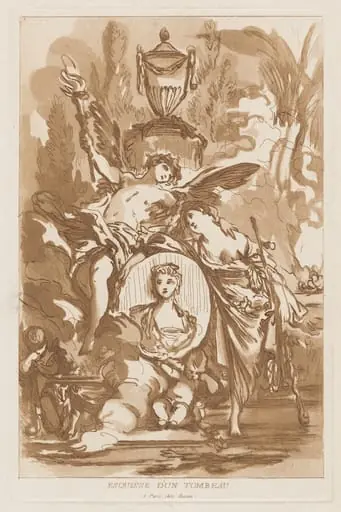 Esquisse d’un tombeau (Sketch for a Tomb)
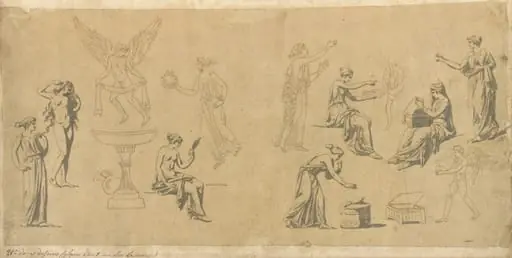 Studies of Classical Women, with Eros
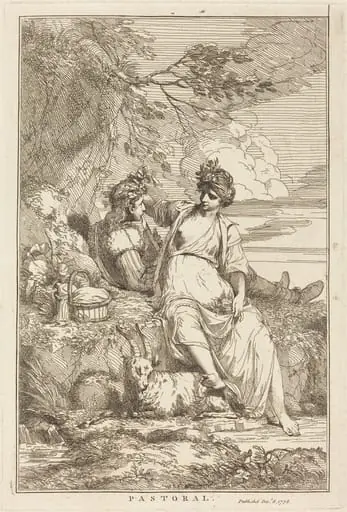 Pastoral
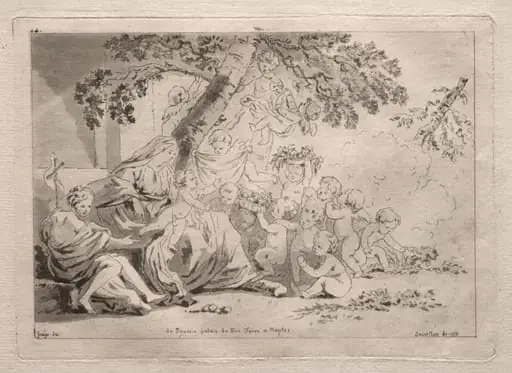 Holy Family with Putti
 Title Page
 Title Page
 Sleeping Woman with a Cupid