Artwork
Allegory of Justice
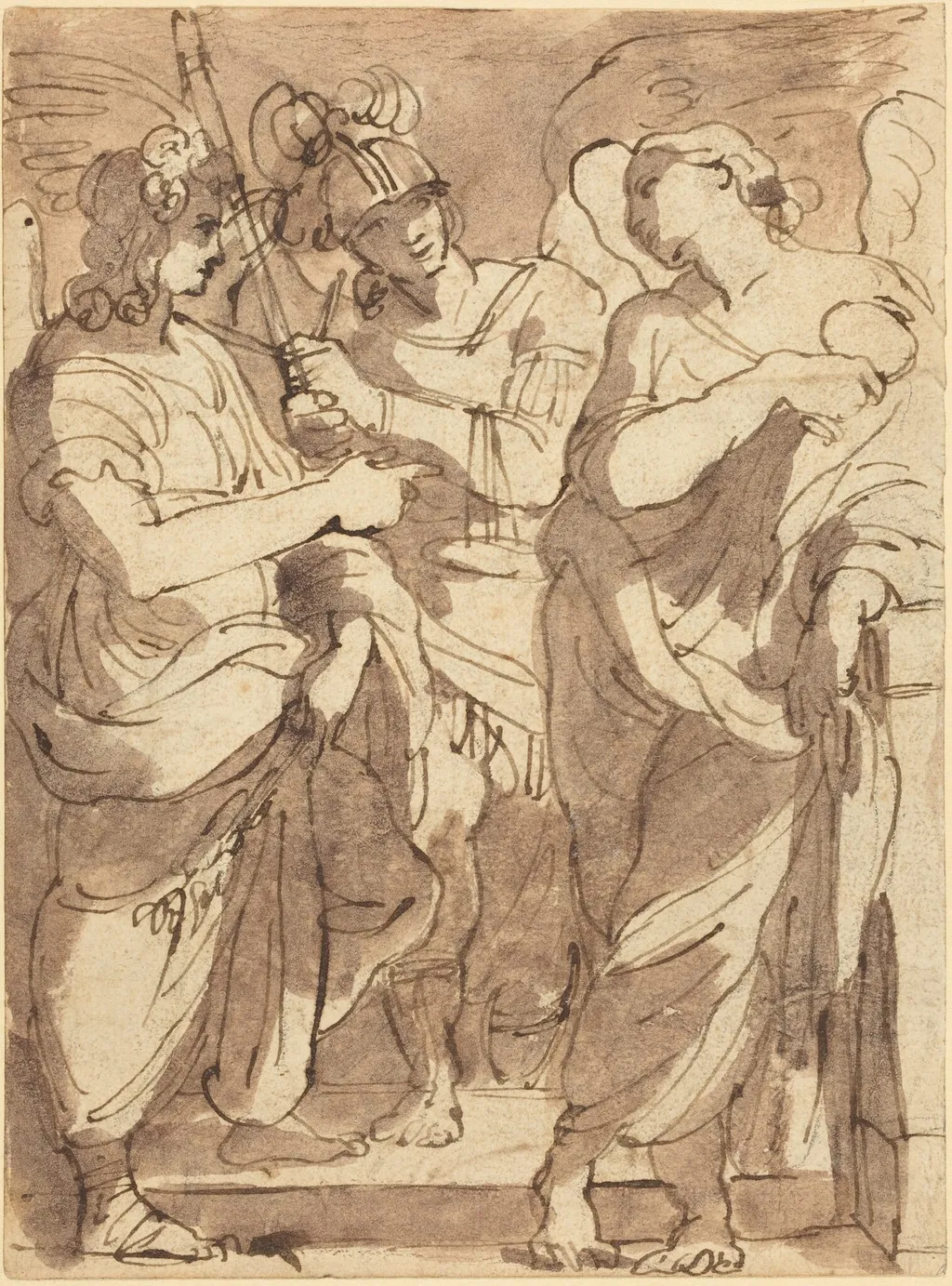
Allegory of Justice is a chalk drawing by the Romanticist artist Felice Giani. It dates from 1790 and is held in the collection of the National Gallery of Art.
About this work
Overview
Executed in pen and brown ink with violet-brown wash over black chalk on wove paper, it captures a moment of moral tension through three robed figures.
Created in 1790, this drawing by Felice Giani is a preparatory study for a larger allegorical composition. Executed in pen and brown ink with violet-brown wash over black chalk on wove paper, it captures a moment of moral tension through three robed figures. The medium allows for both precision and spontaneity, reflecting the artist’s focus on gesture and emotional weight rather than finished detail.
Subject & Meaning
The central figure, upright and authoritative, holds a sword and scroll—symbols of legal power and codified law. Two others lean toward them, their postures suggesting deliberation or dissent. The grouping implies a judicial council in motion, where justice is not static but negotiated. The absence of setting or background directs attention to the interplay of moral authority and human interaction.
Technique & Style
Giani employs loose, energetic lines in black chalk to define form, then overlays them with fluid ink washes to model volume and shadow. Cross-hatching builds depth in the robes and folds, while the violet-brown wash adds warmth and atmospheric density. The sketch’s immediacy comes from visible revisions and unpolished strokes, emphasizing process over finish and conveying psychological urgency.
History & Provenance
The drawing emerged during Giani’s active period in Bologna, where he was engaged in decorative and allegorical projects for elite patrons. It likely served as a study for a ceiling fresco or public monument, though no final work has been definitively linked to it. The sheet remains in private collections, with no public exhibition history recorded prior to the late 20th century.
Context
Made during the late Enlightenment, the drawing reflects contemporary interest in legal reform and civic virtue. Giani’s style aligns with Neoclassical ideals of clarity and moral gravity, yet his expressive handling distinguishes it from rigid academic conventions. The emphasis on dynamic figures suggests a shift toward emotional resonance in allegorical representation, influenced by contemporary theatrical and political discourse.
Legacy
Though not widely reproduced, this drawing exemplifies Giani’s skill in translating abstract concepts into visceral human forms. It contributes to understanding how 18th-century artists approached allegory not as static symbolism but as living drama. Its preservation offers insight into the working methods of Italian draftsmen navigating the transition from Baroque expressiveness to Neoclassical order.
Own this work as a print
Artist & collection


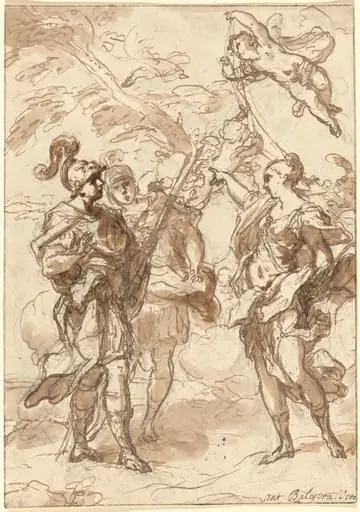 Venus as a Huntress Appearing to Aeneas and Achates
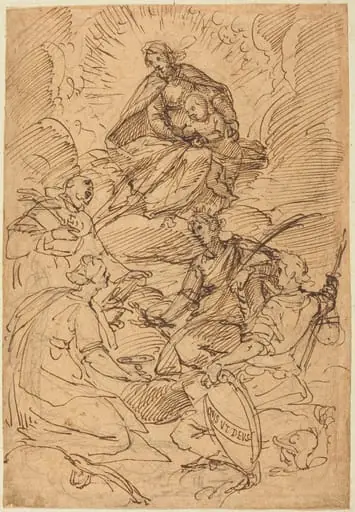 The Madonna and Child in Glory Adored by Saints
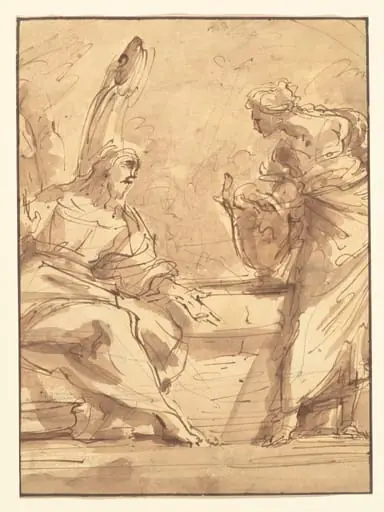 Christ and the Samaritan Woman
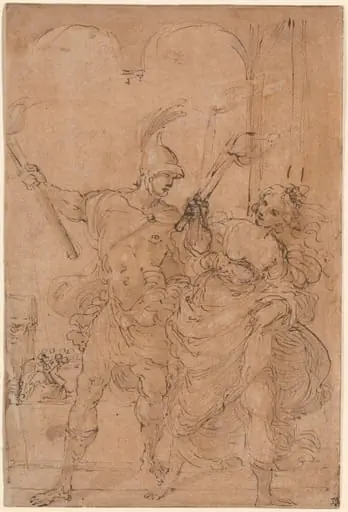 Alexander and Thaïs Setting Fire to Persepolis
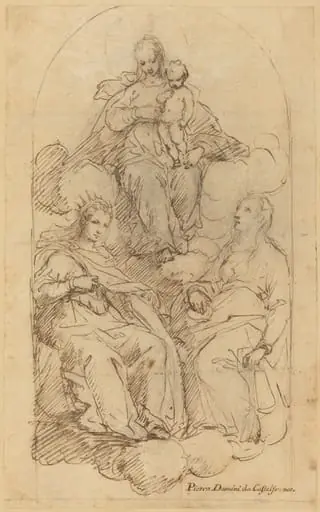 The Virgin and Child Adored by Saint Catherine and Another Female Saint
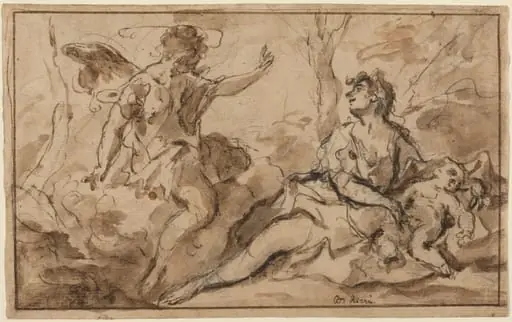 The Angel Appearing to Hagar and Ishmael
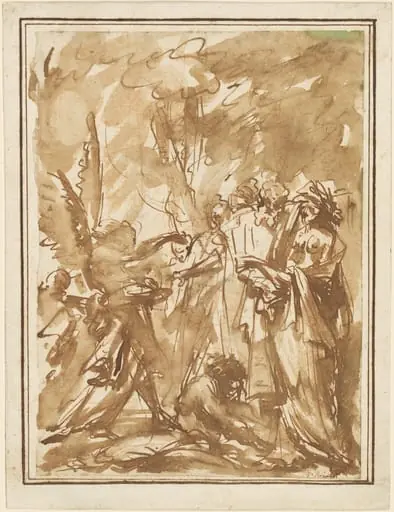 Scherzo with Antique Figures
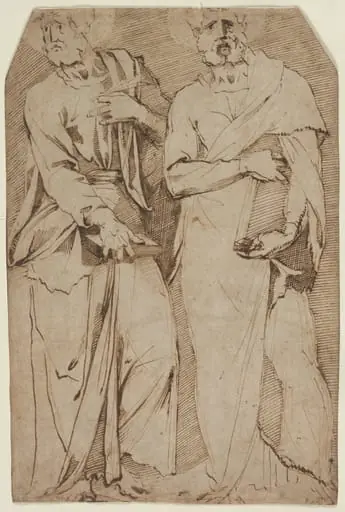 Two Standing Saints
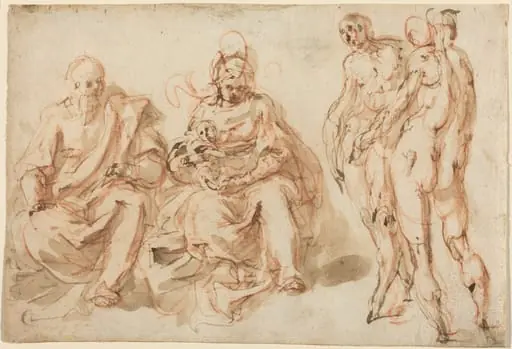 The Adoration of the Shepherds
 Youth Sitting on a Wall in Conversation with Two Men
 Classical Figures Gathered around an Urn
 Esther before Ahasuerus