Artwork
Saint George
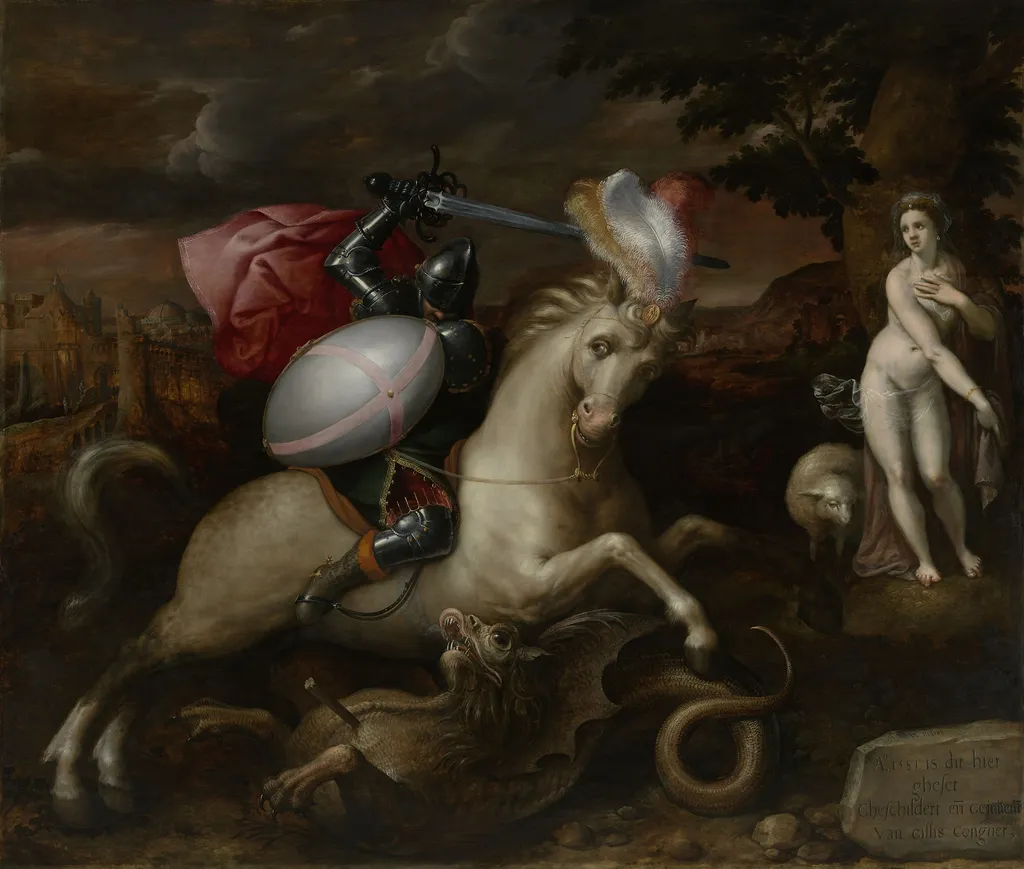
Saint George is an oil painting by the Mannerist artist Gillis Coignet. It dates from 1591 and is held in the collection of the Royal Museum of Fine Arts Antwerp.
About this work
Overview
The painting is part of the Royal Museum of Fine Arts Antwerp’s collection, reflecting its significance in late 16th-century religious art.
Painted in 1591 by Flemish artist Gillis Coignet, this oil-on-canvas work portrays Saint George in the act of slaying the dragon. Coignet, who spent formative years in Italy, synthesized Italian Mannerist tendencies with Northern European precision. The painting is part of the Royal Museum of Fine Arts Antwerp’s collection, reflecting its significance in late 16th-century religious art. Its composition and lighting reveal a deliberate engagement with Venetian chromatic and dramatic traditions.
Subject & Meaning
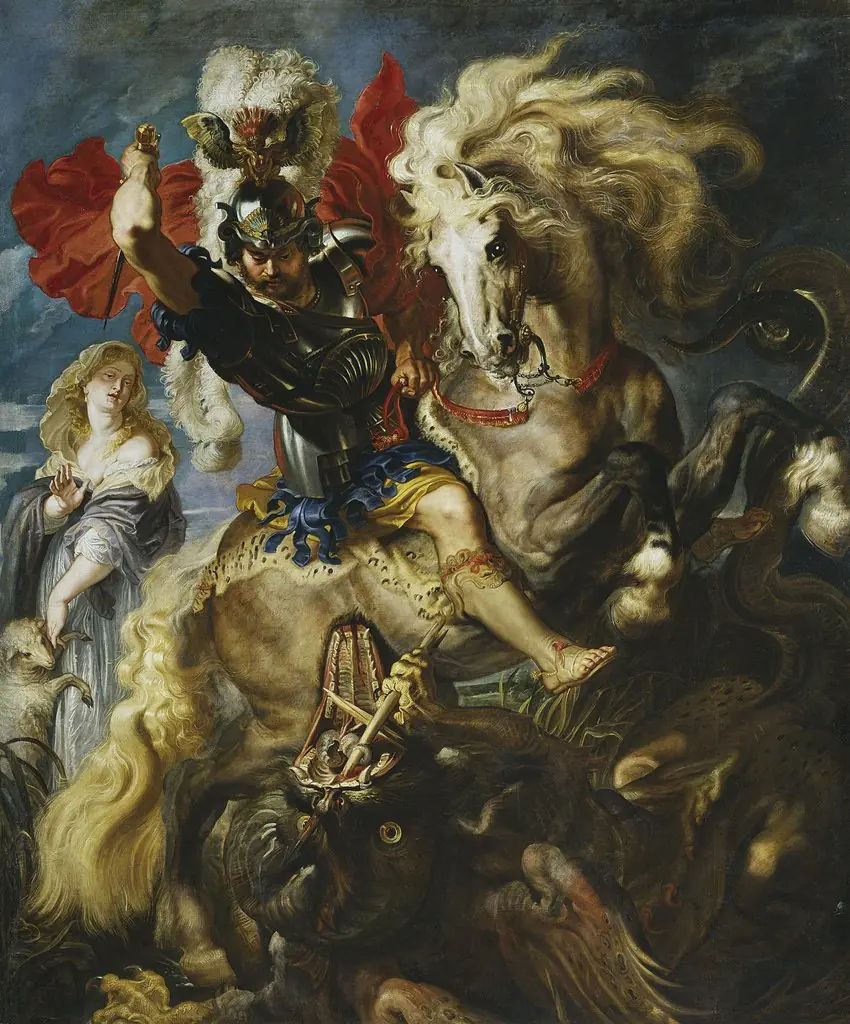
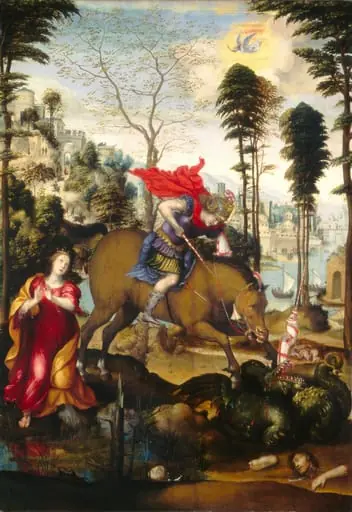
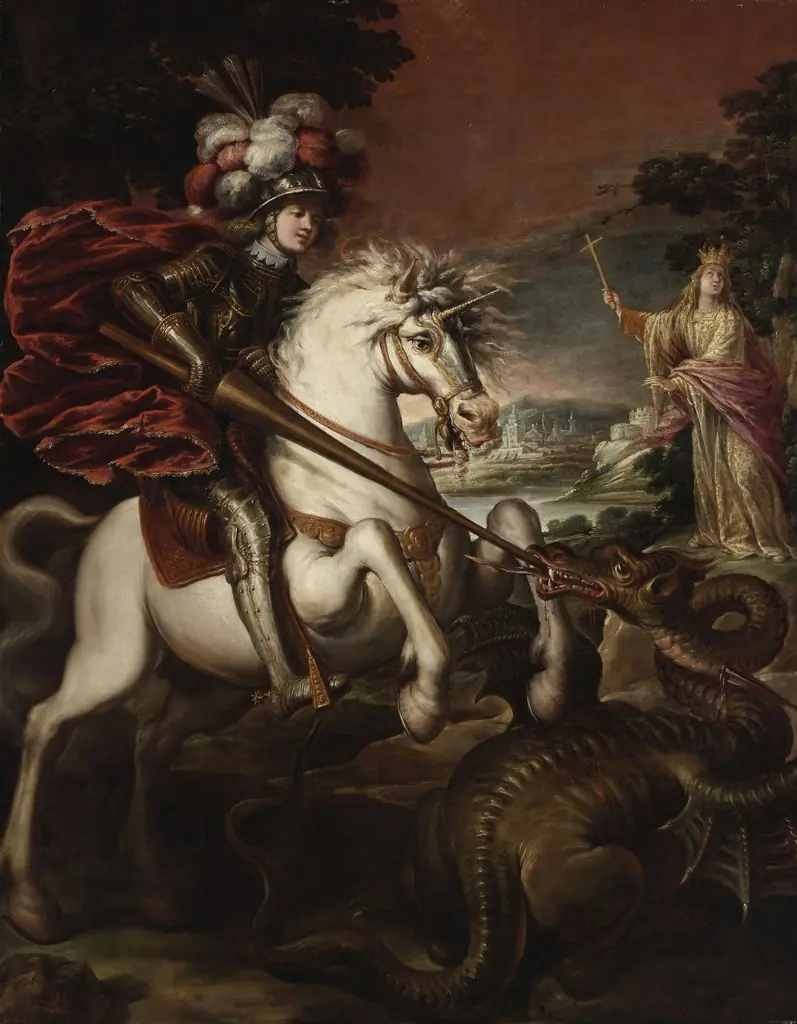
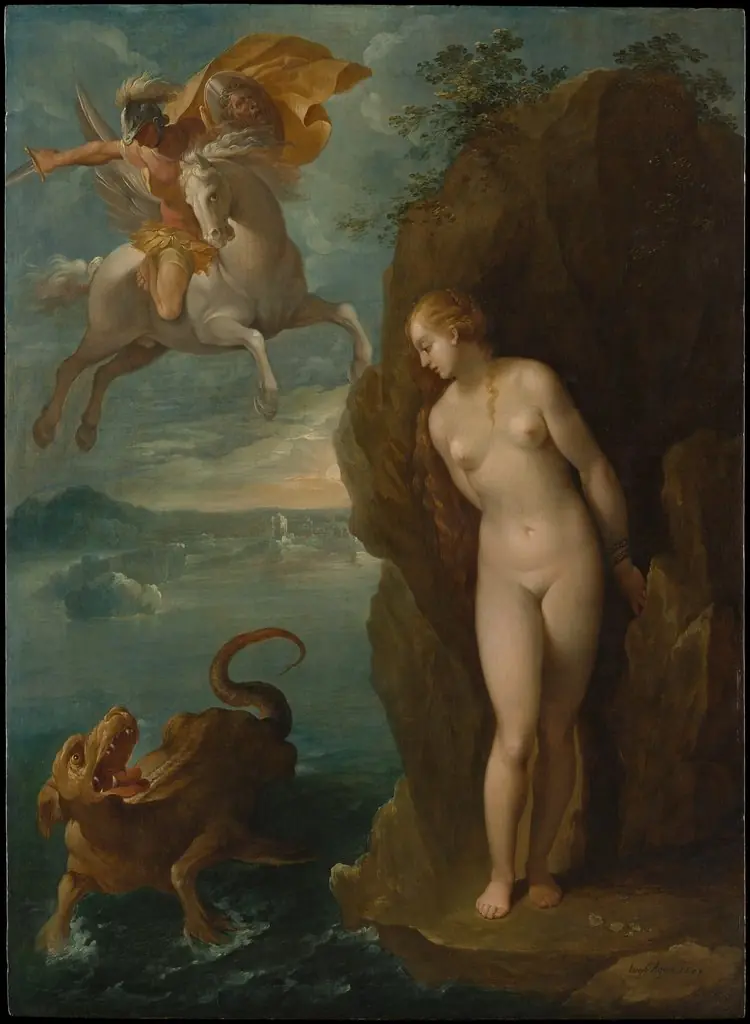
The scene illustrates the legendary moment Saint George, a Christian martyr and soldier-saint, defeats a dragon to rescue a princess. The nude woman standing to the right represents the princess, symbolizing innocence saved through divine intervention. The dragon, a traditional emblem of evil, is subdued beneath the saint’s horse. The narrative underscores the triumph of faith over chaos, a common theme in Counter-Reformation art meant to inspire moral resolve.
Technique & Style
Coignet employs strong chiaroscuro to heighten the drama of the moment, directing attention to the raised sword and the writhing dragon. The armor is rendered with meticulous detail, reflecting Northern attention to texture, while the dragon’s scales and the flowing cape suggest movement through fluid brushwork. The background landscape is rendered with atmospheric perspective, distancing the sacred action from the earthly realm. The style aligns with Mannerism’s emphasis on tension, elongated forms, and emotional intensity.
History & Provenance
Created during Coignet’s post-Italian period, the painting likely originated in Antwerp, where he returned after a decade in Venice and Rome. It entered the Royal Museum of Fine Arts Antwerp’s collection in the 19th century, following the dissolution of religious institutions and the reorganization of regional art holdings. Its survival through centuries of political and religious upheaval underscores its enduring status as a documented work of Flemish Mannerism.
Context
In the late 1500s, the Southern Netherlands remained a center for religious imagery despite Protestant iconoclasm in the north. Saint George, a popular military saint, was frequently depicted to reinforce Catholic ideals of chivalry and divine protection. Coignet’s synthesis of Italian dynamism with Flemish detail reflects the transregional exchange of artistic ideas during the Counter-Reformation, when visual narratives were used to affirm doctrinal authority.
Legacy
Though Coignet is less widely known than his Italian contemporaries, this painting exemplifies how Northern artists adapted Italian Mannerist innovations to local devotional needs. The work contributes to the broader understanding of how Flemish painters engaged with Venetian color and Roman composition without abandoning their own traditions of precision and narrative clarity. It remains a key reference for studying the cross-pollination of styles in late Renaissance Europe.
Own this work as a print
Artist & collection
Artist
Gillis Coignet or Gillis Coignet (I), known in Italy as Giulio Cognietta (many variant spellings of the family name, including Quinet, Quinget, Cognget, Cognet, Coignet, Congnet and Quiniet) (c.