Artwork
Saint George and the Dragon
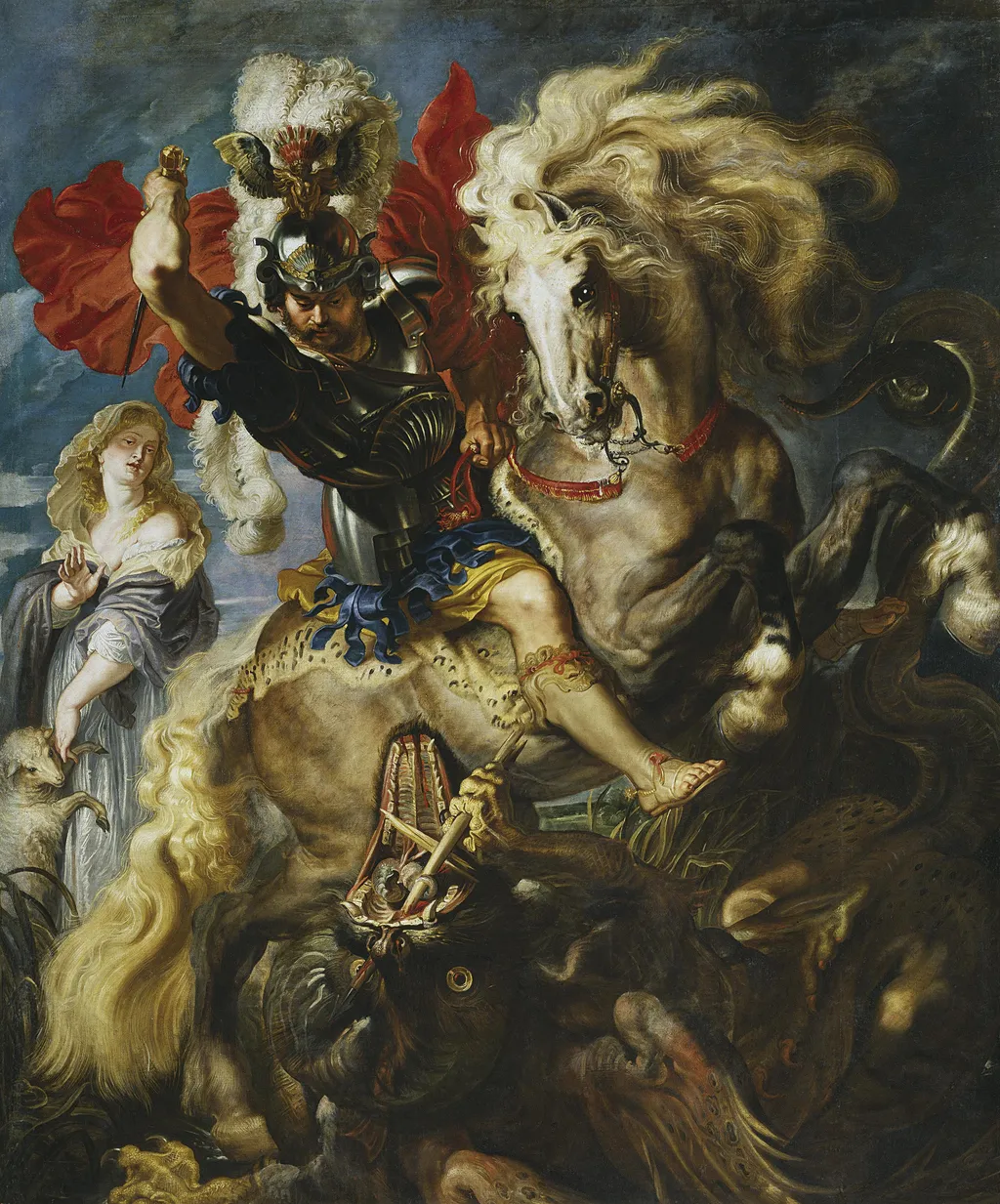
Saint George and the Dragon is an oil painting by the Flemish Baroque painting artist Peter Paul Rubens. It dates from 1606 and is held in the collection of the Museo del Prado.
About this work
Overview
Peter Paul Rubens created the oil painting Saint George and the Dragon around 1605–1607 while he was in Genoa. The work depicts the legendary knight confronting a monstrous dragon, a subject linked to the city’s patron saint. The canvas now belongs to the Museo del Prado in Madrid.
Subject & Meaning
The composition shows Saint George, clad in gleaming armor, thrusting his sword at a dragon whose head resembles a white horse and whose wings are scarlet. The beast coils around a rescued princess in a flowing white gown, emphasizing the triumph of chivalric virtue over chaos.
Technique & Style
Rubens renders the dragon’s scales with fine cracks and subtle shadows, giving them a tactile quality. The knight’s armor reflects light sharply against a stormy sky, while the princess’s dress appears weightless, creating a dynamic contrast between solidity and movement.
History & Provenance
Rubens painted the piece during his Italian apprenticeship under Otto van Veen. Scholars suggest it was intended for Genoa’s Church of Sant’Ambrogio, dedicated to Saint George, though the commission was never fulfilled. Rubens retained the canvas until his death in 1640, after which King Felipe IV of Spain acquired it.
Context
Genoa’s devotion to Saint George provided a local audience familiar with the legend, and Rubens’s exposure to Italian Baroque influences informed the dramatic chiaroscuro and vigorous composition evident in the work.
Own this work as a print
Artist & collection
Artist
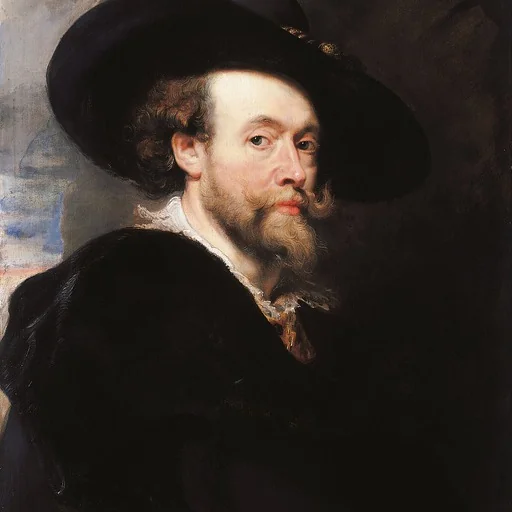
Sir Peter Paul Rubens ( ROO-bənz; Dutch: ; 28 June 1577 – 30 May 1640) was a Flemish artist and diplomat.

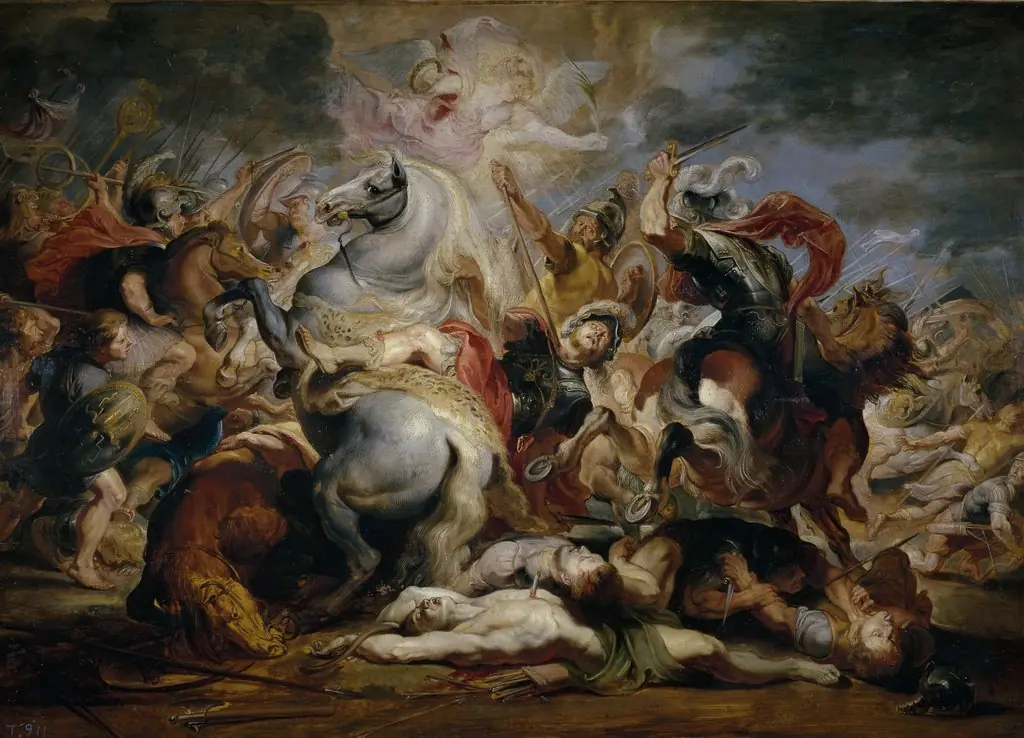 The Death of the Consul Decius
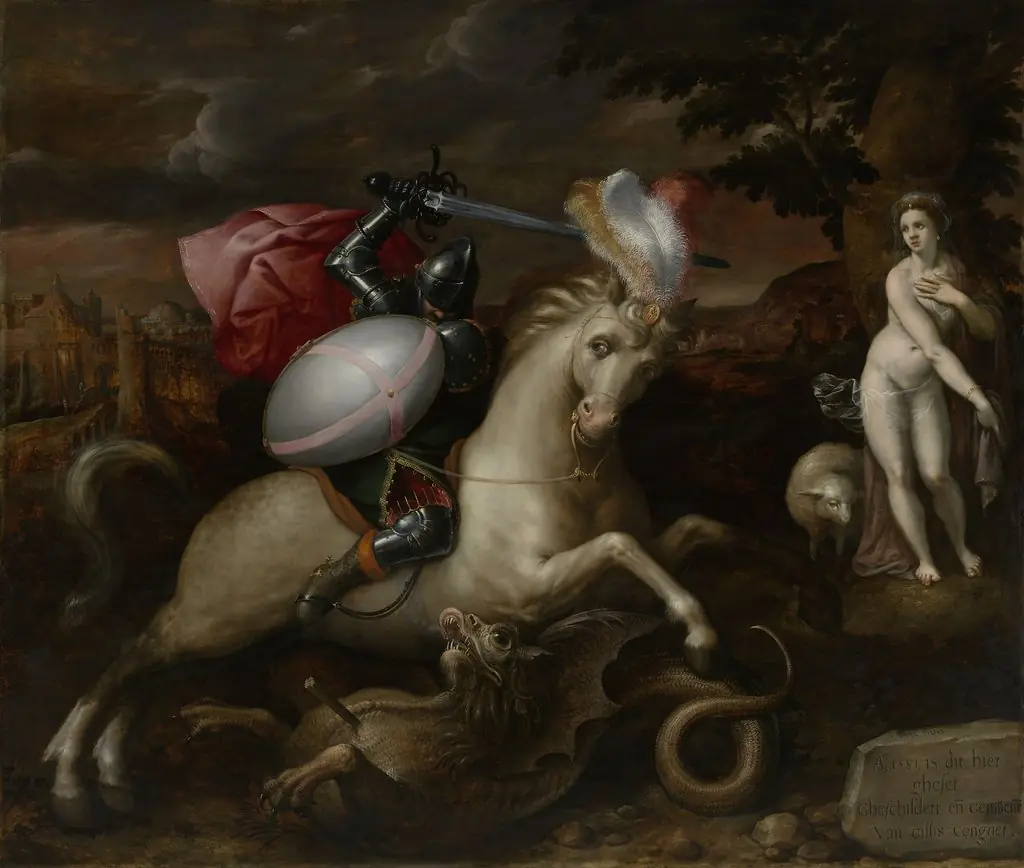 Saint George
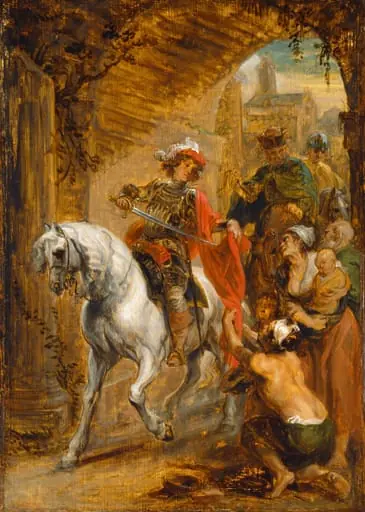 Saint Martin Dividing His Cloak
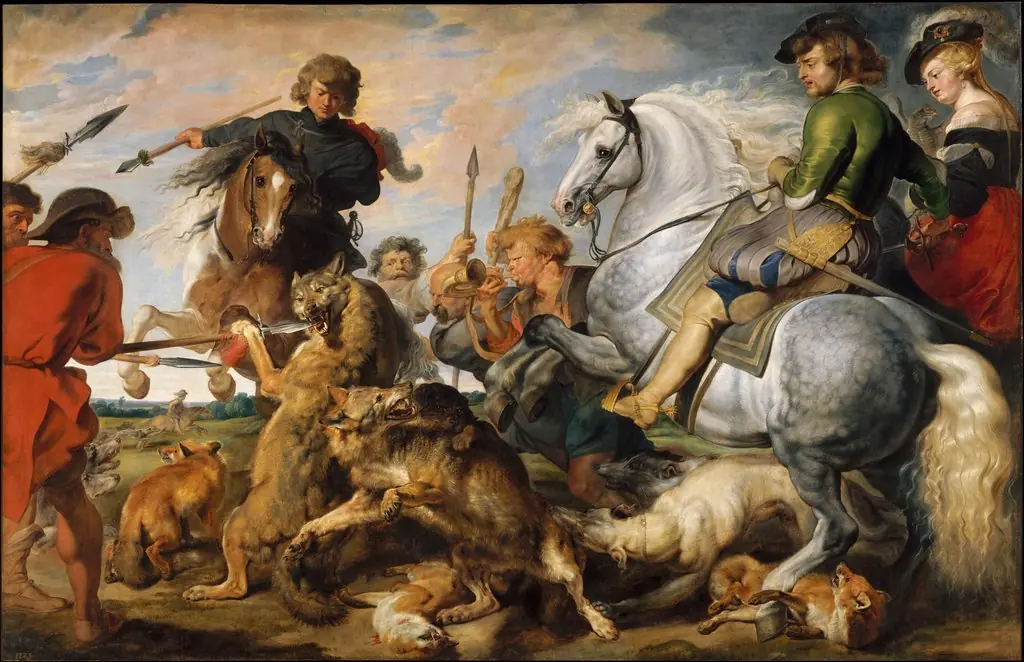 The Wolf and Fox Hunt
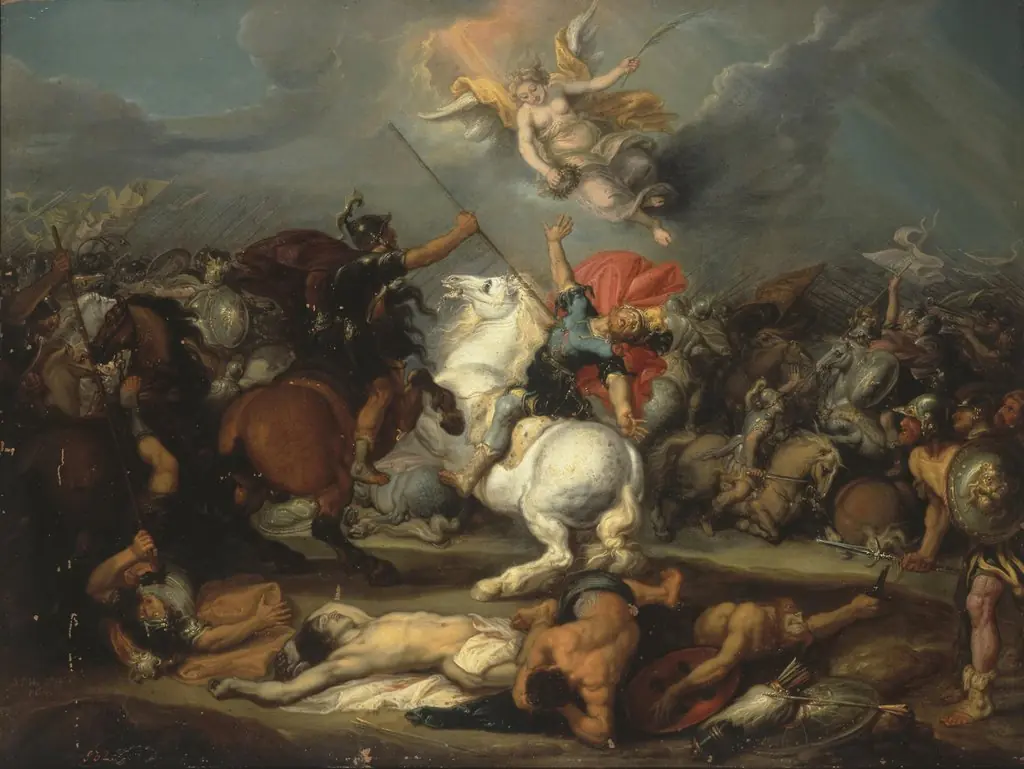 Death of Decius Mus
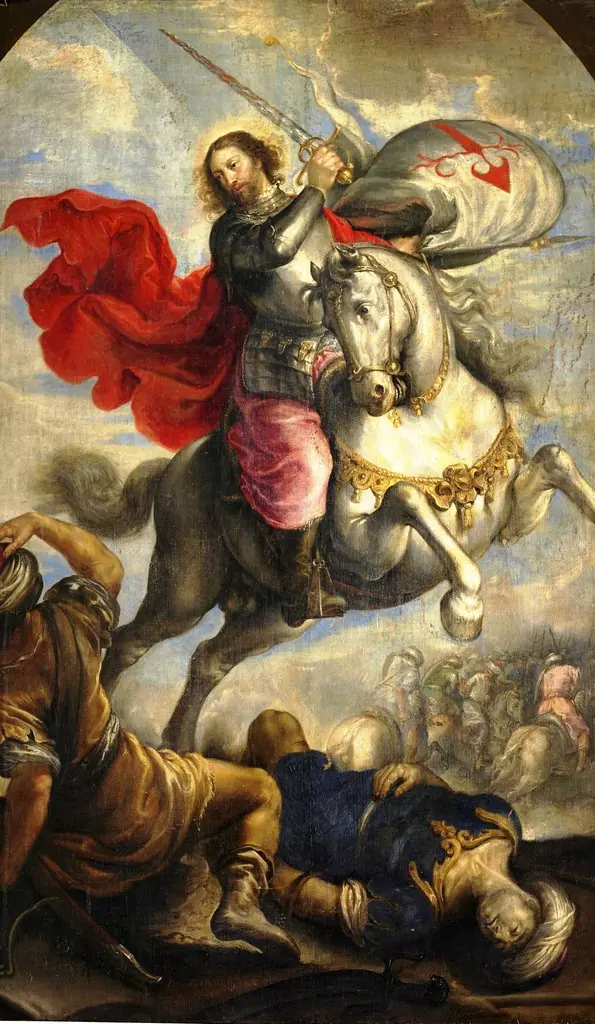 The Apostle Saint James or Saint James the Moor Slayer
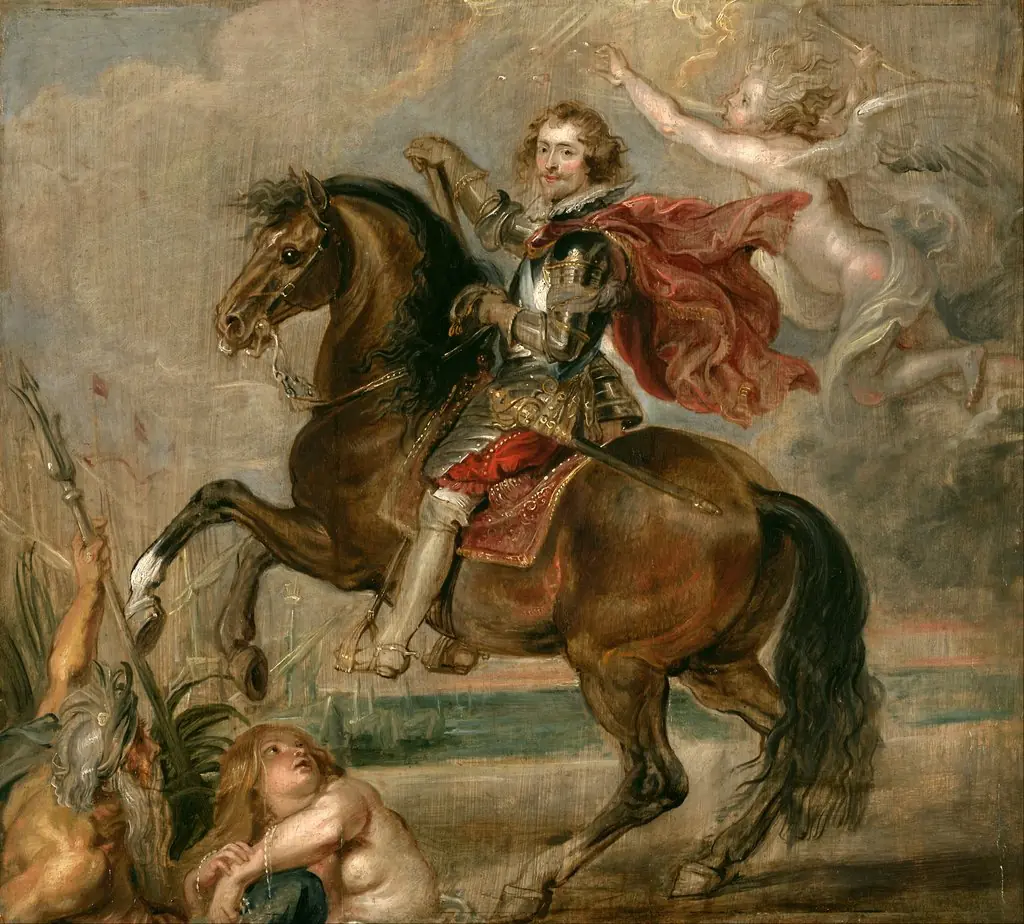 Equestrian Portrait of the Duke of Buckingham
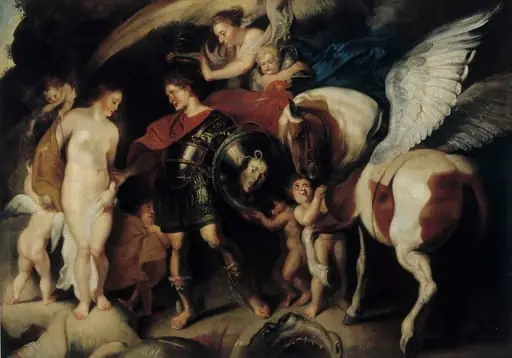 Perseus ja Andromeda, kopio Peter Paul Rubensin mukaan
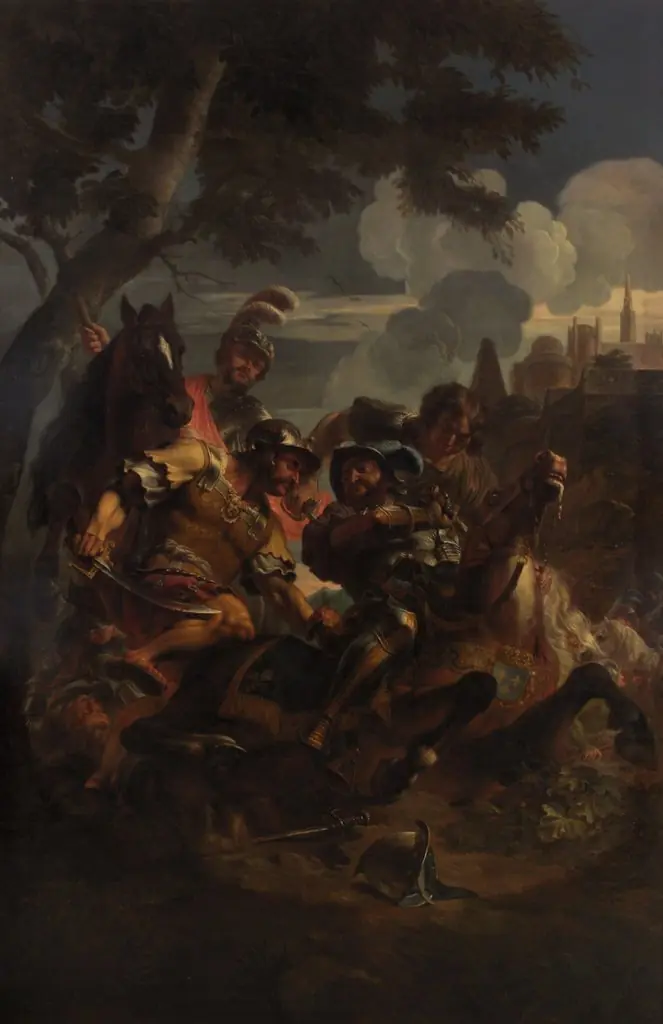 Capture of King Francis I at the Battle of Pavia