Artwork
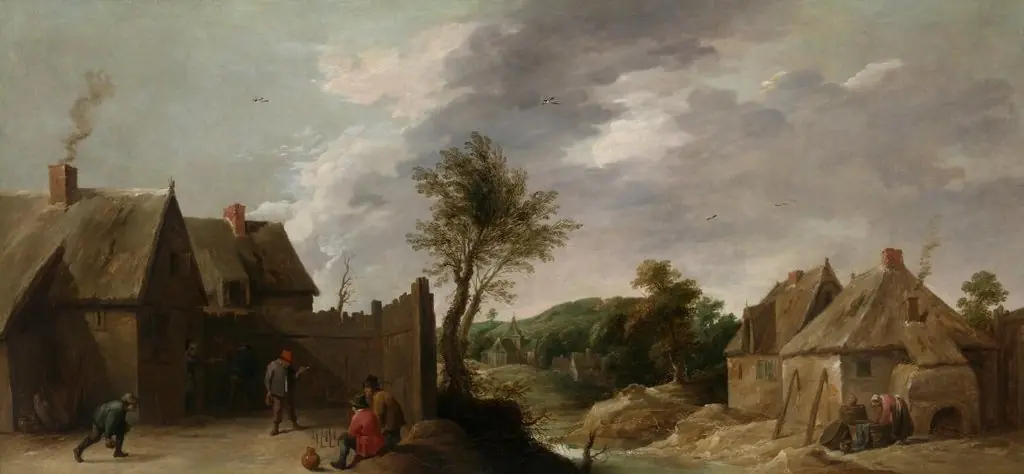
Scene before an inn
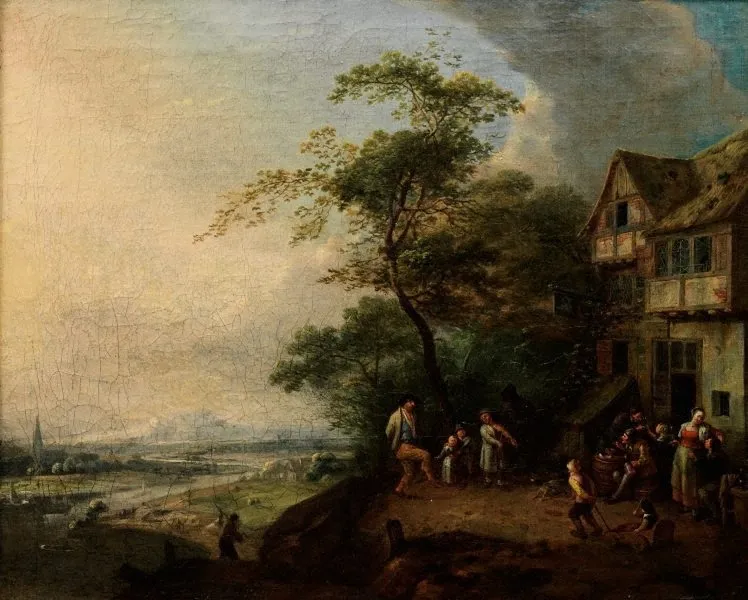
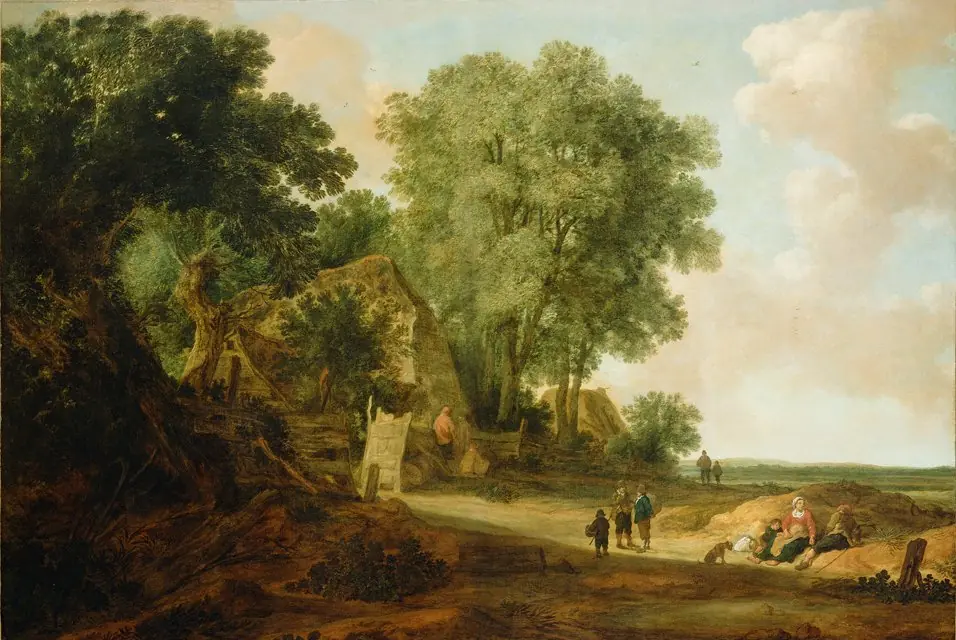
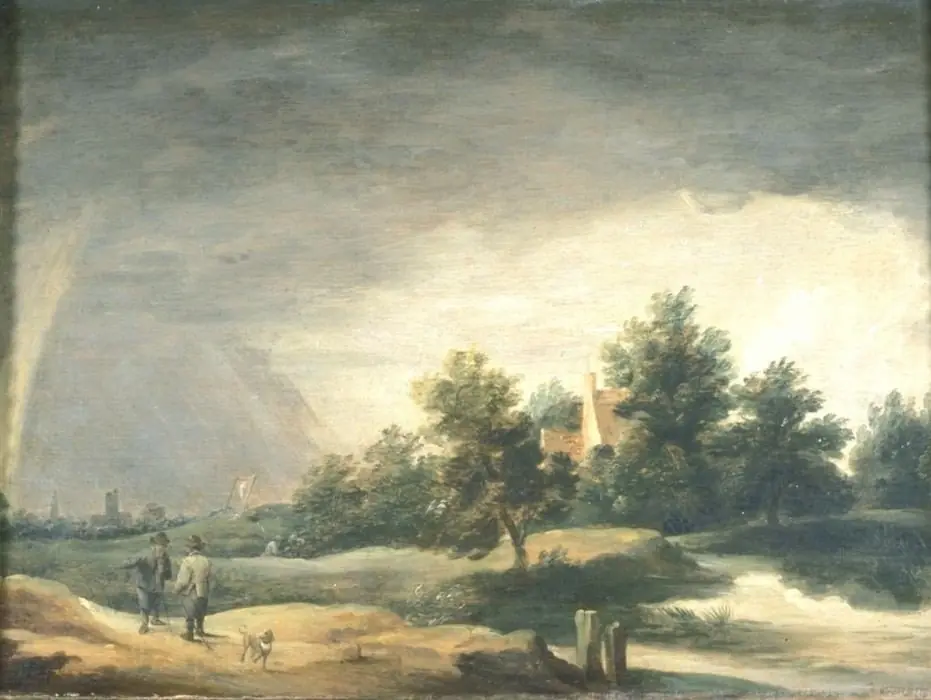
Scene before an inn is an oil painting by the Dutch Golden Age artist Gillis de Winter. It dates from 1690 and is held in the collection of the Art Gallery of New South Wales.
About this work
Overview
The work resides in the Art Gallery of New South Wales, where it contributes to a modest but significant collection of Dutch-influenced genre scenes.
Painted around 1690, Scene before an inn is an oil-on-canvas landscape by Gillis de Winter. It captures a quiet moment outside a rural inn, framed by a broad river and rolling hinterland. The composition balances architectural structure with natural elements, emphasizing daily life in the late 17th-century Low Countries. The work resides in the Art Gallery of New South Wales, where it contributes to a modest but significant collection of Dutch-influenced genre scenes.
Subject & Meaning
The scene portrays ordinary people gathered near an inn—some seated, others standing, a few with cups or food. No dramatic event unfolds; instead, the painting conveys stillness and routine. The inn, with its sloping roof and prominent tree, serves as both shelter and social hub. The absence of grandeur suggests a focus on the dignity of everyday leisure, typical of Dutch genre painting’s quiet realism.
Technique & Style
De Winter employs visible brushwork to render texture in the tree bark, fabric, and water’s surface. Earth tones dominate the foreground, while cooler blues and grays suggest distance in the river and sky. Light falls evenly, avoiding strong contrasts, which enhances the calm mood. The handling of paint is direct and unembellished, reflecting a practical approach to observation rather than idealized composition.
History & Provenance
The painting’s early history is undocumented, but its style aligns with Dutch and Flemish traditions of the late 1600s. It entered the Art Gallery of New South Wales’ collection in the 20th century, likely through acquisition or bequest. No records of exhibition or ownership prior to the 1900s are publicly known, leaving its journey from Europe to Australia largely untraced.
Context
De Winter worked during a period when Dutch and Flemish artists increasingly turned to scenes of rural life, often commissioned by middle-class patrons. Inns were common subjects, symbolizing rest, travel, and community. While not a leading figure, De Winter’s work reflects broader trends in regional painting, where atmospheric detail and quiet human activity replaced religious or mythological narratives.
Legacy
Though not widely studied, the painting exemplifies the quiet genre traditions of its time. It contributes to understanding how lesser-known artists interpreted everyday environments with sincerity. Its presence in an Australian public collection underscores the global reach of Northern European art, even when the artist’s name remains obscure.
Artist & collection