Artwork
Keats House, Hampstead
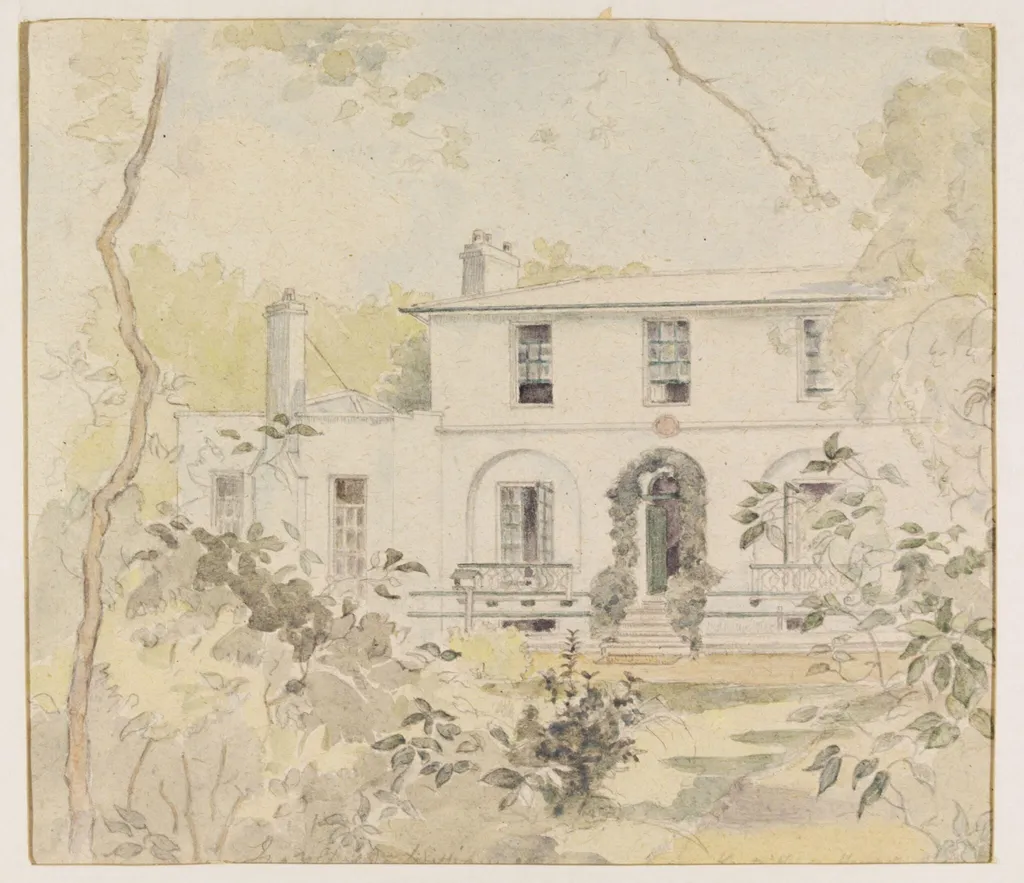
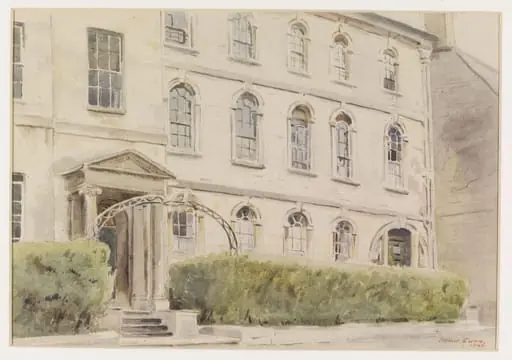
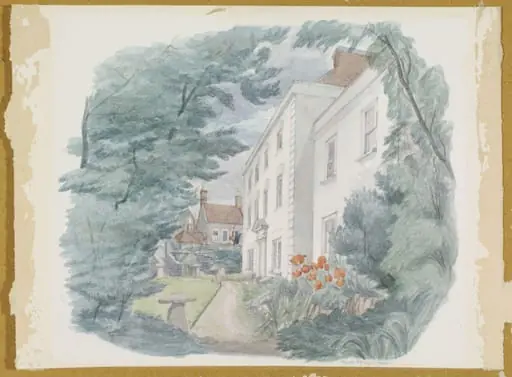
Keats House, Hampstead is a watercolor work on paper by the Impressionist artist Ina Sheldon Williams. It dates from 1940 and is held in the collection of the Victoria and Albert Museum.
About this work
Overview
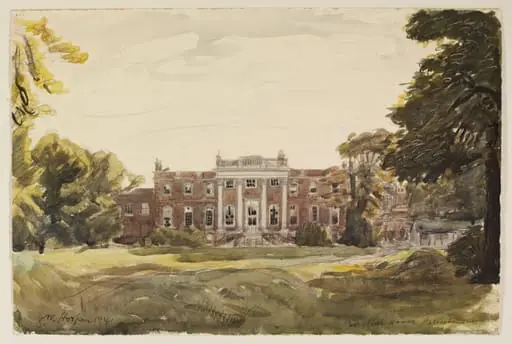
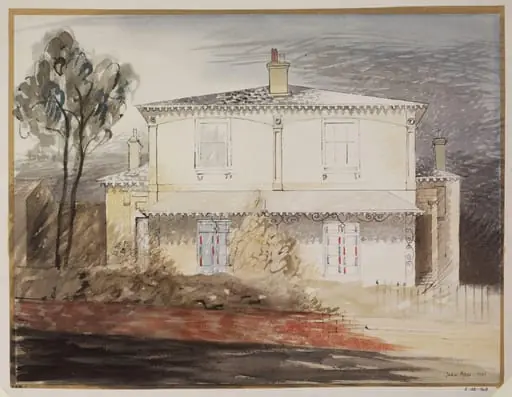
This watercolour by Ina Sheldon Williams was created in 1941 as part of the Recording Britain project, a government-backed effort to visually document the nation’s architectural and rural heritage during World War II. Commissioned by the Pilgrim Trust and administered by the Ministry of Labour and National Service, the initiative sought to preserve images of places deemed culturally significant amid fears of wartime destruction and urban transformation.
Subject & Meaning
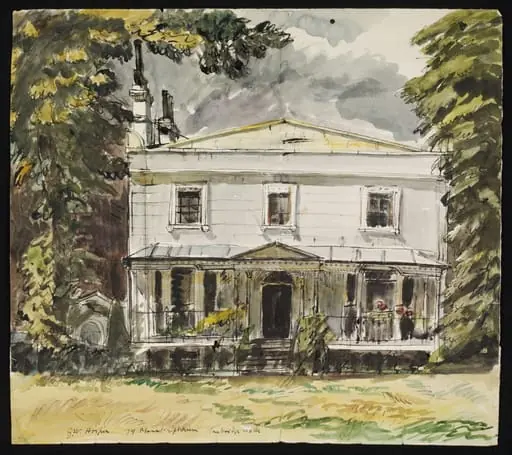
The painting captures Keats House, the former residence of the poet John Keats in Hampstead, now a symbol of literary history.
The painting captures Keats House, the former residence of the poet John Keats in Hampstead, now a symbol of literary history. Its quiet, unassuming presence—slightly ajar door, climbing vines, and modest scale—evokes a sense of intimate continuity. The choice to depict this domestic literary landmark reflects the project’s broader aim to safeguard images of places tied to national memory, not just grand monuments.
Technique & Style
Williams employed delicate watercolour washes to render the house’s pale yellow walls and soft shadows, allowing subtle gradations of light to suggest depth without harsh lines. The vines along the steps and the leaning tree branch are rendered with loose, fluid strokes, while the wrought-iron railing and chimney are simplified yet precise. The slightly open door introduces a quiet narrative tension, inviting contemplation rather than declaration.
History & Provenance
Created in 1941 under the Recording Britain project, the work entered the Victoria and Albert Museum’s collection alongside over 1,500 other watercolours by 97 artists. The project, directed by Sir Kenneth Clark, prioritized sites vulnerable to wartime damage or modernization. Williams’s depiction of Keats House was one of many efforts to archive Britain’s architectural character before it could be lost.
Context
During the early years of the Second World War, Britain faced widespread anxiety over cultural loss. The Recording Britain project emerged as a civilian response to this threat, mobilizing artists to record vernacular buildings, villages, and historic homes. Keats House, as a site of literary pilgrimage, represented the quiet endurance of cultural identity amid national upheaval.
Legacy
Williams’s watercolour remains part of a vital visual archive that continues to inform historical and cultural studies of Britain’s wartime experience. Its understated composition reflects the project’s ethos: not to glorify, but to observe and preserve. Today, it stands as a quiet testament to the role of art in sustaining collective memory during times of uncertainty.
Artist & collection
Artist
Ina Sheldon Williams painted watercolours of London landmarks around 1940. Her Keats House, Hampstead shows the poet’s home in muted greens and browns, capturing the quiet garden gate and ivy-covered walls. She worked…