Artwork
Untitled
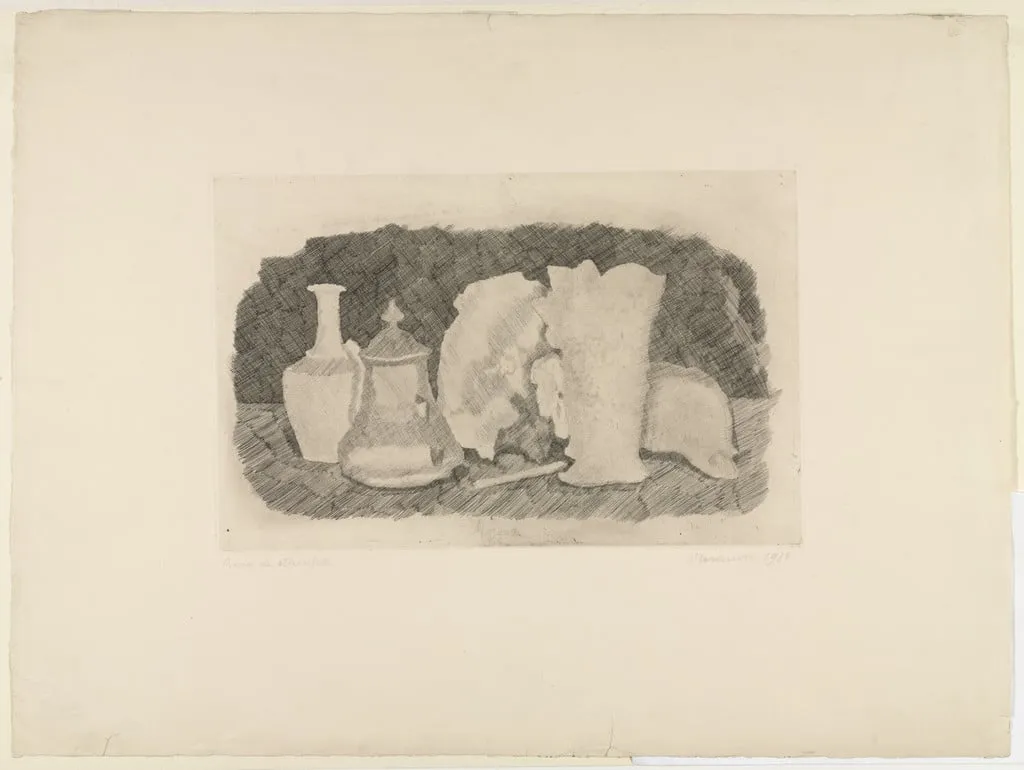
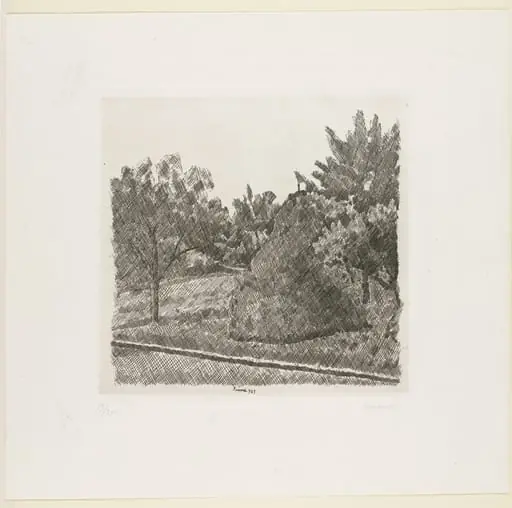
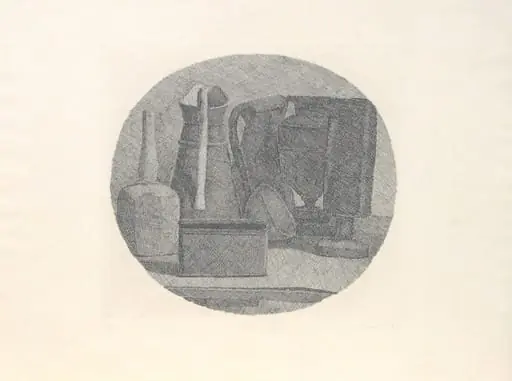
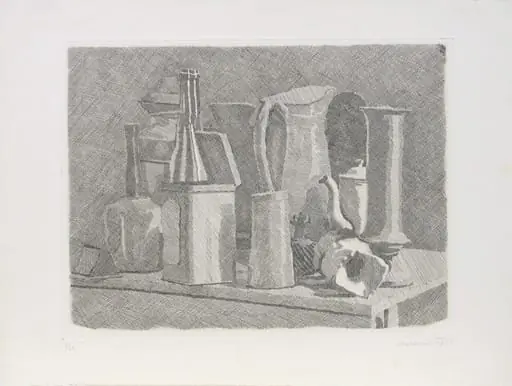
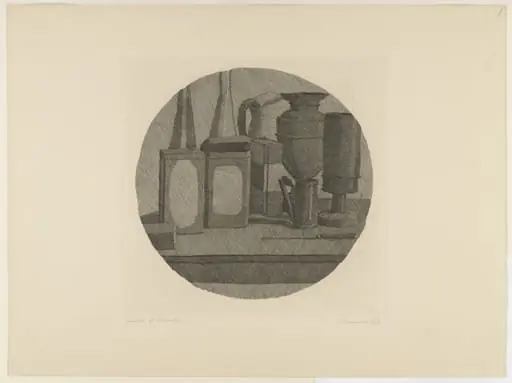
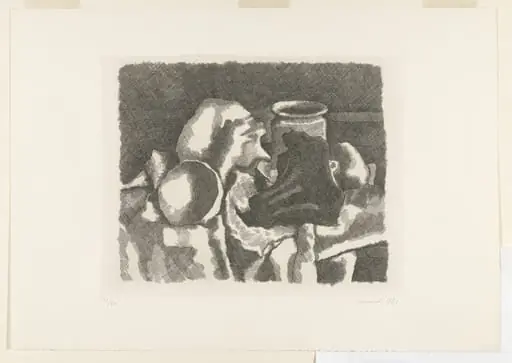
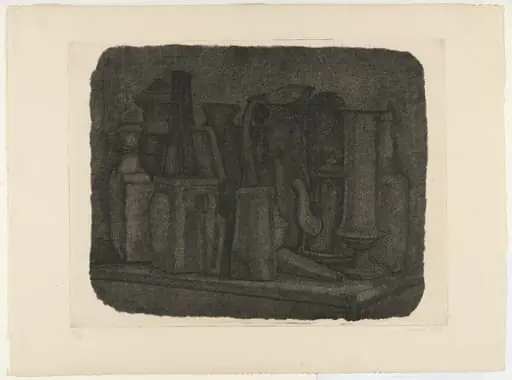
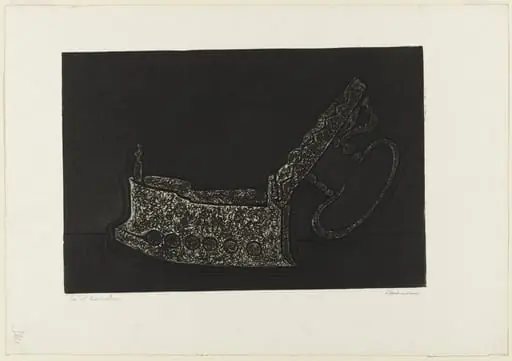
Untitled is an ink print by Giorgio Morandi. It dates from 1930 and is held in the collection of the Museum of Modern Art.
About this work
Overview
Created in 1930, this etching by Giorgio Morandi is part of a series of prints that explore still-life arrangements with minimalistic precision.
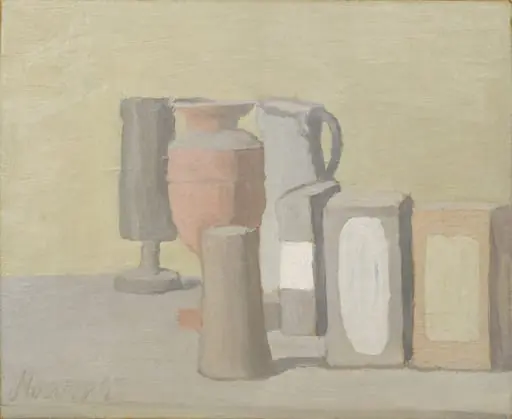
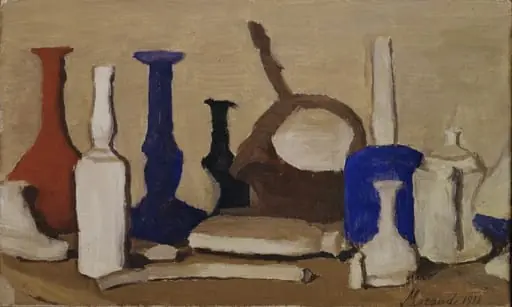
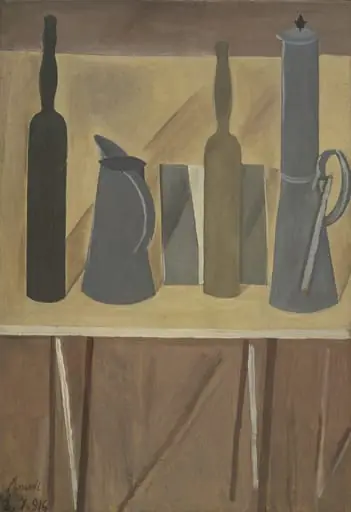
Created in 1930, this etching by Giorgio Morandi is part of a series of prints that explore still-life arrangements with minimalistic precision. Unlike his paintings, the work relies on tonal gradations rather than color to define form. The composition is sparse, featuring three ceramic objects arranged on a flat surface, rendered with careful line work and subtle shading to suggest volume and spatial relationships without embellishment.
Subject & Meaning
The objects depicted—a slender vase, a lidded vessel, and a fractured shard—are common household items, stripped of decorative or symbolic meaning. Their placement suggests a moment of quiet observation, as if captured after use. Morandi’s focus on worn, ordinary things reflects an interest in the quiet dignity of the mundane, inviting contemplation rather than narrative interpretation.
Technique & Style
Morandi employed etching to achieve a range of gray tones, from near-white to deep charcoal, using fine lines and hatching to model form. The background is uniformly dark, enhancing the sense of isolation for the objects. His lines are deliberate and restrained, avoiding flourish or drama. The result is a balance between precision and ambiguity, where edges blur slightly, suggesting atmosphere rather than sharp definition.
History & Provenance
This print was made during a period when Morandi was deeply engaged with printmaking, producing etchings alongside his paintings. It was created in Bologna, where he lived and worked for most of his life. While the specific provenance of this impression is not widely documented, it aligns with a body of work that was exhibited in Italy during the 1930s and later acquired by public collections for its quiet formal rigor.
Context
In early 20th-century Italy, Morandi’s work stood apart from the dominant movements of Futurism and Fascist-era monumentalism. His focus on stillness, repetition, and subtle variation resonated with a quieter, introspective modernism. This etching reflects his alignment with a European tradition of quiet observation, akin to the still-life practices of Chardin or Cézanne, yet uniquely distilled through his personal visual language.
Legacy
Morandi’s etchings, including this one, influenced later generations of artists drawn to minimalism and meditative composition. His ability to convey depth and presence through restraint became a touchstone for those exploring abstraction without abandon. The work remains in institutional collections as an example of how simplicity, when executed with discipline, can sustain visual and emotional resonance over time.
Artist & collection
Artist
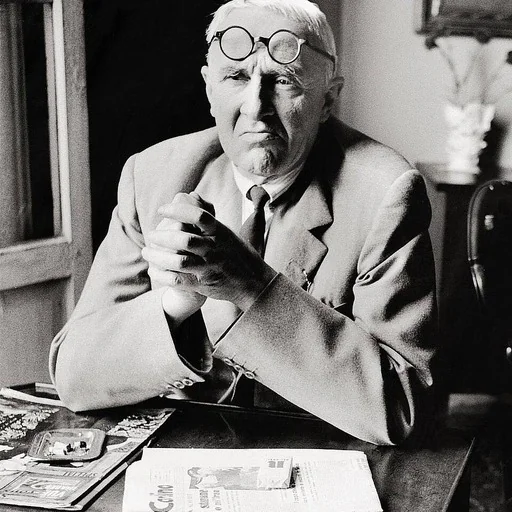
Giorgio Morandi (July 20, 1890 – June 18, 1964) was an Italian painter and printmaker widely known for his subtly muted still-life paintings of ceramic vessels, flowers, and landscapes.