Artwork
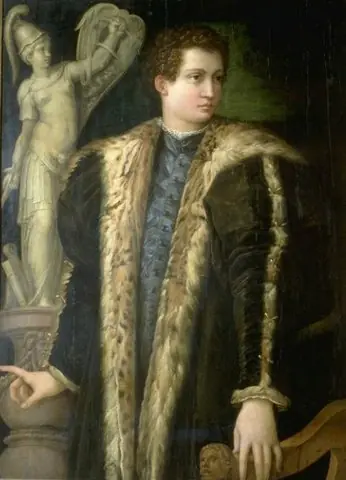
Portrait of Alessandro de' Medici
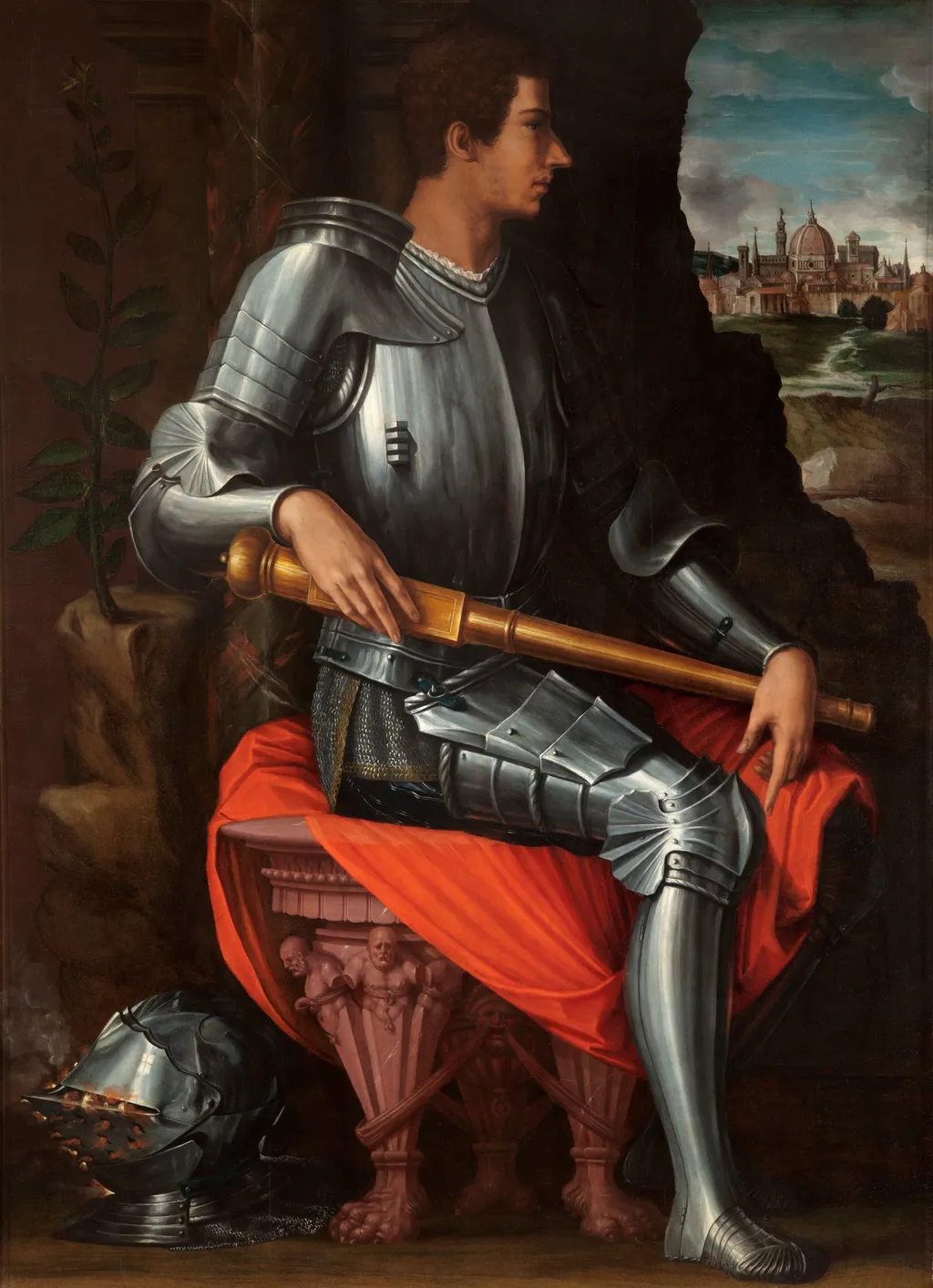
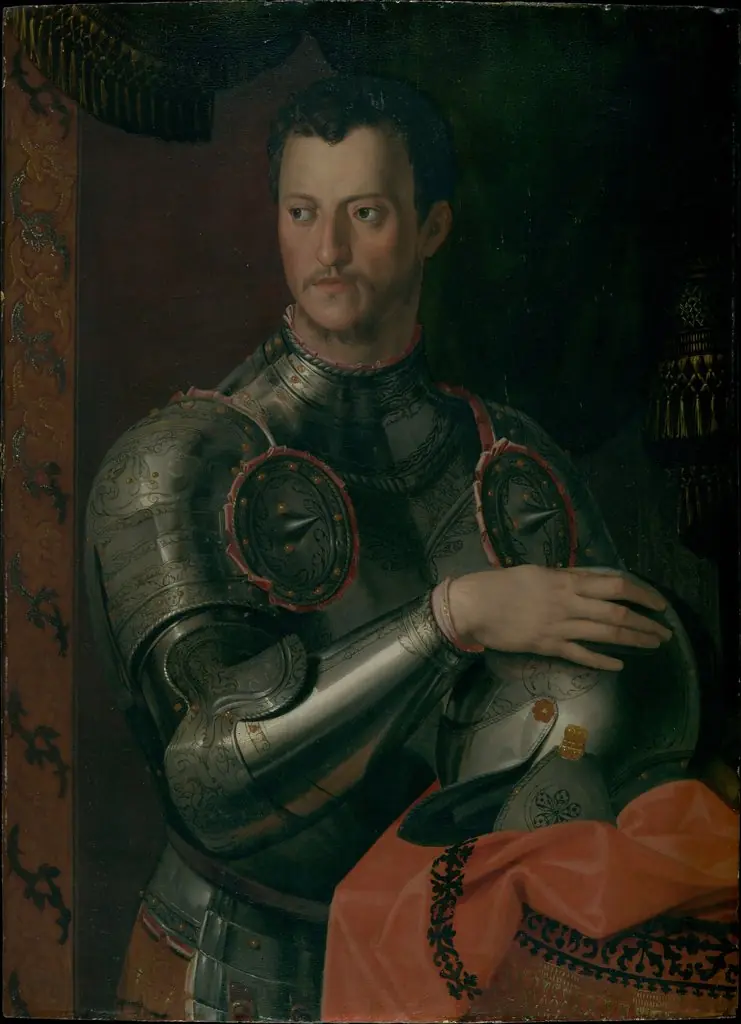
Portrait of Alessandro de' Medici is an unspecified painting by the Mannerist artist Giorgio Vasari. It dates from 1534 and is held in the collection of the Uffizi Gallery. Created in 1534, this oil portrait presents Alessandro de' Medici seated in a richly upholstered chair.
About this work
Overview
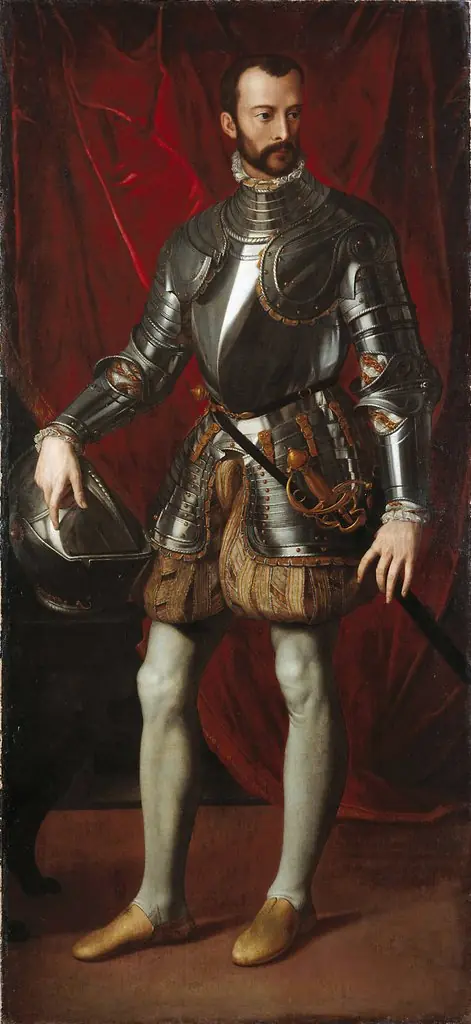
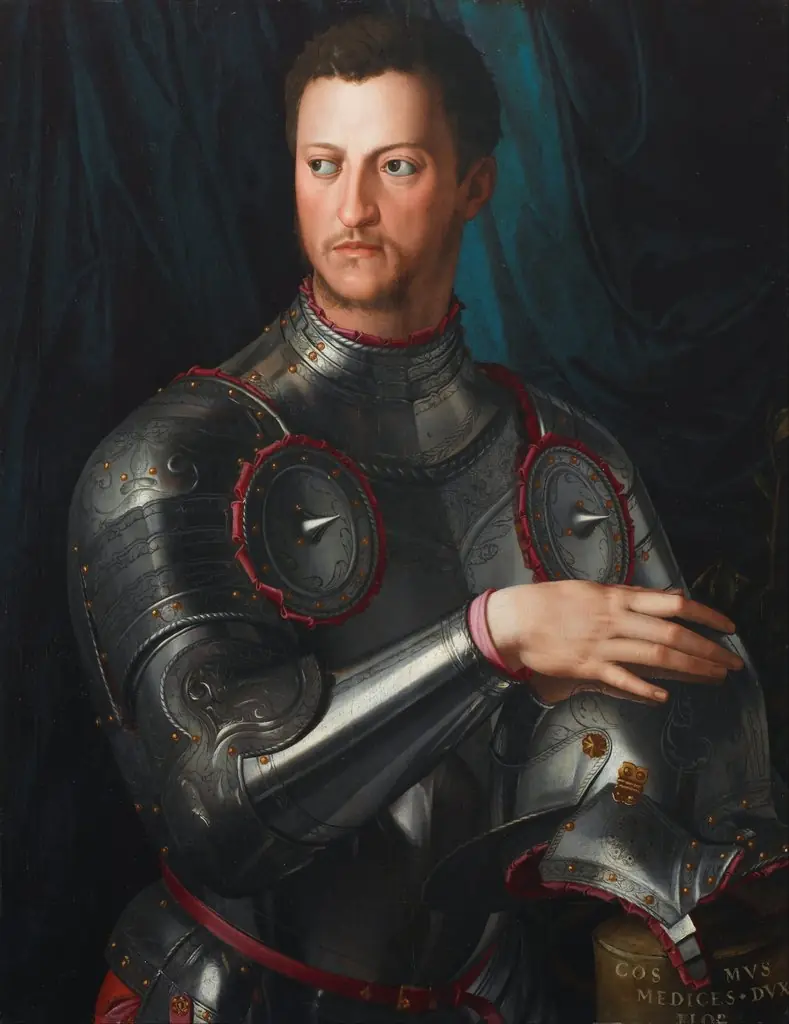
Created in 1534, this oil portrait presents Alessandro de' Medici seated in a richly upholstered chair. The figure is clad in intricately articulated silver armor and holds a gilded staff, while a muted urban landscape unfolds behind him. The work resides in the Uffizi Gallery, exemplifying the courtly portraiture of early 16th‑century Florence.
Subject & Meaning
Alessandro de' Medi, the first Duke of Florence, is depicted with the authority of a military leader, his gaze directed toward the viewer's right. The inclusion of armor, a ceremonial weapon, and a distant cityscape alludes to his political power and the Medici family's role in governing the Florentine republic.
Technique & Style
The painting displays hallmarks of the Mannerist idiom: elongated proportions, a sophisticated arrangement of decorative elements, and a contrast between the polished metal surfaces and the soft, atmospheric background. Vasari rendered the armor with meticulous brushwork, achieving a reflective sheen, while the distant architecture is rendered in a more lyrical, less detailed manner.
History & Provenance
Attributed to Giorgio Vasari, a prominent painter and architect of the Italian Renaissance, the portrait entered the Uffizi's collection as part of the Medici holdings. Its documentation aligns with Vasari's own biographical accounts of contemporary artists, confirming its creation date and original patronage by the Medici court.
Context
The work emerges at a transitional moment when Florentine portraiture began to emphasize individual status through elaborate costume and symbolic objects.
The work emerges at a transitional moment when Florentine portraiture began to emphasize individual status through elaborate costume and symbolic objects. Vasari, also known for his seminal art historical treatise, employed the portrait to showcase both his technical skill and the cultural prestige of his patron, reflecting broader trends in courtly representation during the early Mannerist period.
Own this work as a print
Artist & collection
Artist
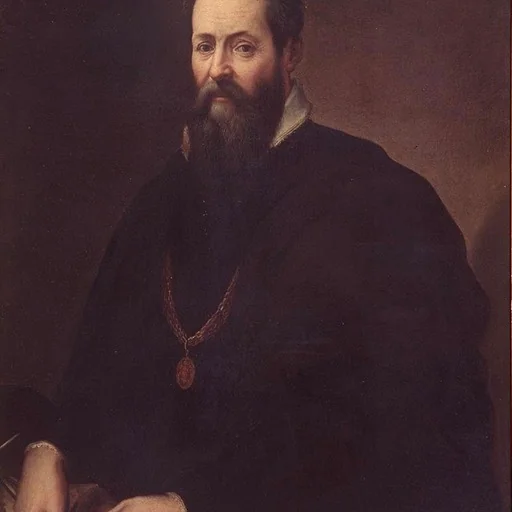
Giorgio Vasari (30 July 1511 – 27 June 1574) was an Italian Renaissance painter, architect, art historian, and biographer known for his work Lives of the Most Excellent Painters, Sculptors, and Architects, considered…