Artwork
Giustiniani Portrait
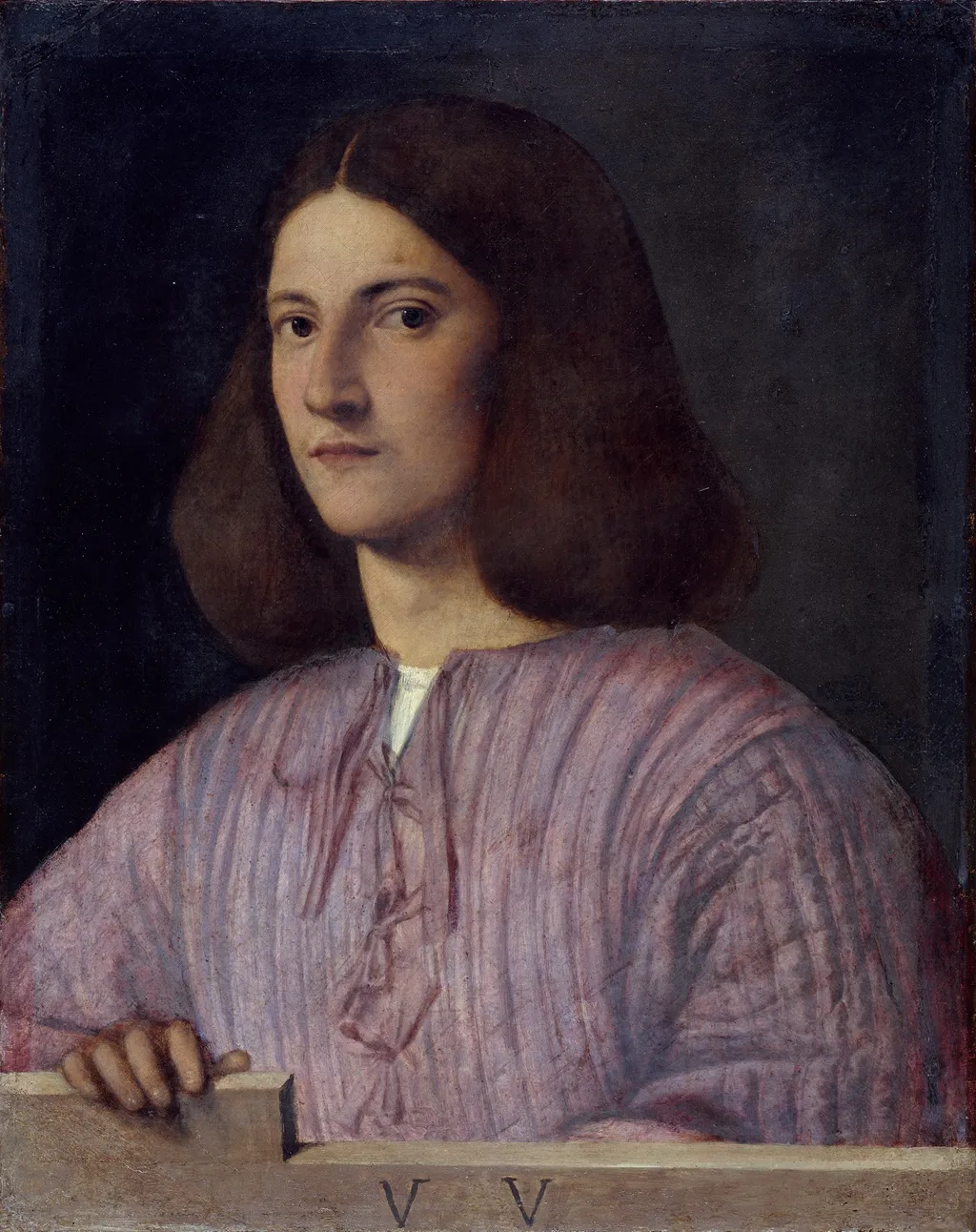
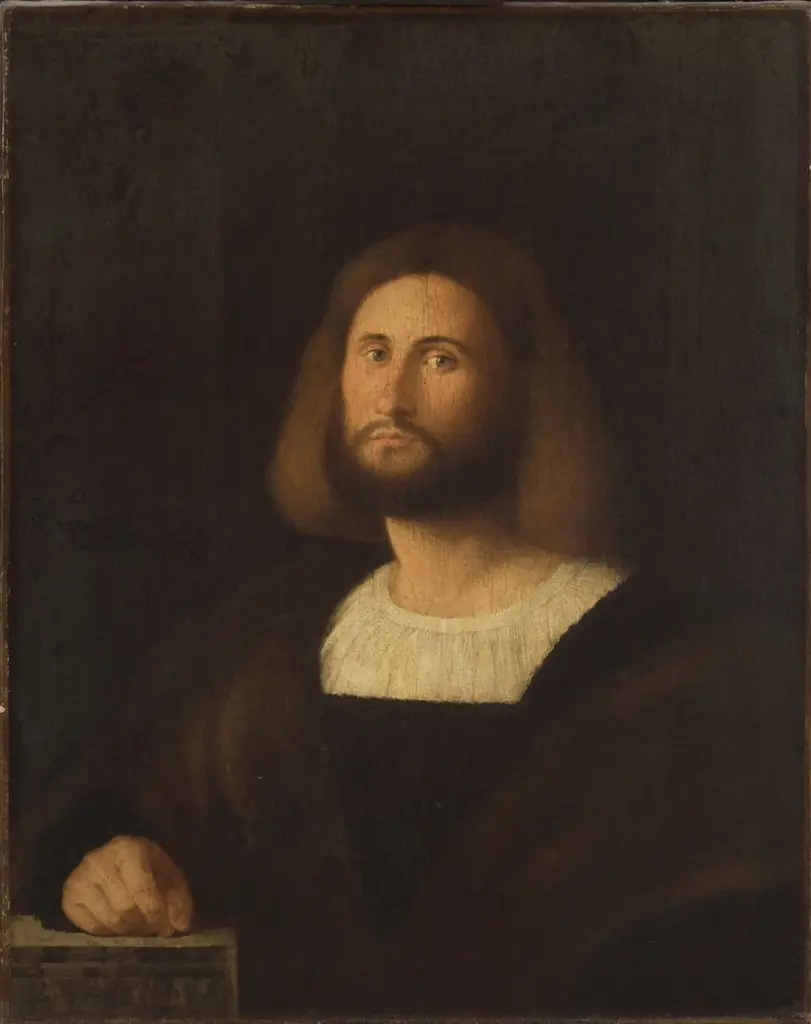
Giustiniani Portrait is a paint painting by the High Renaissance artist Giorgione. It dates from 1503 and is held in the collection of the Gemäldegalerie Berlin.
About this work
Giorgione made this portrait around 1505, and it’s known for how he plays with light and shadow.
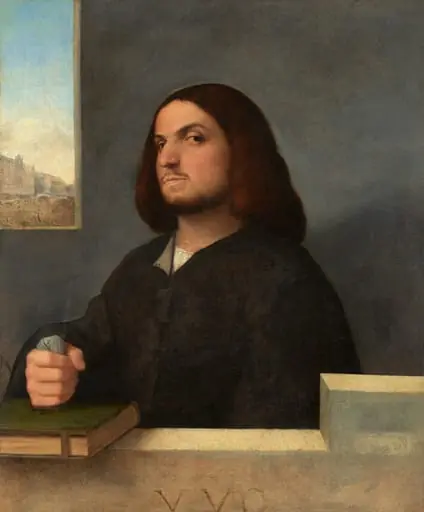
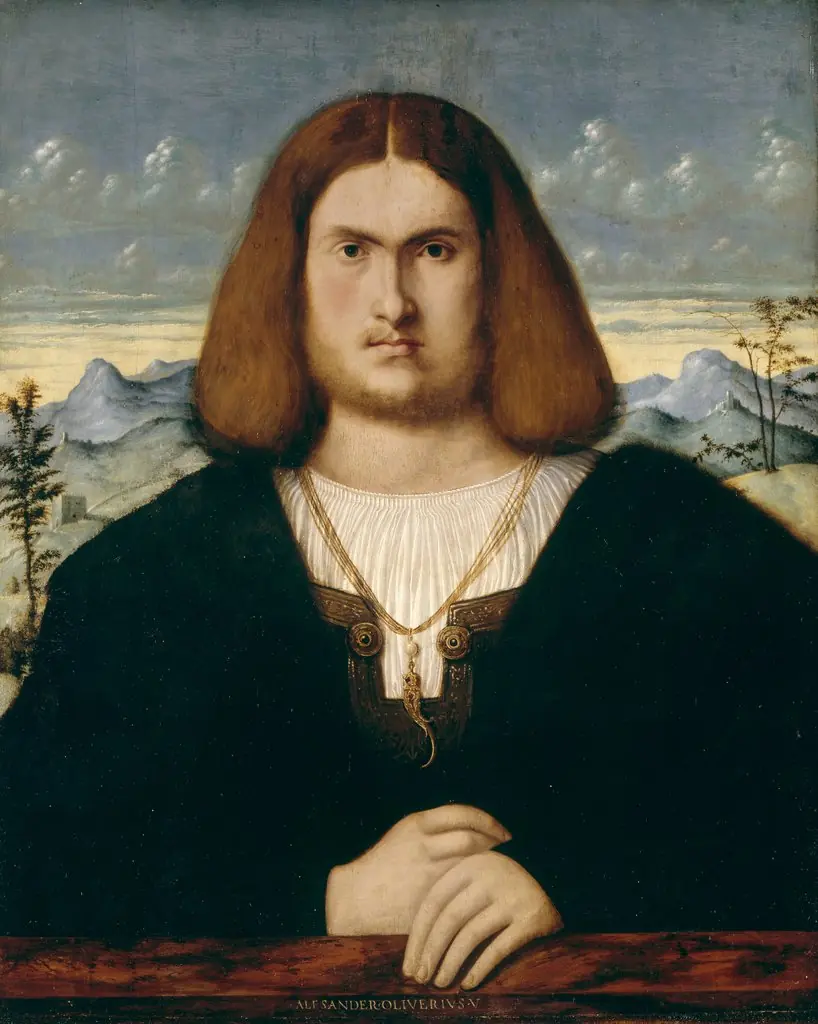
This painting shows a young man with dark hair and a serious look. He’s wearing a loose, purple-brown shirt with a white collar peeking out. His hand rests on a ledge, and the background is plain and dark.
The letters "V V" are painted on the ledge in front of him. Giorgione made this portrait around 1505, and it’s known for how he plays with light and shadow.
Next, look up chiaroscuro to see how artists use light and dark to create depth.
Overview
The Giustiniani Portrait, circa 1503, is a painting of disputed attribution, often linked to Giorgione. It depicts a somber young man with dark hair, clad in a loose, purple-brown shirt with a visible white collar, his hand resting on a ledge bearing the inscription 'V V' against a dark, plain background.
Subject & Meaning
The subject, a young man with a serious demeanor, remains unidentified. The 'V V' on the ledge may hint at the sitter's identity or serve as a symbolic element, though its meaning is unclear.
Technique & Style
The painting showcases a pronounced use of chiaroscuro, where the interplay of light and dark creates depth and volume, characteristic of Giorgione's style if attributed correctly.
History & Provenance
Originally part of the Giustiniani Collection in Padua until 1884, the portrait was later owned by Jean Paul Richter (1884-1891) before being acquired by Wilhelm von Bode, leading to its inclusion in the Berlin State Museums.
Context
Created around the turn of the 16th century, the portrait reflects the early Renaissance's emphasis on individualism and the emerging techniques in lighting that defined the period's artistic innovation.
Legacy
Despite the attribution debate, the Giustiniani Portrait remains a significant work for its exemplary use of chiaroscuro, influencing the development of portrait painting in the Renaissance.
Own this work as a print
Artist & collection