Artwork
Portrait of a Man
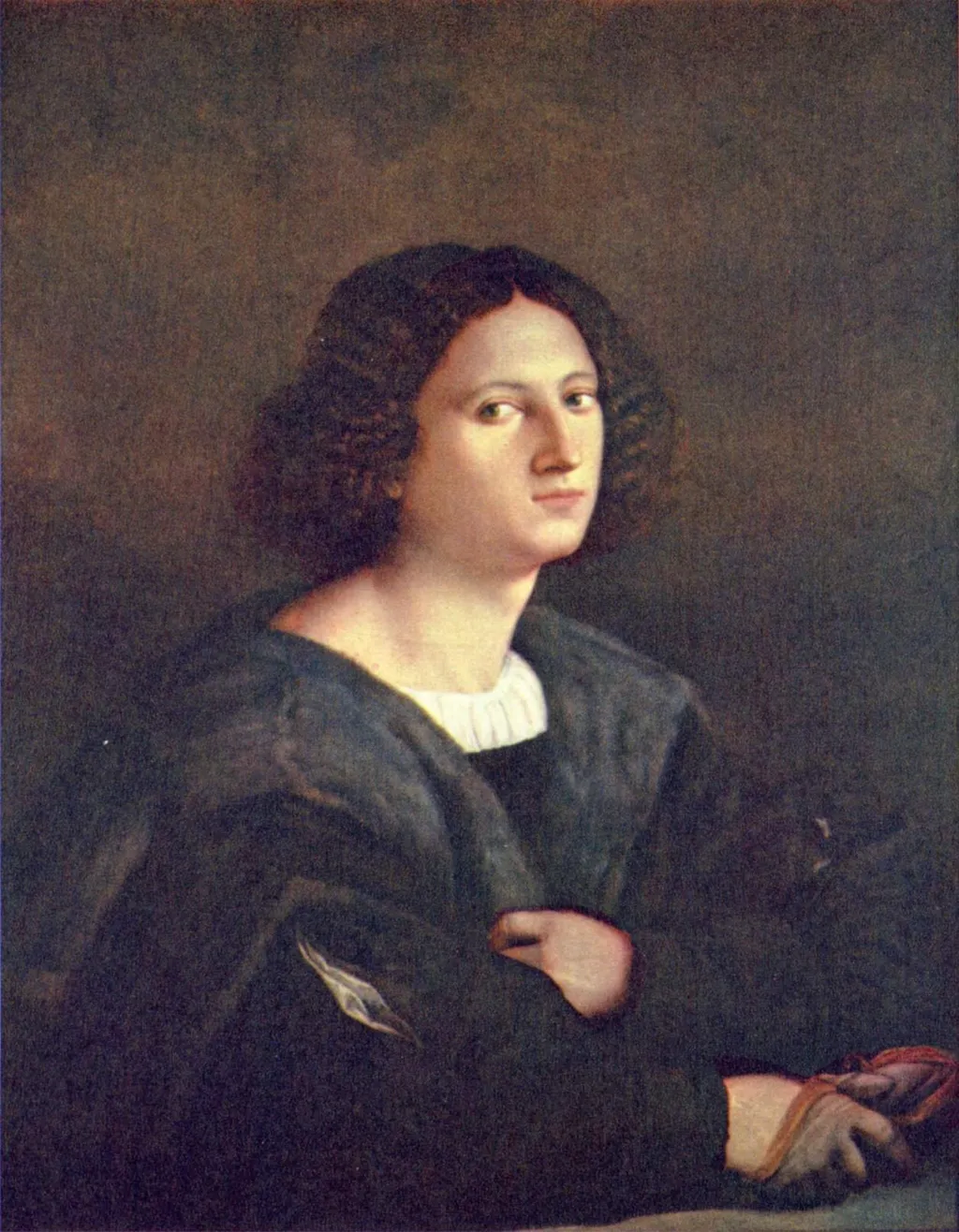
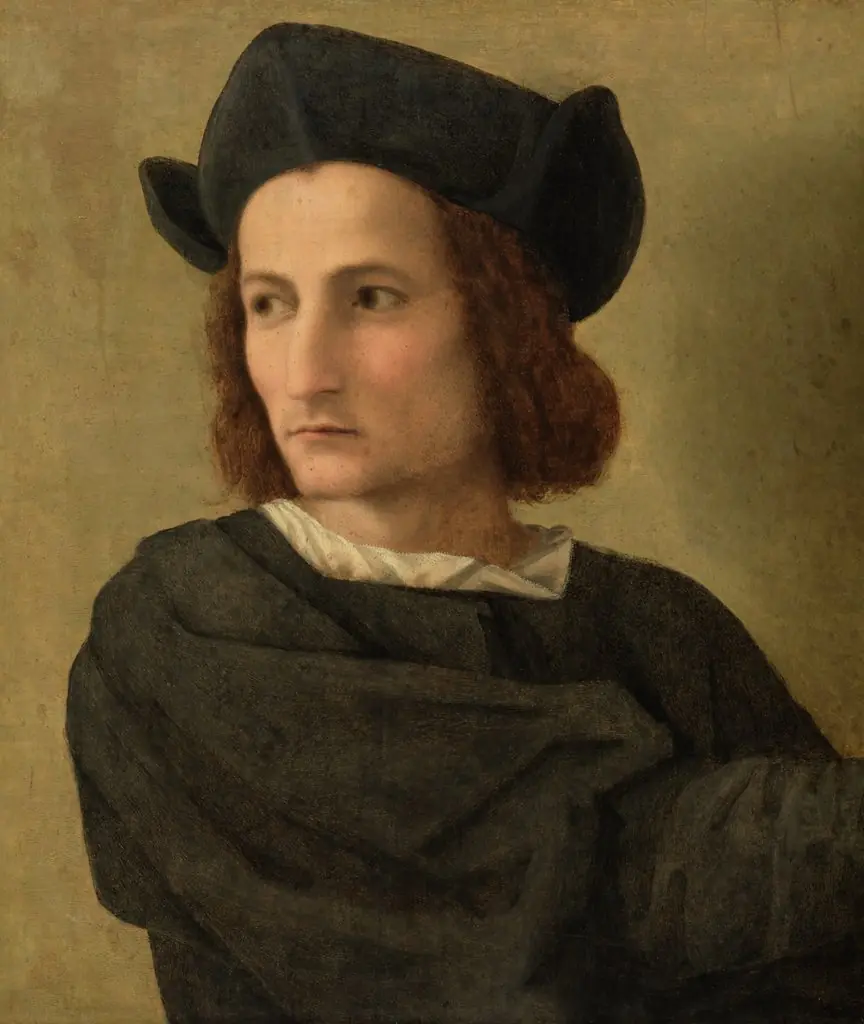
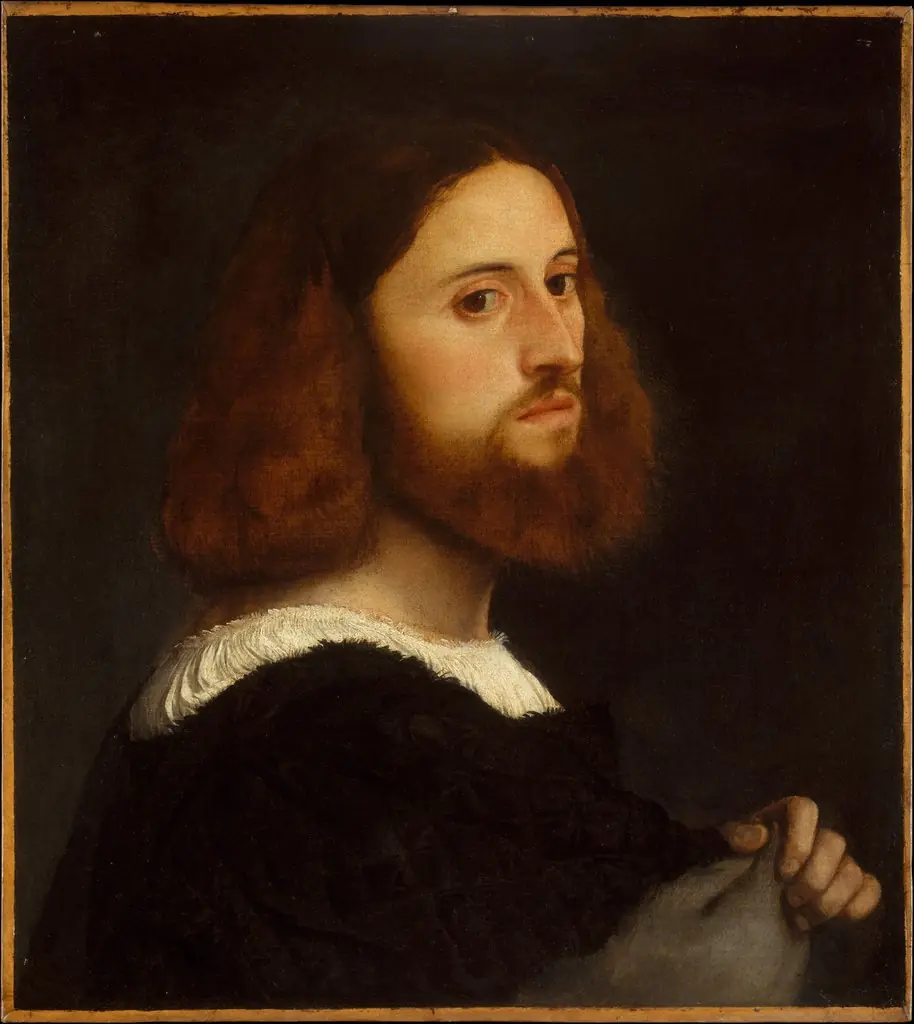
Portrait of a Man is an oil painting by the High Renaissance artist Palma Vecchio. It dates from 1510 and is held in the collection of the Hermitage Museum.
About this work
Overview
Created in 1510 by Jacopo Palma, known as Palma Vecchio, *Portrait of a Man* is an oil painting exemplifying the Italian High Renaissance style. It is part of the State Hermitage Museum's collection.
Subject & Meaning
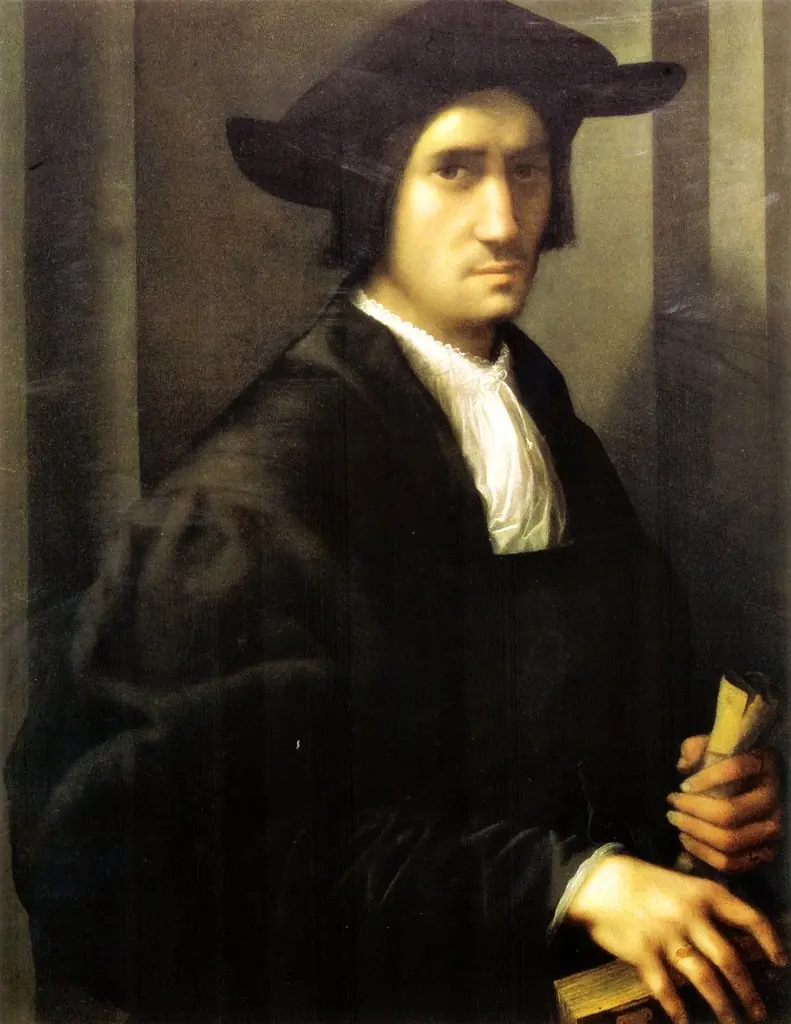
The subject, a serene man with dark, wavy hair, is depicted in a contemplative pose, with his left hand on his chest and a small, folded item (possibly cloth or paper) in his right. The simplicity of his attire, highlighted by a white collar, contrasts with the depth of his portrayed character.
Technique & Style
The painting showcases Palma Vecchio's mastery of chiaroscuro, employing soft, nuanced light and shadow to achieve a smooth, luminous skin texture. The plain, dark background further emphasizes the subject's facial expression.
History & Provenance
Executed in 1510, the work is attributed to Palma Vecchio's Venetian High Renaissance period. Originally created by Jacopo Palma (c. 1480–1528), it is now held in the State Hermitage Museum's collection.
Context
As a product of the Italian High Renaissance, *Portrait of a Man* reflects the era's emphasis on individualism and psychological depth in portraiture, characteristic of Venetian painting's blend of elegance and realism.
Legacy
While specific impacts of *Portrait of a Man* on subsequent art movements are not broadly documented, it contributes to the broader legacy of Palma Vecchio's influence on Venetian Renaissance portraiture, valued for its expressive and technical qualities.
Own this work as a print
Artist & collection
Artist
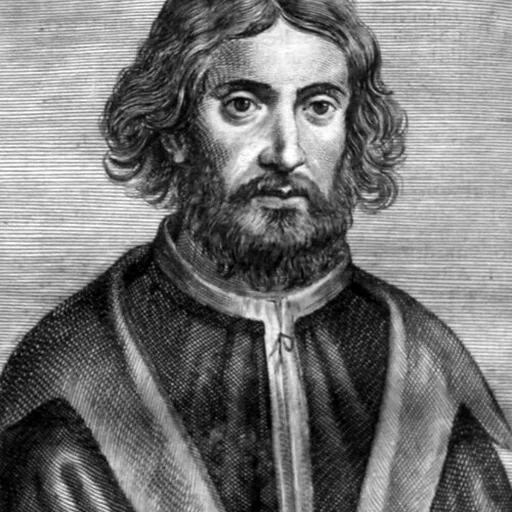
Palma Vecchio (c. 1480 – 30 July 1528), born Jacopo Palma, also known as Jacopo Negretti, was a Venetian painter of the Italian High Renaissance. He is called Palma Vecchio in English and Palma il Vecchio in Italian…