Artwork
The Prisons: A Perspective of Roman Arches, with Two Lions Carved in Relief on Stone Slabs in the Foreground
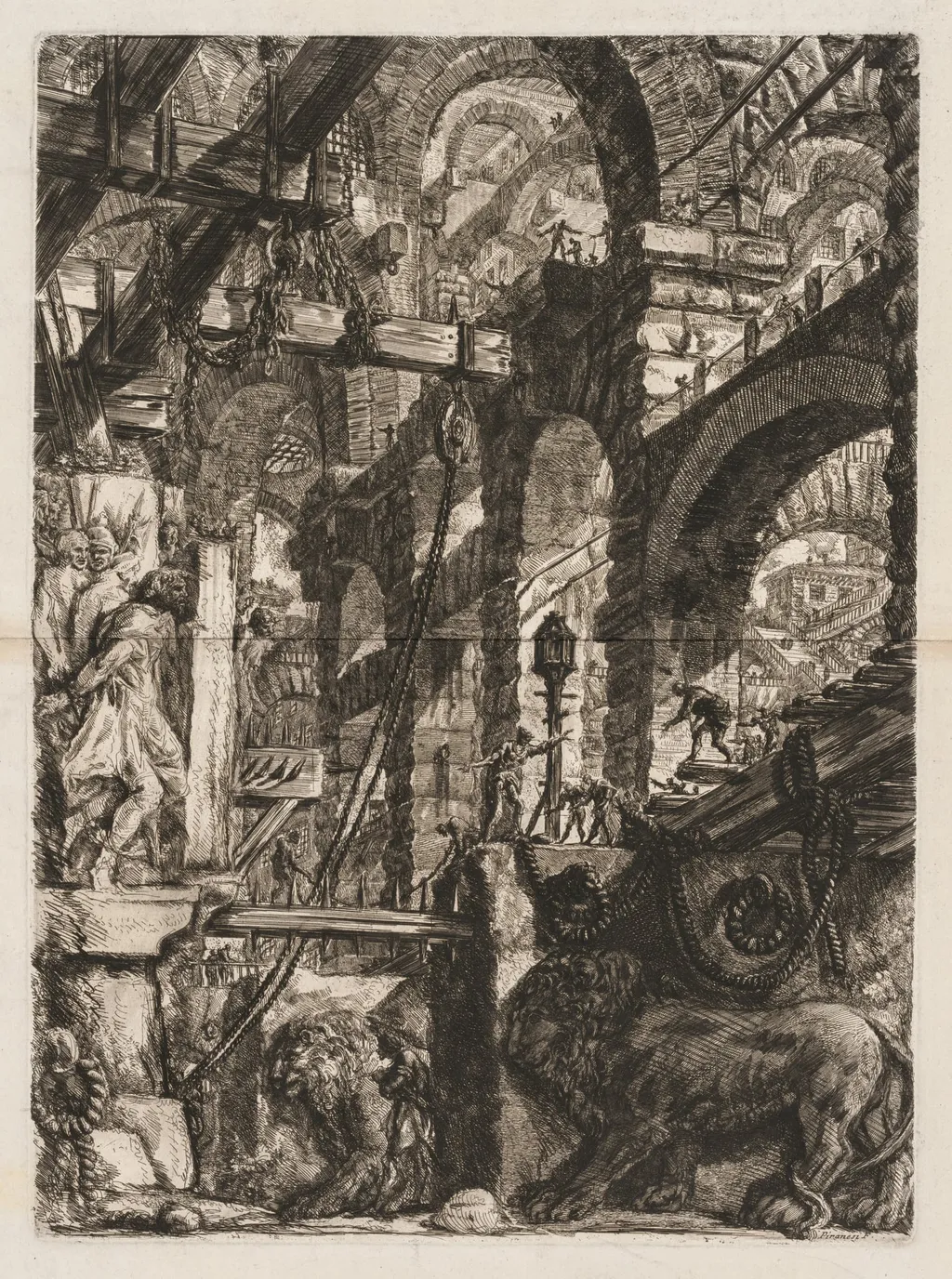
The Prisons: A Perspective of Roman Arches, with Two Lions Carved in Relief on Stone Slabs in the Foreground is a print by the Baroque artist Giovanni Battista Piranesi. It dates from 1748 and is held in the collection of the Cleveland Museum of Art.
About this work
Overview
This print, dated 1748, is part of Giovanni Battista Piranesi’s series known as Le Carceri, or The Prisons.
This print, dated 1748, is part of Giovanni Battista Piranesi’s series known as Le Carceri, or The Prisons. It depicts an imagined architectural space dominated by towering Roman-style arches receding into shadow. The foreground features two stone lions carved in relief, their forms anchored in the composition. Executed in etching, the work blends real architectural elements with fantastical spatial extensions, characteristic of Piranesi’s inventive approach to antiquity.
Subject & Meaning
The scene presents a labyrinthine interior that evokes both grandeur and confinement. The monumental arches suggest the scale of ancient Roman engineering, while the enclosed, oppressive atmosphere hints at psychological weight. The lions, symbols of power and guardianship in classical tradition, appear as silent sentinels, reinforcing the theme of enduring authority amid decay. The space is not a documented site but a mental landscape, reflecting Enlightenment-era fascination with ruins and the sublime.
Technique & Style
Piranesi employed etching with meticulous line work to render intricate architectural details and deep shadows. Chiaroscuro is used not for naturalism but to amplify spatial depth and emotional tension. The contrast between light-lit stone surfaces and ink-dark recesses creates a sense of overwhelming volume. Fine hatching and cross-contour lines define textures of weathered masonry, while the lions’ relief carving is suggested through subtle tonal shifts rather than physical projection.
History & Provenance
Created in 1748, this print belongs to Piranesi’s early experiments in architectural fantasy, preceding the full Le Carceri series published in 1761. It entered The Cleveland Museum of Art’s collection through documented acquisitions in the 20th century, likely sourced from European print dealers. Its survival in good condition reflects its status as a sought-after example of 18th-century Italian printmaking, valued for its technical precision and imaginative scope.
Context
Piranesi worked during a period of renewed interest in Roman antiquity, fueled by archaeological discoveries and Grand Tour travel. While many artists documented real ruins, Piranesi reimagined them as psychological spaces. His prints responded to contemporary debates about the sublime in art and the moral weight of empire. The Prisons series, though fictional, resonated with thinkers who saw in ancient architecture a mirror for human ambition and its inevitable collapse.
Legacy
Piranesi’s imaginative reconstructions influenced Romantic and Gothic architecture, as well as later visual artists like Escher and filmmakers drawn to surreal interiors. The Prisons series became a touchstone for interpretations of alienation and institutional power. Though not widely exhibited in his lifetime, the print’s technical mastery and haunting atmosphere secured its place in the canon of printmaking, inspiring generations to reconsider the emotional potential of architectural form.
Artist & collection

Artist
Giovanni Battista (or Giambattista) Piranesi (Italian pronunciation: ; also known as simply Piranesi; 4 October 1720 – 9 November 1778) was an Italian classical archaeologist, architect, and artist, famous for his…

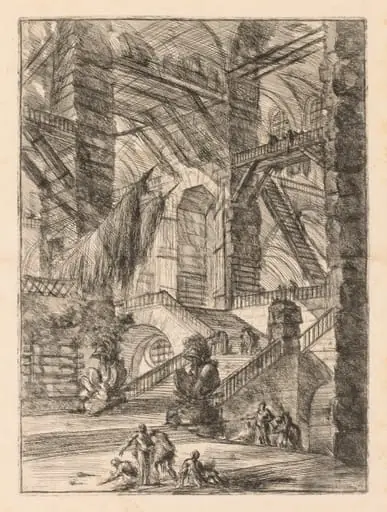 The Prisons: A Vast Interior with Trophies
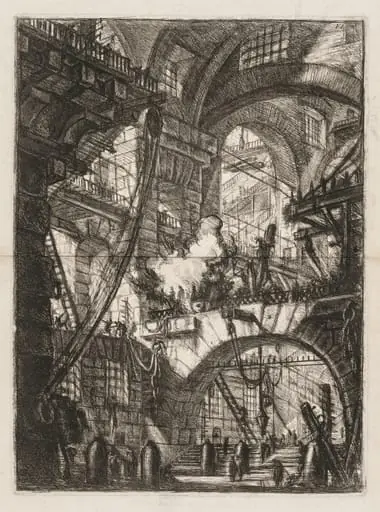 The Prisons: A Perspective of Arches with a Smoking Fire in the Center
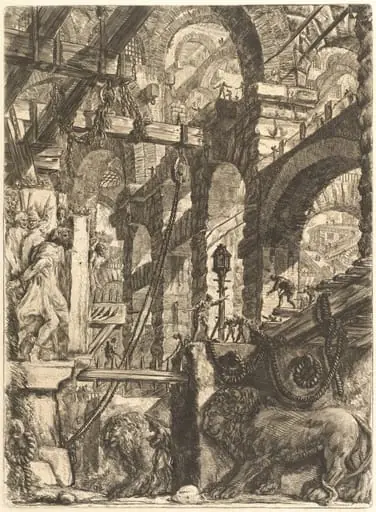 The Lion Bas-Reliefs
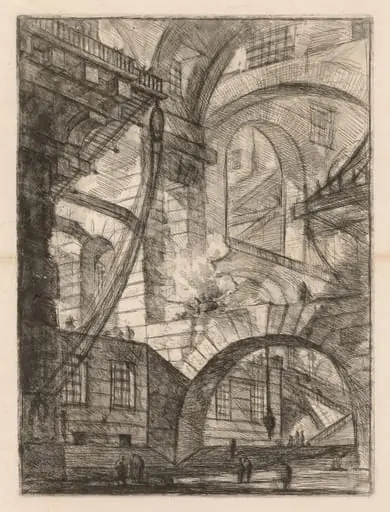 The Prisons: A Perspective of Arches with a Smoking Fire
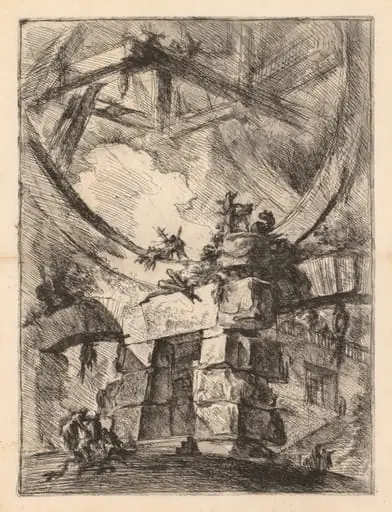 The Prisons: A Prison Door
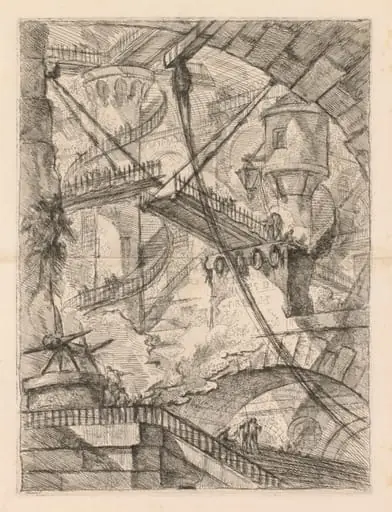 The Prisons: An Immense Interior with a Drawbridge
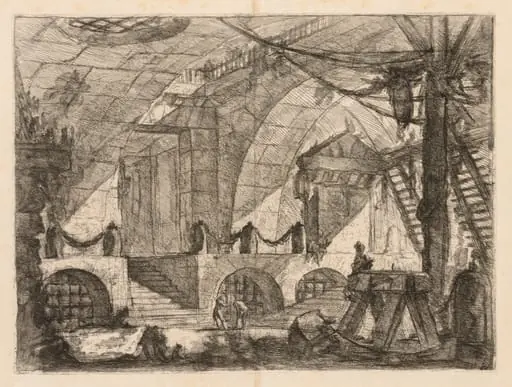 The Prisons: An Arched Chamber with Posts and Chains
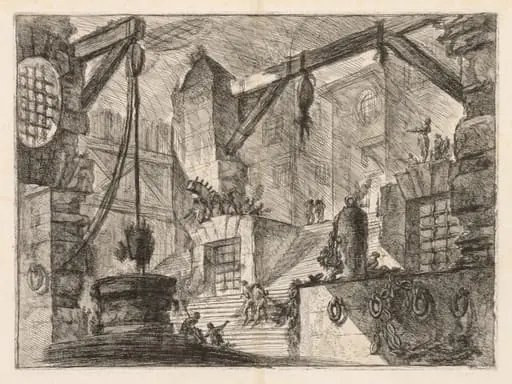 The Prisons: Colonnaded Interior with a Broad Stair
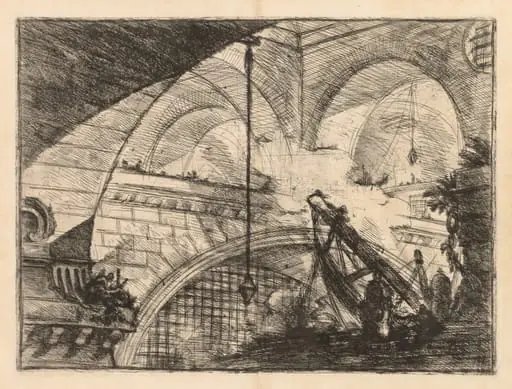 The Prisons: A Series of Galleries with Crane-Like Erection of Beams
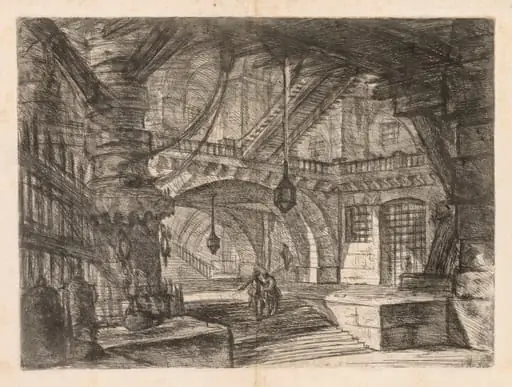 The Prisons: A Wide Hall with Lanterns
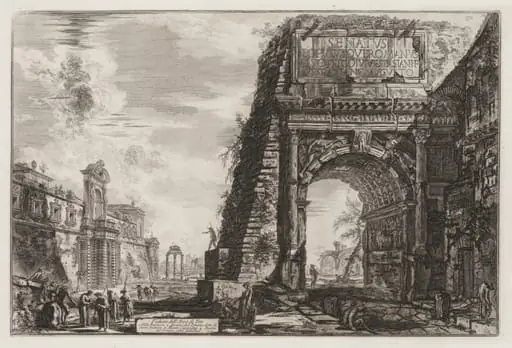 Views of Rome: The Arch or Titus