Artwork
The Prisons: A Perspective of Arches with a Smoking Fire
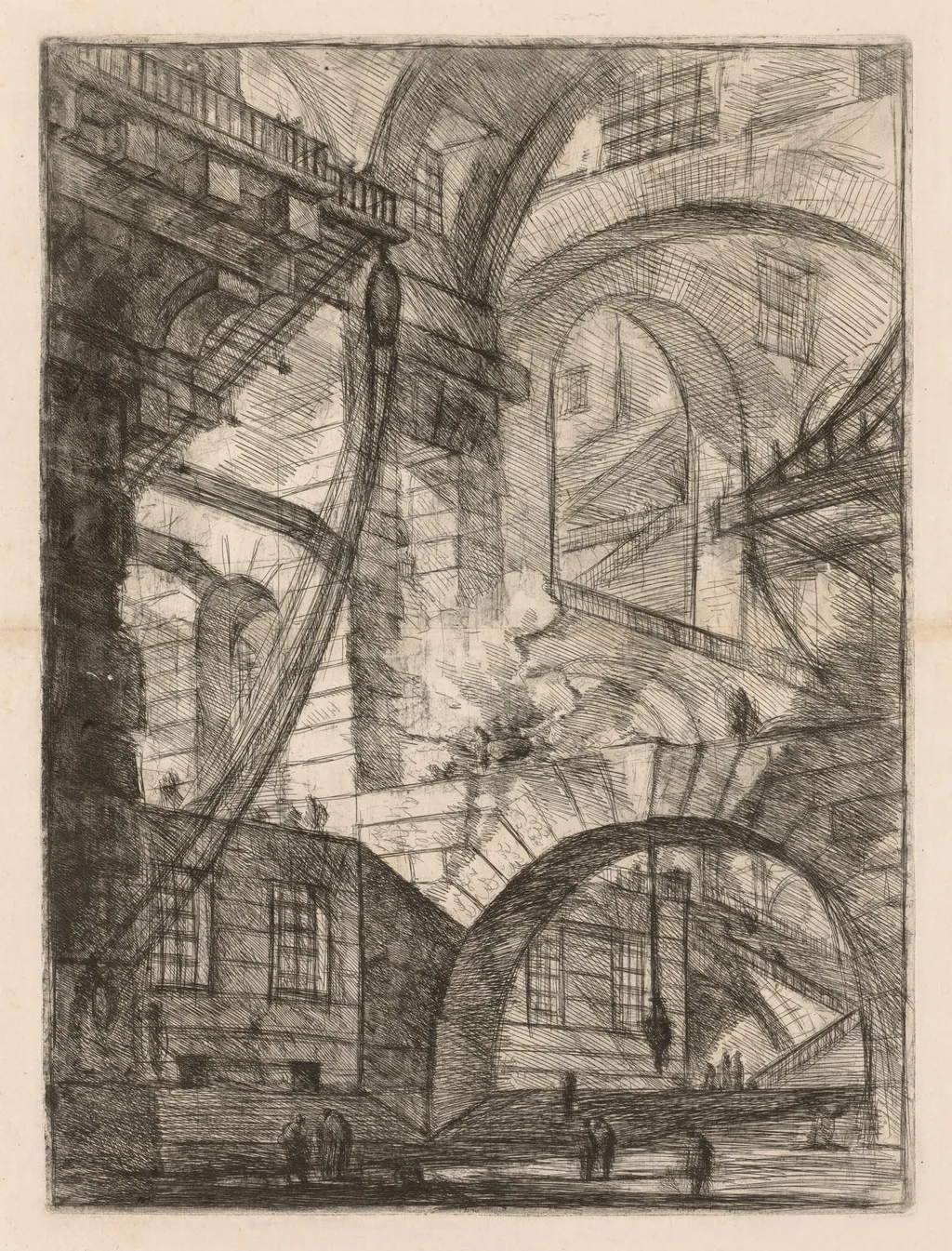
The Prisons: A Perspective of Arches with a Smoking Fire is a print by the Baroque artist Giovanni Battista Piranesi. It dates from 1748 and is held in the collection of the Cleveland Museum of Art.
About this work
Overview
It depicts an imagined architectural space of immense scale, dominated by towering arches, winding staircases, and labyrinthine passageways.
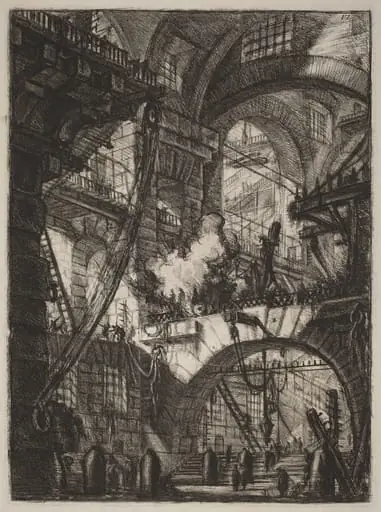
Created in 1748 by Giovanni Battista Piranesi, this print is part of his series known as Le Carceri d’Invenzione. It depicts an imagined architectural space of immense scale, dominated by towering arches, winding staircases, and labyrinthine passageways. The scene is suffused with smoke rising from a central fire, enhancing the atmosphere of unease and mystery. Executed in etching and engraving, the work showcases Piranesi’s mastery of linear precision and tonal contrast.
Subject & Meaning
The scene is not a real location but a fantastical construction, blending elements of Roman engineering with surreal, oppressive grandeur. The smoking fire suggests destruction or ritual, while the endless corridors imply entrapment and psychological disorientation. Piranesi evokes a sense of sublime dread, where human presence is absent yet implied through the scale and complexity of the architecture.
Technique & Style
Piranesi employed etching and engraving to achieve intricate detail, using fine lines and dense hatching to model stone surfaces and deep shadows. The dramatic interplay of light and dark heightens spatial depth and emotional tension. Smoke is rendered with loose, swirling strokes, contrasting with the rigid geometry of the arches and stairs, reinforcing the tension between order and chaos.
History & Provenance
The print was produced during Piranesi’s early years in Rome, when he was developing his reputation through architectural fantasies. It was later included in the expanded 1761 edition of Le Carceri. The Cleveland Museum of Art acquired the work as part of its collection of European prints, where it remains a key example of 18th-century printmaking.
Context
Piranesi’s Prisons emerged amid Enlightenment fascination with ruins and the sublime, yet diverged from archaeological accuracy to explore psychological space. Unlike contemporaries who documented real antiquities, he invented spaces that evoked awe and unease, anticipating Romanticism’s interest in emotion and the irrational. His work influenced later architects and artists drawn to the uncanny potential of architecture.
Legacy
Le Carceri d’Invenzione became a touchstone for 19th-century artists and writers exploring alienation and the subconscious. The prints’ haunting, labyrinthine spaces resonated with Gothic literature and surrealism. Though not widely known in his lifetime beyond architectural circles, Piranesi’s imaginary prisons have since become emblematic of the power of print to conjure psychological landscapes.
Artist & collection
Artist
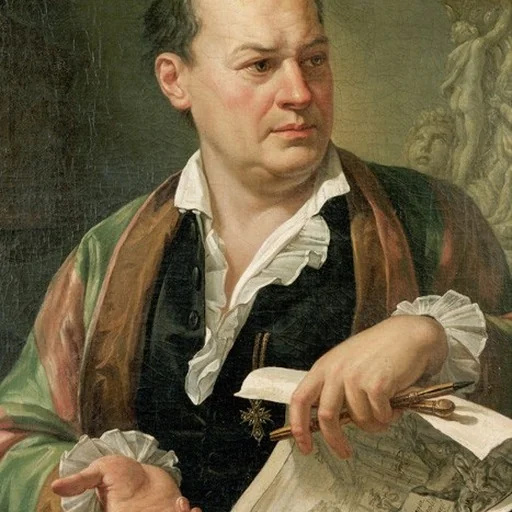
Giovanni Battista (or Giambattista) Piranesi (Italian pronunciation: ; also known as simply Piranesi; 4 October 1720 – 9 November 1778) was an Italian classical archaeologist, architect, and artist, famous for his…

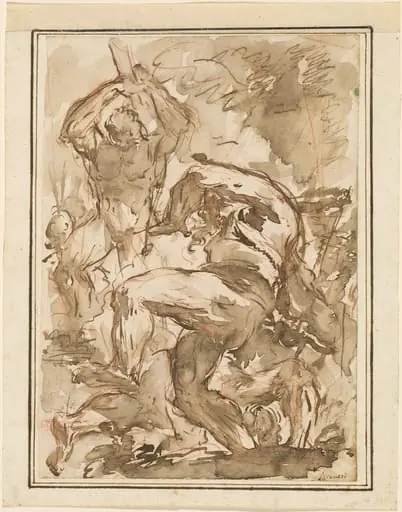
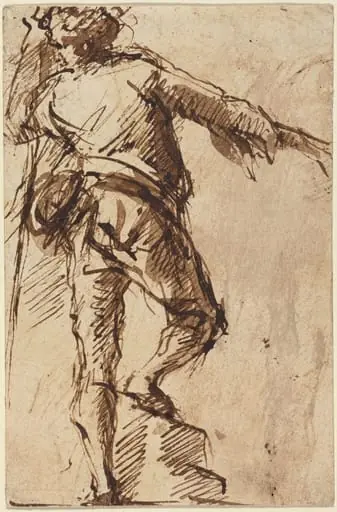
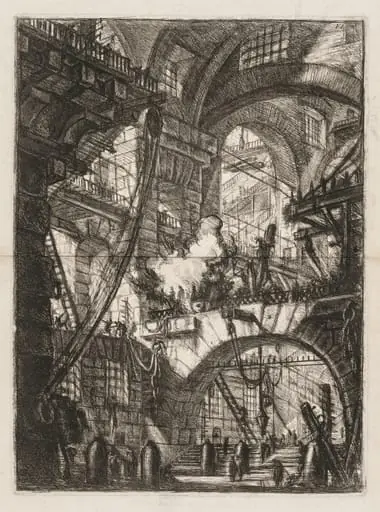 The Prisons: A Perspective of Arches with a Smoking Fire in the Center
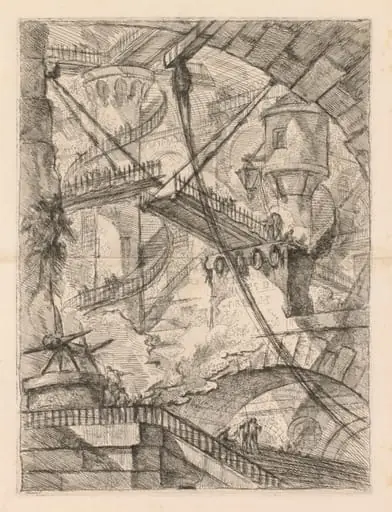 The Prisons: An Immense Interior with a Drawbridge
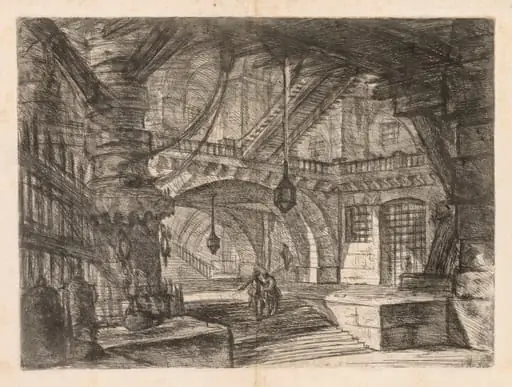 The Prisons: A Wide Hall with Lanterns
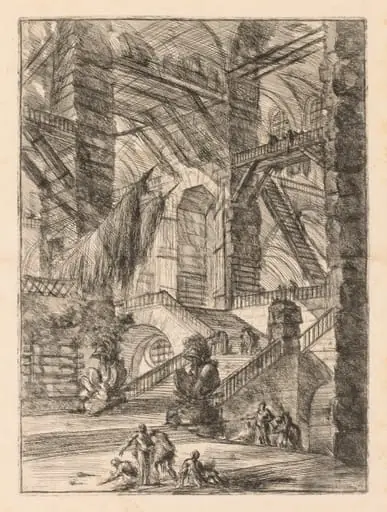 The Prisons: A Vast Interior with Trophies
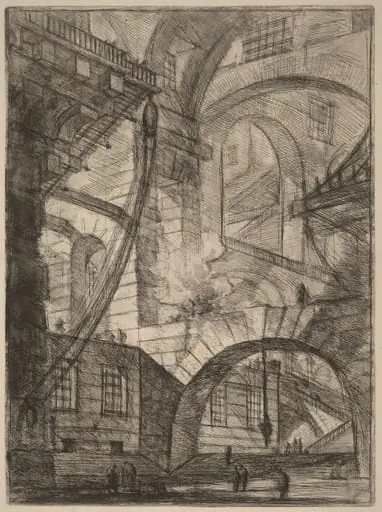 The Smoking Fire
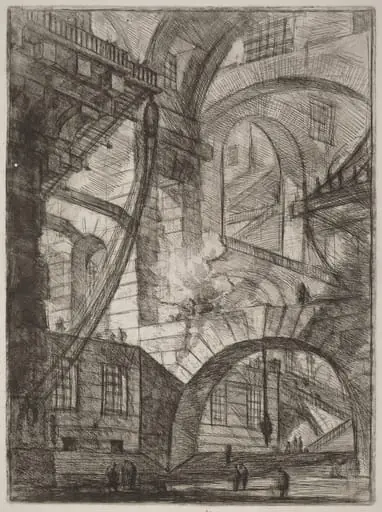 The Smoking Fire
 An Imaginary Prison
 The Prisons: A Lofty Arch with a Frieze
 The Prisons: An Arched Chamber with Posts and Chains
 The Prisons: A Perspective of Colonnades with Zig-Zag Staircase
 The Prisons: A Series of Galleries with Crane-Like Erection of Beams
 The Smoking Fire