Artwork
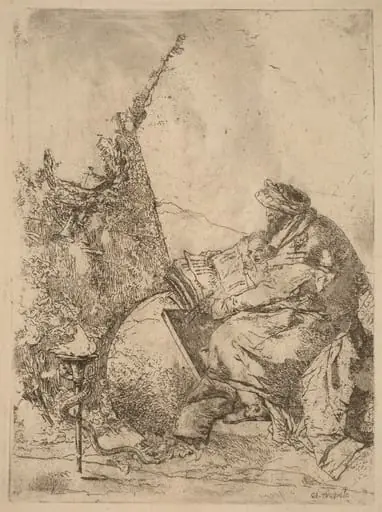
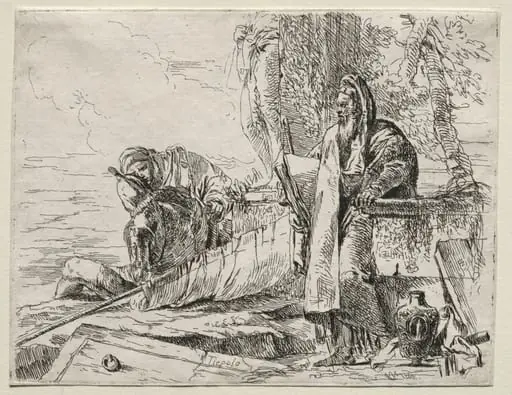
Scherzi di Fantasia: The Philosopher
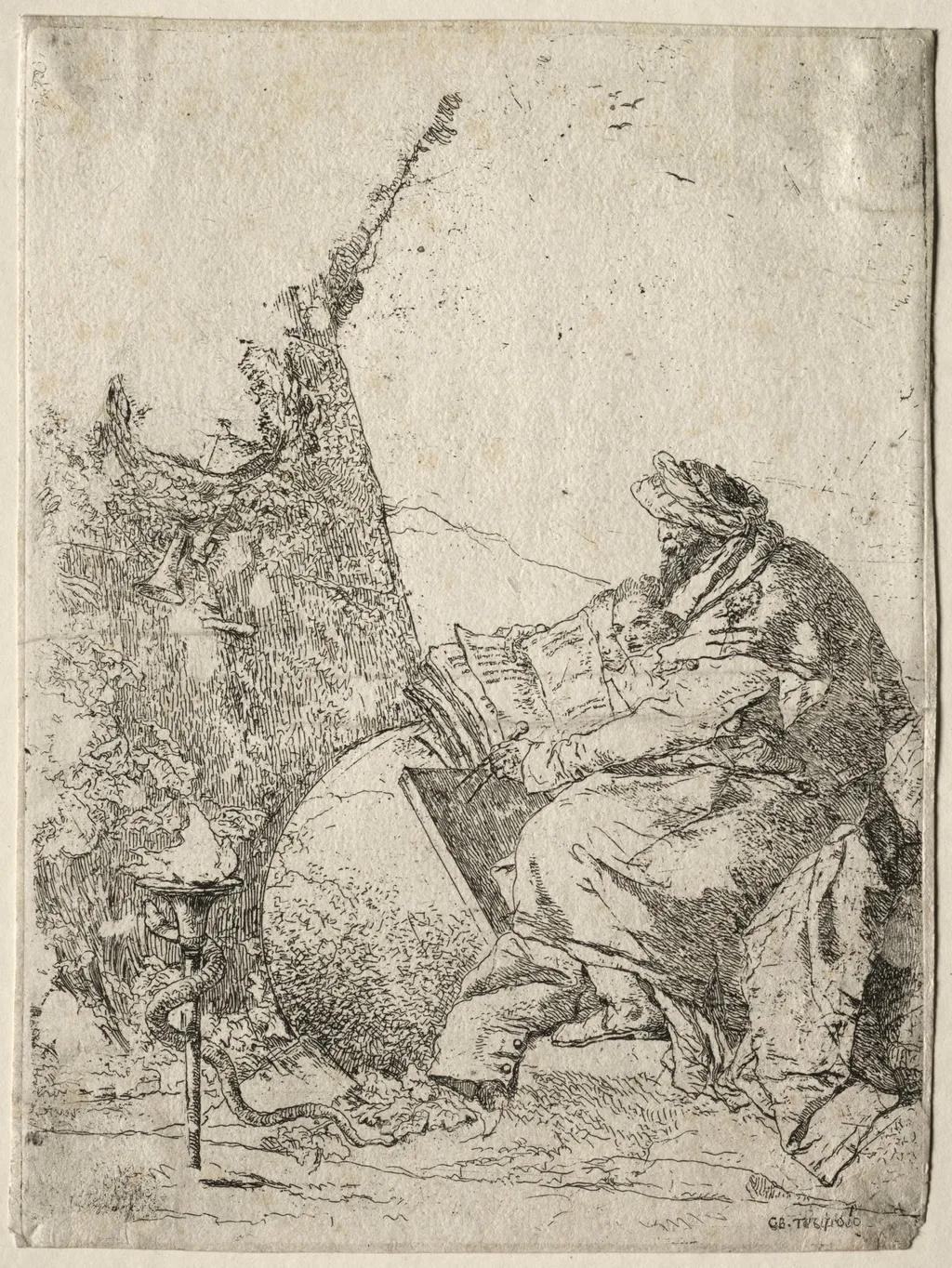
Scherzi di Fantasia: The Philosopher is a print by the Baroque artist Giovanni Battista Tiepolo. It dates from 1755 and is held in the collection of the Cleveland Museum of Art.
About this work
Overview
It belongs to a series of imaginative figural studies known as Scherzi di Fantasia, which explore character types rather than narrative scenes.
Scherzi di Fantasia: The Philosopher is a print by Giovanni Battista Tiepolo, dated to around 1755. It belongs to a series of imaginative figural studies known as Scherzi di Fantasia, which explore character types rather than narrative scenes. The work is part of the collection at The Cleveland Museum of Art, where it is preserved as an example of Tiepolo’s graphic experimentation during his later career.
Subject & Meaning
The figure depicts a contemplative scholar seated at a cluttered desk, immersed in quiet reflection. His attire, reminiscent of earlier centuries, suggests an idealized intellectual rather than a specific historical person. The accumulation of books and scattered papers implies sustained study, evoking the solitary nature of philosophical inquiry. The calm expression and subdued posture convey introspection rather than action, emphasizing the inner life of the mind.
Technique & Style
Tiepolo employed pen and ink with wash to create subtle tonal variations, using chiaroscuro to model form and suggest depth. The lines are fluid yet precise, capturing texture in fabric and paper without excessive detail. The composition is deliberately sparse, focusing attention on the figure’s posture and the quiet arrangement of objects. This restrained approach contrasts with his grander frescoes, revealing his mastery in intimate graphic work.
History & Provenance
Created during Tiepolo’s time in Venice, the print was likely made for private collectors interested in his inventive figural studies. It was not widely reproduced in his lifetime, and surviving impressions are rare. The Cleveland Museum of Art acquired the work in the 20th century, where it now serves as a key example of 18th-century Venetian printmaking and Tiepolo’s lesser-known graphic output.
Context
Tiepolo’s Scherzi di Fantasia emerged amid a broader European fascination with the idealized philosopher and scholar, influenced by Enlightenment ideals. These prints were not illustrations of texts but independent character studies, reflecting contemporary interest in the intellectual life. Unlike commissioned works, they allowed Tiepolo freedom to explore mood and type, bridging the gap between portraiture and allegory.
Legacy
Though less celebrated than his frescoes, the Scherzi di Fantasia series influenced later artists interested in expressive line and psychological nuance in printmaking. The Philosopher exemplifies Tiepolo’s ability to convey depth and character with minimal means. Today, it remains a significant reference for understanding the evolution of graphic art in 18th-century Italy and the cultural reverence for intellectual solitude.
Artist & collection

Artist
Giovanni Battista Tiepolo, also known as Giambattista Tiepolo, was an Italian painter and printmaker from the Republic of Venice who painted in the Rococo style, considered an important member of the 18th-century Venetian school.