Artwork
Rest on the Flight into Egypt
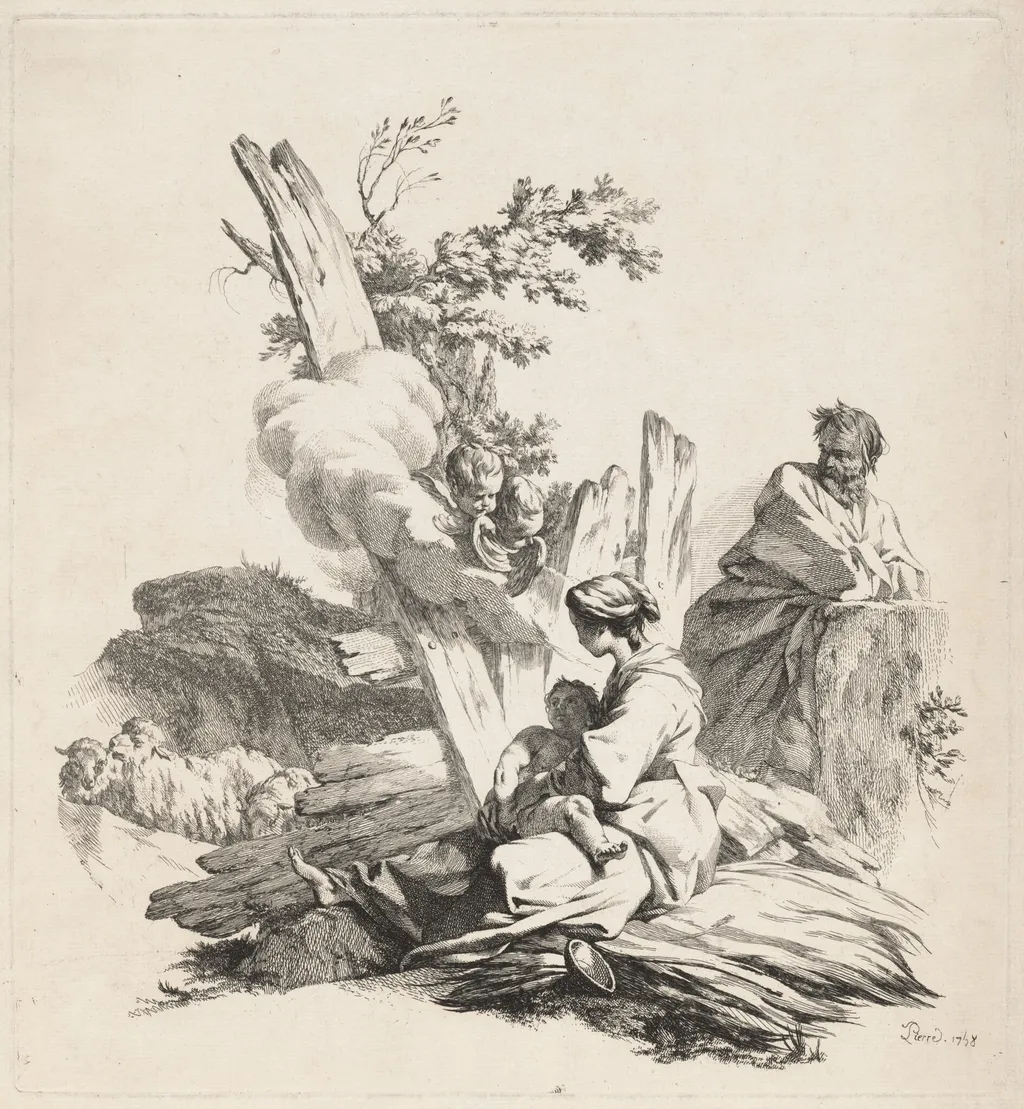
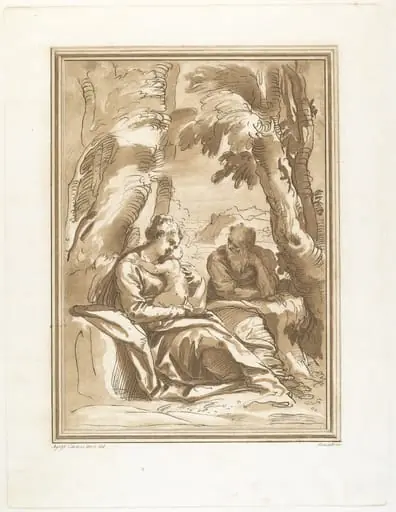
Rest on the Flight into Egypt is an ink print by the Romanticist artist Jean-Baptiste-Marie Pierre. It dates from 1759 and is held in the collection of the National Gallery of Art.
About this work
Overview
Pierre’s use of fine, controlled lines defines texture and form without excessive detail, characteristic of 18th-century printmaking techniques.
Created in 1759, this etching by Jean-Baptiste-Marie Pierre depicts a moment from the biblical Flight into Egypt. Rendered in monochrome on laid paper, the scene captures a quiet pause during the Holy Family’s journey. The composition centers on rest and vulnerability, with figures arranged naturally against a sparse landscape. Pierre’s use of fine, controlled lines defines texture and form without excessive detail, characteristic of 18th-century printmaking techniques.
Subject & Meaning
The image illustrates the Holy Family’s temporary respite during their escape to Egypt, as recounted in the Gospel of Matthew. Mary, seated with the infant Jesus, embodies tenderness; Joseph, leaning against a tree, appears weary yet watchful. A second child, likely John the Baptist, clings to the trunk, while sheep graze in the distance, suggesting divine protection in solitude. The scene emphasizes humility and endurance rather than grandeur.
Technique & Style
Pierre employed etching to achieve delicate tonal variation and precise line work. The soft gradations in the sky and the textured rock surfaces were created through controlled acid biting of the copper plate. Fine, intersecting lines define fabric folds and foliage, while minimal cross-hatching preserves clarity. The medium’s capacity for subtlety suited the intimate, contemplative mood, avoiding dramatic contrasts common in larger-scale religious works.
History & Provenance
The print was produced in 1759 during Pierre’s tenure as a leading French academic artist and director of the Académie Royale. Though primarily known for painting and decorative commissions, he occasionally turned to printmaking to disseminate religious themes. This etching likely served as a devotional image or study, circulated among collectors and students familiar with biblical narratives through visual culture.
Context
In mid-18th-century France, religious subjects remained popular in art, even as secular themes gained ground. Etchings like this allowed accessible reproduction of sacred imagery for private devotion or educational use. Pierre’s approach reflects the Rococo preference for gentle emotion and refined detail, adapting traditional iconography to a more intimate, human scale that resonated with domestic audiences.
Legacy
This etching exemplifies how academic artists used printmaking to extend the reach of religious narratives beyond grand canvases. While not widely reproduced or celebrated in later centuries, it preserves a quiet, humanized interpretation of a biblical episode. Its modest scale and technical restraint offer insight into the role of prints in shaping private piety during the Enlightenment.
Artist & collection


 Rest on the Flight into Egypt
 La Bonne Aventure
 The Rest on the Flight, with Holy Family under a Tree
 Standing Philosopher and Two Other Figures
 Three Soldiers and a Youth
 Two Turbaned Magicians and a Boy
 Les présents du berger
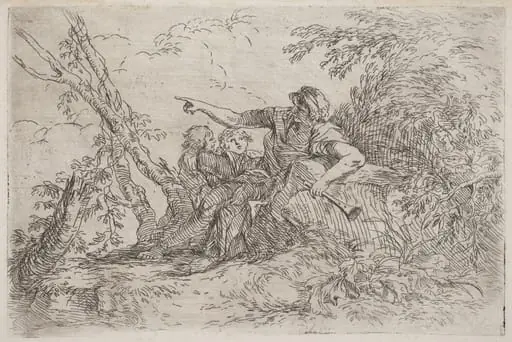 Shepherd in a Landscape
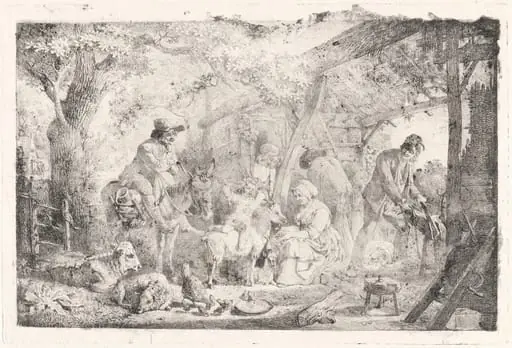 The Little Cavalier (Le Petit Cavalier)
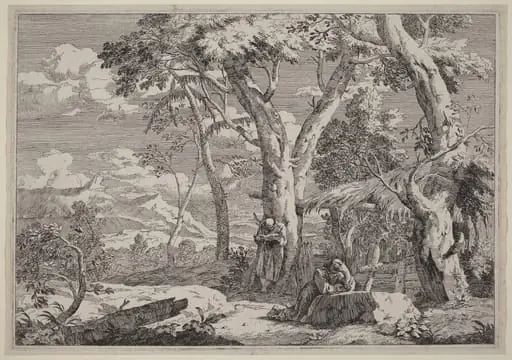 Wilderness Landscape with Two Monks
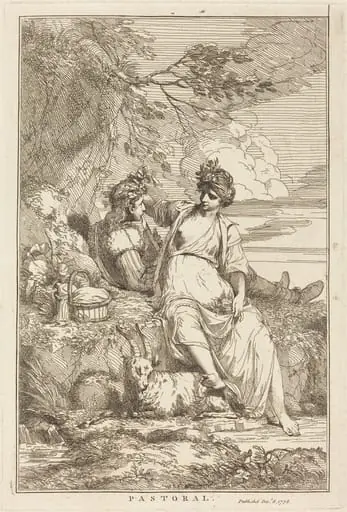 Pastoral