Artwork
Various Caprices: The Philosopher Holding a Book
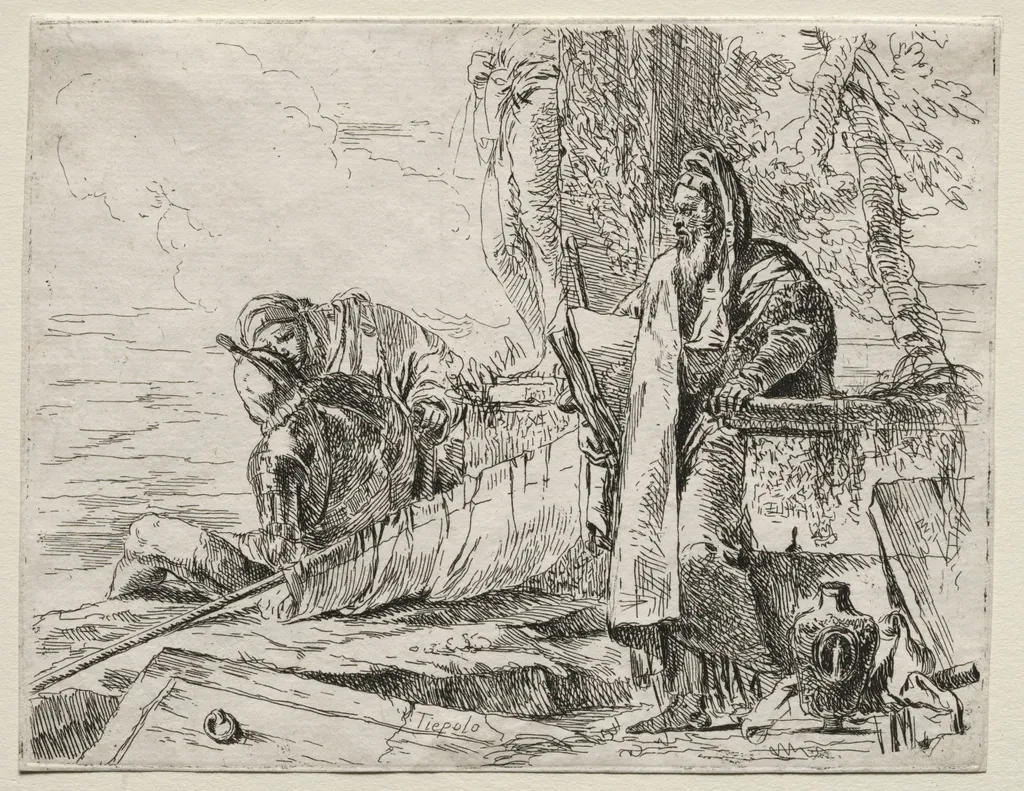
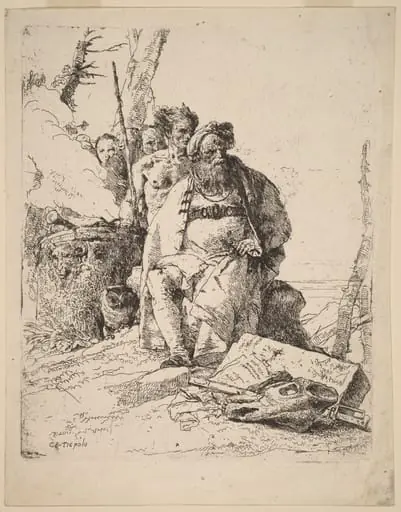
Various Caprices: The Philosopher Holding a Book is a print by the Baroque artist Giovanni Battista Tiepolo. It dates from 1742 and is held in the collection of the Cleveland Museum of Art.
About this work
Overview
It depicts a solitary philosopher in a contemplative pose, rendered in ink and wash with subtle tonal variations.
Created in 1742 by Giovanni Battista Tiepolo, this print is part of a series titled Various Caprices. It depicts a solitary philosopher in a contemplative pose, rendered in ink and wash with subtle tonal variations. The work is held in the collection of The Cleveland Museum of Art and exemplifies Tiepolo’s skill in translating expressive figures into graphic form, blending theatricality with introspection.
Subject & Meaning
The figure is portrayed as an aged scholar, bearded and robed, seated on a naturalistic rock. His open book and raised hand suggest active thought or discourse, while his downcast gaze implies inward reflection. The absence of narrative context invites interpretation as a symbol of wisdom, solitude, or the quiet pursuit of knowledge—common themes in Enlightenment-era representations of philosophers.
Technique & Style
Tiepolo employed ink wash and light brushwork to model form with delicate gradations of tone. Chiaroscuro is used subtly to define the volume of the robe and the figure’s posture, creating depth without heavy contrast. The background, rendered in muted earth tones, recedes softly, focusing attention on the central figure. The style merges Baroque sensitivity to light with a more intimate, almost sketchlike immediacy.
History & Provenance
The print belongs to Tiepolo’s series of Caprices, produced during his Venetian period, likely as independent artistic explorations rather than commissions. It entered The Cleveland Museum of Art’s collection in the 20th century, acquired as part of a broader effort to represent European graphic arts. Its provenance prior to museum acquisition remains largely undocumented.
Context
In the mid-18th century, Venetian artists like Tiepolo often turned to allegorical and literary subjects in prints, responding to intellectual currents of the Enlightenment. The philosopher motif, rooted in classical tradition, was frequently invoked to represent reason and learning. Tiepolo’s version reflects this trend, yet avoids overt symbolism, favoring psychological nuance over didacticism.
Legacy
Though less known than Tiepolo’s frescoes, the Caprices series influenced later printmakers through its expressive economy and atmospheric rendering. This particular image endures as a quiet testament to the artist’s ability to convey complex inner states with minimal means, contributing to the evolving visual language of philosophical representation in print culture.
Artist & collection

Artist
Giovanni Battista Tiepolo, also known as Giambattista Tiepolo, was an Italian painter and printmaker from the Republic of Venice who painted in the Rococo style, considered an important member of the 18th-century Venetian school.

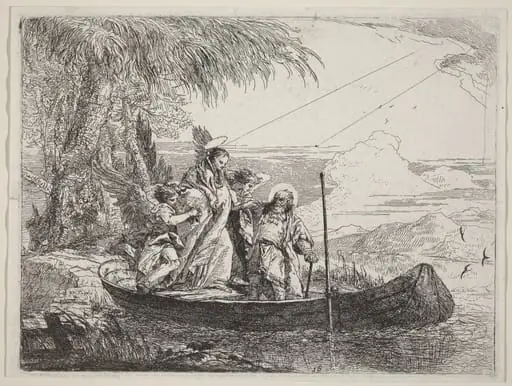 The Madonna, Child, and Angels Entering the Boat
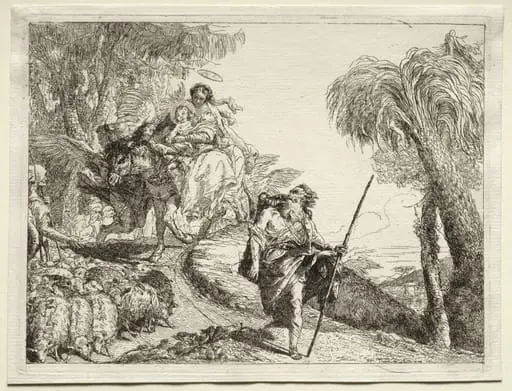 Flight into Egypt: The Holy Family and the Flock of Sheep
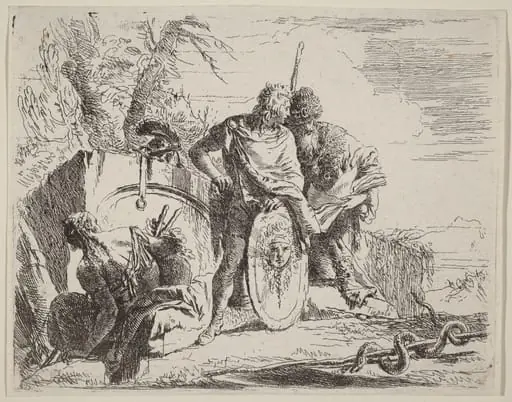 Young Soldier with Philosopher and Seated Woman
 Seated Magician with Other Figures beside an Altar
 Three Soldiers and a Youth
 Seated Youth Leaning against an Urn
 Seated Youth Leaning Against an Urn
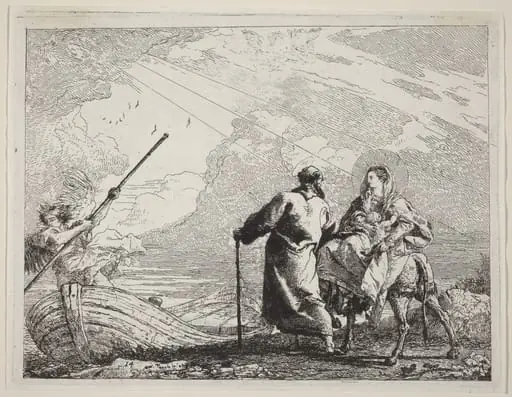 The Holy Family at the Bank of the River
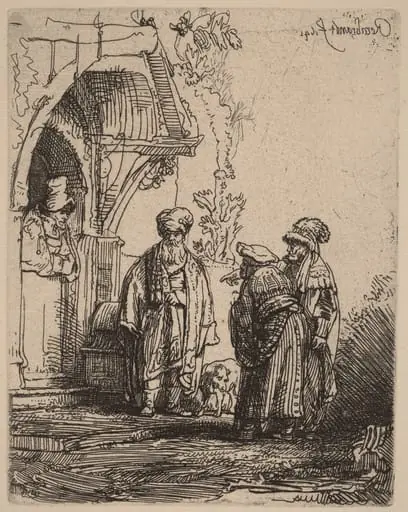 Three Oriental Figures (Jacob and Laban?)
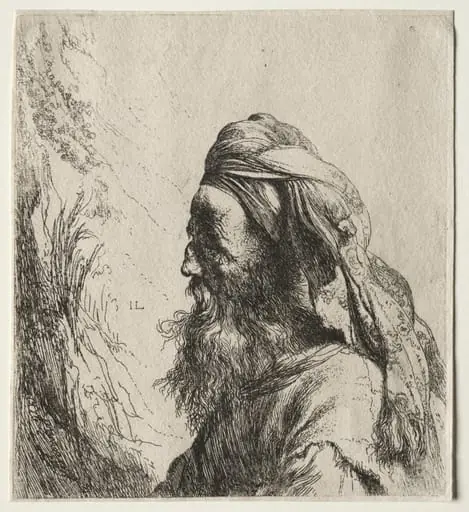 Head of an Oriental