Artwork
The theological virtues
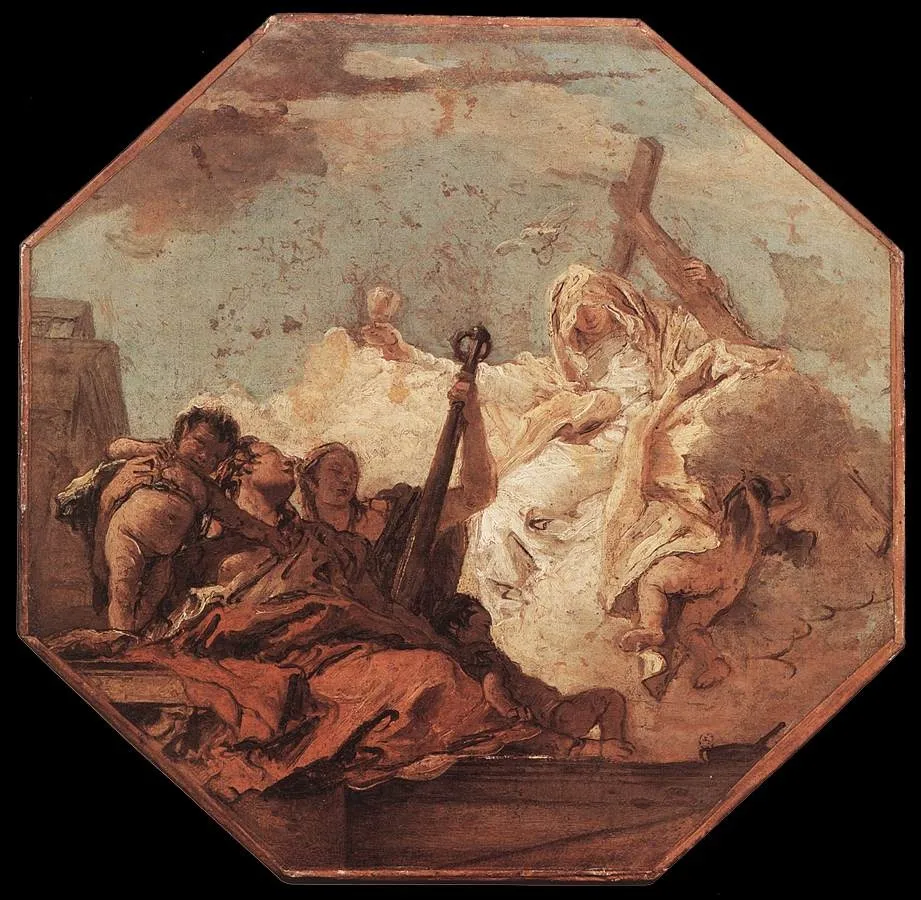
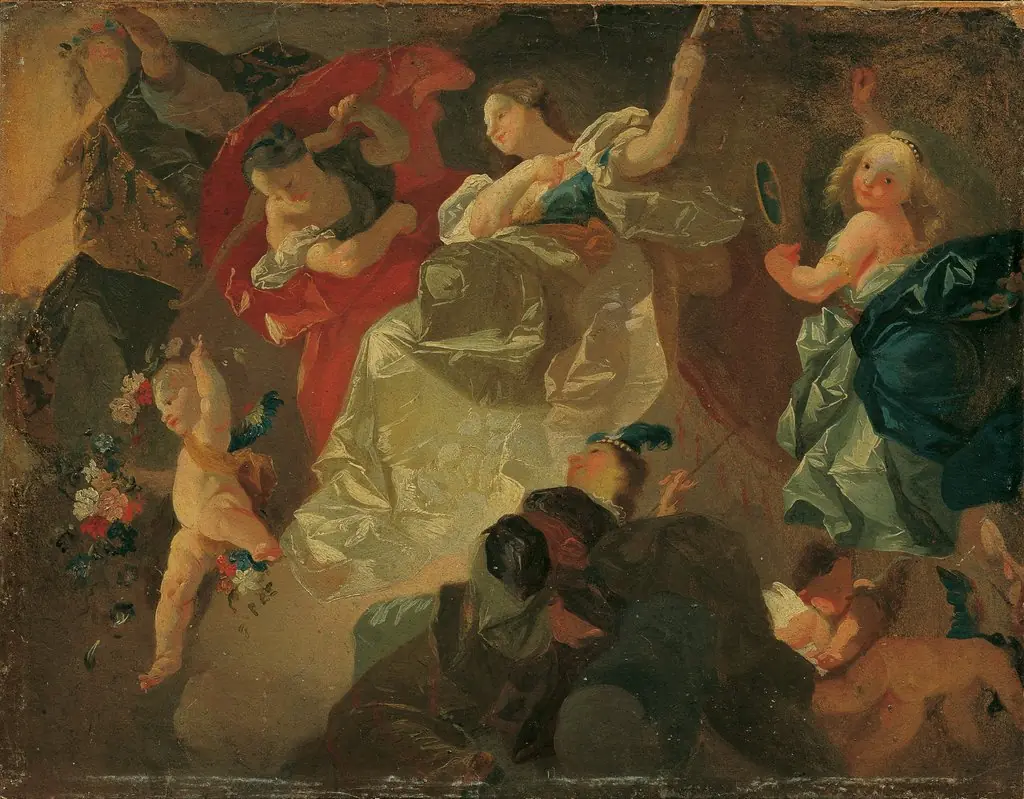
The theological virtues is an oil painting by the Rococo painting artist Giovanni Battista Tiepolo. It dates from 1755 and is held in the collection of the Royal Museums of Fine Arts of Belgium.
About this work
Overview
Painted in 1755 by Giovanni Battista Tiepolo, this work is an oil-on-canvas allegory depicting the theological virtues. Its unusual octagonal format distinguishes it from typical rectangular religious compositions. The painting resides in the Royal Museums of Fine Arts of Belgium, where its shape and subject reflect a deliberate engagement with devotional symbolism and spatial innovation.
Subject & Meaning
Three female figures represent faith, hope, and charity, each identified by symbolic attributes: a cross, a staff, and a white veil. They float amid soft clouds, suggesting a celestial realm beyond earthly concerns. The composition avoids dramatic action, instead emphasizing quiet dignity and spiritual stillness, aligning with the contemplative nature of the virtues they embody.
Technique & Style
Tiepolo employed delicate brushwork and muted tones—soft blues, grays, and warm beiges—to create a serene atmosphere. The figures are rendered with fluid drapery and subtle modeling, avoiding harsh contours. The background dissolves into atmospheric haze, enhancing the sense of ethereal space. The octagonal canvas guides the viewer’s gaze inward, reinforcing the meditative focus of the scene.
History & Provenance
Commissioned for a private or ecclesiastical setting, the painting entered the collection of the Royal Museums of Fine Arts of Belgium in the 19th century. Its octagonal form suggests it may have been designed for a specific architectural context, possibly a chapel or oratory. Little is known of its early ownership, but its preservation indicates enduring recognition of its devotional intent.
Context
Created during the height of Tiepolo’s career, this work reflects the late Baroque fascination with allegory and spiritual abstraction. While contemporaries favored grand narratives, Tiepolo here opts for quiet symbolism, aligning with Enlightenment-era shifts toward introspection. The painting’s form and tone resonate with devotional practices emphasizing inner virtue over external spectacle.
Legacy
Though less known than Tiepolo’s frescoes, this painting exemplifies his mastery of subtle allegory and compositional ingenuity. Its rare shape and restrained palette influenced later artists exploring spiritual themes through form and tone. It remains a quiet testament to the artist’s ability to convey theological ideas with restraint and grace.
Artist & collection

Artist
Giovanni Battista Tiepolo, also known as Giambattista Tiepolo, was an Italian painter and printmaker from the Republic of Venice who painted in the Rococo style, considered an important member of the 18th-century Venetian school.

Museum
Royal Museums of Fine Arts of Belgium
Continue through works from the same source collection.
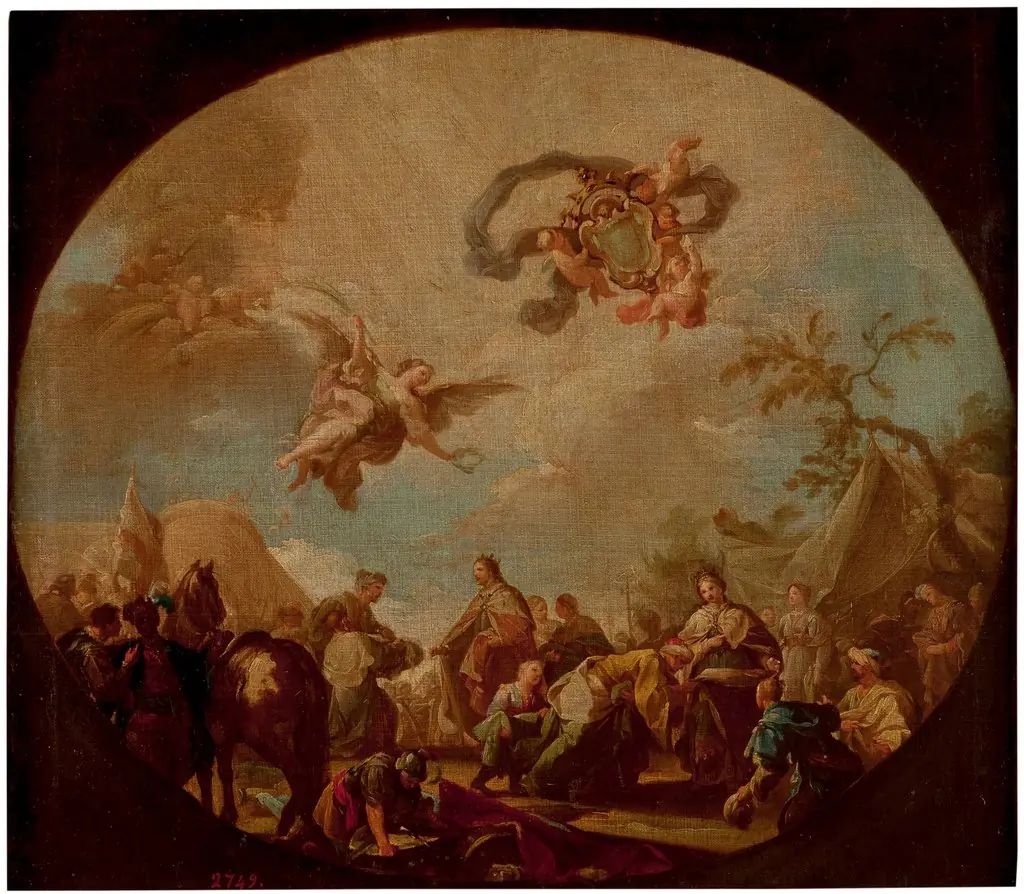 La Rendición de Granada
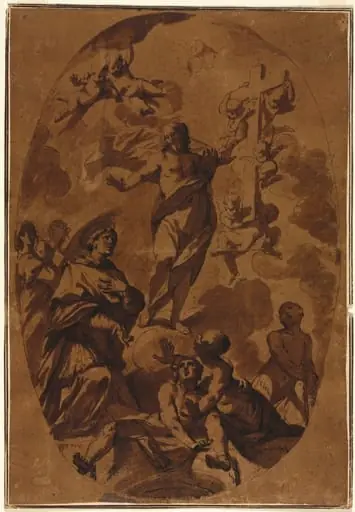 Christ Triumphant Appearing to an Interceding Saint
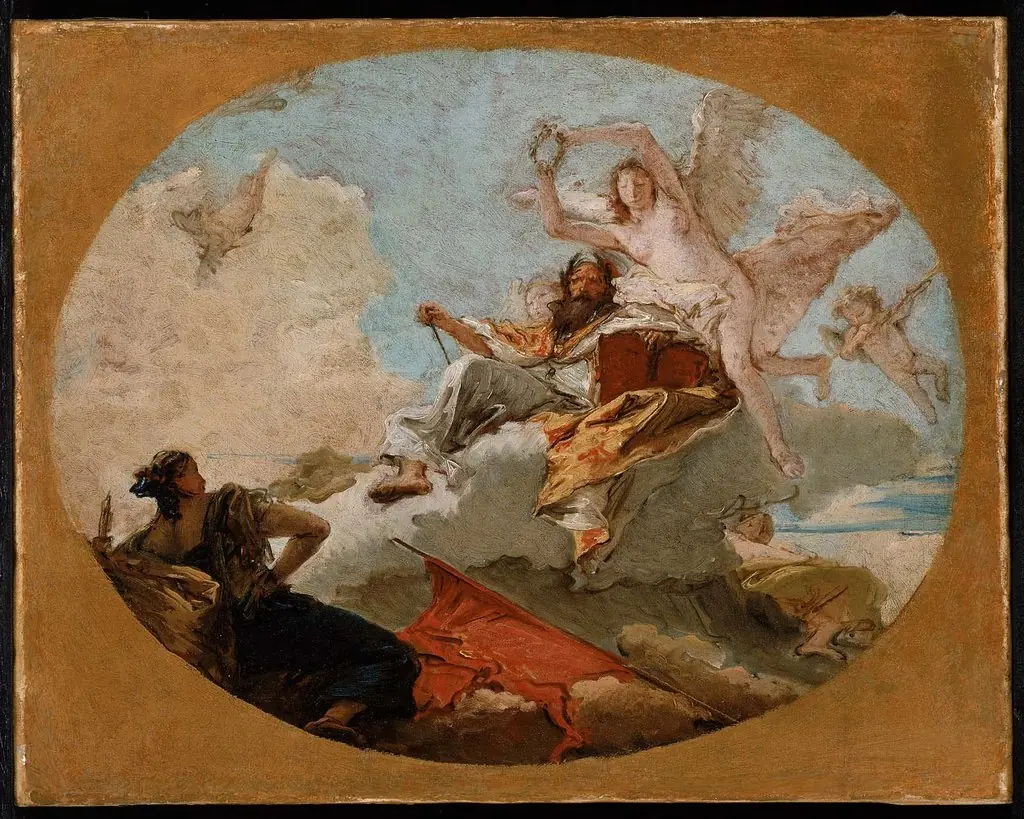 The Crowning of Merit
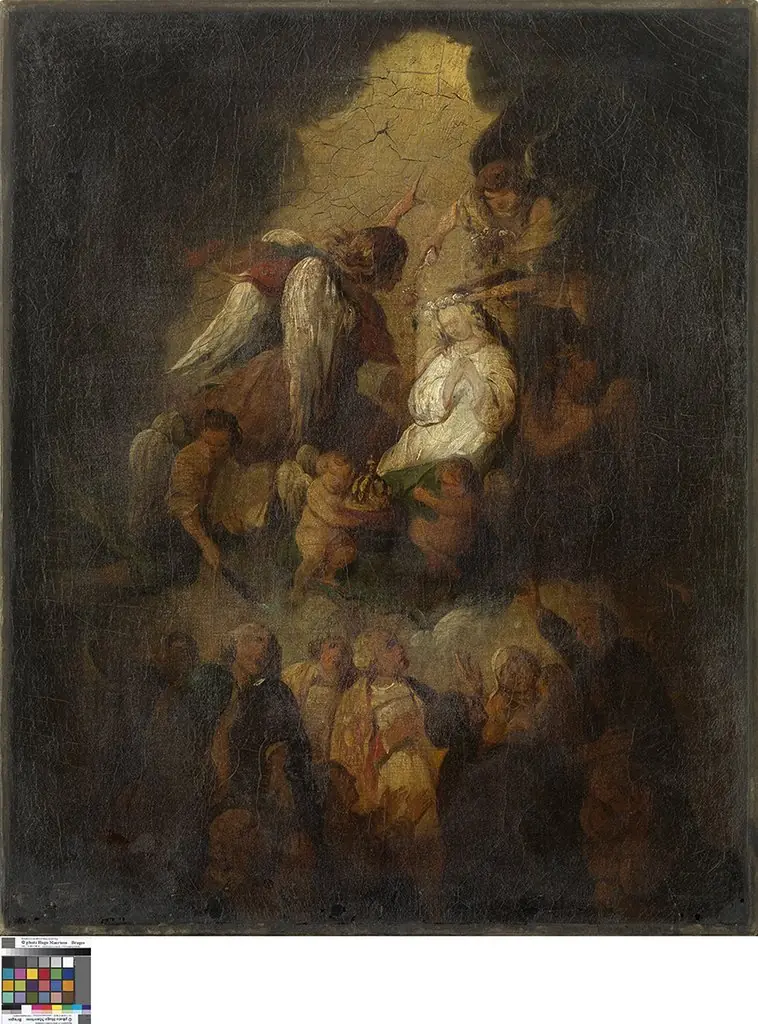 Verheerlijking van een vrouwelijke heilige
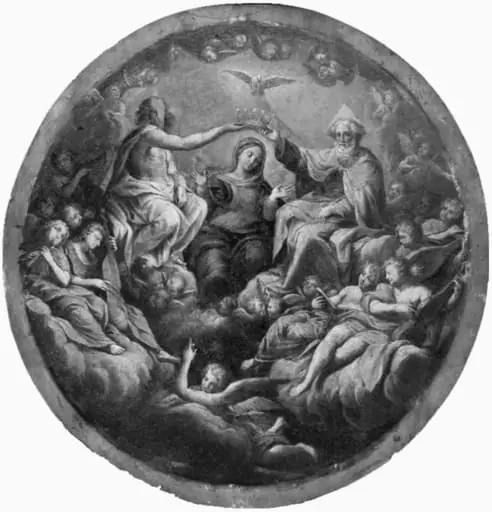 The Coronation of the Virgin
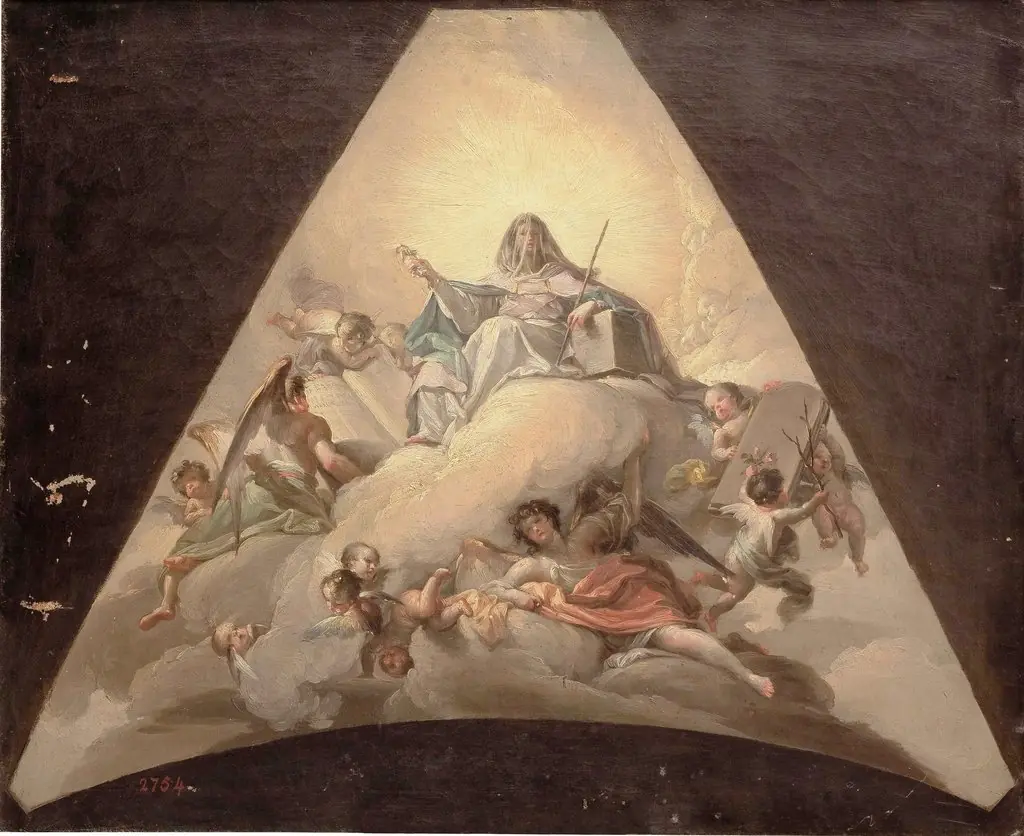 Alegoría de la Iglesia
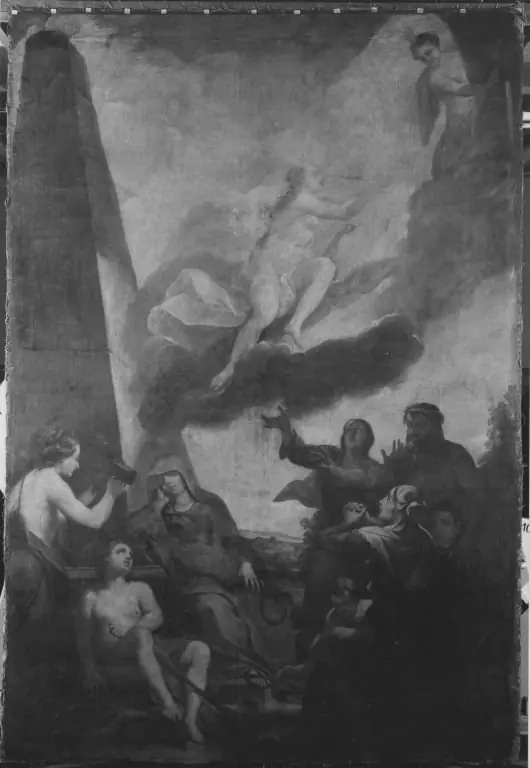 Allegorie auf den Tod einer Fürstin
 Christus am Ölberg
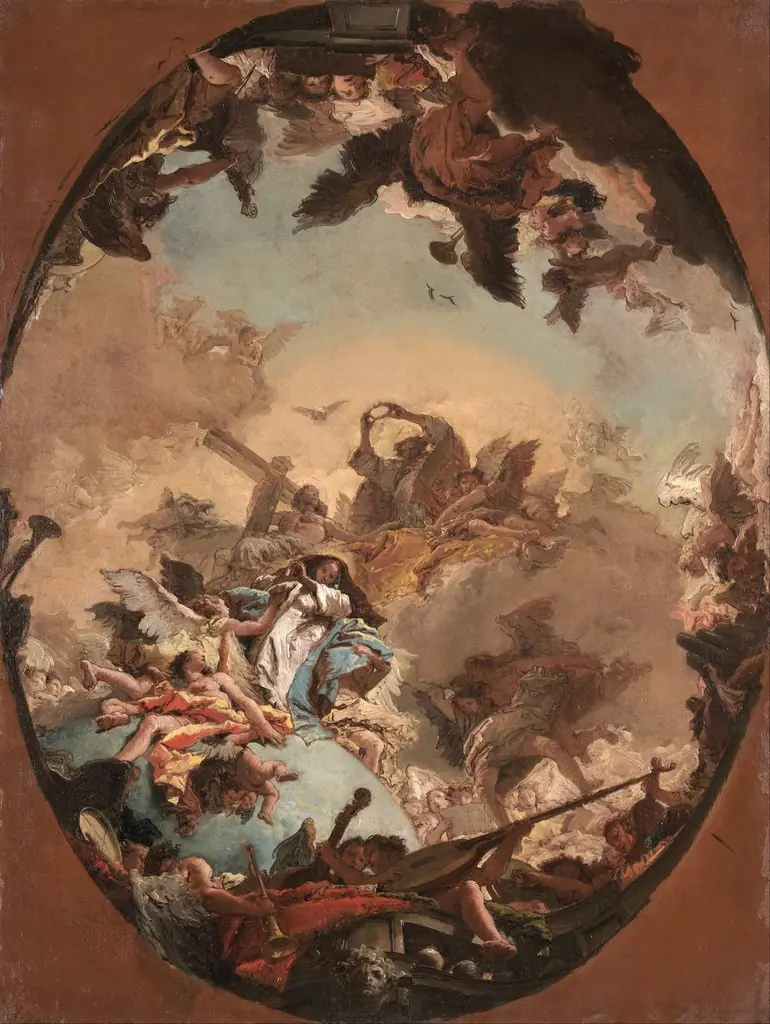 The Coronation of the Virgin
 Children Playing before a Hercules Group
 St Leo in Glory (sketch for the ceiling of the church of San Lio, Venice)
 Virtues