Artwork
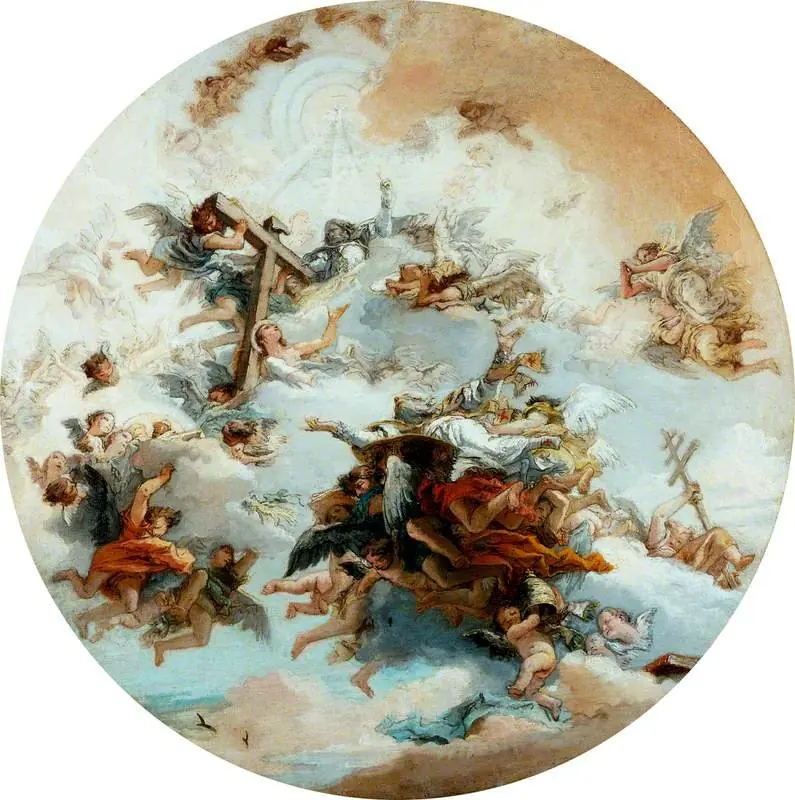
St Leo in Glory (sketch for the ceiling of the church of San Lio, Venice)
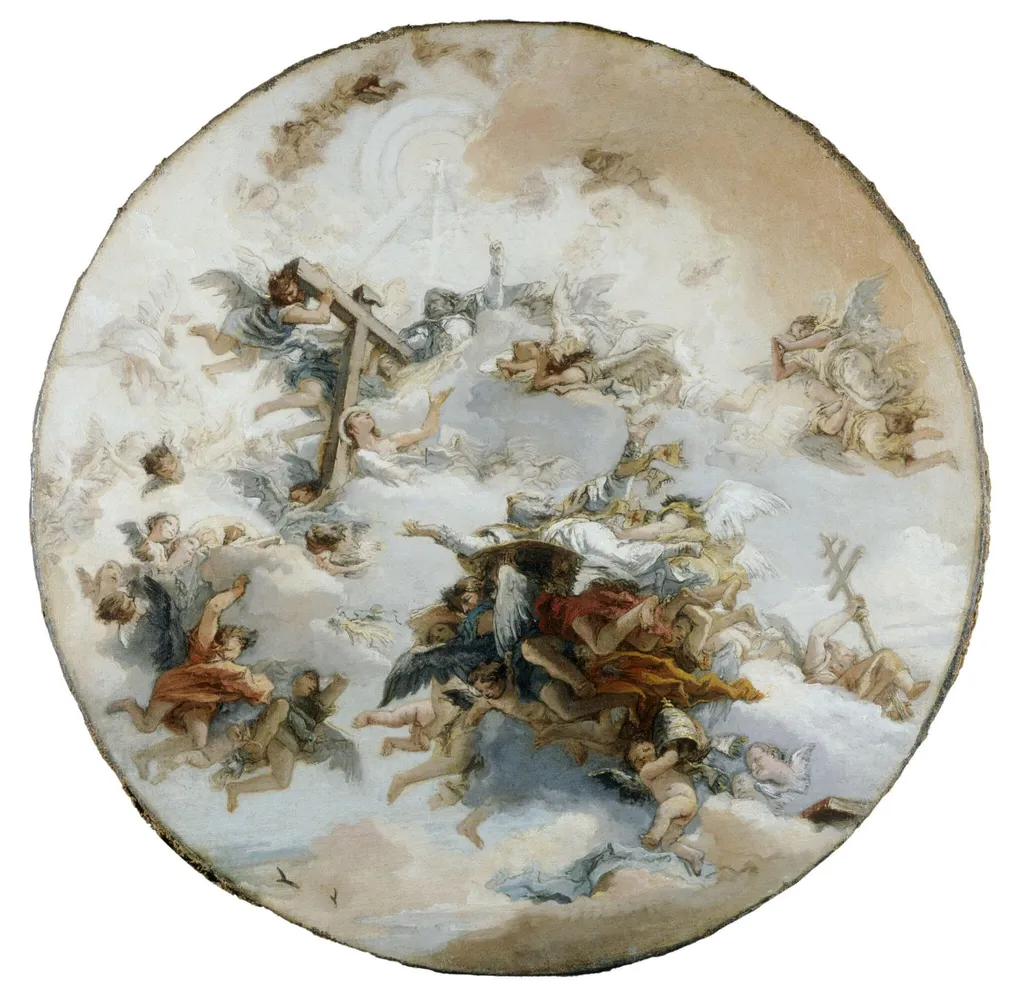
St Leo in Glory (sketch for the ceiling of the church of San Lio, Venice) is an oil painting by the Rococo painting artist Domenico Tiepolo. It dates from 1784 and is held in the collection of the Victoria and Albert Museum.
About this work
Domenico Tiepolo painted this oil sketch in 1783 to plan the church ceiling.
A swirling sky holds Saint Leo high above Venice. Golden clouds frame him as he blesses the city below. Domenico Tiepolo painted this oil sketch in 1783 to plan the church ceiling.
This sketch shows Tiepolo’s light touch. He often worked in bright colors with loose brushstrokes. His father trained him, but Domenico had his own style.
If you like this, check out his father’s work. Look up Tiepolo, Domenico.
Overview
Domenico Tiepolo created this oil sketch in 1783 as a preparatory study for the ceiling fresco in the Venetian church of San Lio. Executed shortly before the completion of the final work in 1784, it reflects his mature style—light, fluid, and atmospheric. Though trained in his father Giambattista’s monumental tradition, Domenico’s approach here is more intimate and spontaneous, emphasizing movement and luminosity over grandeur.
Subject & Meaning
The composition depicts the apotheosis of Saint Leo IX, the 11th-century pope, ascending through celestial clouds toward divine glory. Above, the Trinity is represented: God the Father, Christ on the Cross, and the Holy Spirit in radiant light. Below, Leo is lifted by a host of angels and putti, his arms outstretched in blessing. The scene merges ecclesiastical veneration with a vision of heavenly ascent, affirming the sanctity of the Church’s leadership.
Technique & Style
Tiepolo employed rapid, translucent brushwork and a luminous palette to suggest weightlessness and divine radiance. The sky swirls with loose, airy strokes, while golden clouds frame the saint with delicate precision. Unlike the dense, theatrical compositions of his father, Domenico’s handling is airy and improvisational, revealing a personal sensitivity to light and motion that anticipates emerging 19th-century sensibilities.
History & Provenance
The sketch was made in 1783 for the ceiling of San Lio, completed the following year and still in place today. It remained in Domenico’s possession until his death in 1804, later entering a private collection before being acquired by a public institution. As a preparatory work, it offers rare insight into his process, bridging the gap between conceptual design and final execution in late Venetian Baroque decoration.
Context
Painted during the final decade of Venetian Republic rule, the work stands at the cusp of artistic change. While still rooted in Baroque tradition, its lightness and informal energy reflect shifting tastes away from theatrical grandeur. Domenico’s focus on celestial movement and intimate divine presence contrasts with the rigid formalism of earlier ecclesiastical commissions, signaling a transition toward more personal, expressive religious art.
Legacy
This sketch exemplifies Domenico Tiepolo’s role in evolving Venetian painting beyond his father’s legacy. Though less celebrated in his time than Giambattista, his later works, including this one, reveal a quieter, more introspective vision. The sketch’s vitality and technical freedom influenced later generations of artists seeking to reconcile religious themes with expressive, painterly language.
Artist & collection
Artist
Domenico Tiepolo painted large-scale church ceilings in Venice during the late 1700s.

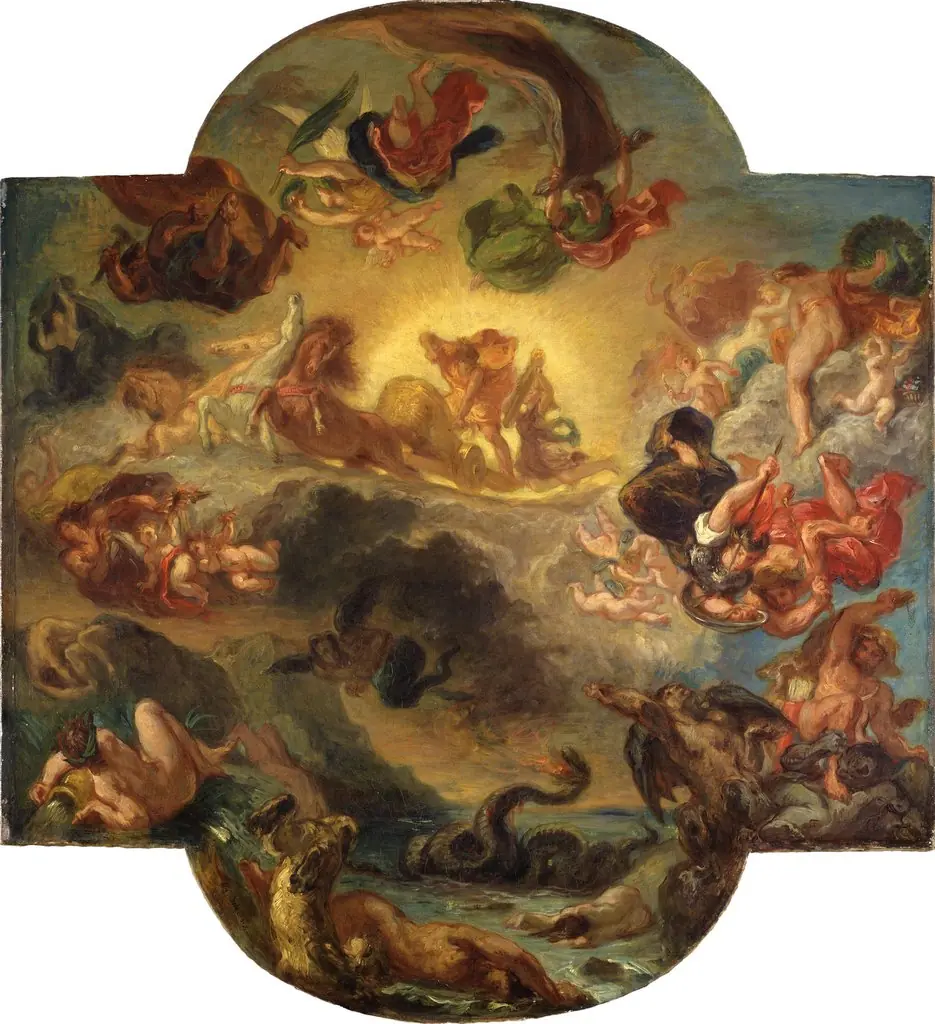 Apollo Slays Python
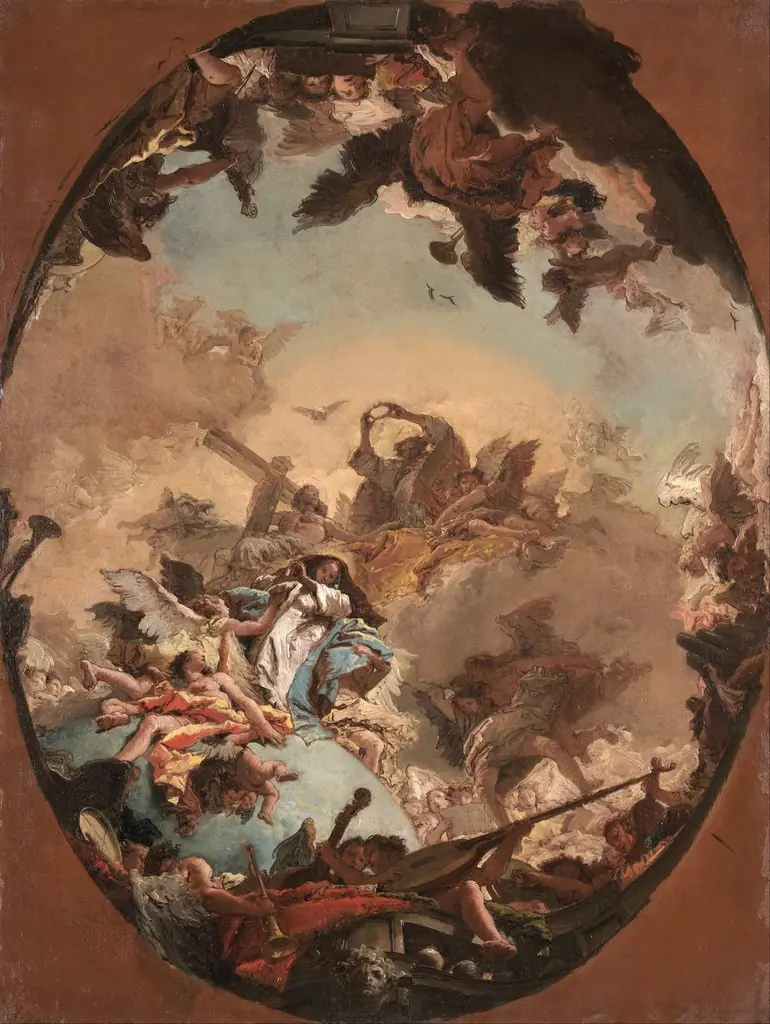 The Coronation of the Virgin
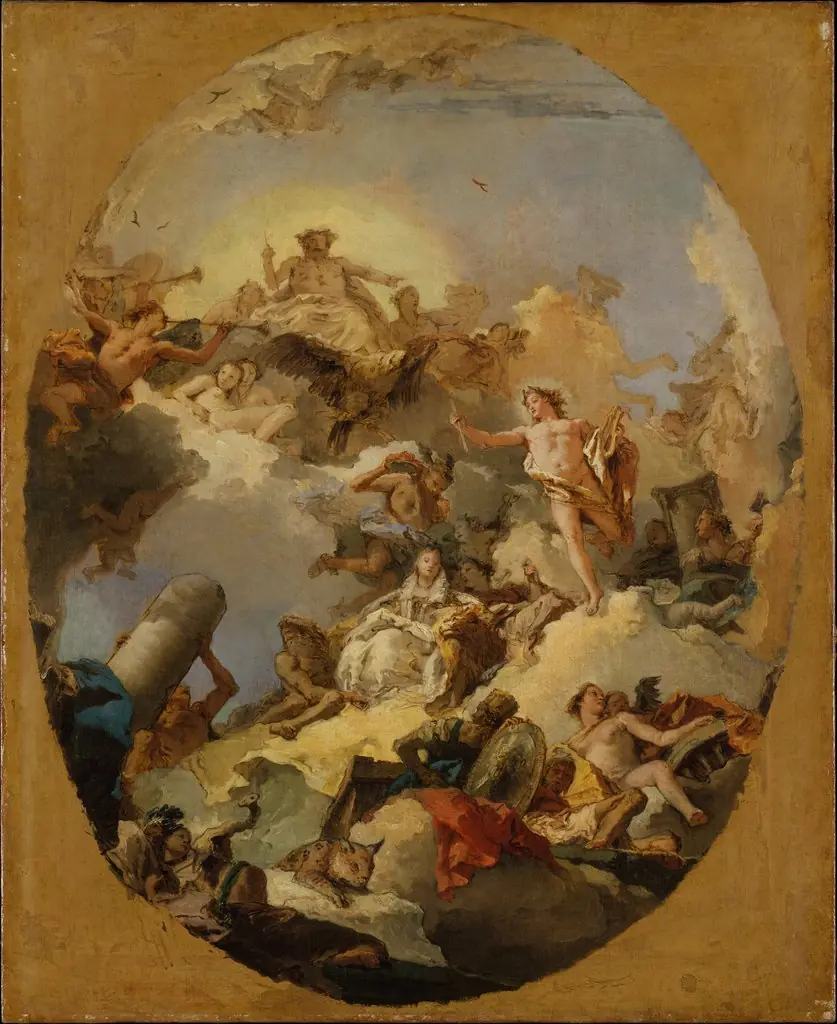 The Apotheosis of the Spanish Monarchy
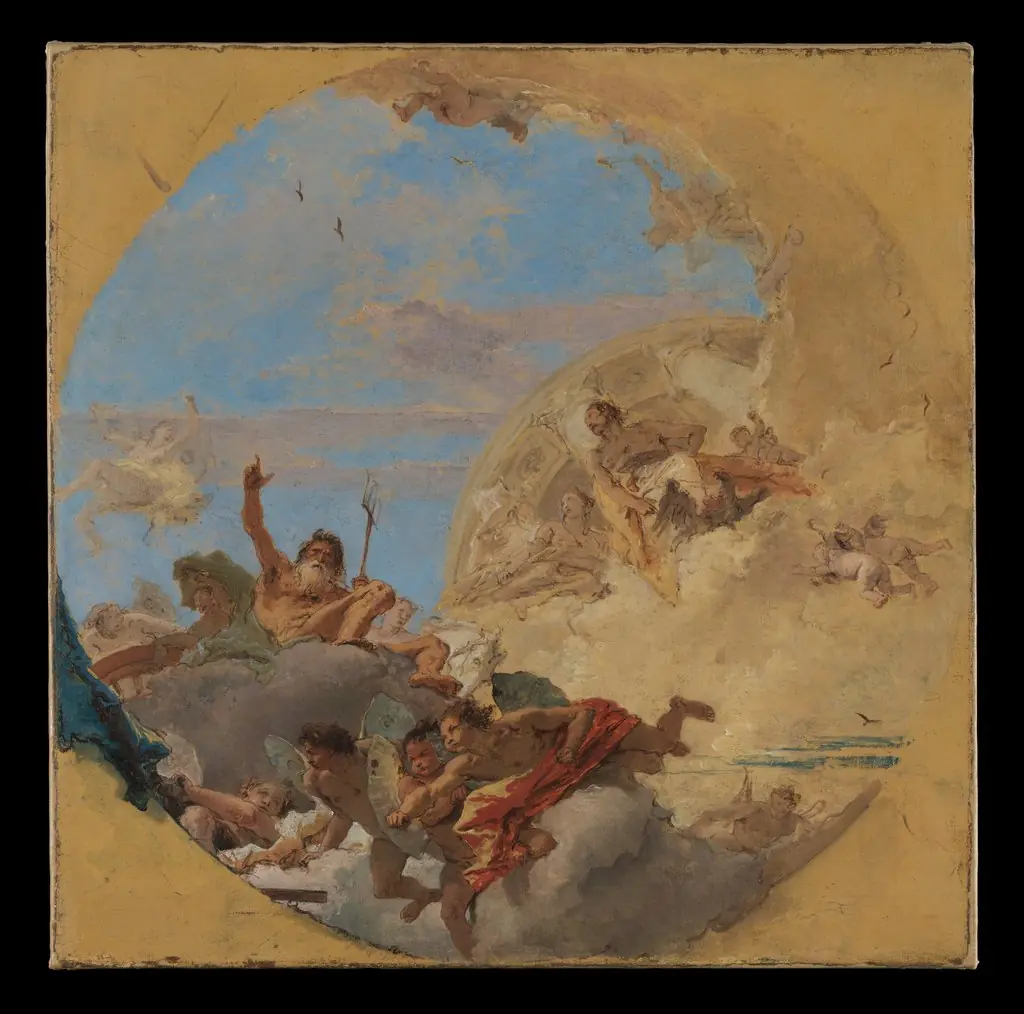 Neptune and the Winds
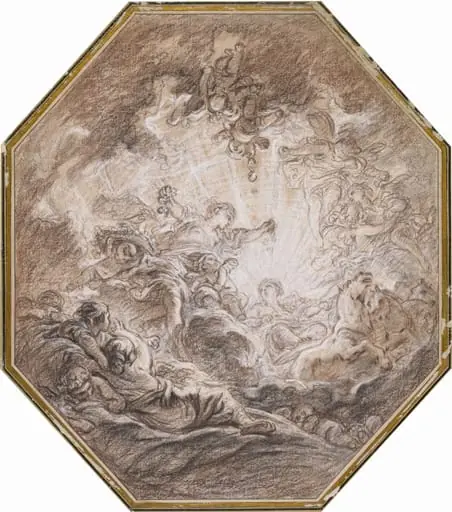 Aurora Heralding the Arrival of the Morning Sun
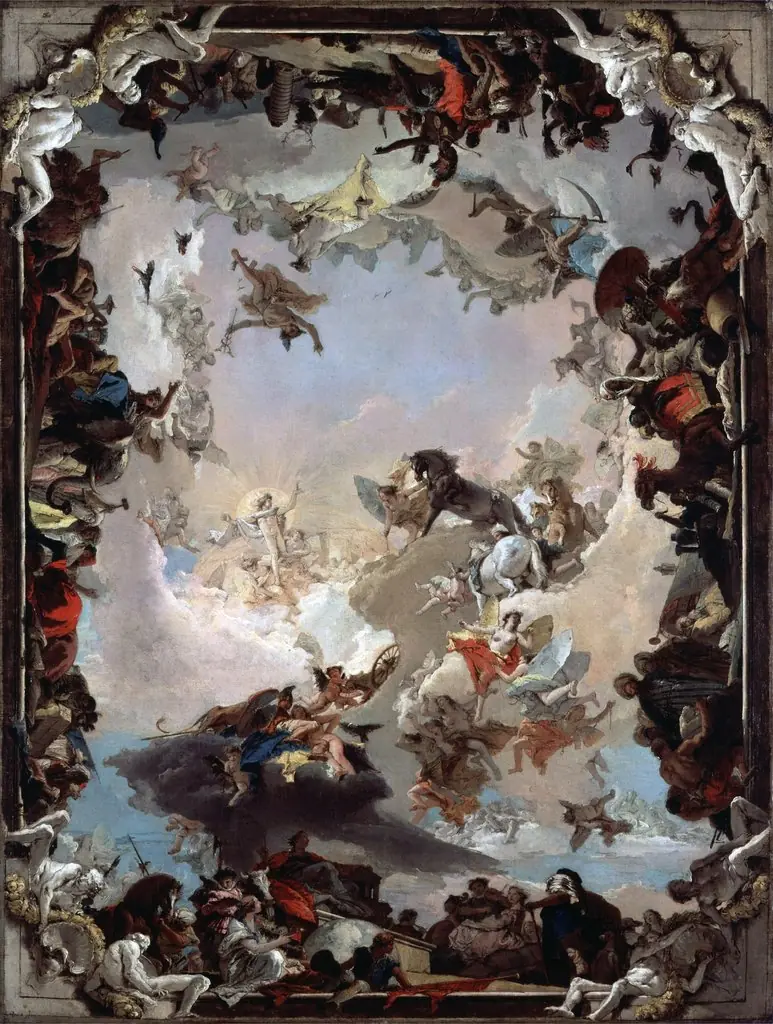 Allegory of the Planets and Continents
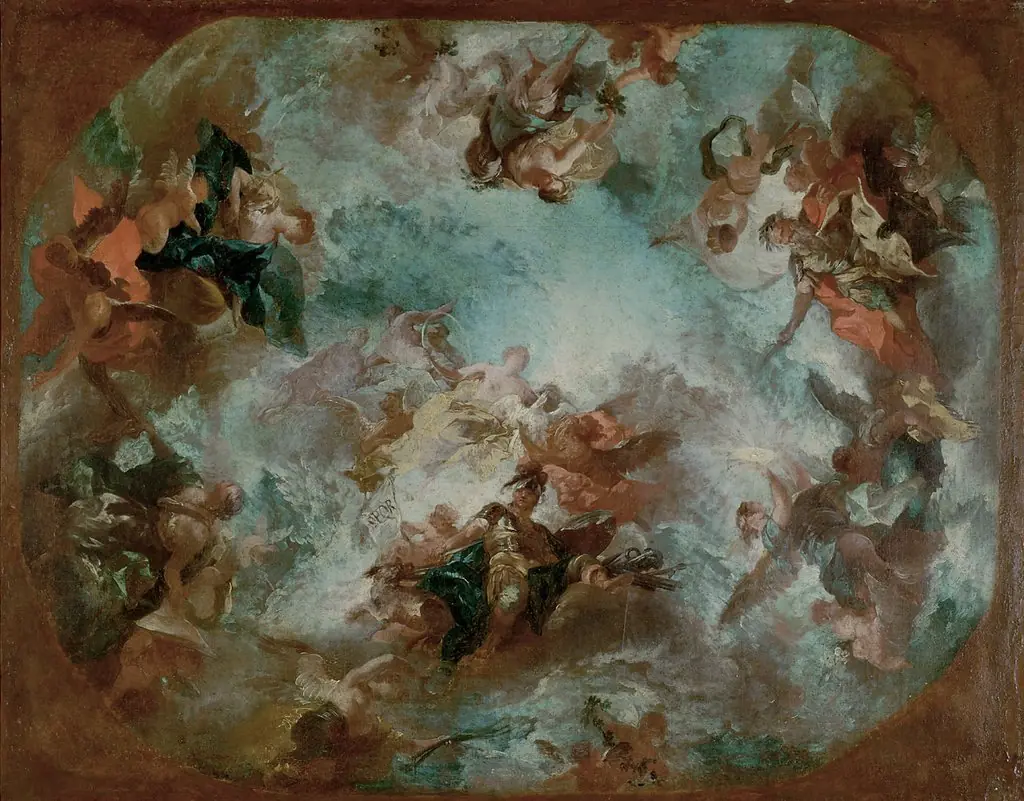 Verherrlichung des Hauses Österreich
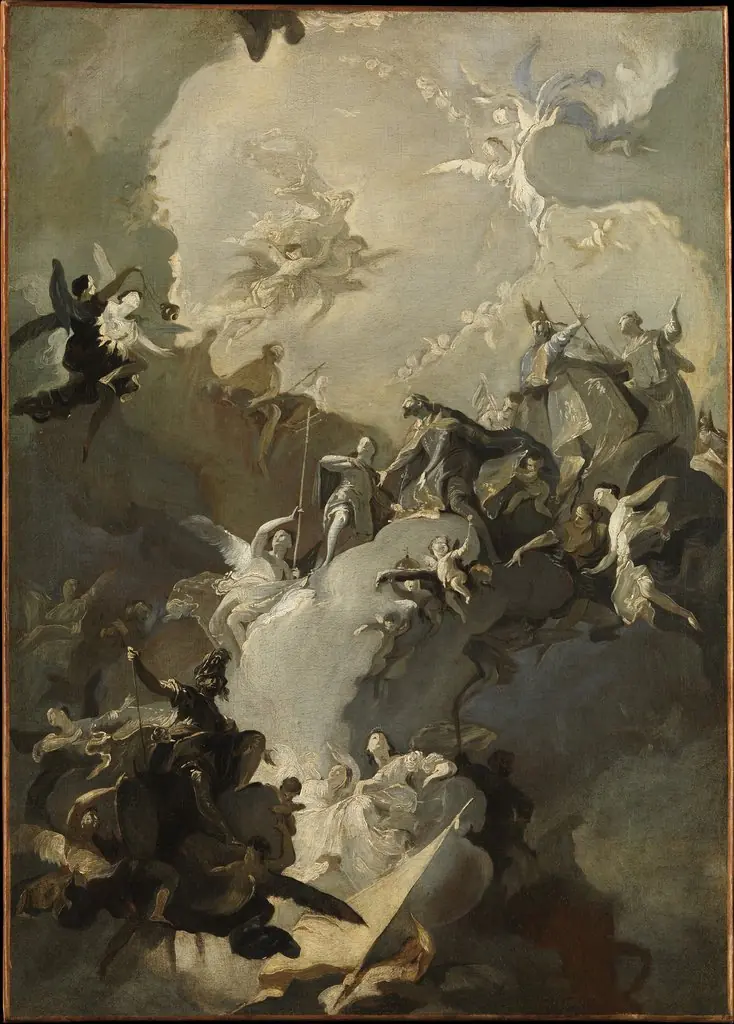 The Glorification of the Royal Hungarian Saints
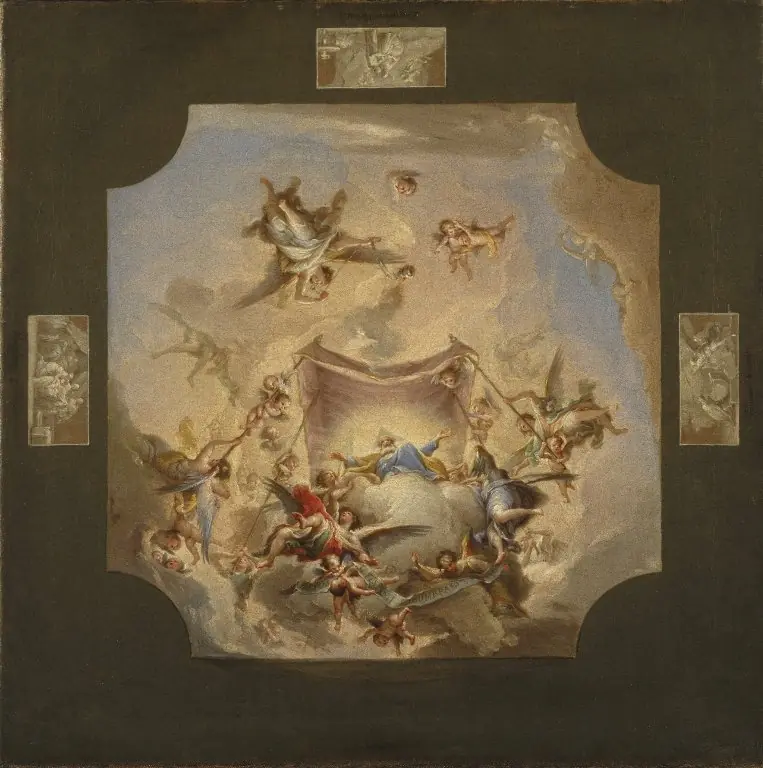 The Eternal Father, sketch
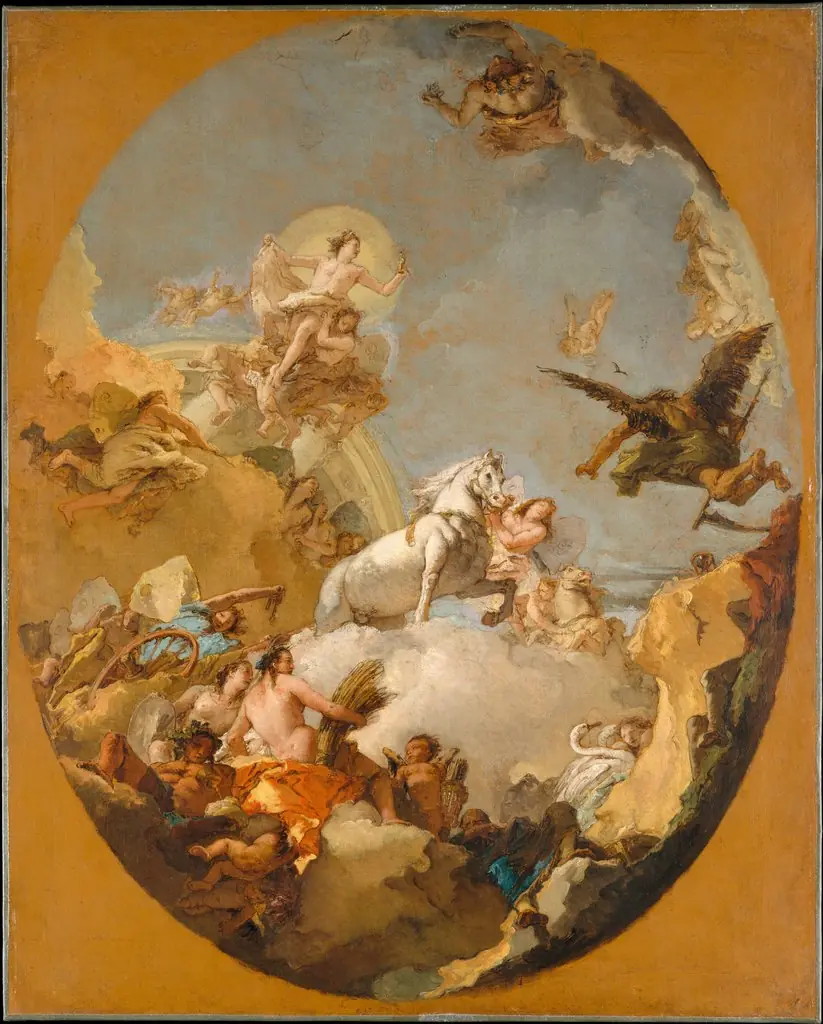 The Chariot of Aurora
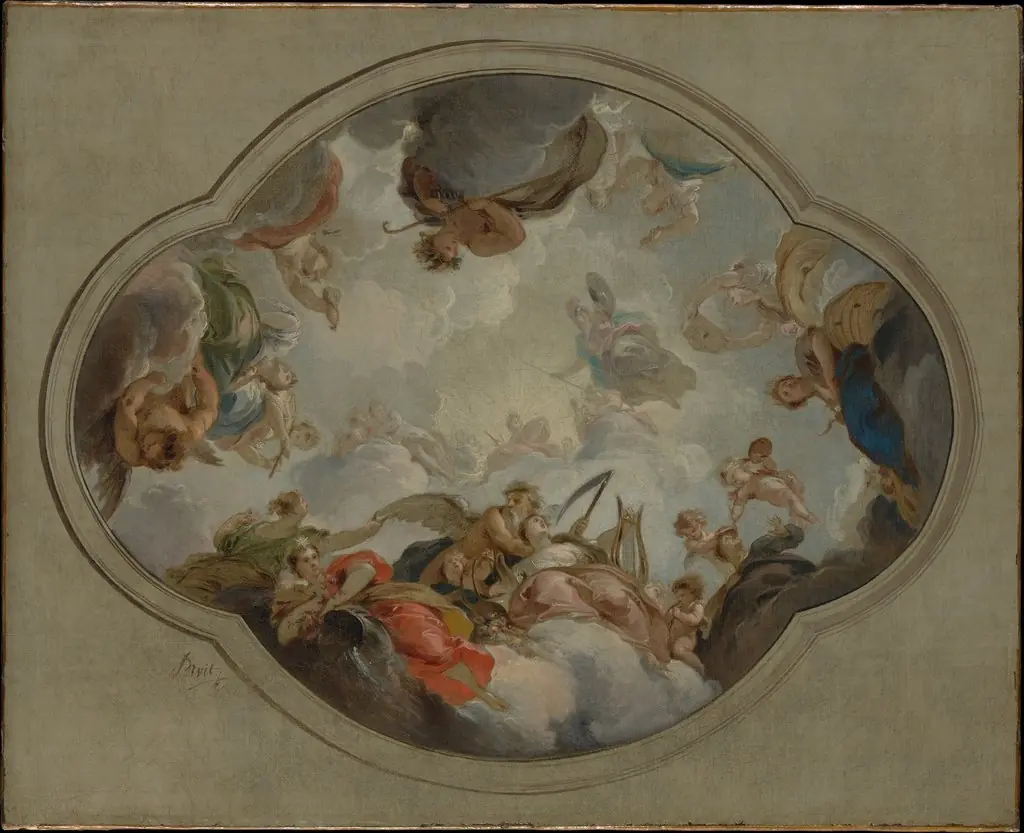 Allegory of the Arts
 Saint Leo in Glory (sketch for the ceiling of the church of San Lio, Venice)