Artwork
The Virgin and Child with Saint John the Baptist and Angels
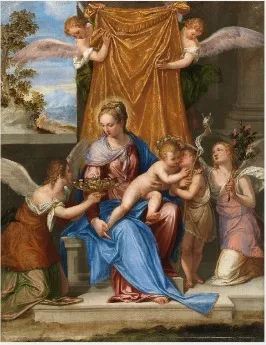
The Virgin and Child with Saint John the Baptist and Angels is an oil painting by the Mannerist artist Giovanni Battista Zelotti. It dates from 1562 and is held in the collection of the National Gallery of Ireland.
About this work
Overview
Zelotti, trained in Verona and active in Venetian circles, produced this piece during a period when Mannerist tendencies were shaping sacred imagery.
Painted around 1562 by Giovanni Battista Zelotti, this oil-on-panel work presents a devotional scene common in late Renaissance religious art. Zelotti, trained in Verona and active in Venetian circles, produced this piece during a period when Mannerist tendencies were shaping sacred imagery. The painting is now part of the National Gallery of Ireland’s collection, reflecting its enduring presence in European art heritage.
Subject & Meaning
The composition centers on the Virgin Mary holding the Christ Child, flanked by the young Saint John the Baptist and a group of angels. The figures form a quiet, intimate circle, suggesting spiritual kinship and divine harmony. Saint John’s presence alludes to his future role as precursor to Christ, while the angels, in varied poses, reinforce the sacredness of the moment without overt drama, emphasizing contemplative reverence.
Technique & Style
Zelotti employed oil paint to achieve subtle transitions of light and color, lending softness to the figures’ forms and a luminous quality to their garments. The palette is restrained—blue, pink, and gold tones dominate—while the background landscape recedes with gentle atmospheric perspective. The figures are arranged with deliberate balance, reflecting Mannerist ideals of elegance and compositional refinement over naturalistic spontaneity.
History & Provenance
Zelotti, who collaborated with Paolo Veronese on decorative projects in Veneto villas, likely developed his compositional approach through such partnerships. The painting’s early ownership is undocumented, but its presence in the National Gallery of Ireland since the 20th century suggests it entered the collection through private donation or acquisition, preserving its integrity through centuries of change.
Context
Created during the height of Mannerism in northern Italy, the work reflects a shift from High Renaissance harmony toward more stylized, refined forms. While rooted in Venetian color traditions, Zelotti’s approach aligns with the intellectualized piety favored by Counter-Reformation patrons, who sought devotional imagery that inspired quiet meditation rather than emotional spectacle.
Legacy
Though Zelotti is less widely known than his contemporaries, this painting exemplifies the quiet, skilled craftsmanship of regional Venetian painters who sustained religious iconography during a period of artistic transition. Its preservation in a public collection ensures continued study of how Mannerist aesthetics adapted sacred themes for private devotion and institutional display.
Artist & collection
Artist
Giovanni Battista Zelotti (Italian pronunciation: ; 1526 – 28 August 1578) was an Italian painter of the late Renaissance, active in Venice and her mainland territories.

 Immaculate Conception
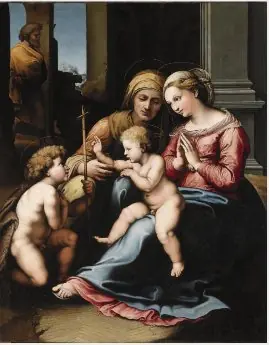 The Holy Family with Saints John the Baptist and Elizabeth
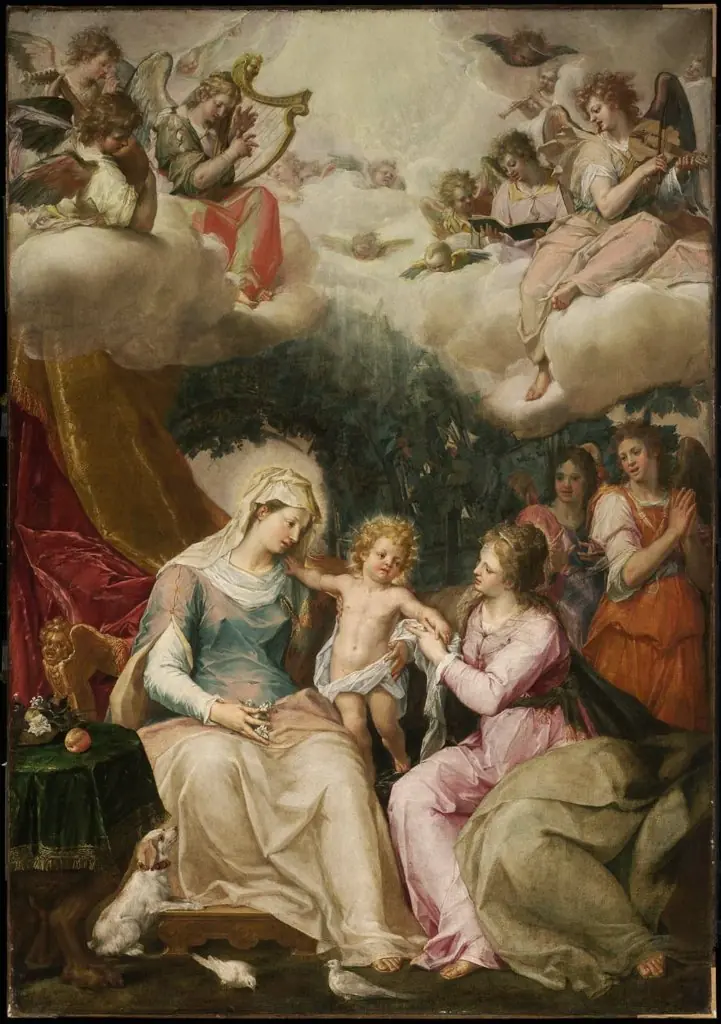 The Mystic Marriage of Saint Catherine
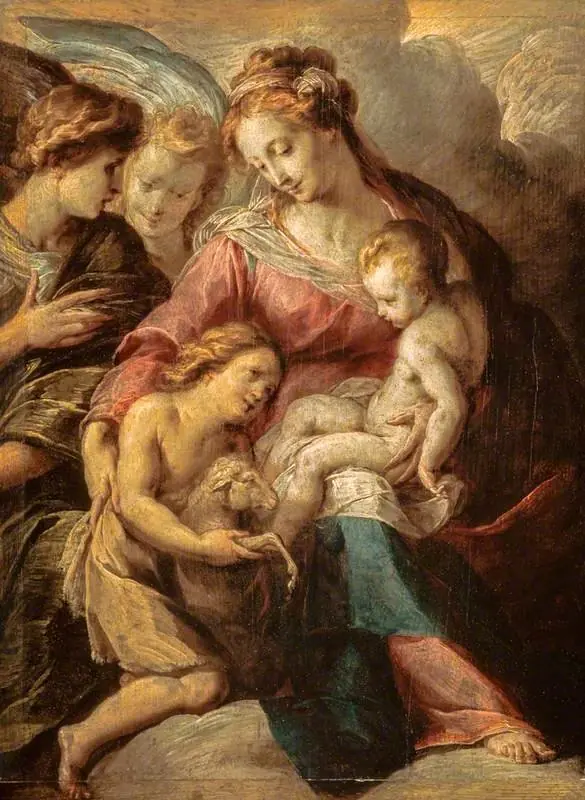 The Virgin and Child with the Infant Saint John and Attendant Angels
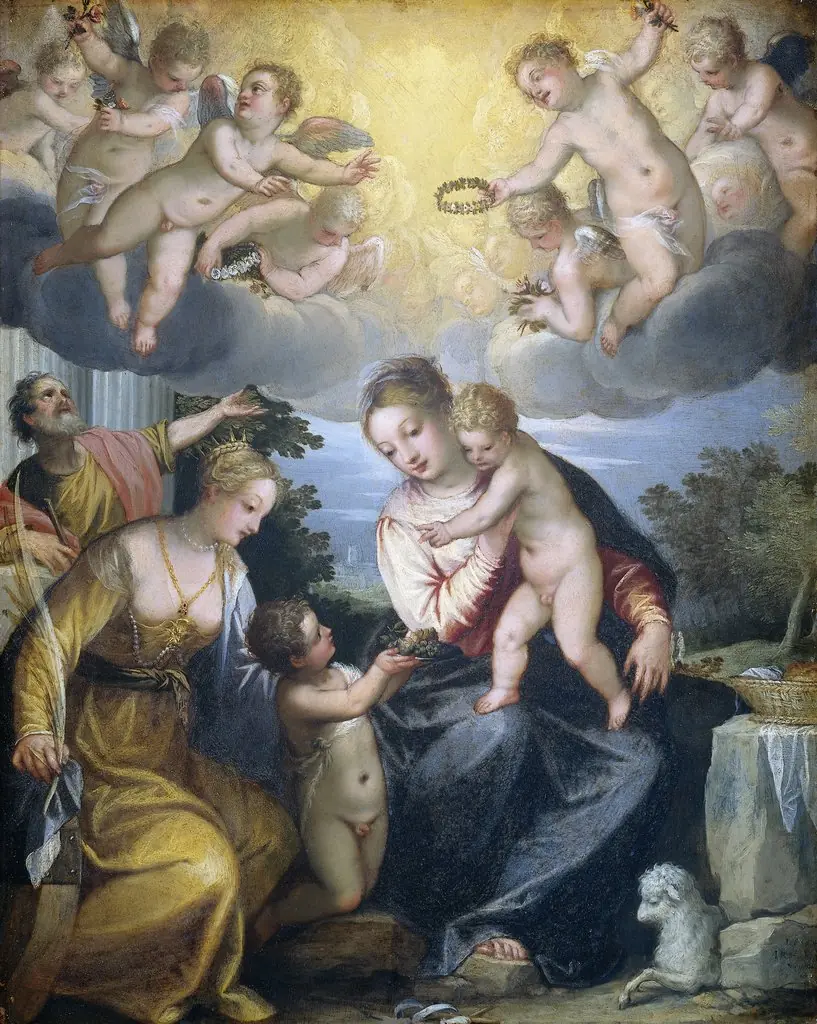 Virgin and Child with young John the Baptist and Saint Catherine
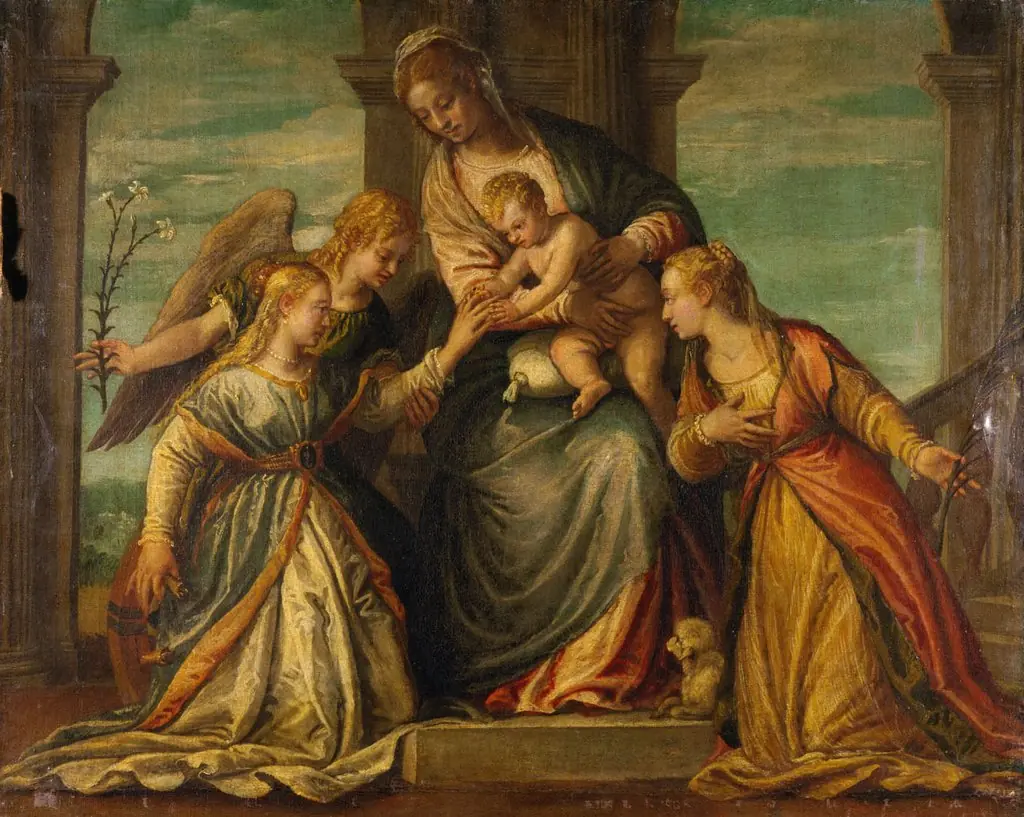 Mystic Marriage of St. Catherine
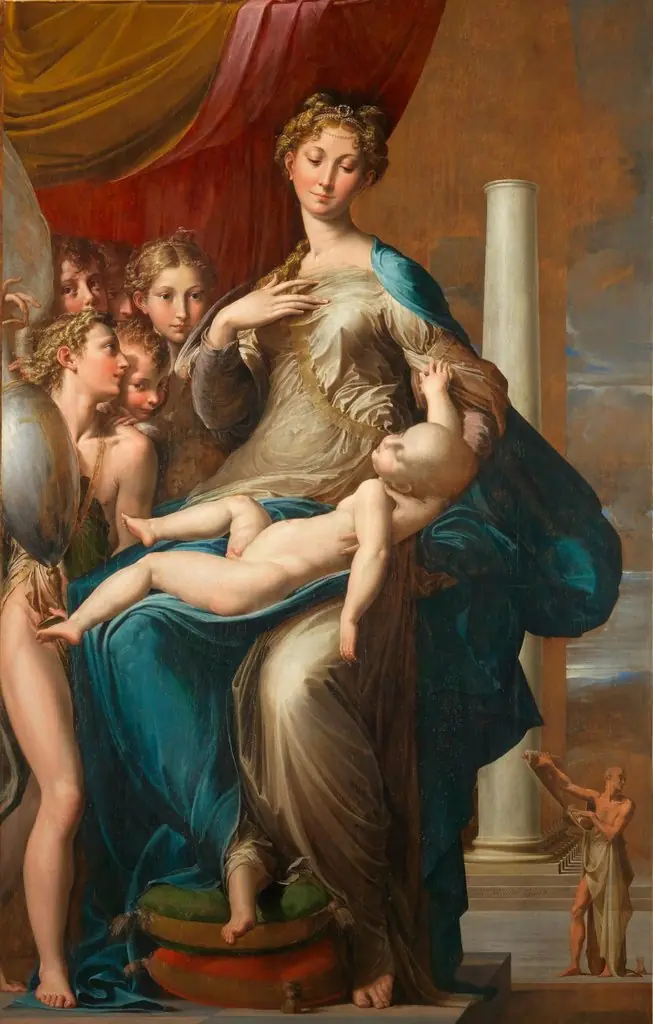 Madonna with the Long Neck
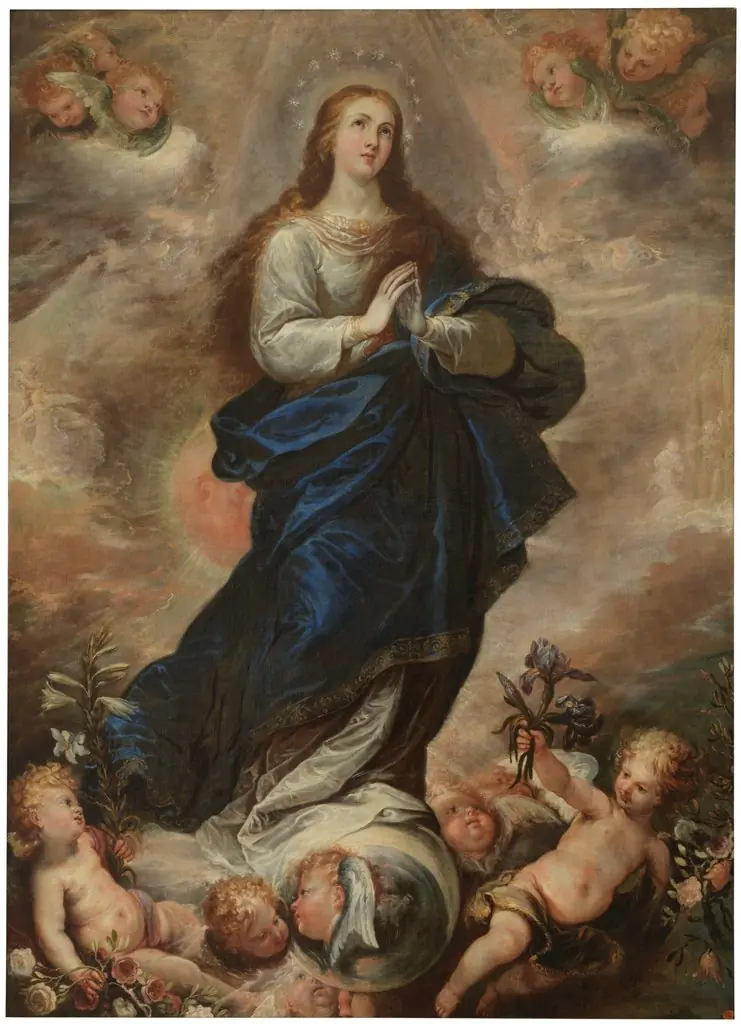 La Purísima Concepción
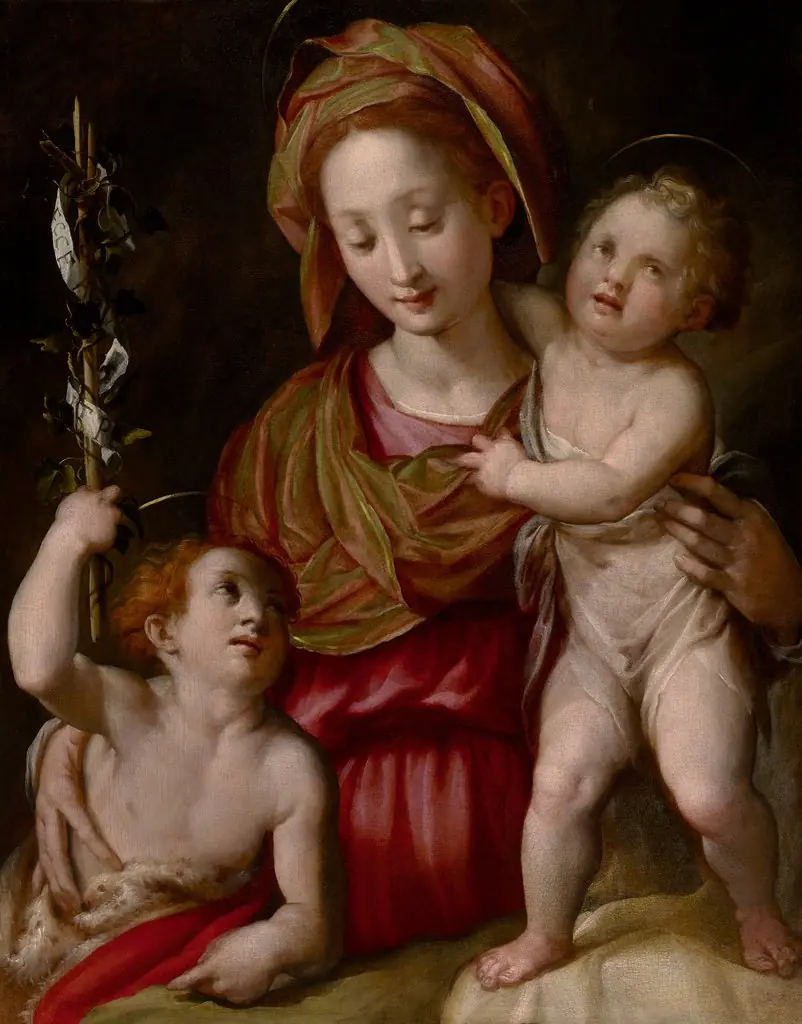 Madonna and Child with the Young St. John the Baptist
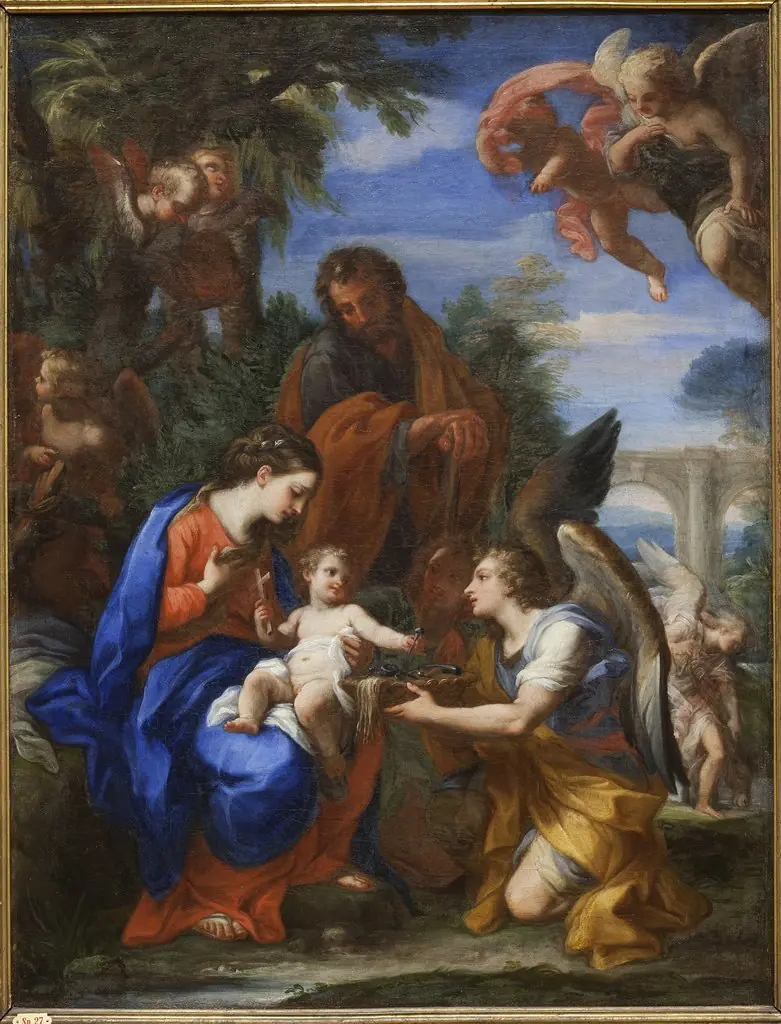 The Rest on The Flight into Egypt
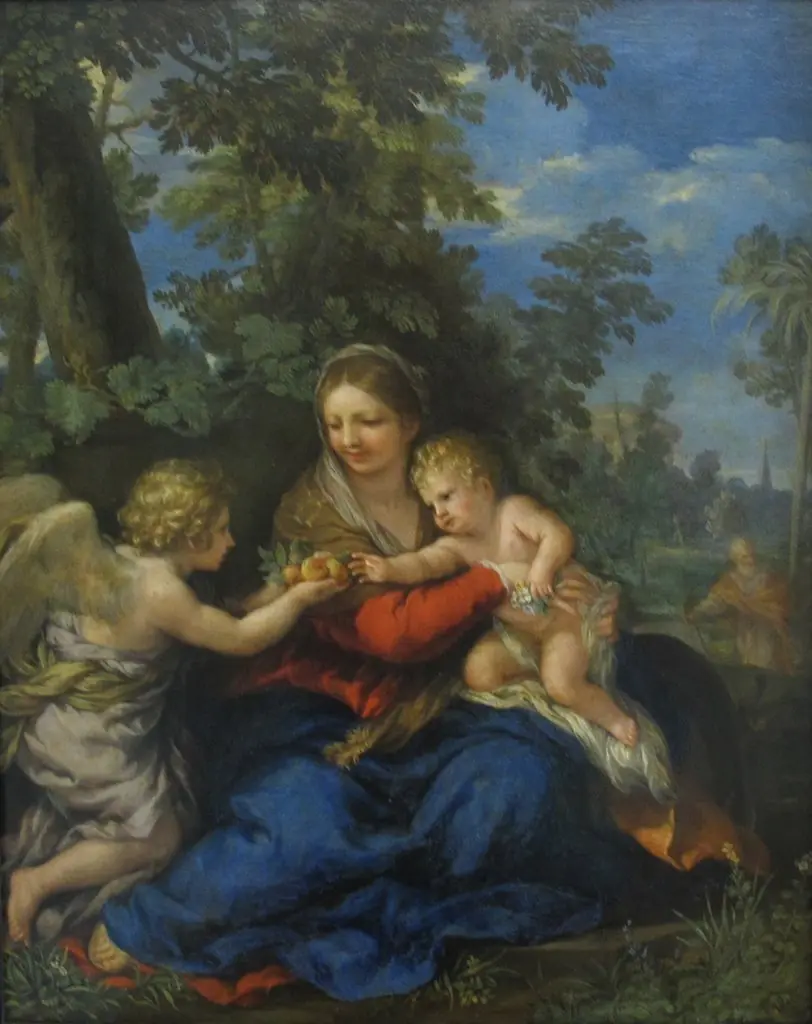 Holy Family Resting on the Flight to Egypt
 The Rest on The Flight into Egypt