Artwork
La Purísima Concepción
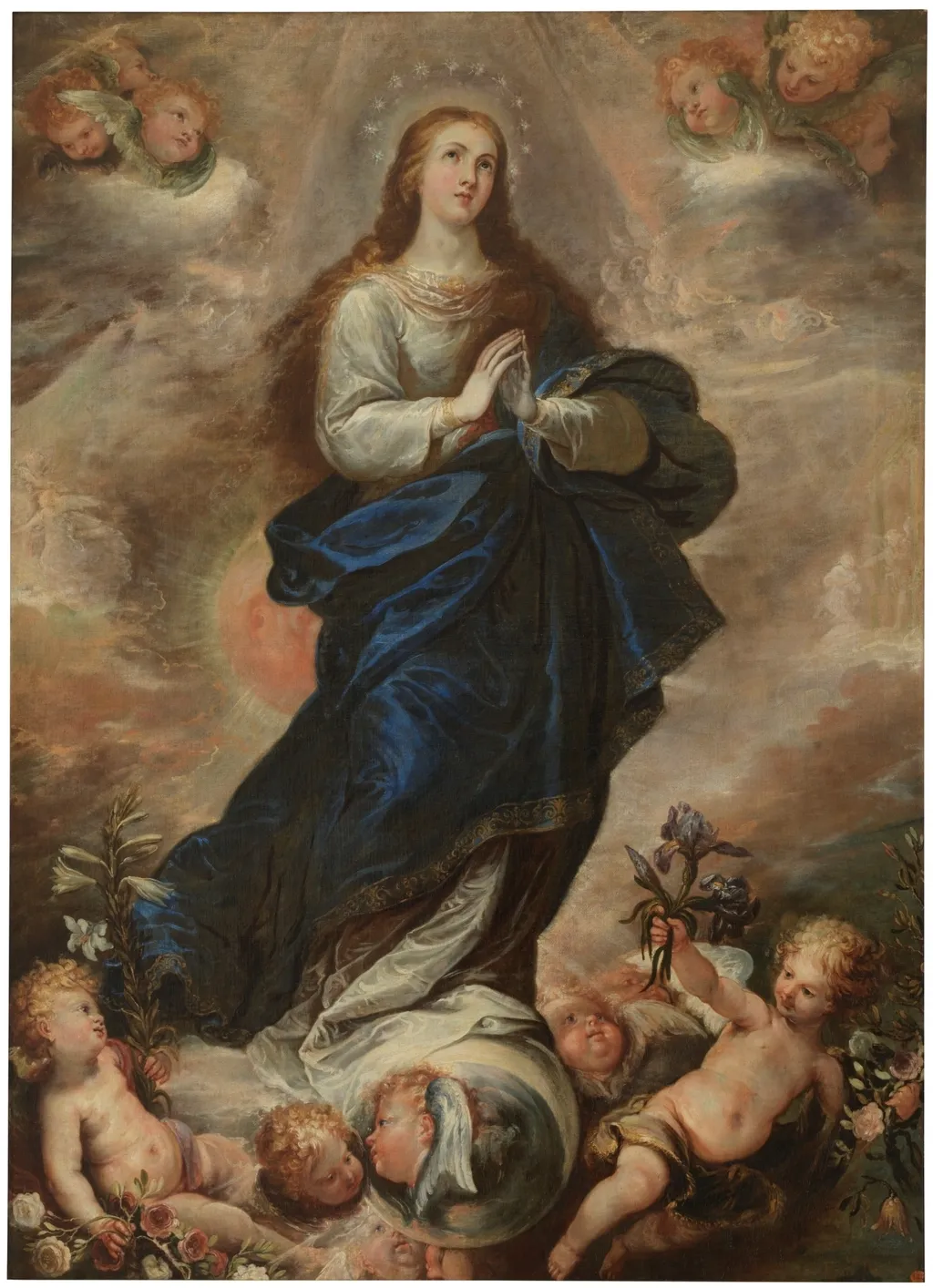
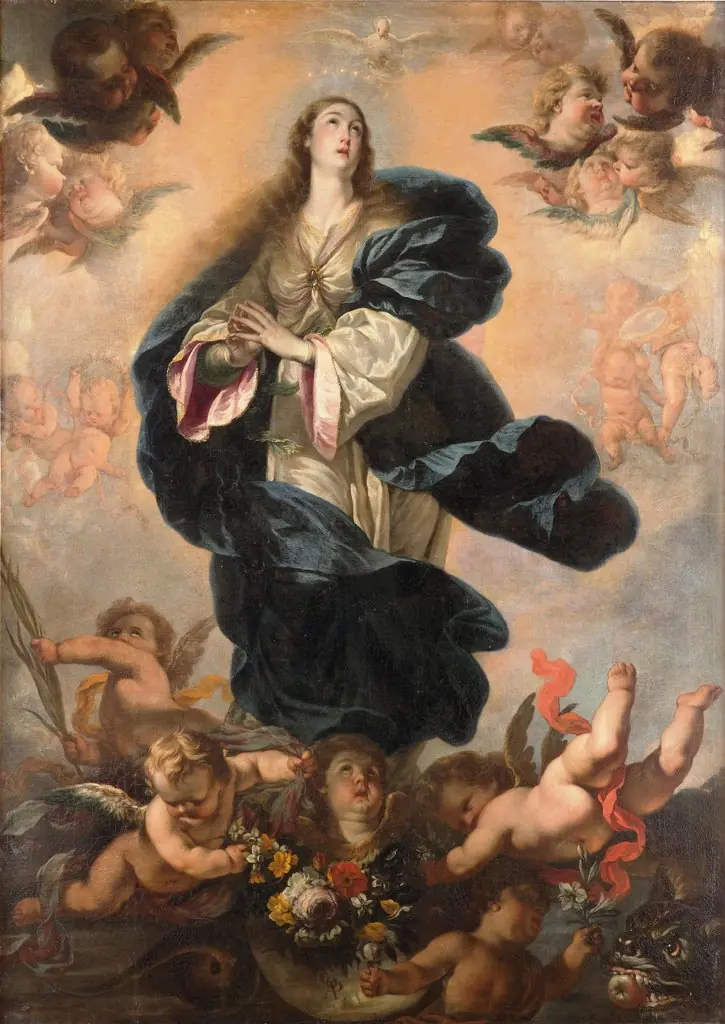
La Purísima Concepción is an oil painting by the Early Baroque Italian artist Francisco Rizi. It dates from 1651 and is held in the collection of the Museo del Prado.
About this work
Overview
Painted in 1651 by Francisco Rizi, La Purísima Concepción is an oil on canvas work depicting the Immaculate Conception of the Virgin Mary.
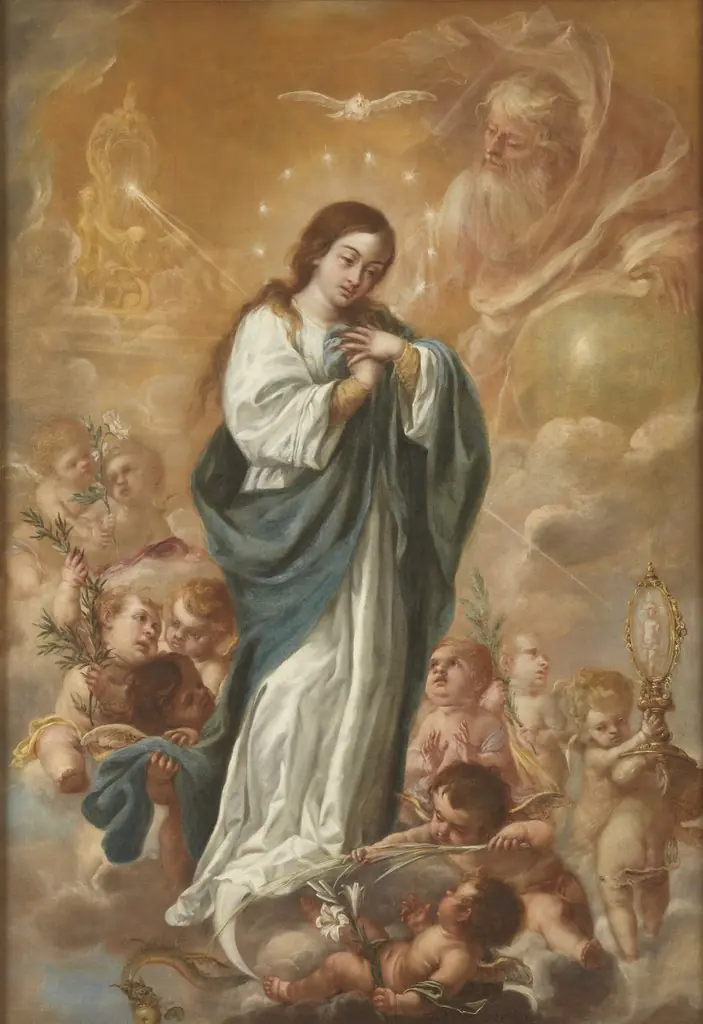
Painted in 1651 by Francisco Rizi, La Purísima Concepción is an oil on canvas work depicting the Immaculate Conception of the Virgin Mary. It resides in the Museo del Prado in Madrid, where it remains a key example of 17th-century Spanish religious art. The composition centers on a celestial figure suspended in a luminous sky, surrounded by cherubic figures and bathed in a soft, directional light that enhances its spiritual tone.
Subject & Meaning
The painting illustrates the Catholic doctrine of the Immaculate Conception, affirming that Mary was conceived without original sin. She is shown floating above the earth, clad in blue and white, symbols of purity and heaven. The surrounding cherubs, engaged in gentle play, signify divine joy and the presence of heavenly hosts. Her serene expression and elevated position reinforce her role as a transcendent, sinless intercessor.
Technique & Style
Rizi employs chiaroscuro to model the Virgin’s form, using subtle gradations of light and shadow to create volume and depth. The light appears to emanate from above, illuminating her robe while leaving the surrounding clouds in softer, muted tones. The cherubs are rendered with delicate brushwork, their forms rounded and playful, contrasting with the Virgin’s stillness. The palette is restrained, with the exception of her vivid garments, which draw the viewer’s focus.
History & Provenance
Commissioned during the height of Counter-Reformation devotion to Marian imagery, the painting entered the Spanish royal collection shortly after its completion. It was later transferred to the Museo del Prado upon its founding in the early 19th century. Its continuous presence in royal and state collections attests to its enduring significance within Spanish ecclesiastical art.
Context
Created in a period when the Spanish Crown and Church actively promoted Marian devotion, the painting reflects theological debates surrounding Mary’s purity. Rizi, trained in Italy and influenced by Baroque trends, adapted Italianate naturalism to Spanish devotional needs. The work aligns with broader efforts to visually reinforce Catholic orthodoxy through emotionally resonant imagery accessible to the faithful.
Legacy
La Purísima Concepción stands as a representative example of Spanish Baroque religious painting, illustrating how theological concepts were rendered through visual symbolism and controlled light. While not widely reproduced in popular culture, it remains a reference point in studies of Counter-Reformation art and the evolution of Marian iconography in Habsburg Spain.
Own this work as a print
Artist & collection

 Immaculate Conception
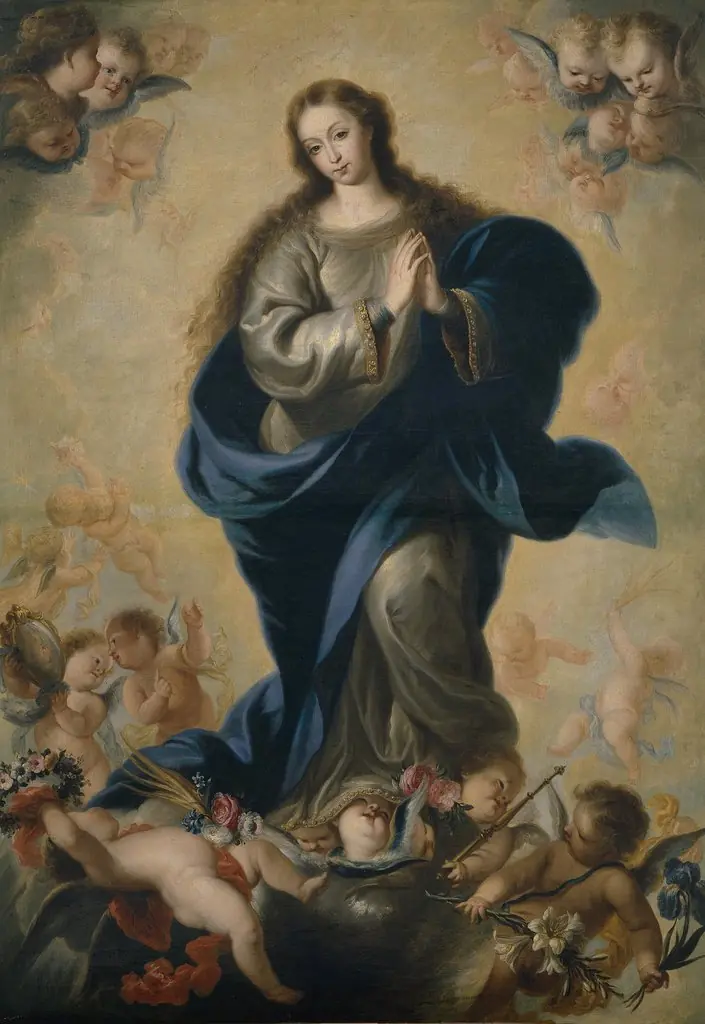 The Immaculate Conception
 The Immaculate Conception
 The Immaculate Conception
 Immaculate Conception
 The Immaculate Conception
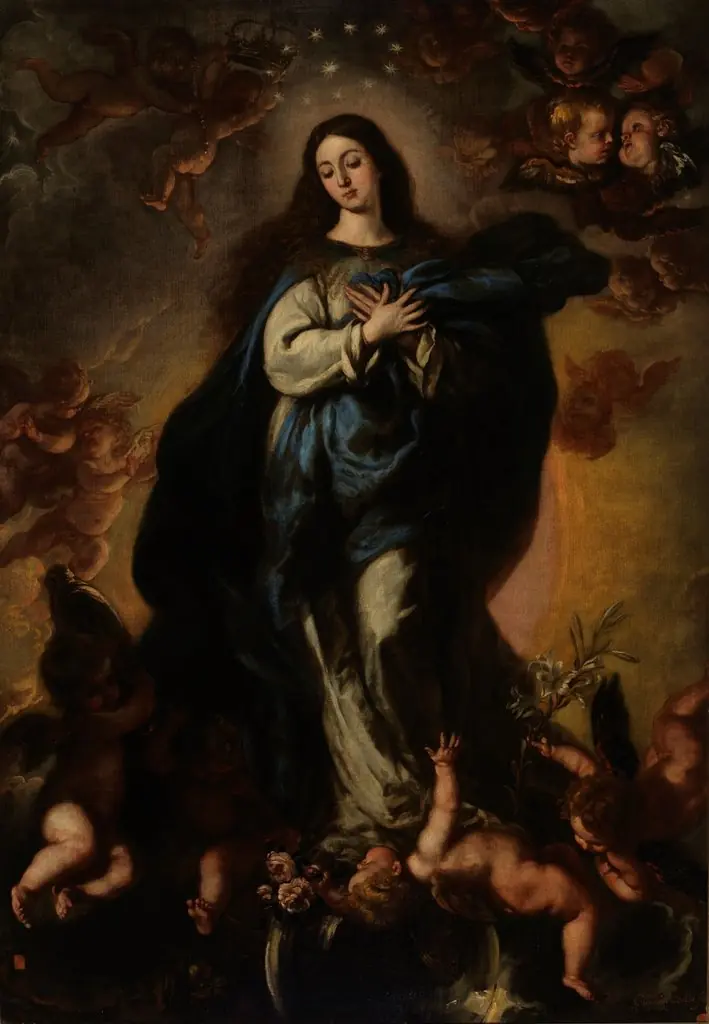 The Immaculate Conception
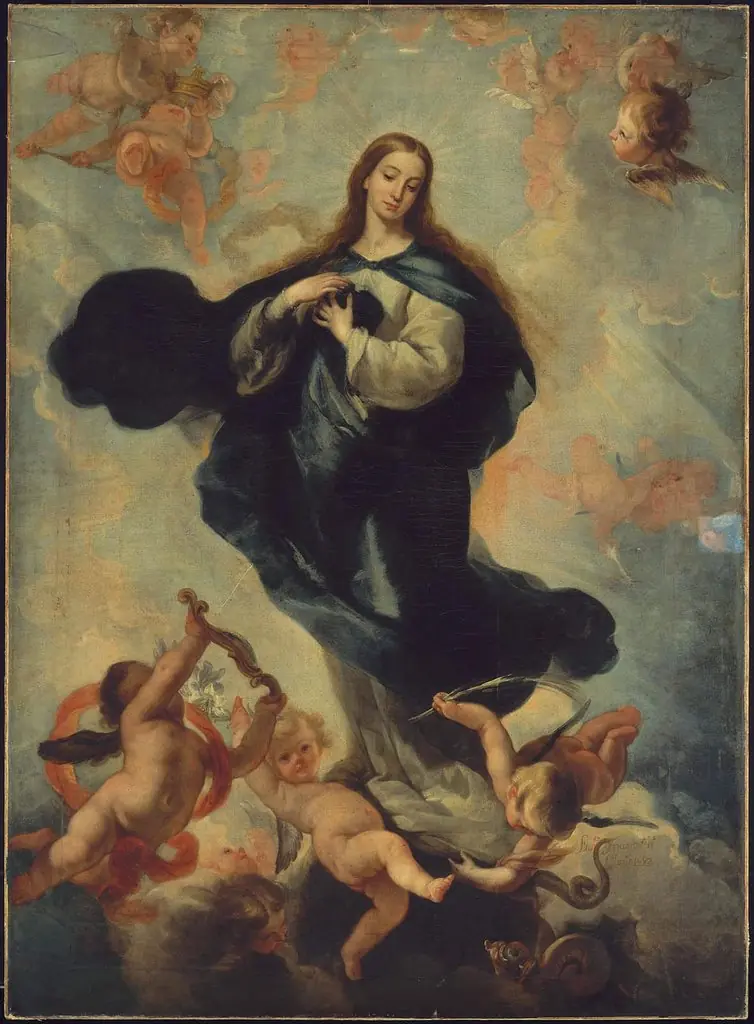 The Virgin of the Immaculate Conception
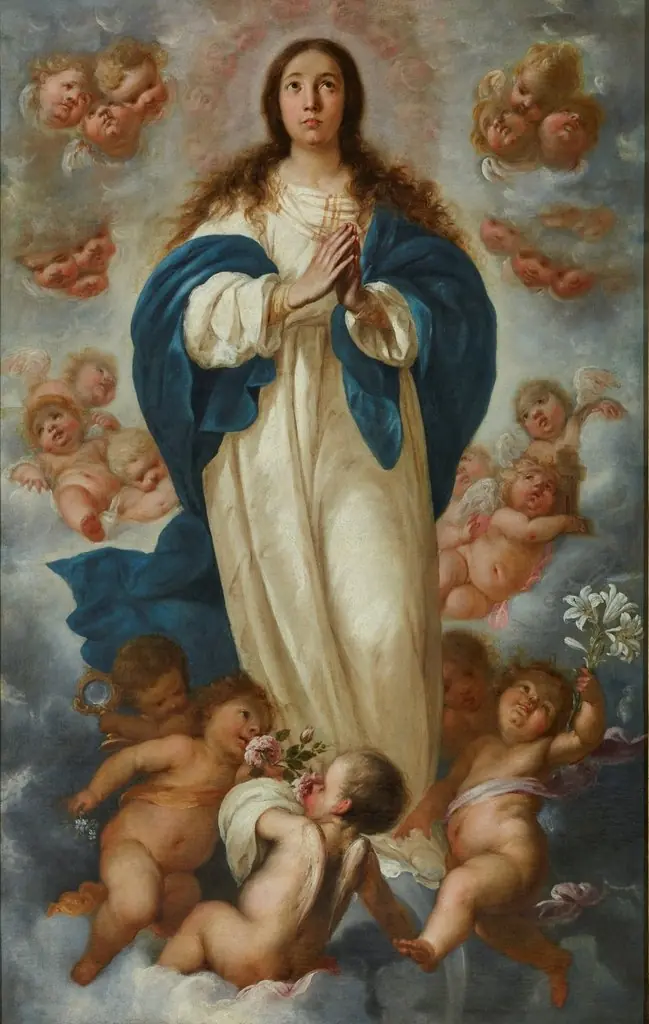 The Immaculate Conception
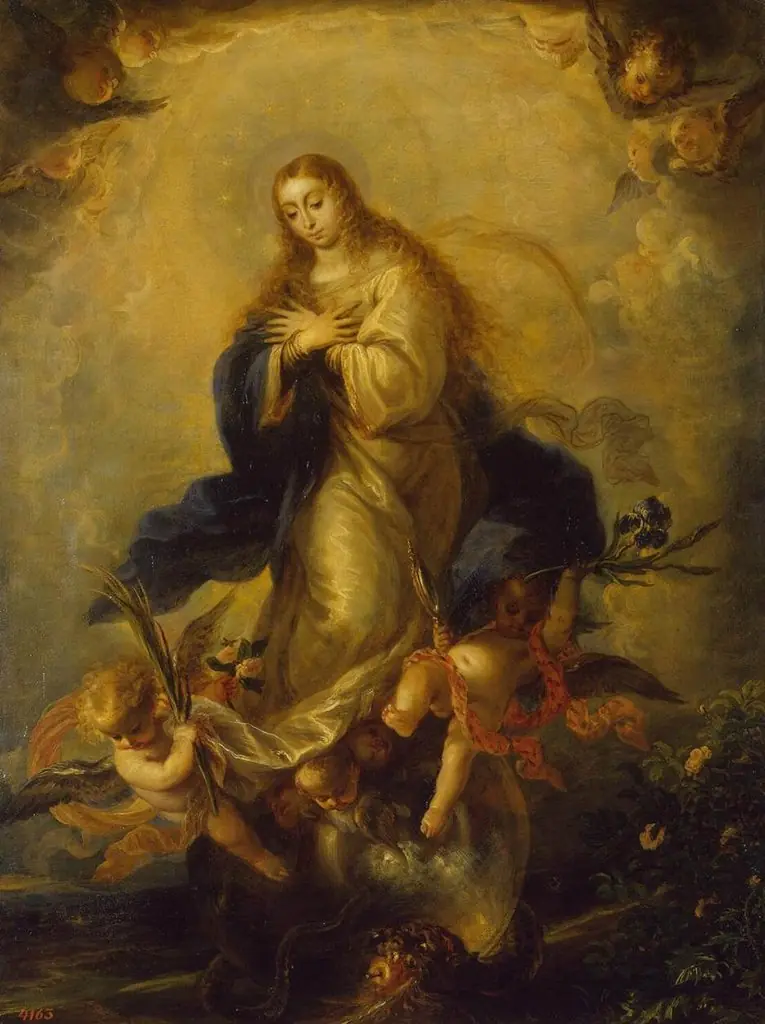 Immaculate Conception
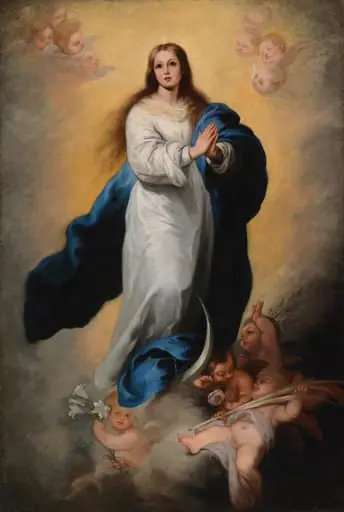 Marian neitseellinen sikiäminen, kopio Murillon mukaan
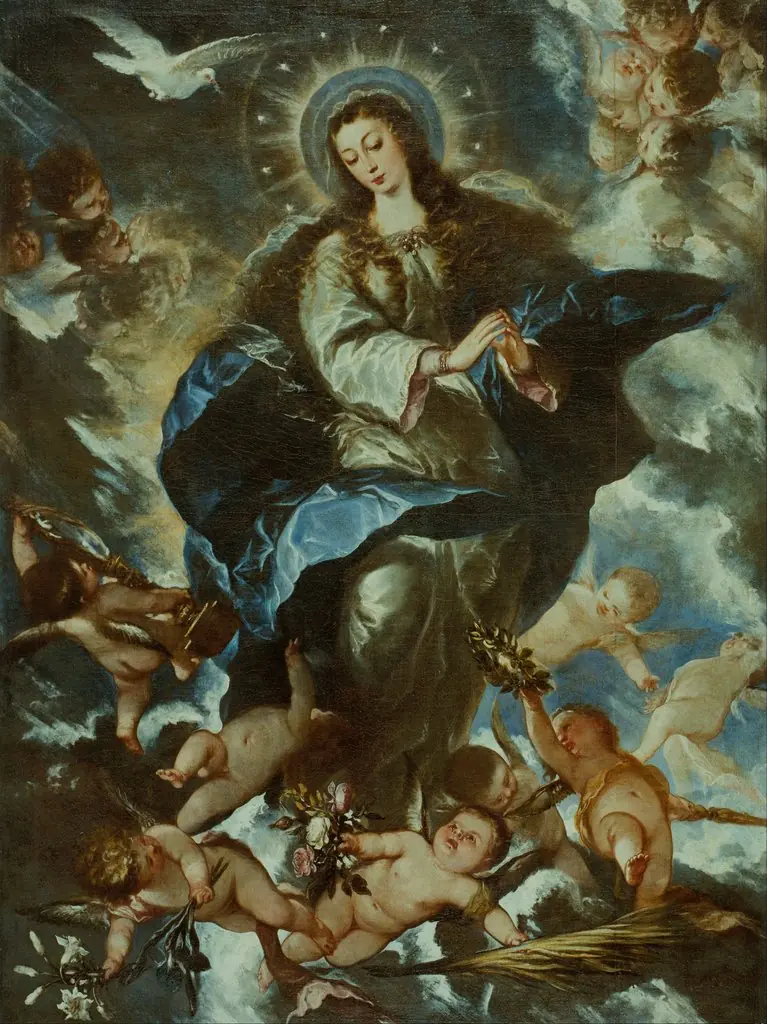 Immaculate Conception