Artwork
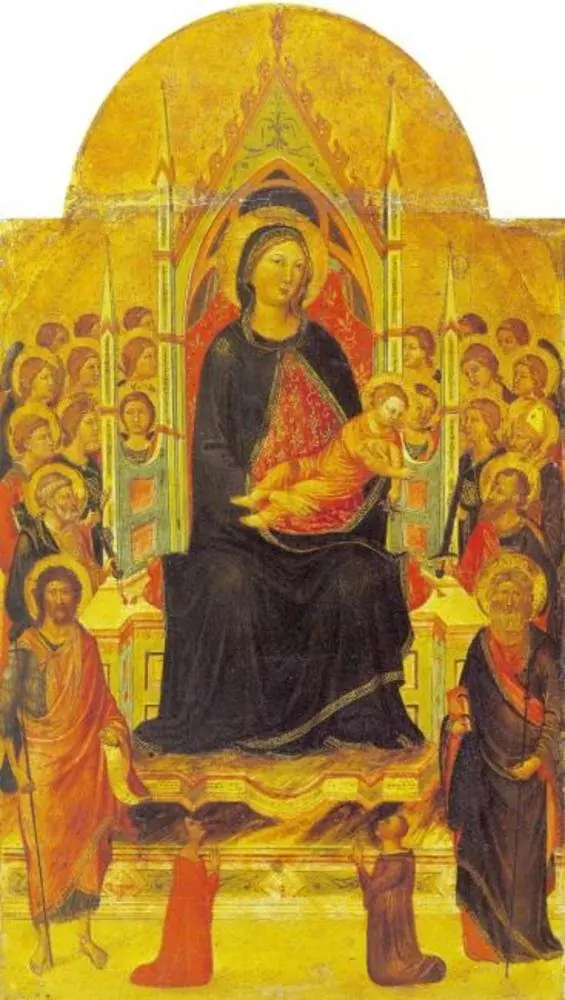
Madonna and Child Enthroned with Saints and Angels
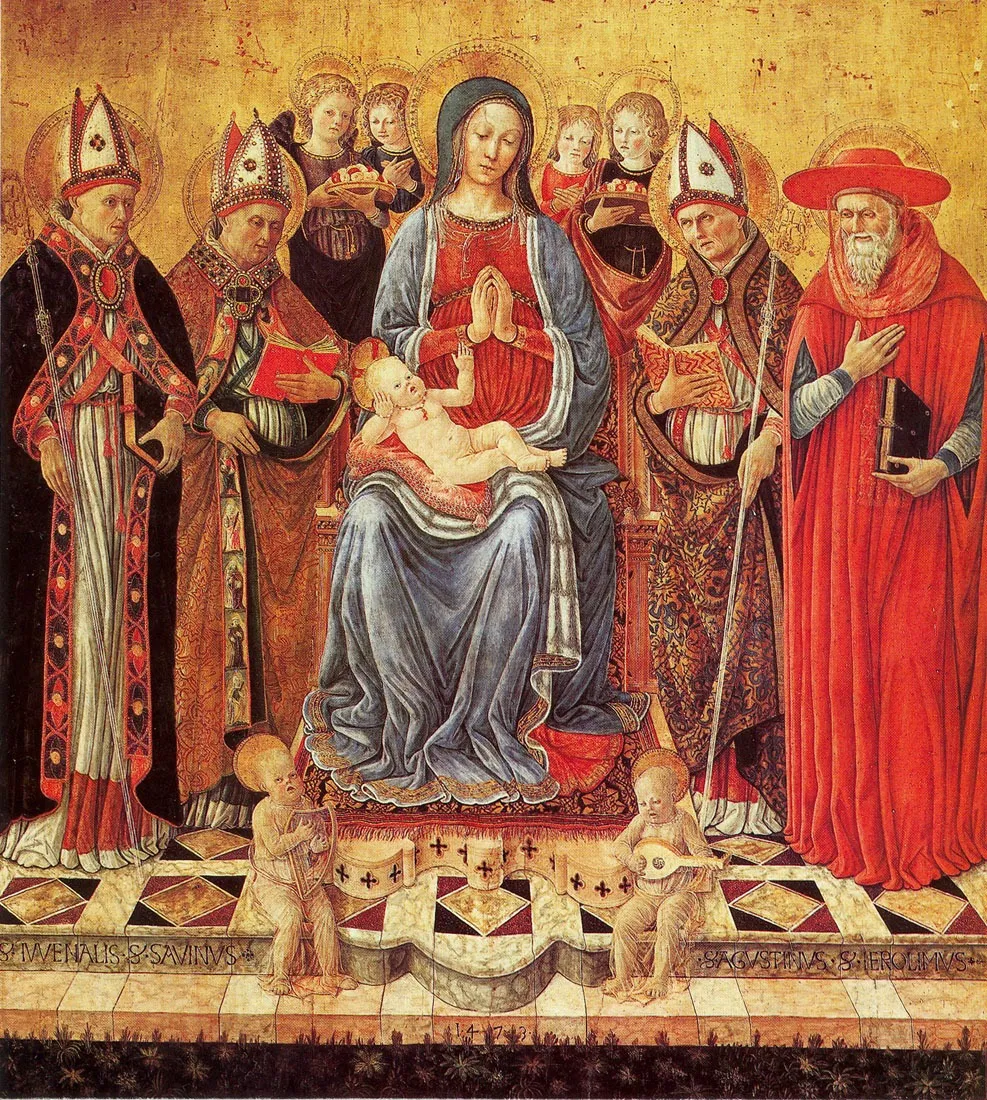
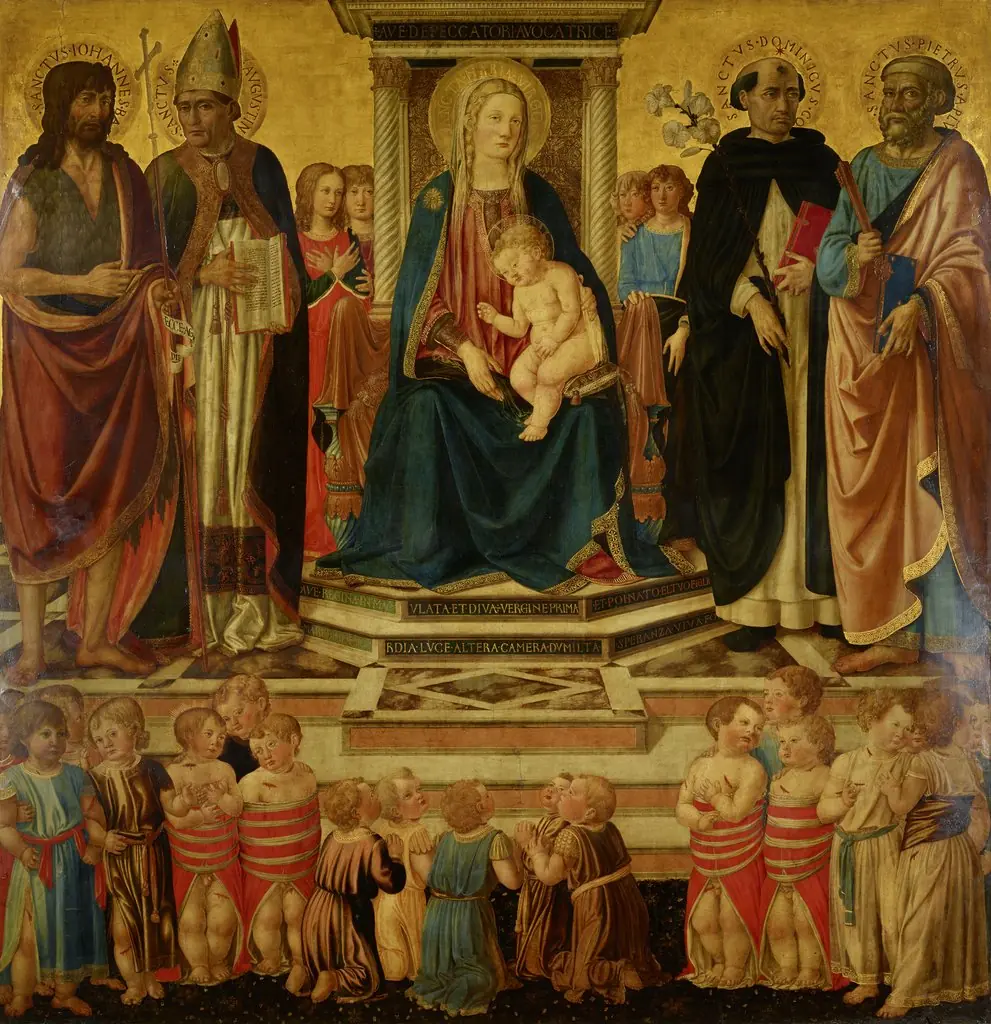
Madonna and Child Enthroned with Saints and Angels is a tempera painting by the Early Renaissance artist Giovanni Boccati. It dates from 1473 and is held in the collection of the Museum of Fine Arts, Budapest.
About this work
Overview
The composition follows the traditional sacra conversazione format, common in Italian devotional art of the period.
Painted in 1473 by Giovanni Boccati, this tempera-on-panel work presents the Virgin Mary seated on a throne with the Christ Child on her lap, surrounded by saints and angels. The composition follows the traditional sacra conversazione format, common in Italian devotional art of the period. It is currently held in the collection of the Museum of Fine Arts in Budapest, where it remains one of the few securely attributed works by the Umbrian-born artist active in the Marche region.
Subject & Meaning
The Virgin and Child occupy the central focus, symbolizing divine grace and maternal tenderness. Flanking them are identifiable saints and angels, each likely chosen for their local veneration or patronage. The presence of books and ritual objects suggests scholarly or spiritual authority among the figures. The arrangement invites contemplation, reinforcing the sacred hierarchy and the intercessory role of saints between the faithful and the divine.
Technique & Style
Boccati employed tempera on wood panel, a traditional medium offering fine detail and luminous color. The figures are rendered with crisp outlines and flat, decorative drapery, typical of late Gothic conventions. Gold highlights and rich blues in Mary’s robe reflect lingering medieval aesthetics, while the tiled floor and subtle landscape elements hint at emerging Renaissance spatial awareness. The warm, flat background enhances the figures’ presence without depth.
History & Provenance
The painting was likely commissioned for a private chapel or religious confraternity in the Marche region, where Boccati worked during the 1470s. It entered the Museum of Fine Arts, Budapest, in the early 20th century as part of a broader acquisition of Italian panel paintings. Its attribution to Boccati is supported by stylistic parallels with his documented works, though its original location and patron remain undocumented.
Context
Created during a transitional period in Italian art, the painting bridges late Gothic formalism and early Renaissance naturalism. While Boccati’s style retains the elegance and symbolism of earlier traditions, the inclusion of architectural details and botanical elements reflects growing interest in the observable world. It aligns with regional practices in central Italy, where artists blended devotional intensity with subtle decorative refinement.
Legacy
Though Boccati was not a major figure on the national stage, this work exemplifies the quiet, skilled craftsmanship of provincial Italian painters who sustained religious imagery for local communities. The painting’s preservation in Budapest offers insight into the circulation of small-scale devotional art across Europe. It stands as a testament to the enduring appeal of Marian iconography in the decades before High Renaissance innovations transformed sacred representation.
Artist & collection

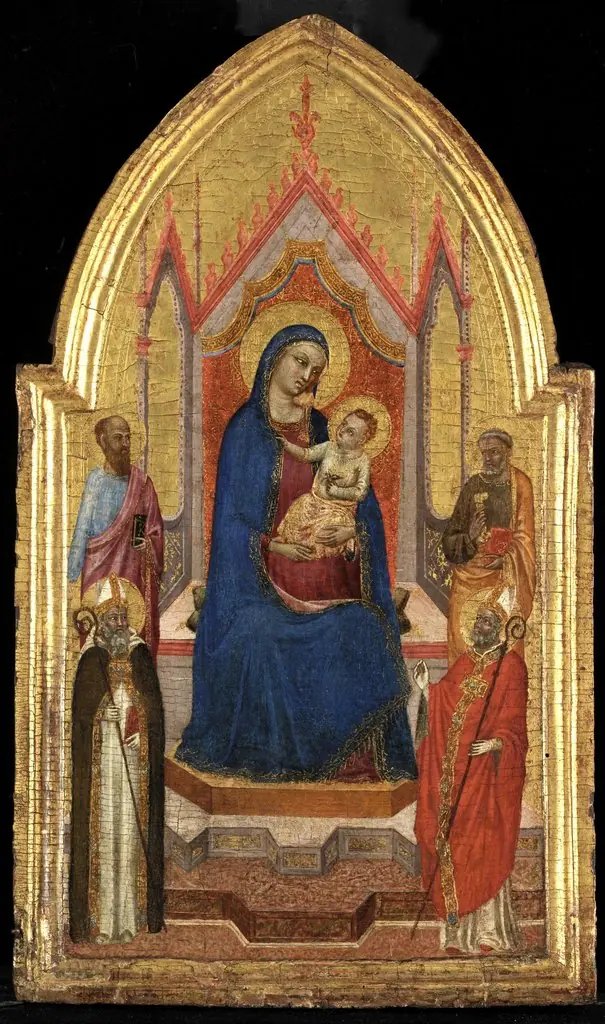
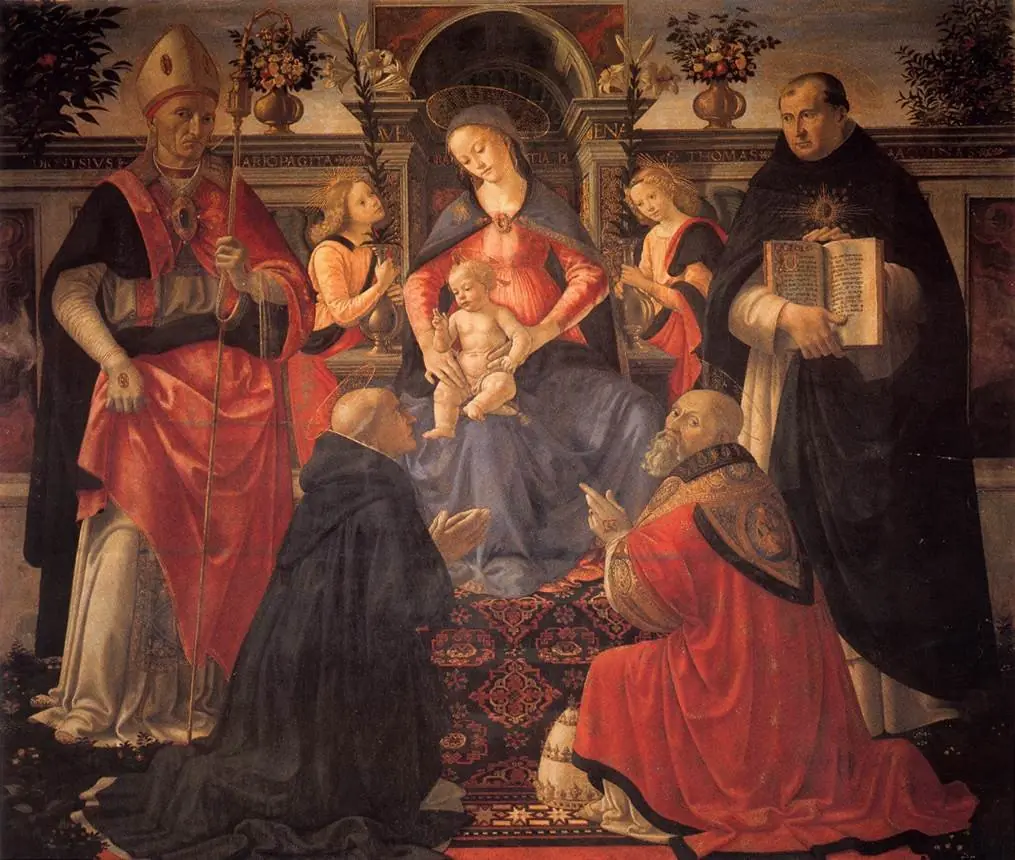 Madonna and Child Enthroned between Angels and Saints
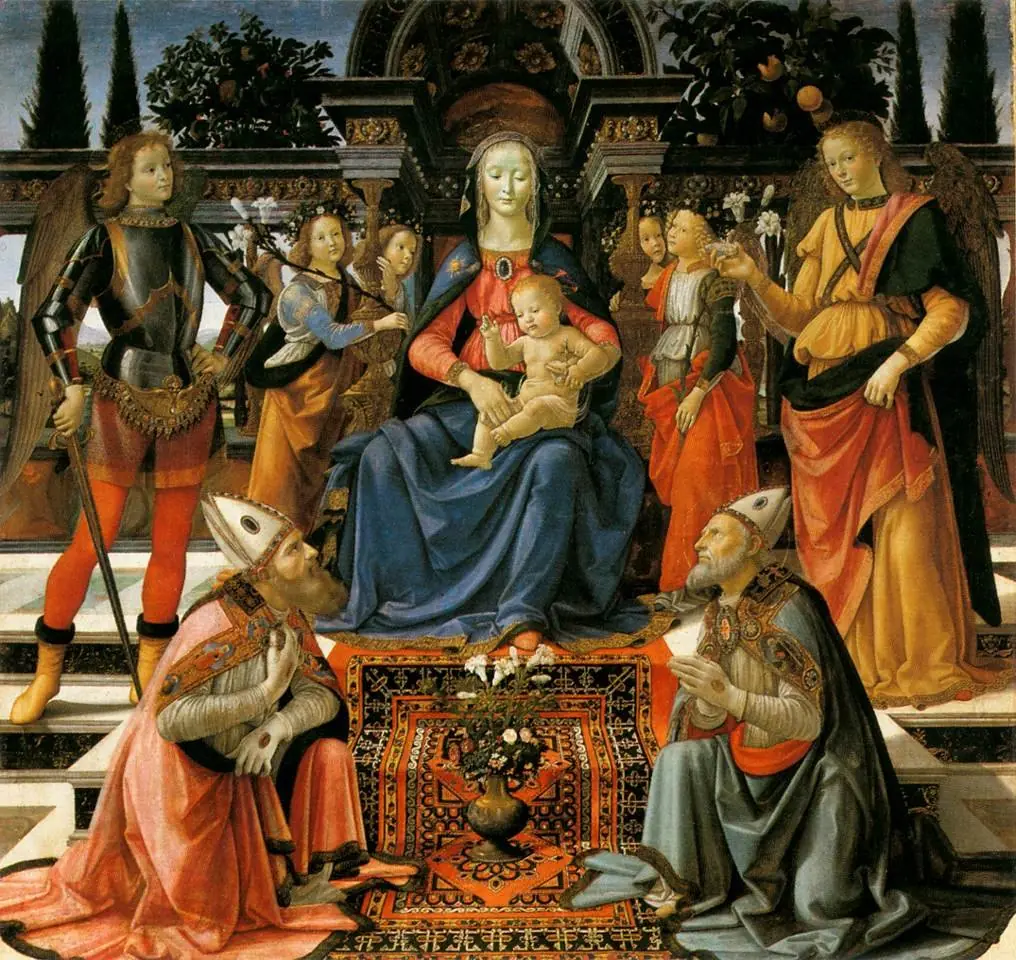 Madonna and Child Enthroned with Saints
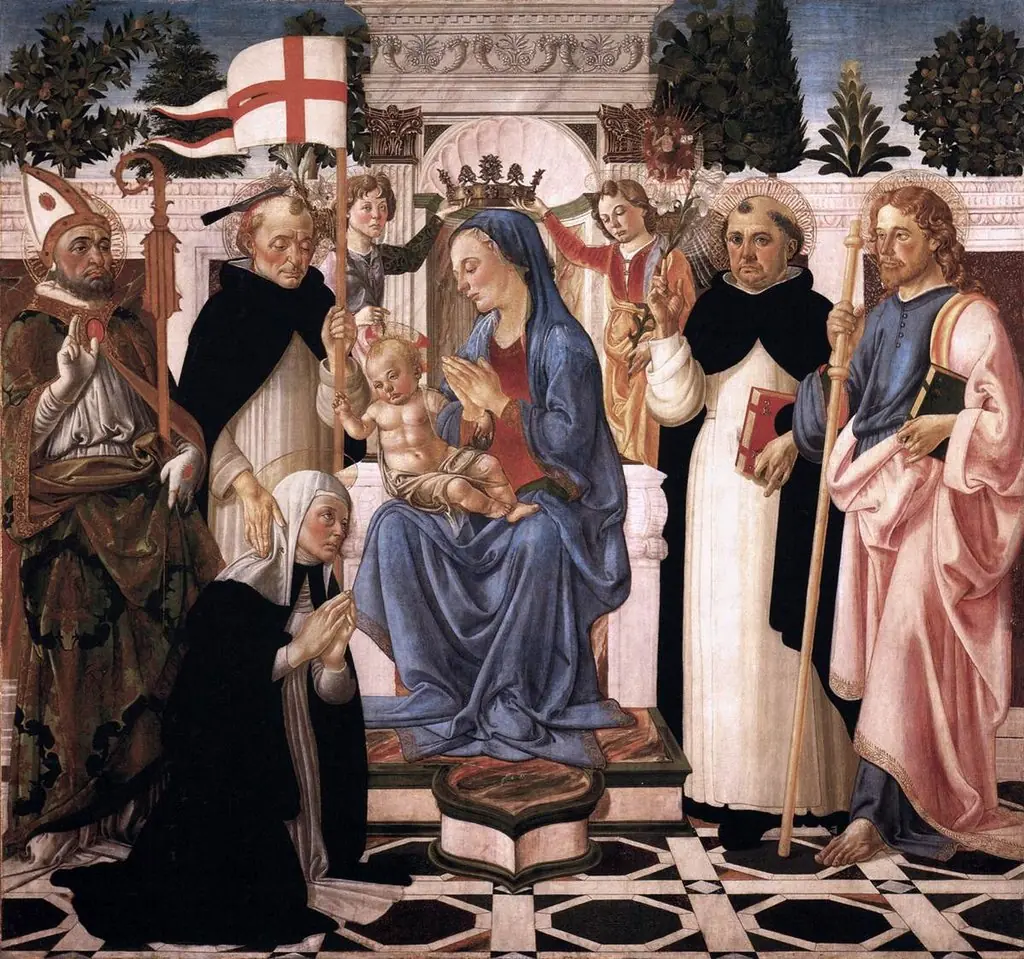
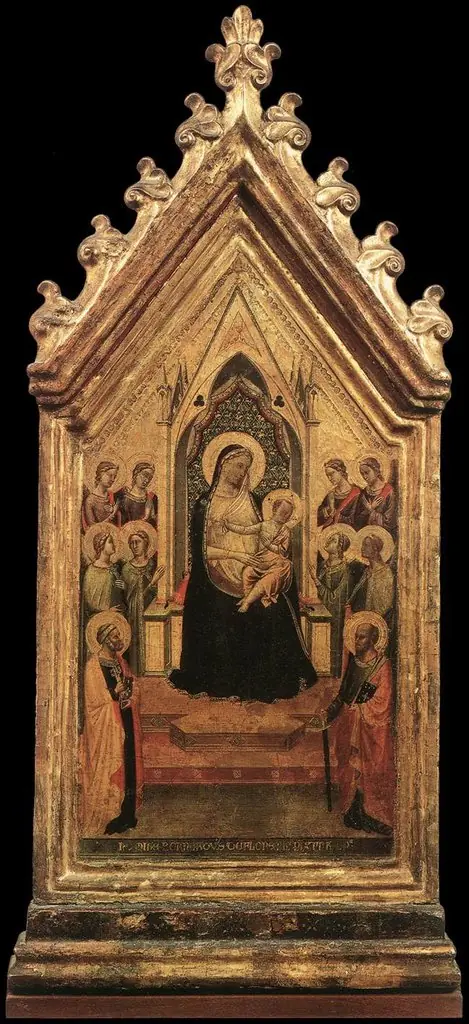 Madonna and Child Enthroned with Angels and Saints
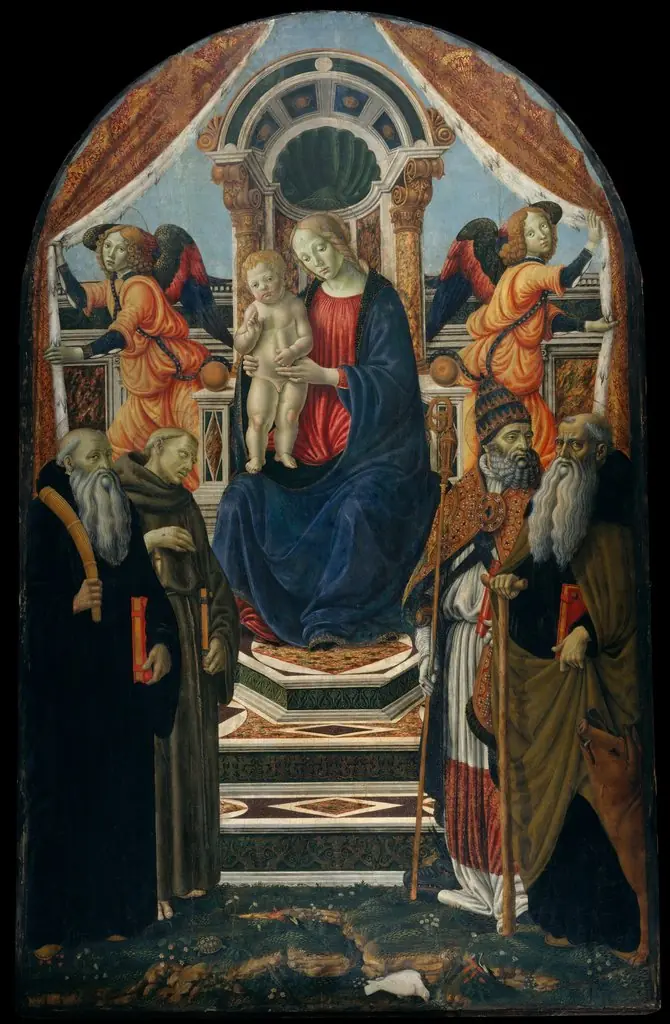 Madonna and Child Enthroned with Saints and Angels
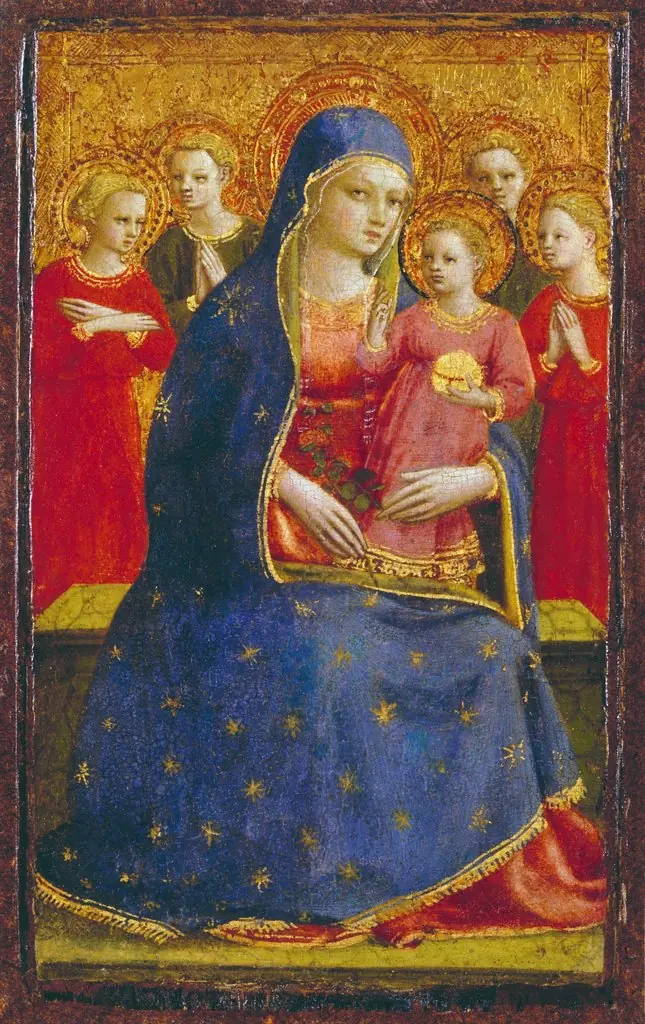
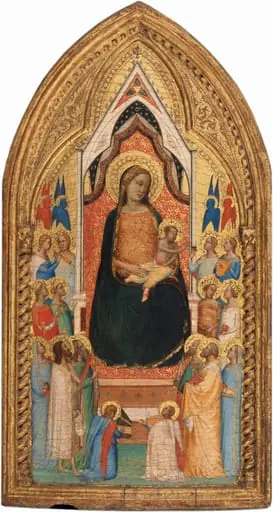 Madonna and Child with Saints and Angels
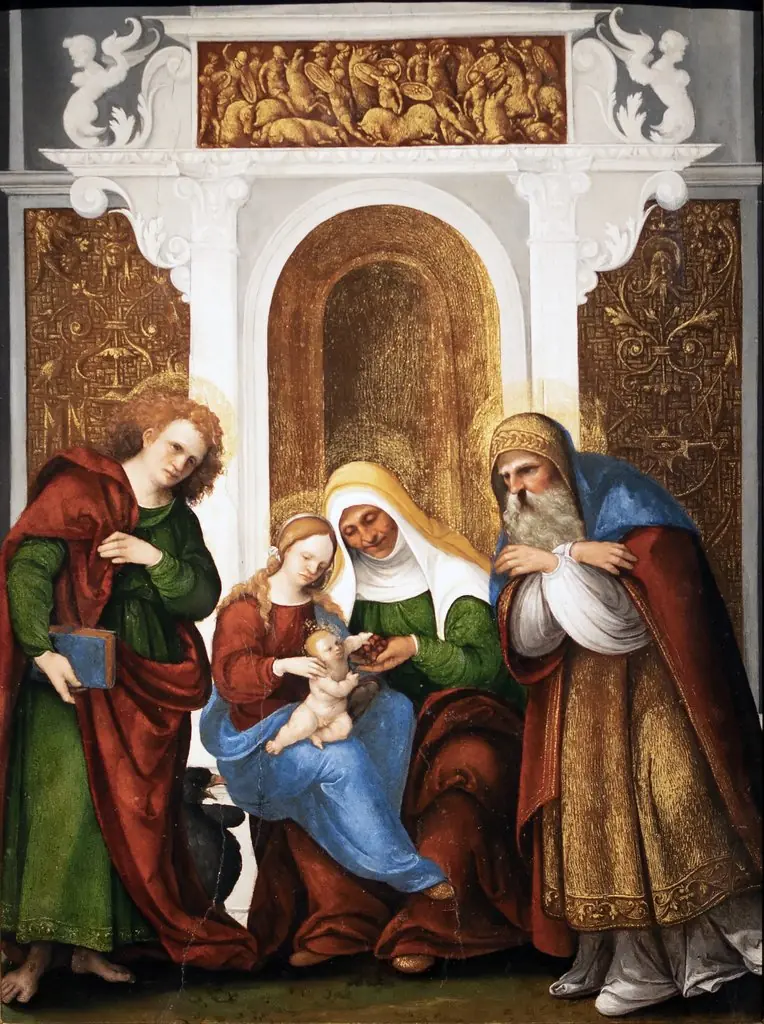 Madonna with Child and Saints
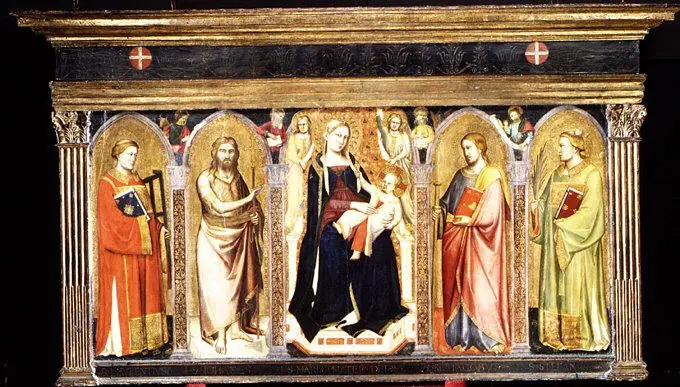 Madonna and Child Enthroned with Saints
 Madonna and Child Enthroned with Angels, Saints and Donors