Artwork
The Blessed Andrea Gallerani (died 1251)
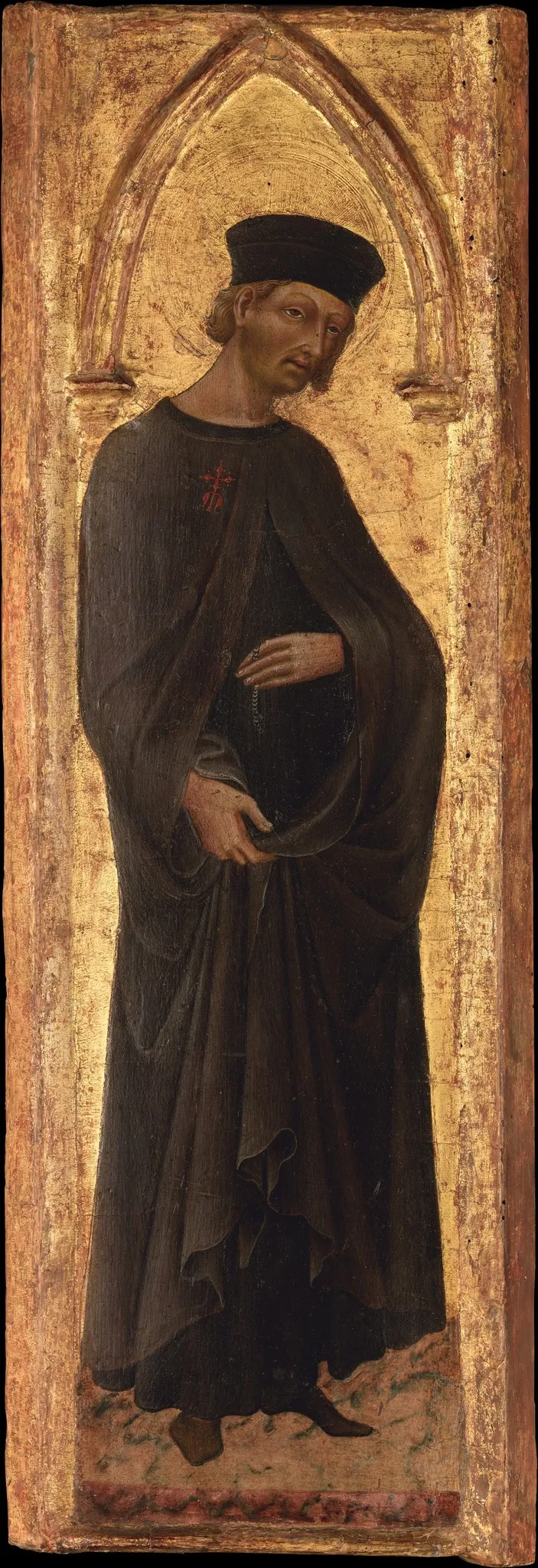
The Blessed Andrea Gallerani (died 1251) is a tempera painting by the Early Renaissance artist Giovanni di Paolo. It dates from 1450 and is held in the collection of the Metropolitan Museum of Art.
About this work
Overview
The figure stands upon a rocky, uneven terrain with sparse green vegetation, a detail that contrasts with the flat, luminous background.
Painted in 1450 by Giovanni di Paolo, The Blessed Andrea Gallerani depicts the 13th-century Sienese lay brother and founder of the Order of the Blessed Virgin Mary of Mercy. The work presents a full-length portrait of the subject standing against a traditional gold ground, framed by a pointed arch that evokes a Gothic architectural setting. Gallerani is shown in a long black habit marked by a small red cross on the chest, signifying his religious affiliation, while his hands clasp a string of beads. His expression is solemn and direct, characteristic of the artist's approach to sacred portraiture during his mature period. The figure stands upon a rocky, uneven terrain with sparse green vegetation, a detail that contrasts with the flat, luminous background. Executed in tempera, the painting reflects Giovanni di Paolo's distinctive style, which blends the linear elegance of the Sienese tradition with a heightened emotional intensity. This work serves as a devotional image honoring the local saint, created during a time when the artist was producing numerous religious commissions for Sienese institutions. The composition emphasizes the spiritual gravity of the subject, utilizing the gold leaf not merely as decoration but as a symbol of divine light surrounding the holy figure.
Subject & Meaning
The painting portrays Andrea Gallerani as a tall, serious man, dressed in a long black robe and a matching hat. His hands are clasped, holding a string of beads, and a small red cross is visible on the chest of his garment, signifying his piety. Against a radiant gold background, his calm yet intense facial expression conveys a sense of spiritual depth and contemplation, consistent with portrayals of blessed individuals from this historical period.
Technique & Style
Executed in tempera, a medium valued for its capacity to render fine detail and enduring color, the painting features a prominent gold background. This gilded surface, along with the pointed arch behind the figure, was a conventional artistic element in religious works of the era, underscoring the sacred nature of the subject. The careful application of gold leaf ensures the artwork's sustained brilliance, subtly contrasted by the rocky ground with a hint of green beneath the figure's feet.
Artist & collection

Artist
Giovanni di Paolo di Grazia was an Italian painter, working primarily in Siena, becoming a prolific painter and illustrator of manuscripts, including Dante's texts.

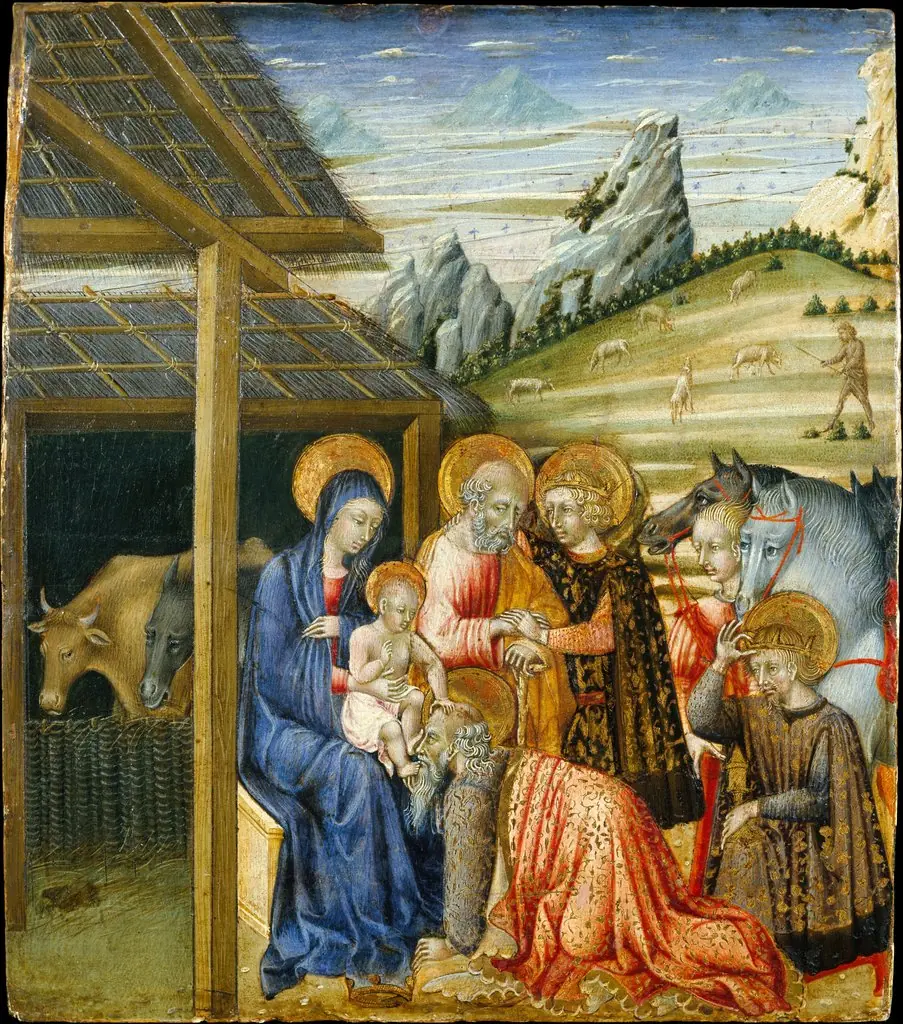 The Adoration of the Magi
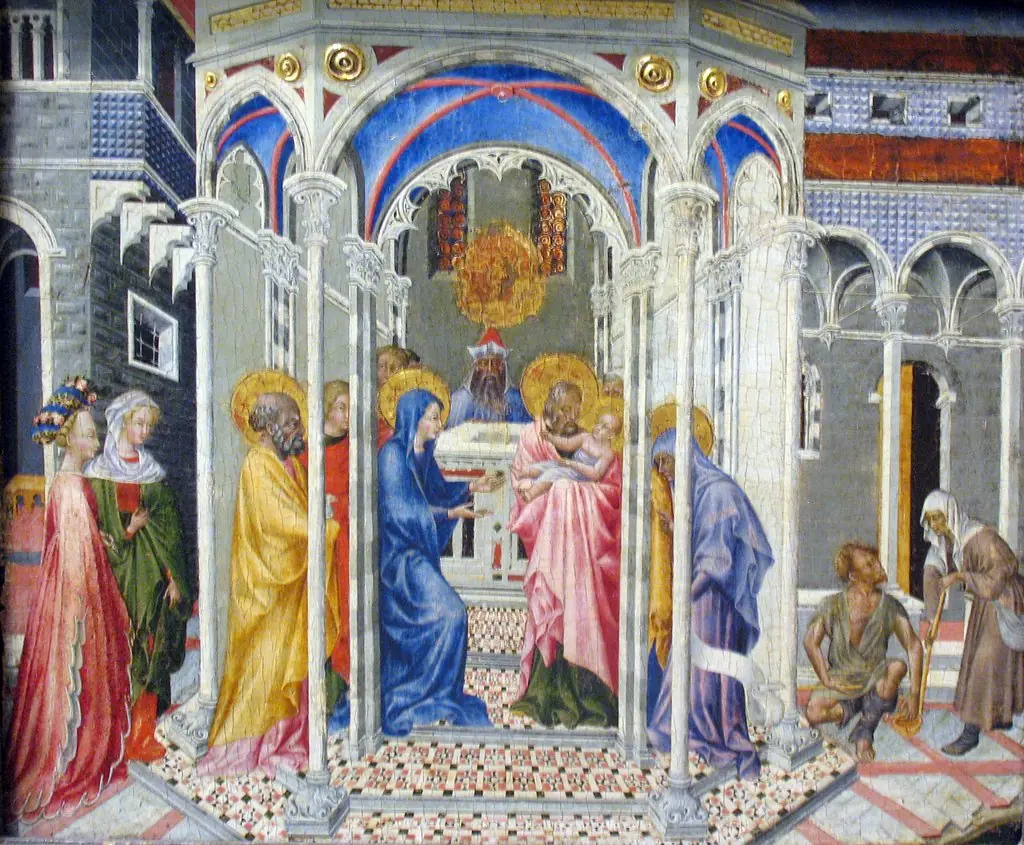 The Presentation of Christ in the Temple
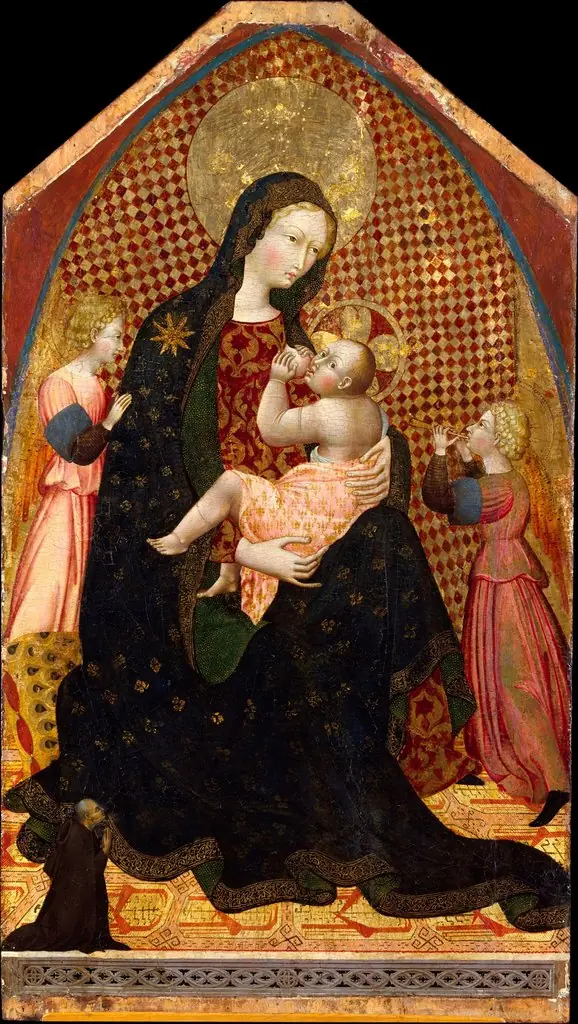 Madonna and Child with Two Angels and a Donor
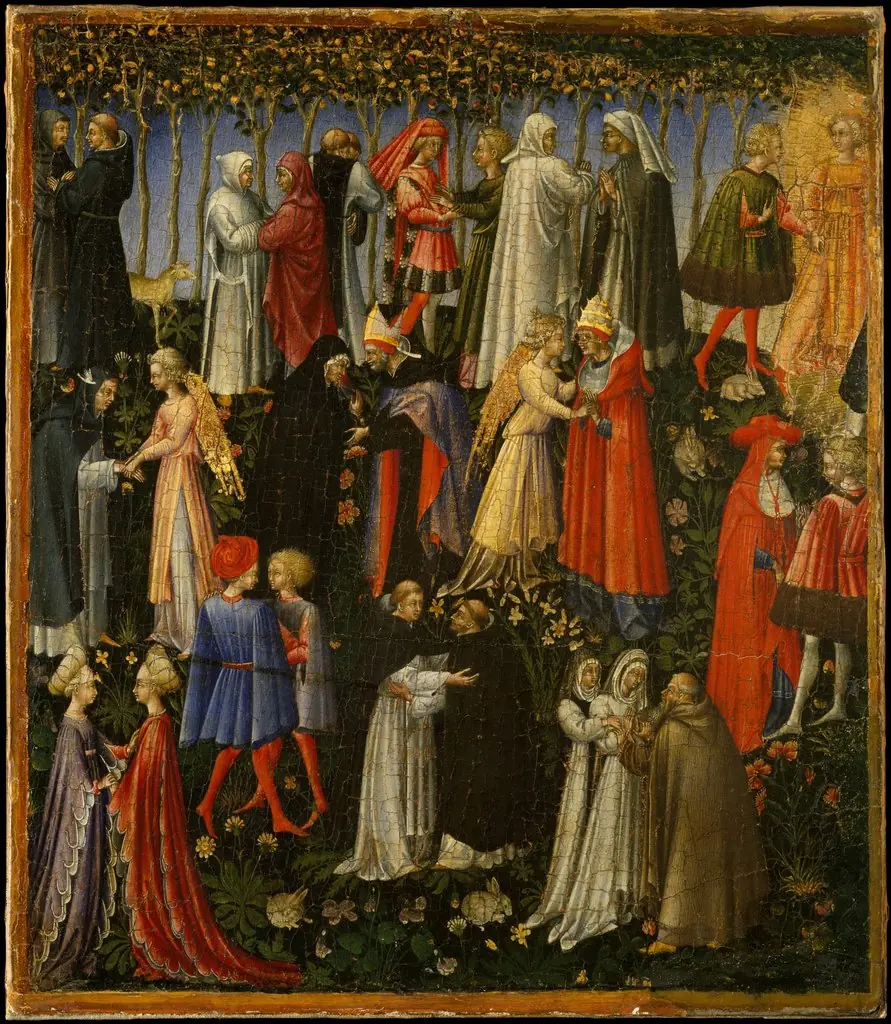 Paradise
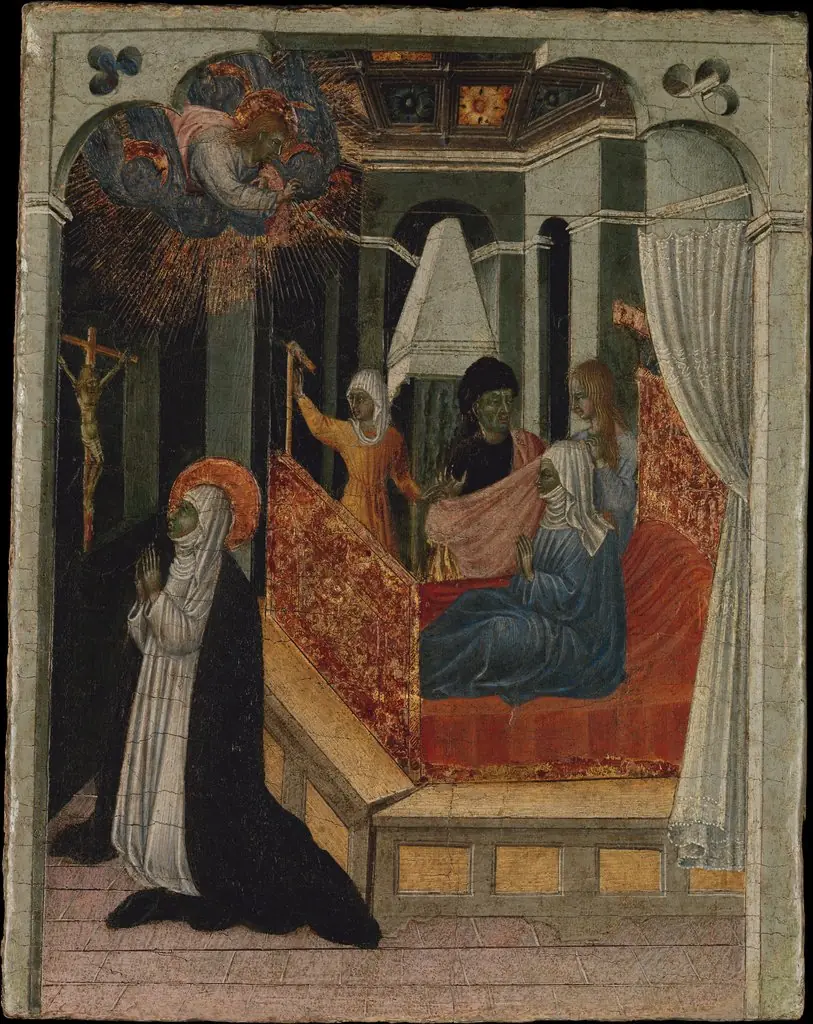 Saint Catherine of Siena Beseeching Christ to Resuscitate Her Mother
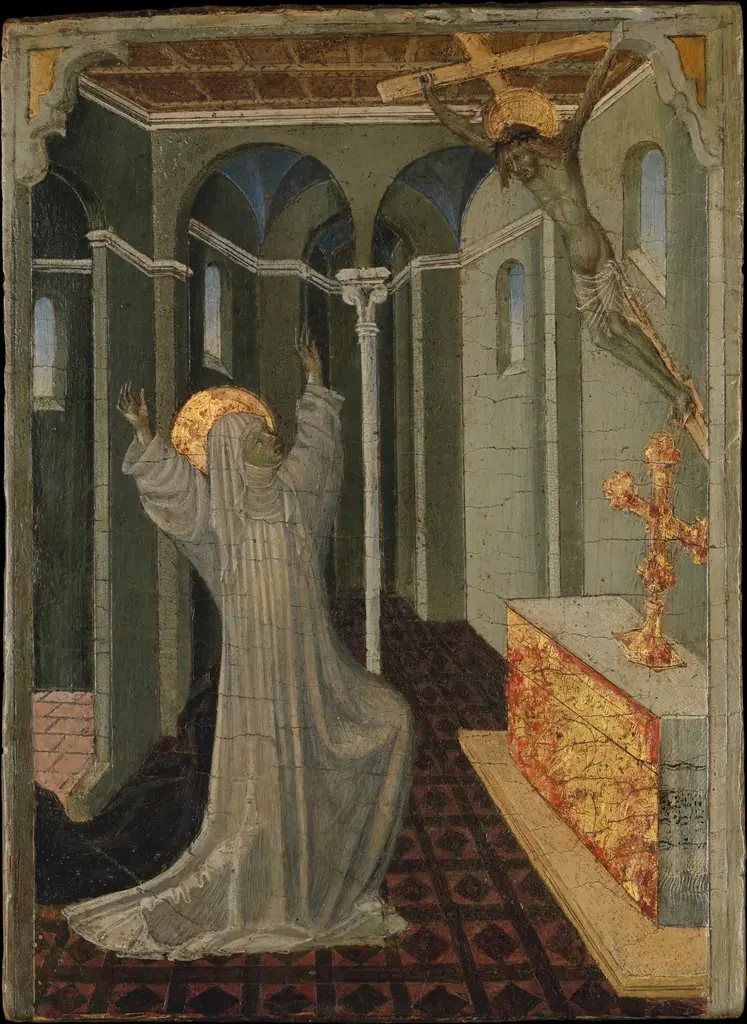 Saint Catherine of Siena Receiving the Stigmata
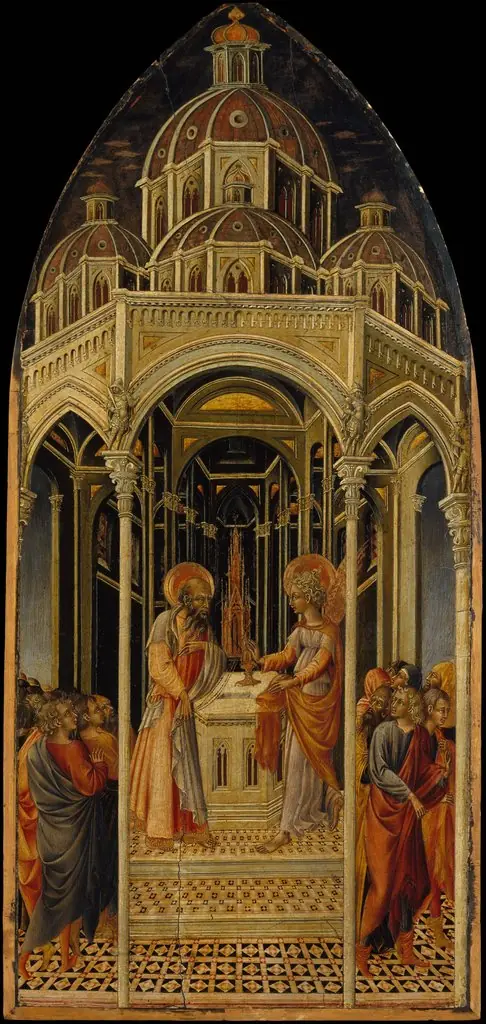 The Annunciation to Zacharias; (verso) The Angel of the Annunciation
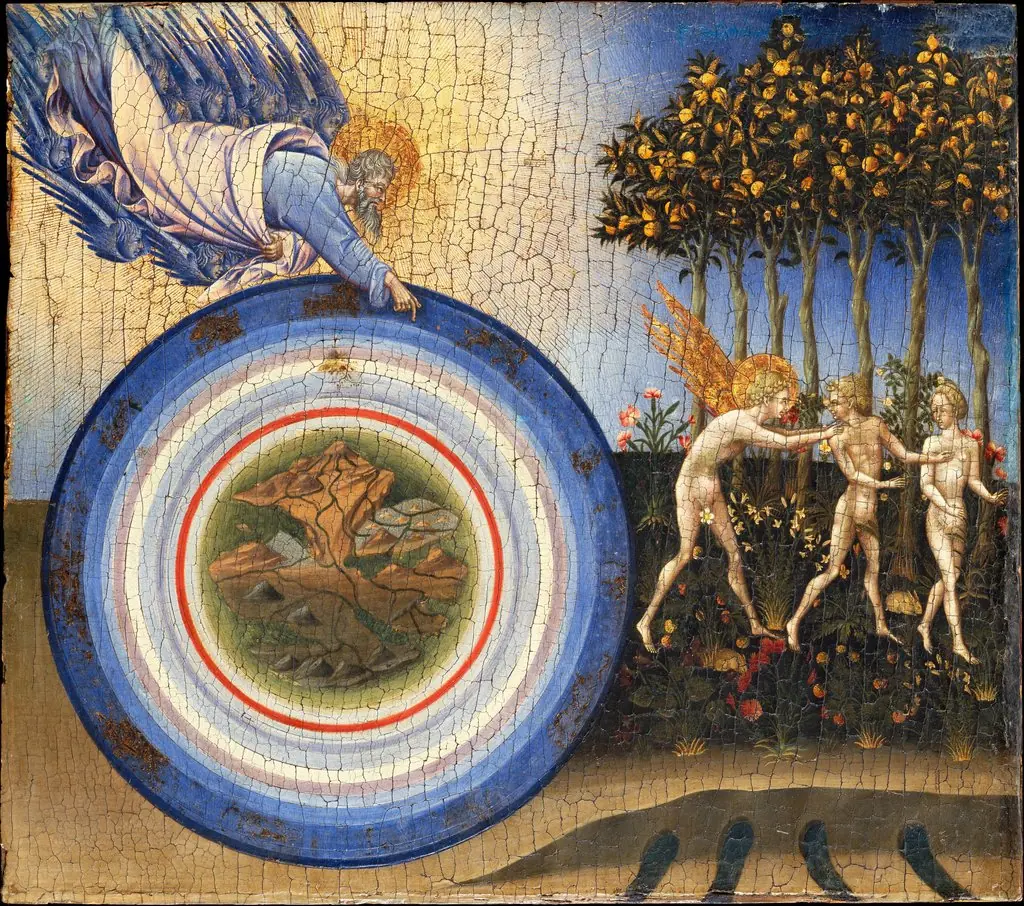 The Creation of the World and the Expulsion from Paradise