Artwork
The Holy Family Descending a Path near Shepherds
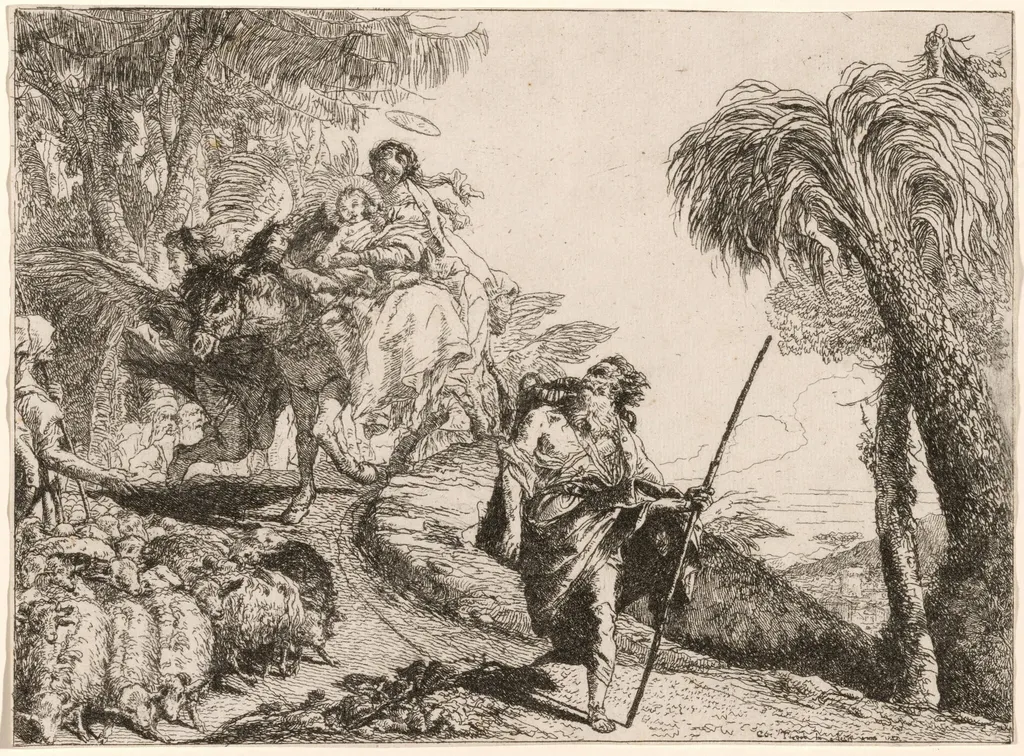
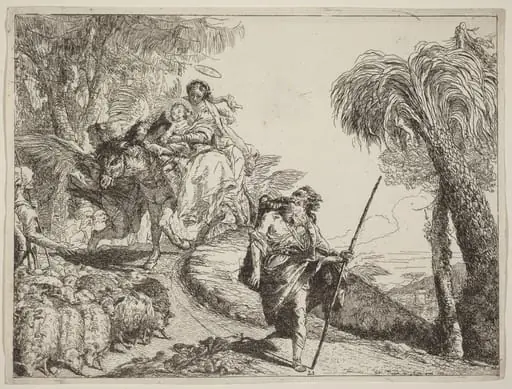
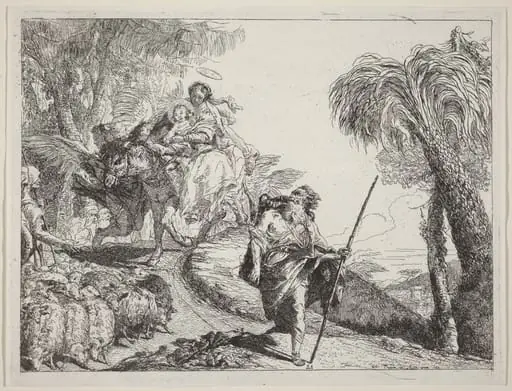
The Holy Family Descending a Path near Shepherds is an ink print by the Baroque artist Giovanni Domenico Tiepolo. It dates from 1752 and is held in the collection of the National Gallery of Art.
About this work
Overview
The composition captures a moment of movement—figures traversing a narrow path—suggesting a narrative pause rather than a ceremonial event.
Created in 1752, this etching by Giovanni Domenico Tiepolo is a working proof on laid paper, part of a series exploring religious themes in intimate natural settings. Unlike his father’s grand frescoes, this work focuses on quiet domesticity, rendered in monochrome with delicate line work. The composition captures a moment of movement—figures traversing a narrow path—suggesting a narrative pause rather than a ceremonial event.
Subject & Meaning
The Holy Family—Mary, Joseph, and the infant Jesus—descend a forested path alongside shepherds, evoking the Flight into Egypt. The child clings to Mary’s back, Joseph carries a staff, and the shepherds observe from a distance. The scene avoids overt symbolism, instead emphasizing humility and quiet pilgrimage. The presence of shepherds, often associated with divine revelation, subtly reinforces sacred continuity without dramatic intervention.
Technique & Style
Tiepolo employed sharp, controlled etching lines to define texture: jagged rocks, dense foliage, and flowing hair are rendered with precision. The use of laid paper enhances the tactile quality of the print, while the absence of tone creates contrast through line density alone. The composition is tightly framed by trees, directing focus to the figures’ movement and the narrowness of the path, a compositional choice that heightens intimacy.
History & Provenance
This print is a working proof, likely used by the artist to refine details before final publication. It belongs to a group of etchings Tiepolo produced in the early 1750s, distinct from his father’s large-scale works. While the exact early ownership is undocumented, such proofs were often retained by the artist or given to close associates, preserving a record of his evolving process in printmaking.
Context
In mid-18th century Venice, religious imagery remained central to artistic production, though the tone shifted toward personal, lyrical expression. Tiepolo’s etchings responded to this trend, moving away from theatricality toward quiet observation. His work reflects both the influence of his father’s style and a growing interest in everyday spirituality, aligning with broader European shifts toward naturalism in religious art.
Legacy
Tiepolo’s etchings, including this one, contributed to the revival of printmaking as a medium for intimate narrative. Though less celebrated than his father’s oeuvre, his work influenced later artists seeking to convey sacred themes through subtle, landscape-integrated compositions. These prints remain valuable for understanding the transition from Baroque grandeur to more restrained, human-centered religious expression in 18th-century Italy.
Artist & collection
Artist
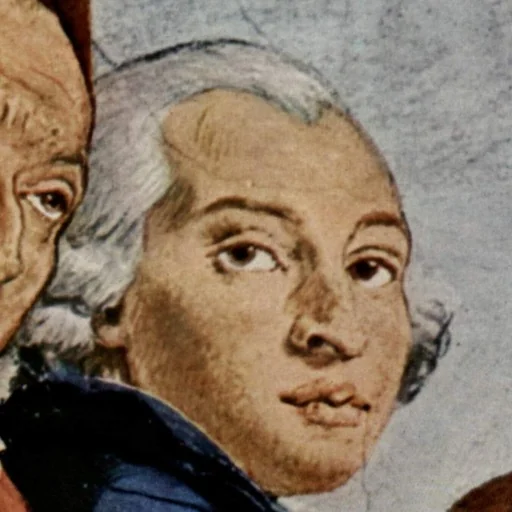
Giovanni Domenico Tiepolo (August 30, 1727 – March 3, 1804) was an Italian painter and printmaker in etching. He was the son of artist Giovanni Battista Tiepolo and elder brother of Lorenzo Baldissera Tiepolo.

 The Flight with Joseph in the Foreground
 The Flight with Joseph in the Foreground
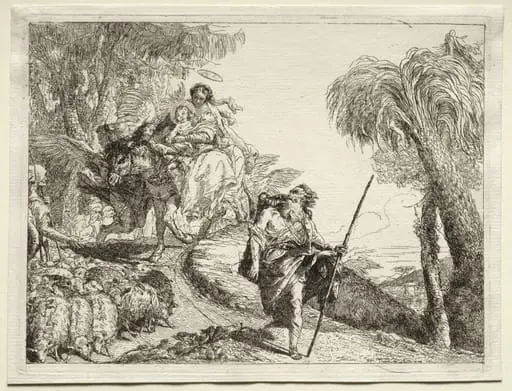 Flight into Egypt: The Holy Family and the Flock of Sheep
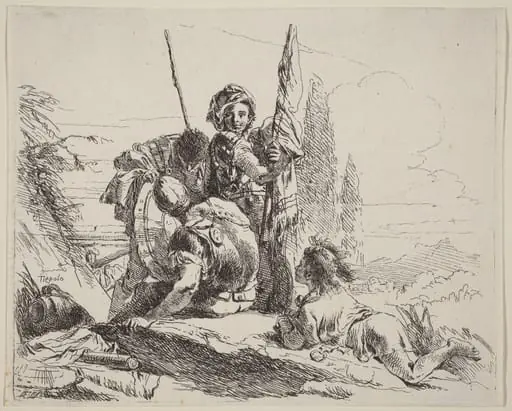 Three Soldiers and a Youth
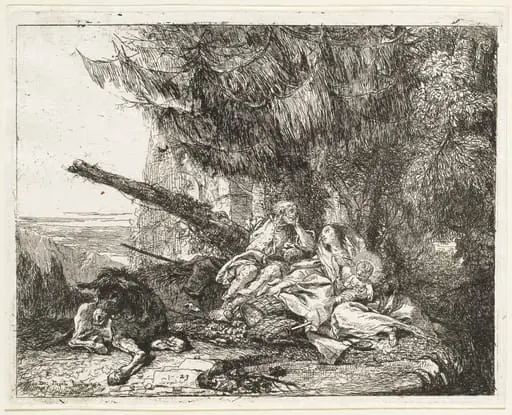 The Rest on the Flight, with Holy Family under a Tree
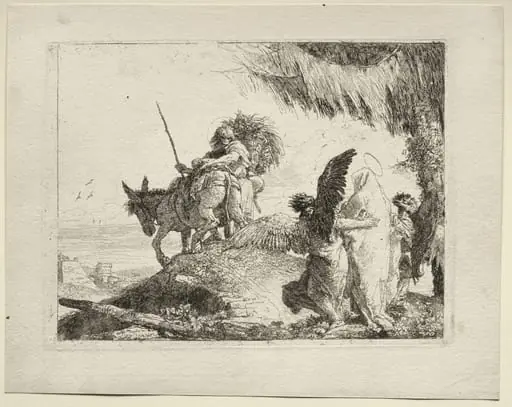 The Flight into Egypt: The Flight with the Madonna at Right Supported by Angels
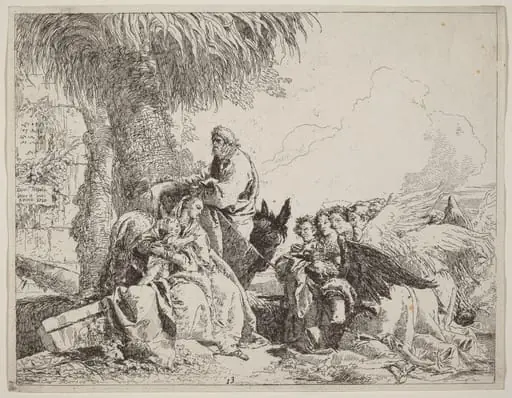 The Rest on the Flight, with Adoring Angels
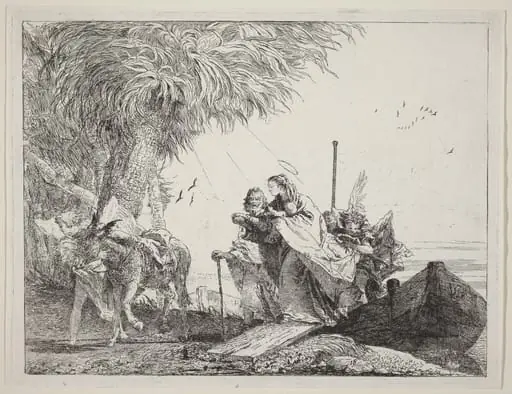 The Holy Family Disembarking
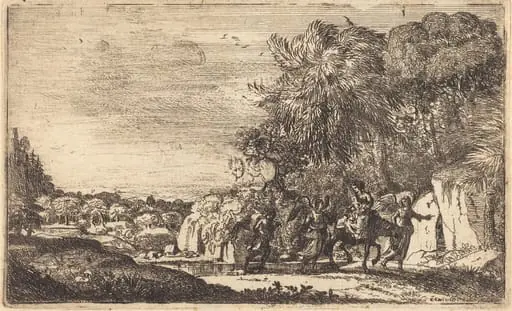 The Flight into Egypt (La fuite en Egypte)
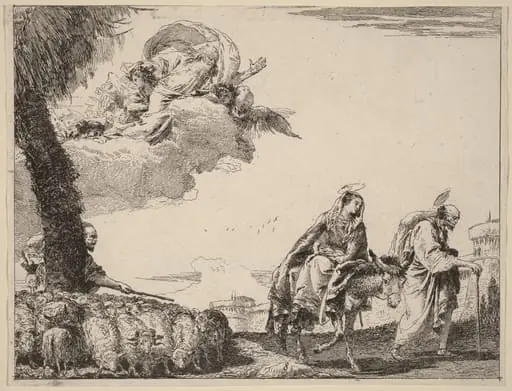 The Flight with the Holy Family at the Right
 The Madonna, Child, and Angels Entering the Boat
 Shepherd in a Landscape