Artwork
Agnès Entering a Grotto
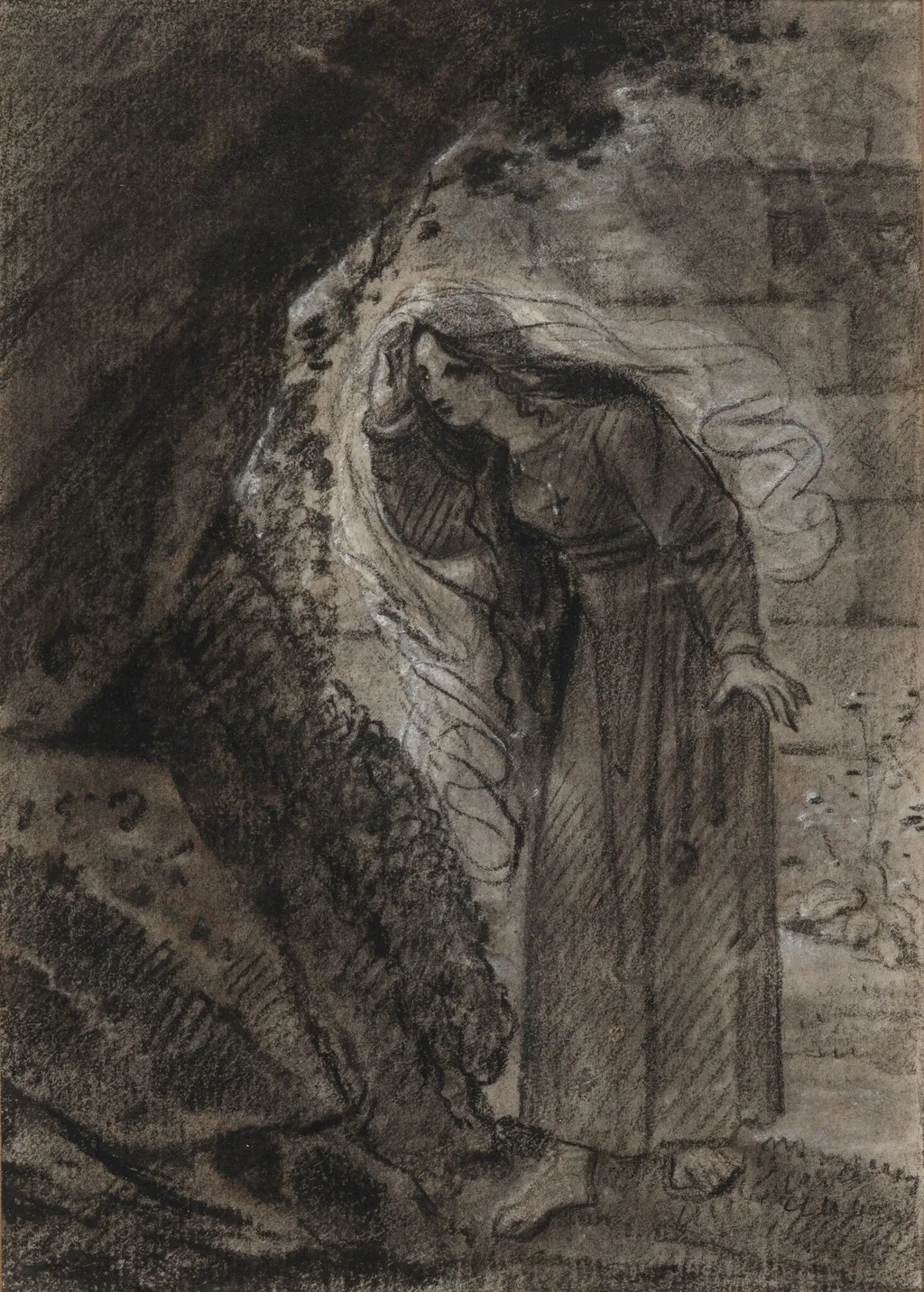
Agnès Entering a Grotto is a charcoal drawing by the Romanticist artist Anne-Louis Girodet de Roussy-Trioson. It dates from 1795 and is held in the collection of the National Gallery of Art.
About this work
Overview
Created around 1795, this drawing by Anne-Louis Girodet de Roussy-Trioson depicts a solitary figure in a natural cave. Executed in black chalk with selective white chalk and charcoal, it is mounted on a decorative paper support. The work is not a preparatory study for a painting but a self-contained composition, valued for its atmospheric immediacy and restrained emotional tone.
Subject & Meaning
The figure, identified as Agnès, stands still within a shadowed grotto, her white garment contrasting with the dark stone. Her posture—arm resting lightly on a ledge—suggests introspection rather than action. The scene evokes a moment of quiet contemplation, possibly referencing mythological or literary themes of retreat and inner reflection, common in late 18th-century Romantic sensibility.
Technique & Style
Girodet employed black chalk for broad tonal areas, charcoal for deep shadows, and white chalk sparingly to suggest light striking the figure’s dress and the grotto’s edges. The medium’s softness allows subtle gradations, while the paper’s texture enhances the tactile quality of the rock. The drawing’s unfinished character amplifies its sense of spontaneity and emotional resonance.
History & Provenance
The drawing entered the collection of the National Gallery of Art in Washington, D.C., through the A.W. Mellon Educational and Charitable Trust. Its earlier provenance is not fully documented, but its preservation on a decorative mount suggests it was valued as a finished work early in its history, possibly collected by patrons interested in Romantic draftsmanship.
Context
Created during the French Revolution’s aftermath, the work reflects a shift from Neoclassical grandeur toward intimate, emotionally charged subjects. Girodet, influenced by both David and the emerging Romantic movement, turned to private, contemplative scenes that emphasized mood over narrative, aligning with broader cultural interests in solitude and nature.
Legacy
Though not widely exhibited, this drawing exemplifies Girodet’s skill in conveying psychological depth through minimal means. It remains a key example of late 18th-century French draftsmanship, illustrating how chalk drawings could achieve the emotional weight once reserved for oil paintings, influencing later artists exploring inner states through drawing.
Artist & collection

Artist
Anne-Louis Girodet de Roussy-Trioson
Anne-Louis Girodet de Roussy-Trioson (1816–1816) was an artist.

 Melancholy
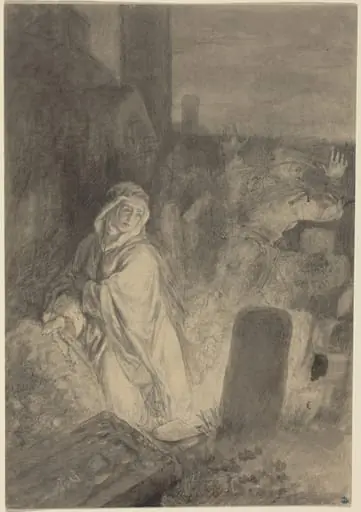 A Man Fleeing from a Nun Praying in a Cemetery
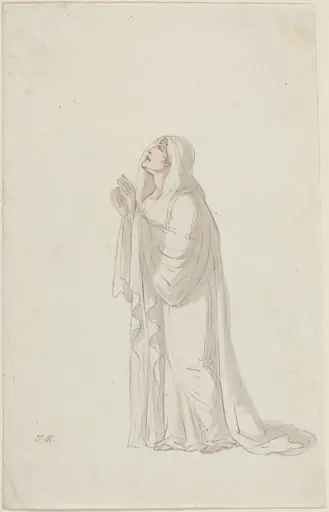 Antique Figure
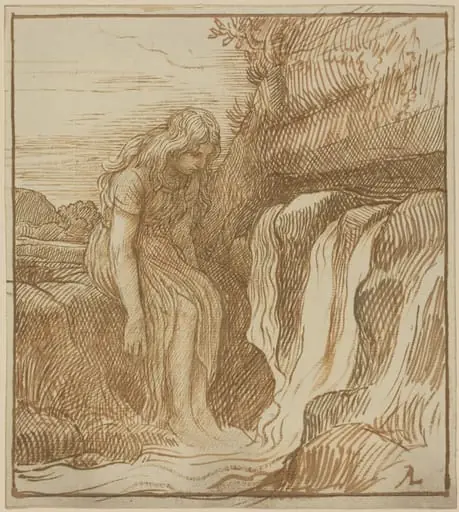 Peasant at the Source
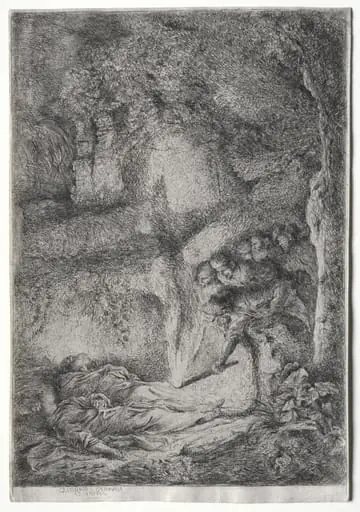 The Discovery of the Bodies of Saints Peter and Paul
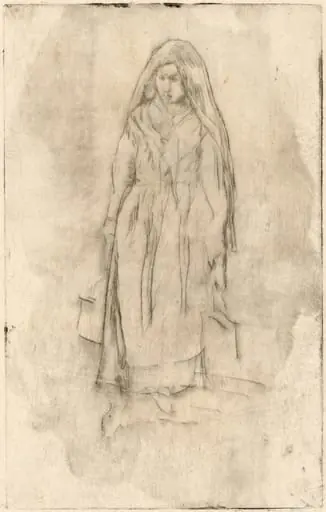 Venetian Water-Carrier
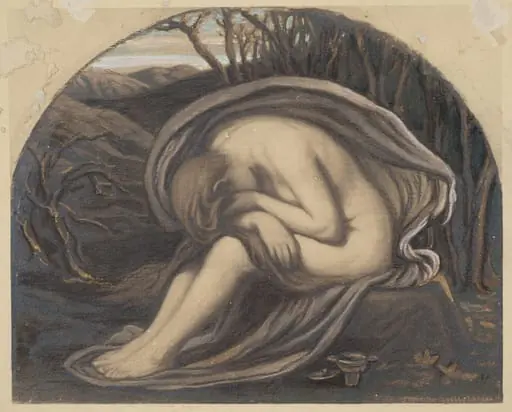 The Magdalene
![View up a Street in Sorrento [verso], by François-Édouard Bertin](https://artifactworldgallery.com/img/francois-edouard-bertin--view-up-a-street-in-sorrento-verso--d628dffbf459271a-w320.webp) View up a Street in Sorrento [verso]
View up a Street in Sorrento [verso]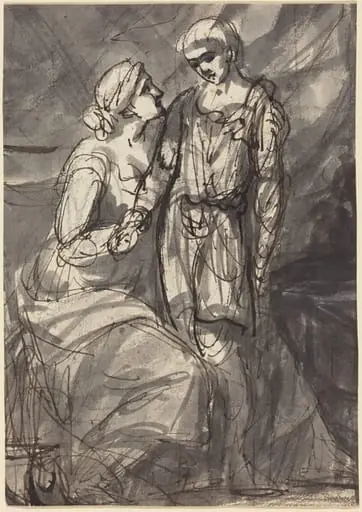 Two Figures in Classical Dress
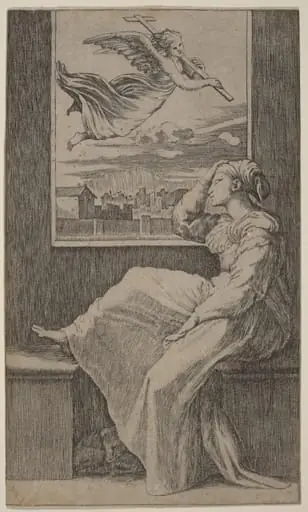 The Vision of Saint Helena
 The Virgin in the Niche
 Two Roman Women