Artwork
A Man Fleeing from a Nun Praying in a Cemetery
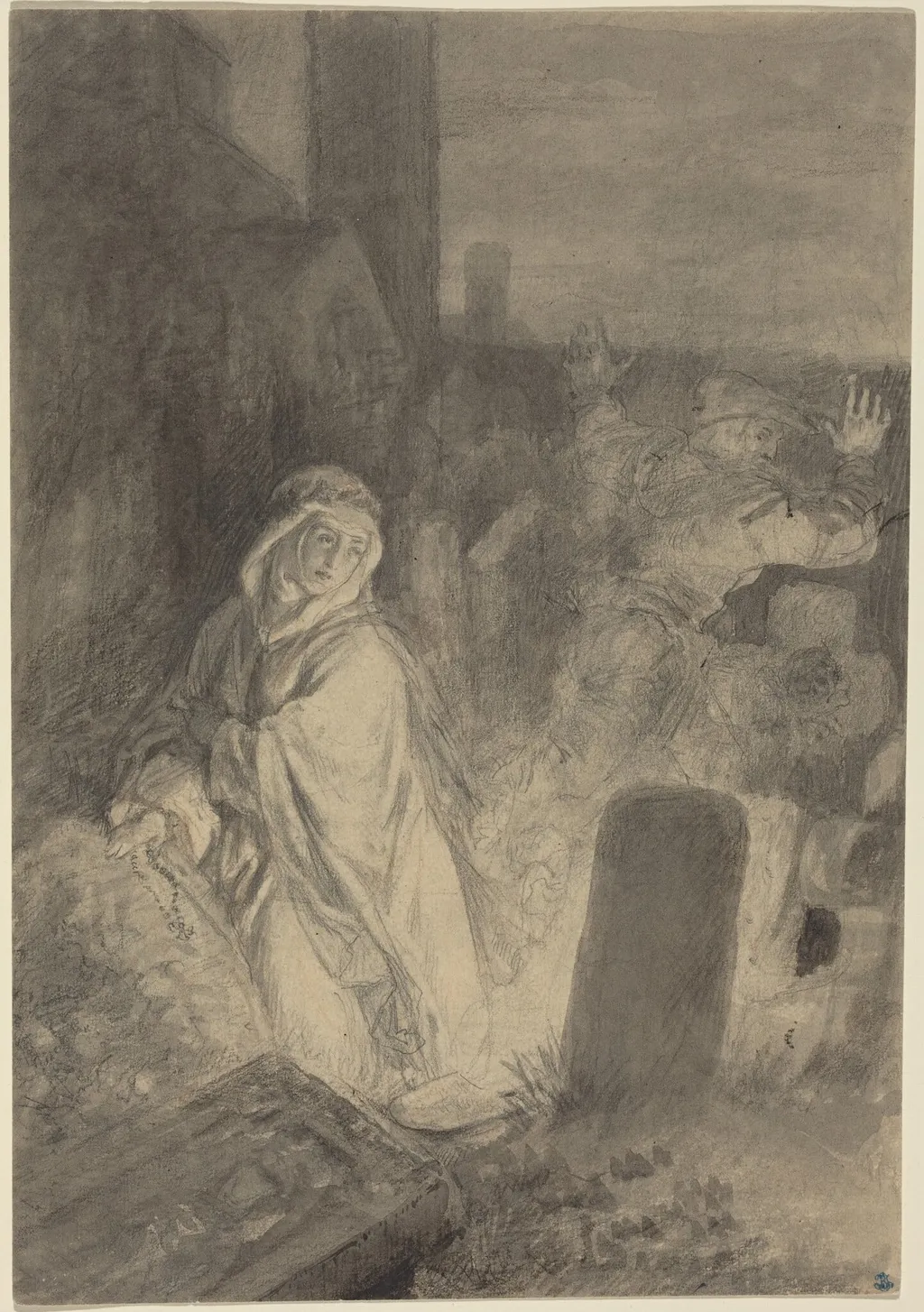
A Man Fleeing from a Nun Praying in a Cemetery is a graphite drawing by the Romanticist artist Joseph Fay. It dates from 1844 and is held in the collection of the National Gallery of Art.
About this work
Overview
Created in 1844, the drawing titled *A Man Fleeing from a Nun Praying in a Cemetery* is executed in graphite with a gray wash on wove paper. The German artist Joseph Fay, linked to the Düsseldorf school of painting, produced the work as a narrative study that captures a moment of tension within a funerary landscape.
Subject & Meaning
The composition shows a man hurriedly retreating from a nun who is kneeling in prayer amid gravestones. The juxtaposition of movement and stillness, as well as the contrast between secular escape and religious devotion, invites speculation about moral conflict or social commentary embedded in the scene.
Technique & Style
Fay employs fine graphite lines to delineate figures and architectural details, while a muted gray wash creates atmospheric depth and a somber tonal range. The drawing reflects the Düsseldorf school's emphasis on precise realism and careful storytelling, using controlled shading to model forms and suggest the damp, overcast ambience of a cemetery.
History & Provenance
The work remains documented as part of Fay’s early output, produced shortly after his affiliation with the Düsseldorfer Malerschule. Its provenance traces through private collections in Germany before entering a public holding in the early twentieth century, where it has been referenced in studies of mid‑nineteenth‑century German illustration.
Artist & collection

Artist
Joseph Fay (6 August 1812 – 27 July 1875) was a German painter and illustrator; associated with the Düsseldorfer Malerschule.

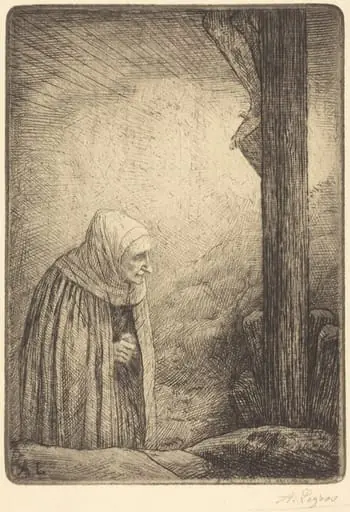 Woman at the Foot of the Cross (Femme au calvaire)
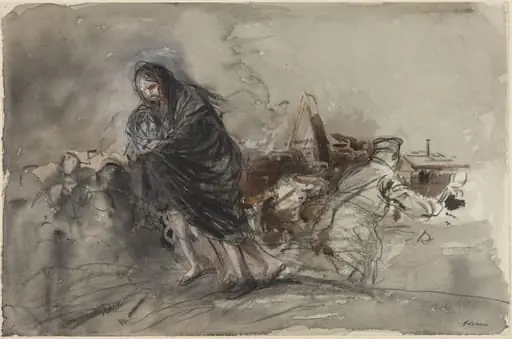 a) Après Douai (After Douai) (recto); b) Figure (verso)
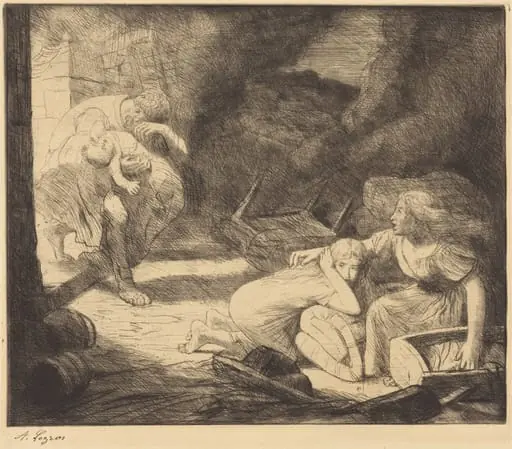 The Fire, 2nd plate (L'incendie)
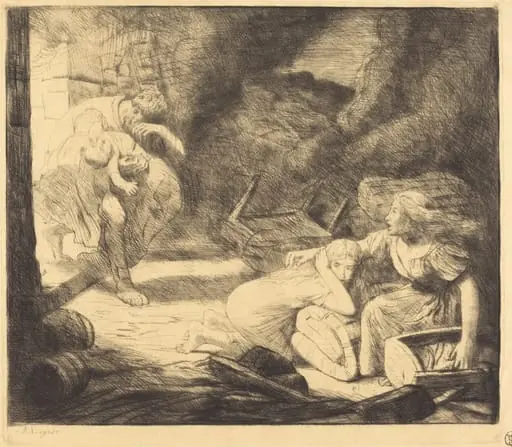 The Fire, 2nd plate (L'incendie)
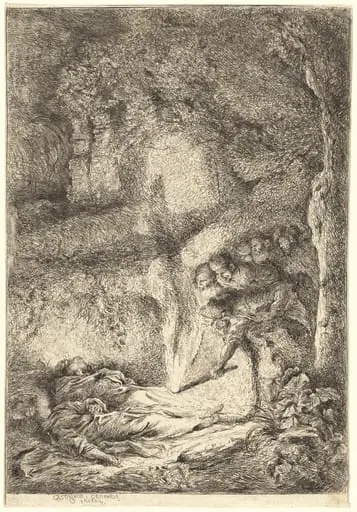 The Bodies of Saints Peter and Paul Hidden in the Catacombs
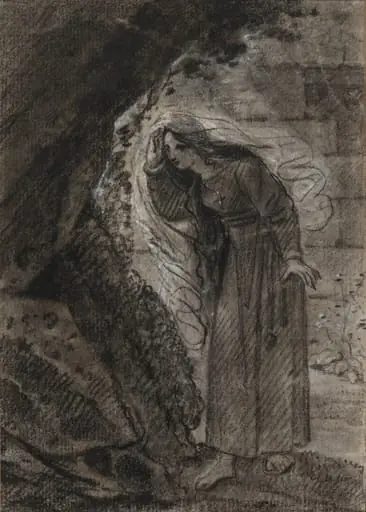 Agnès Entering a Grotto
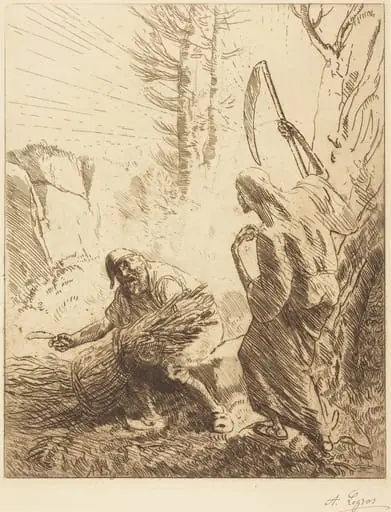 Death and the Woodcutter, 3rd plate (La mort et le bucheron)
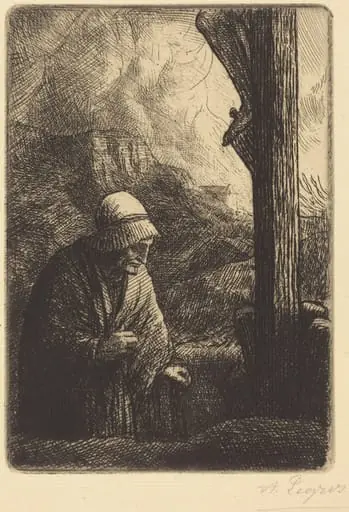 Woman at the Foot of the Cross (Femme au calvaire)
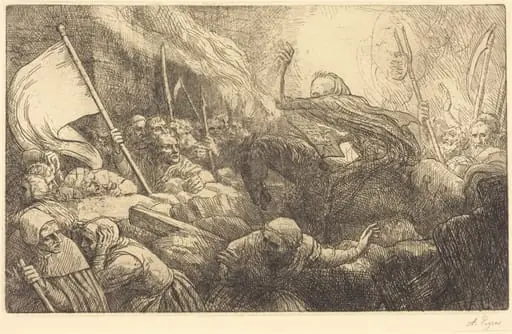 The Triumph of Death: Proclamation (Le triomphe de la mort: La proclamation)
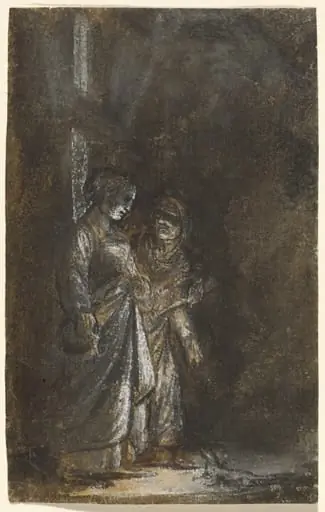 Ceres Changes Stellio into a Lizard
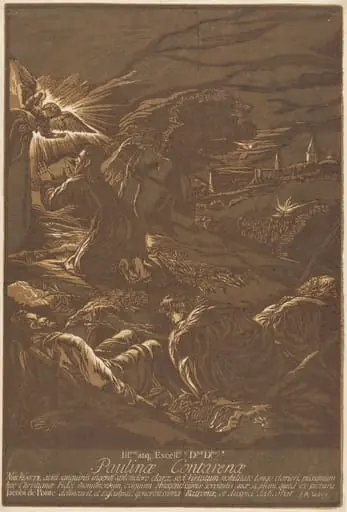 Christ on the Mount of Olives
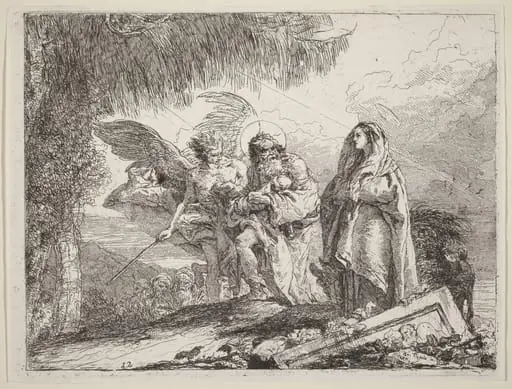 The Flight, Holy Family Walking with Angel