Artwork
Carnarvon Castle
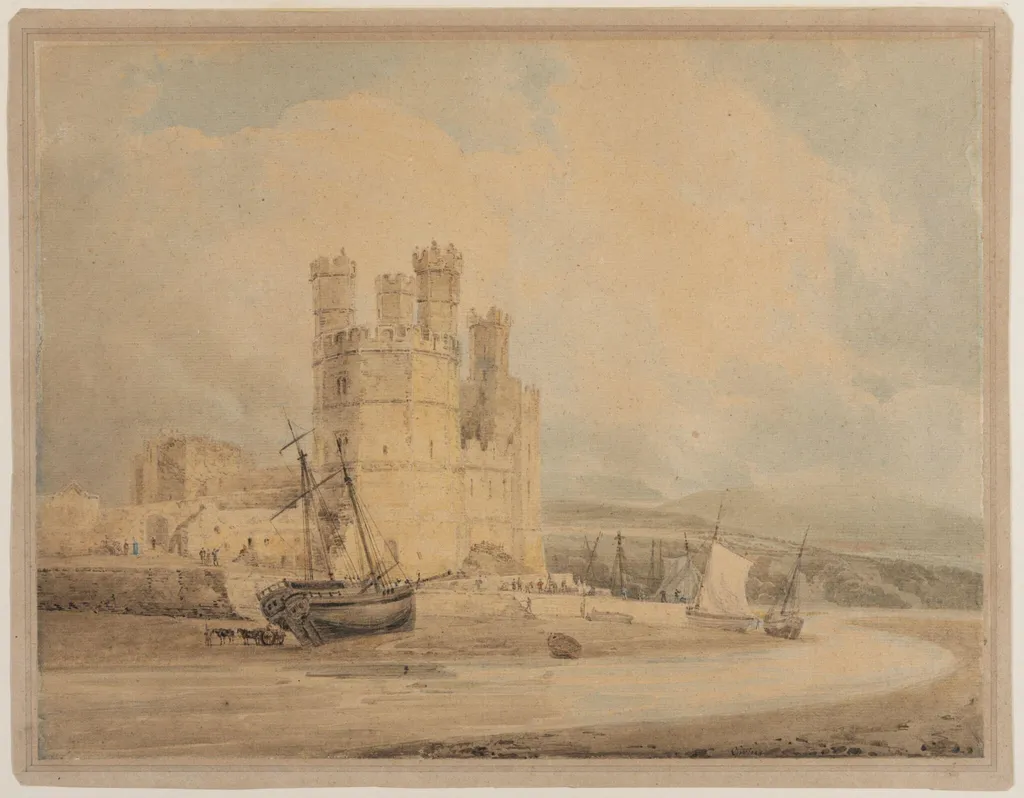
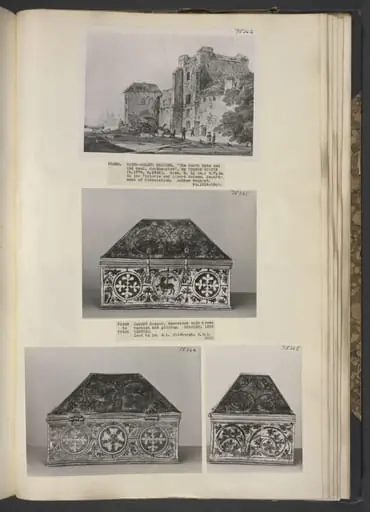
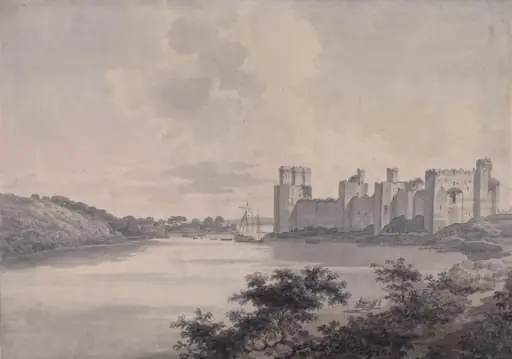
Carnarvon Castle is a watercolor work on paper by the Romanticist artist Girtin. It dates from 1798 and is held in the collection of the Victoria and Albert Museum.
About this work
Overview
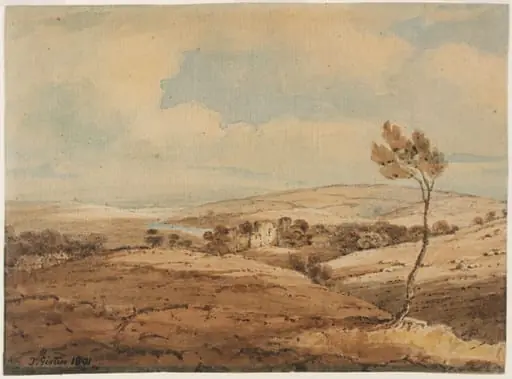
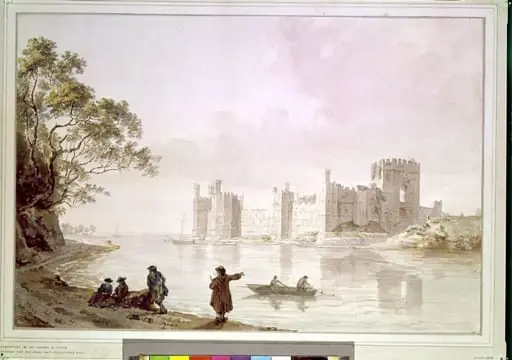
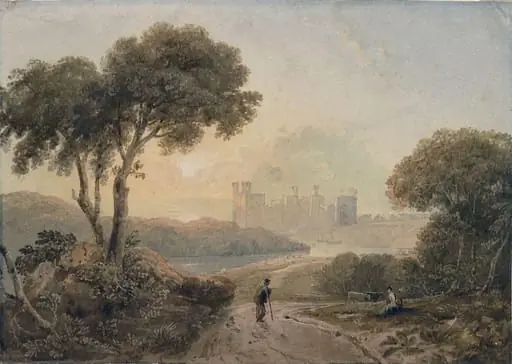
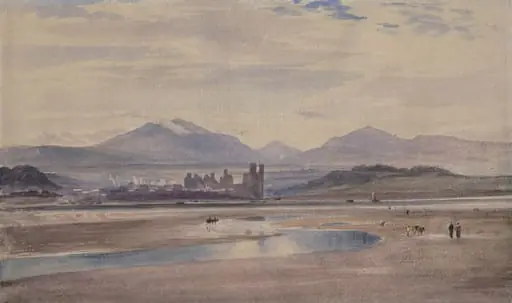
Thomas Girtin’s 1798 watercolour presents a coastal stronghold identified as Carnarvon Castle. The composition captures the ruinous silhouette of the fortress, its twin towers rising against a muted sky, while a shoreline populated with a beached boat, additional vessels, and scattered figures conveys a sense of everyday activity at the water’s edge.
Subject & Meaning
The work juxtaposes the enduring, weathered architecture of the castle with the transient presence of people, animals, and ships, suggesting a dialogue between historic permanence and the fleeting moments of maritime life. The subdued palette and open sky evoke a contemplative atmosphere rather than a narrative of specific events.
Technique & Style
Girtin employs delicate washes of colour, allowing pigments to blend softly and create a dreamlike ambience. The handling of light and shadow is restrained, emphasizing tonal harmony over precise detailing. This approach renders the stonework and surrounding landscape with a sense of atmospheric depth while maintaining the fluidity characteristic of late‑18th‑century British watercolour.
History & Provenance
Signed and dated by Girtin in 1798, the piece reflects the artist’s interest in British topography during a period of heightened national interest in historic sites. The watercolour entered the collection of the Victoria and Albert Museum, where it remains accessible for public viewing and scholarly study.
Artist & collection
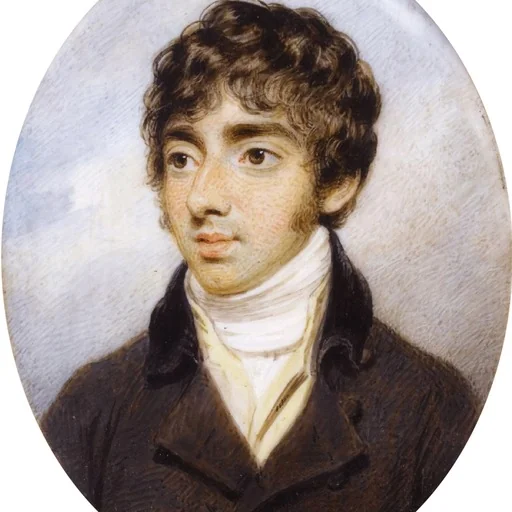
Artist
Thomas Girtin (18 February 1775 – 9 November 1802) was an English watercolourist and etcher. A friend and rival of J. M. W. Turner, Girtin played a key role in establishing watercolour as a reputable art form.