Artwork
Pinckney's Farm, Radwinter, Essex
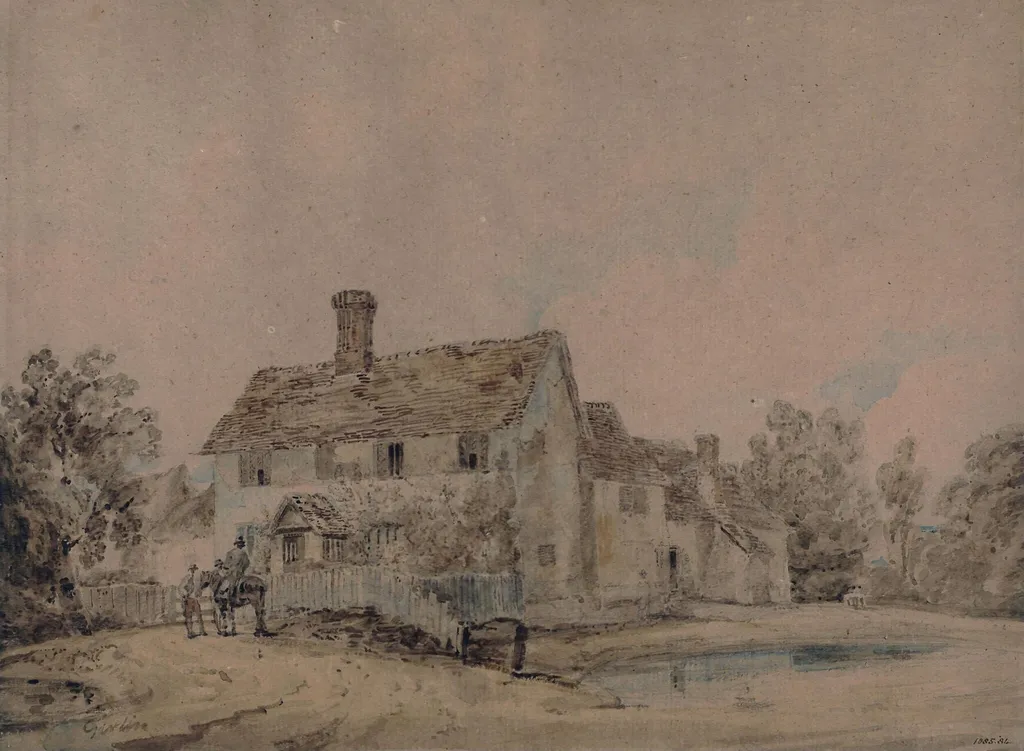
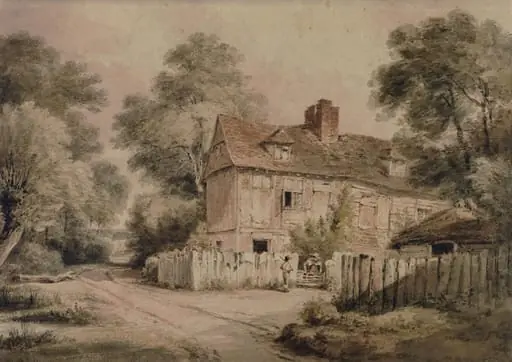
Pinckney's Farm, Radwinter, Essex is a watercolor work on paper by the Romanticist artist Girtin. It dates from 1798 and is held in the collection of the Victoria and Albert Museum.
About this work
Overview
Unlike grand landscapes, it focuses on an unassuming rural structure, reflecting Girtin’s interest in everyday English scenery.
Thomas Girtin completed this watercolour in 1798, depicting a modest farmhouse in Radwinter, Essex. The work is signed by the artist and belongs to his series of topographical studies from the late 1790s. Unlike grand landscapes, it focuses on an unassuming rural structure, reflecting Girtin’s interest in everyday English scenery. The medium’s transparency and delicate handling lend the scene a quiet intimacy.
Subject & Meaning
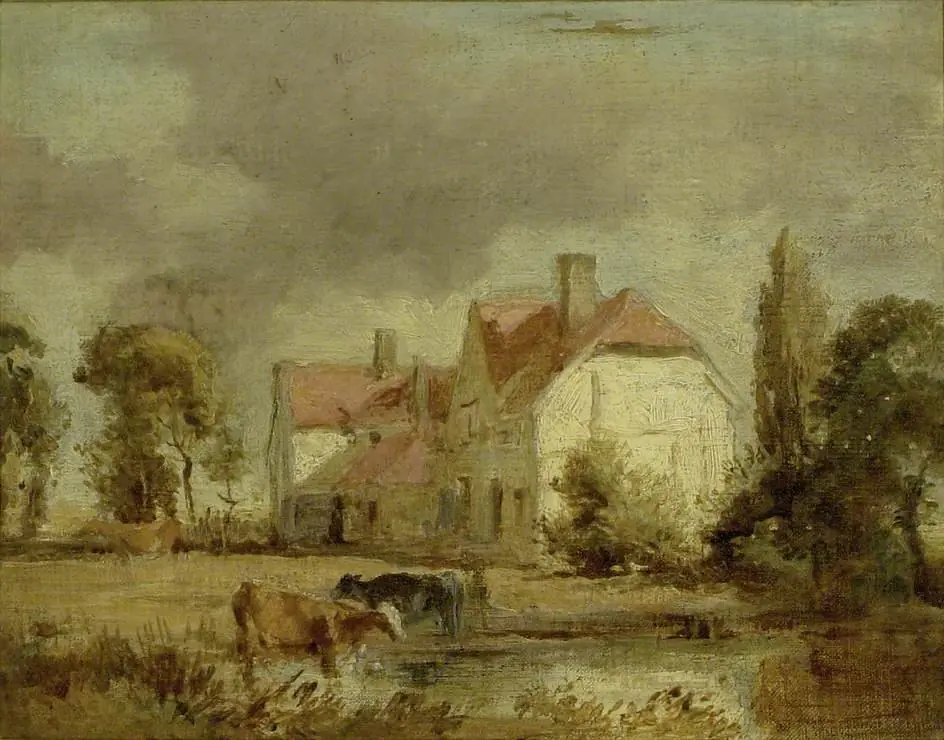
The painting centers on a weathered farmhouse with a tiled roof and boarded windows, suggesting age and partial abandonment. A low fence separates the property from the surrounding fields, while sparse trees frame the view. The absence of human figures and the subdued activity evoke stillness, perhaps hinting at rural decline or quiet endurance. The scene resists idealization, offering a contemplative view of ordinary rural life.
Technique & Style
Girtin employed thin washes of watercolour to build subtle tonal gradations, avoiding bold outlines. The textures of the roof tiles and tree bark are suggested through layered, dry-brush strokes, while the sky is rendered with soft, diffused clouds. Muted earth tones and pale blues dominate, reinforcing the scene’s tranquility. His approach prioritizes atmosphere over precision, aligning with emerging Romantic sensibilities in landscape depiction.
History & Provenance
Created during Girtin’s mature period, the work was likely made during a journey through Essex, a region he explored extensively between 1796 and 1799. It remained in private hands after his death in 1802 and entered public collections in the 20th century. Its survival is notable, as many of Girtin’s smaller watercolours were dispersed or lost after his early passing.
Context
In the late 1790s, British artists increasingly turned to local landscapes as subjects worthy of serious attention. Girtin’s focus on modest farms and unremarkable villages contrasted with the picturesque traditions of the time. His work contributed to a shift toward realism and emotional resonance in landscape art, influencing later artists like J.M.W. Turner.
Legacy
Though not widely exhibited in his lifetime, this watercolour exemplifies Girtin’s role in redefining British watercolour as a medium for expressive, rather than merely documentary, purposes. His restrained compositions and atmospheric effects became touchstones for 19th-century landscape painters, helping establish watercolour as a legitimate fine art form.
Artist & collection
Artist
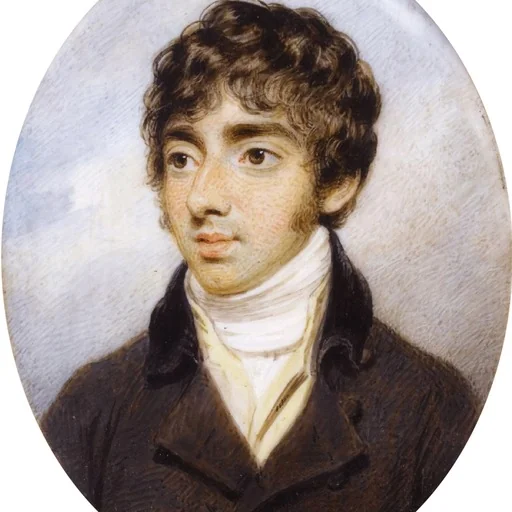
Thomas Girtin (18 February 1775 – 9 November 1802) was an English watercolourist and etcher. A friend and rival of J. M. W. Turner, Girtin played a key role in establishing watercolour as a reputable art form.

 Cottage at Bookham
 Farmhouse, Buckinghamshire
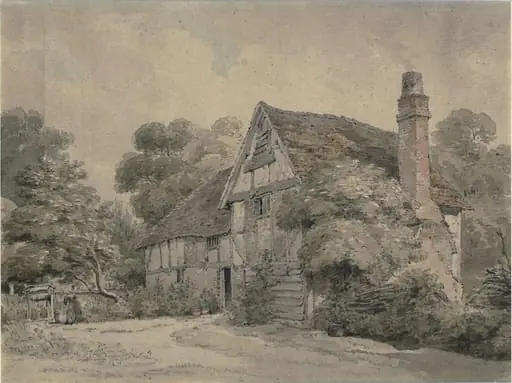
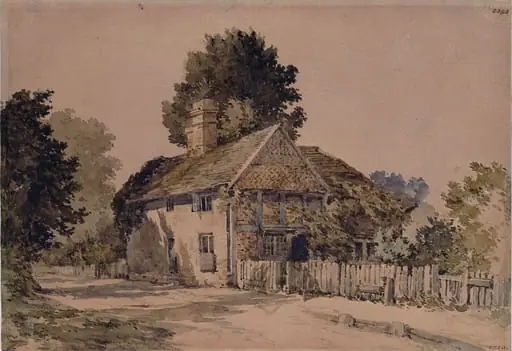 Cottage near Shere, Surrey
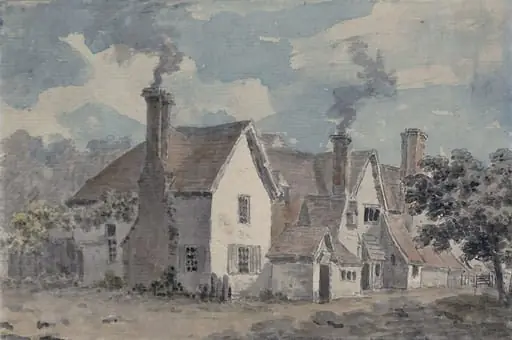 Dent-de-lion, near Margate
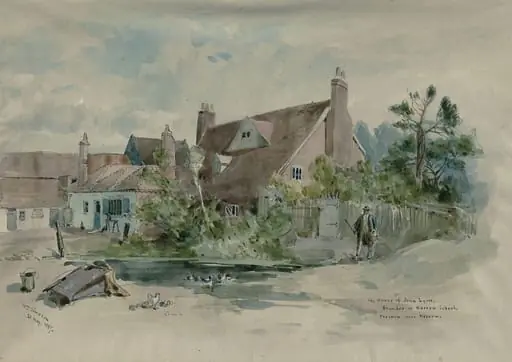 House of John Lyon, Founder of Harrow School, at Preston, near Harrow
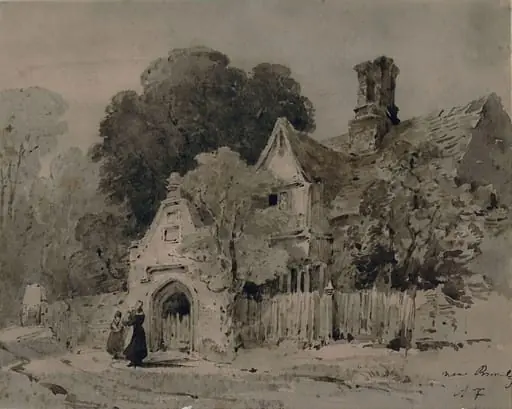 Near Bromley, Kent
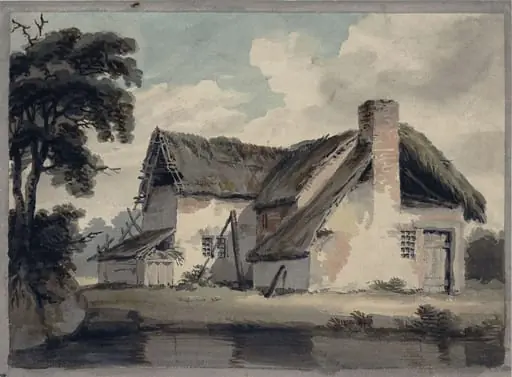 Thatched Cottage near a Pond
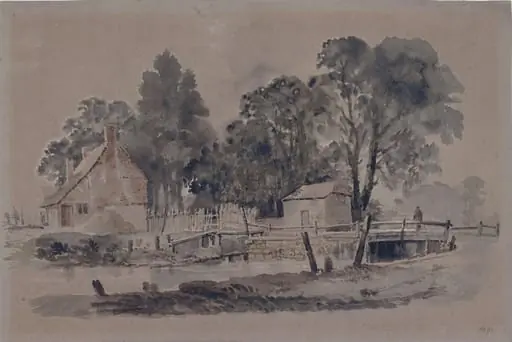 Stream with bridge and cottages
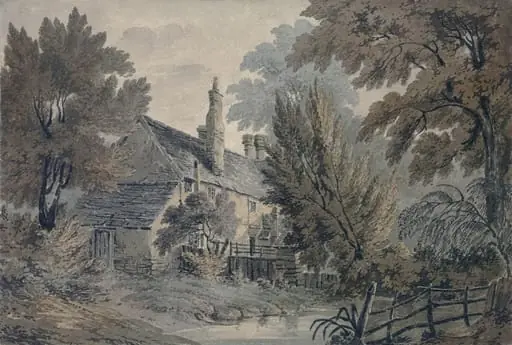 Landscape with House by a Pond
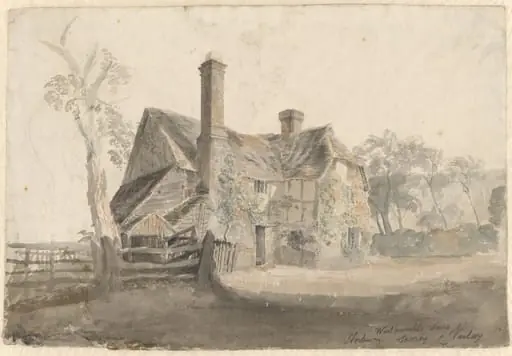 A House, West Humble Lane, Norbury, Surrey
 A Farm House
 An Old Manor House