Artwork
Annunication; Crucifixion
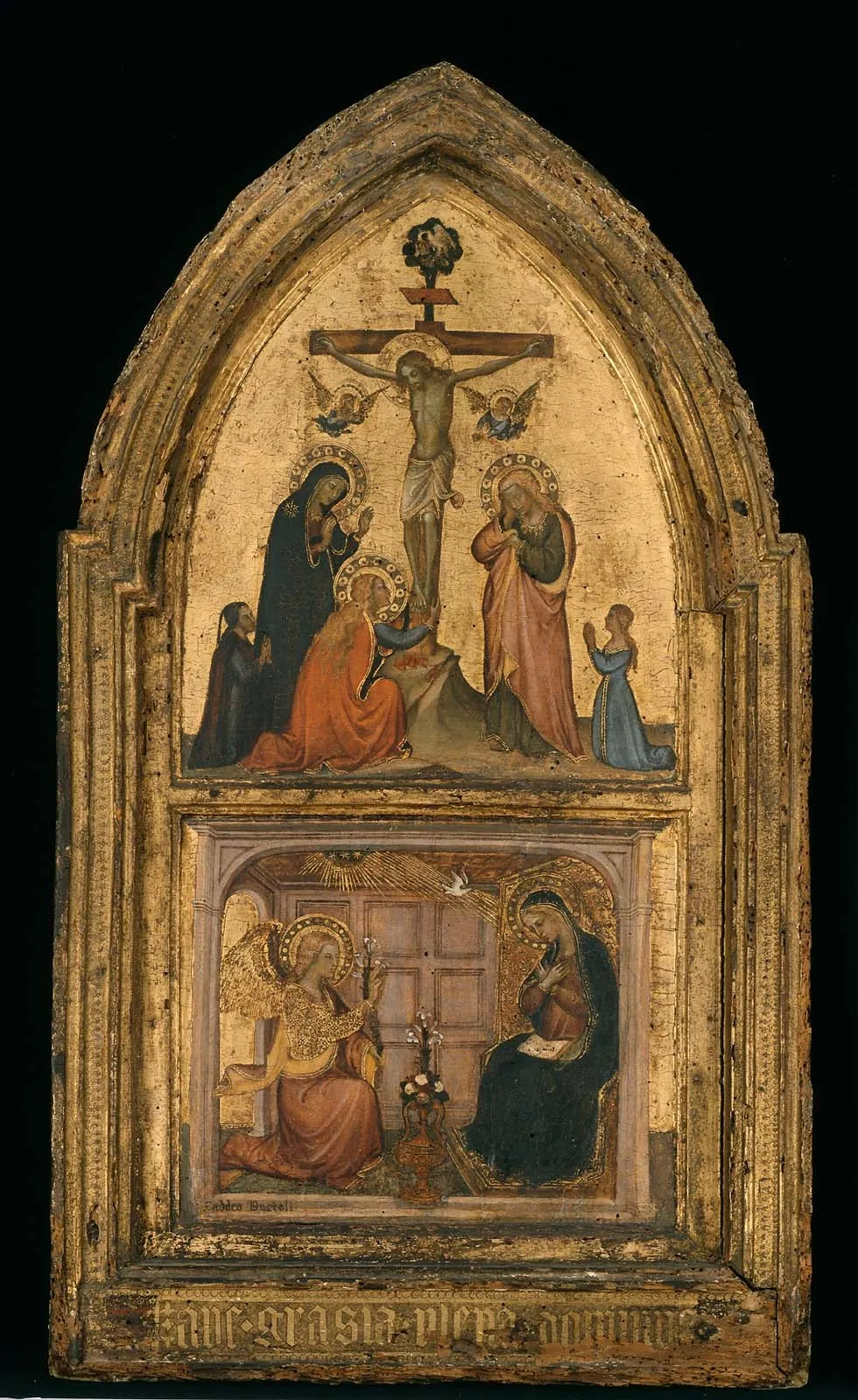
Annunication; Crucifixion is an unspecified painting by the Byzantine icon painting artist Giuliano di Simone. It is held in the collection of the Museum of Fine Arts Boston.
About this work
Overview
Giuliano di Simone, an Italian painter active in the Lucca‑Pisa region during the late Gothic era, completed the double‑panel work *Annunciation; Crucifixion* in 1396. The piece combines two biblical episodes on a single surface and is now part of the Museum of Fine Arts, Boston’s collection.
Subject & Meaning
The upper panel portrays the Crucifixion, with Christ on the cross flanked by two kneeling women—traditionally identified as the Virgin Mary and Saint John—while angels hover above. The lower panel presents the Annunciation scene: an angelic messenger appears to a kneeling woman holding a book, while another figure with a staff looks upward, suggesting the moment of divine announcement.
Technique & Style
Executed in the Byzantine‑derived iconographic tradition, the painting employs a gold ground and luminous halos that emphasize the sacred nature of the subjects. Figures are rendered with a flattened, linear quality and vivid, saturated colors, reflecting the influence of Spinello Aretino on Giuliano’s late‑Gothic style.
History & Provenance
Created in 1396, the work remained in private or ecclesiastical hands before entering the Museum of Fine Arts, Boston, where it is displayed as part of the museum’s European medieval holdings. Its provenance traces a typical path for Italian devotional panels that migrated to American collections in the 20th century.
Context
The pairing of the Annunciation and Crucifixion reflects a devotional program common in late‑14th‑century Italy, linking the Incarnation with the Redemption. Such diptychs served as focal points for private prayer, reinforcing theological continuity between Christ’s conception and his sacrificial death.
Artist & collection
Artist
Giuliano di Simone (late 14th century - early 15th century) was an Italian painter, active near Lucca and Pisa in a late Gothic-style.

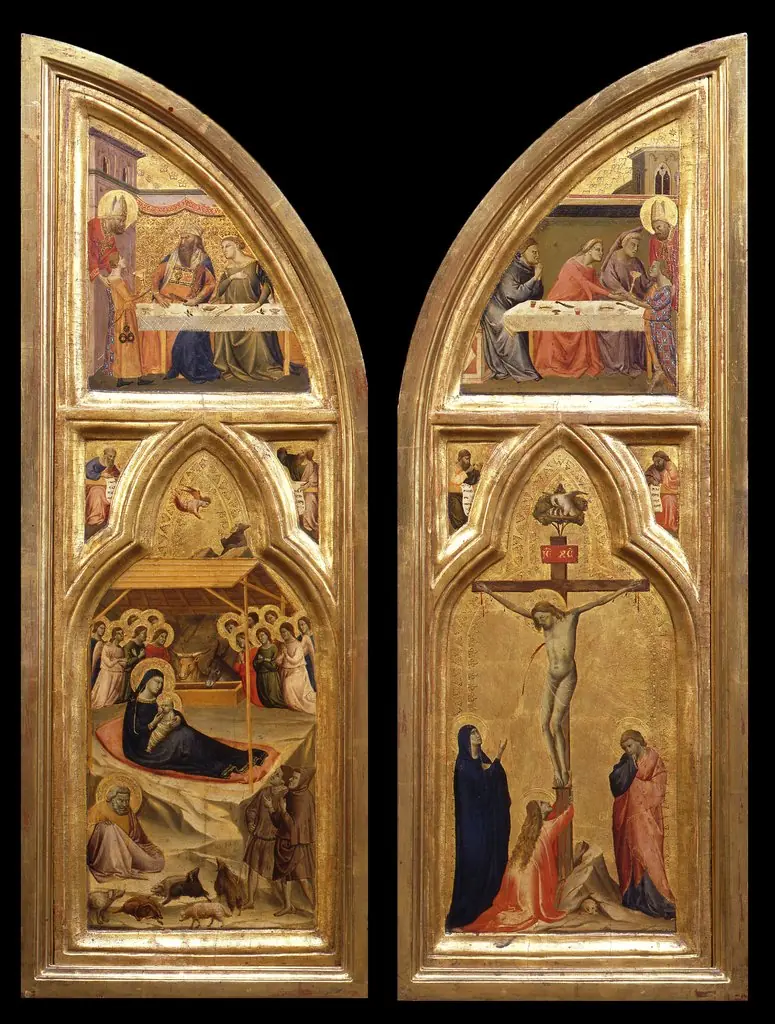 Interior view of wings of the triptych
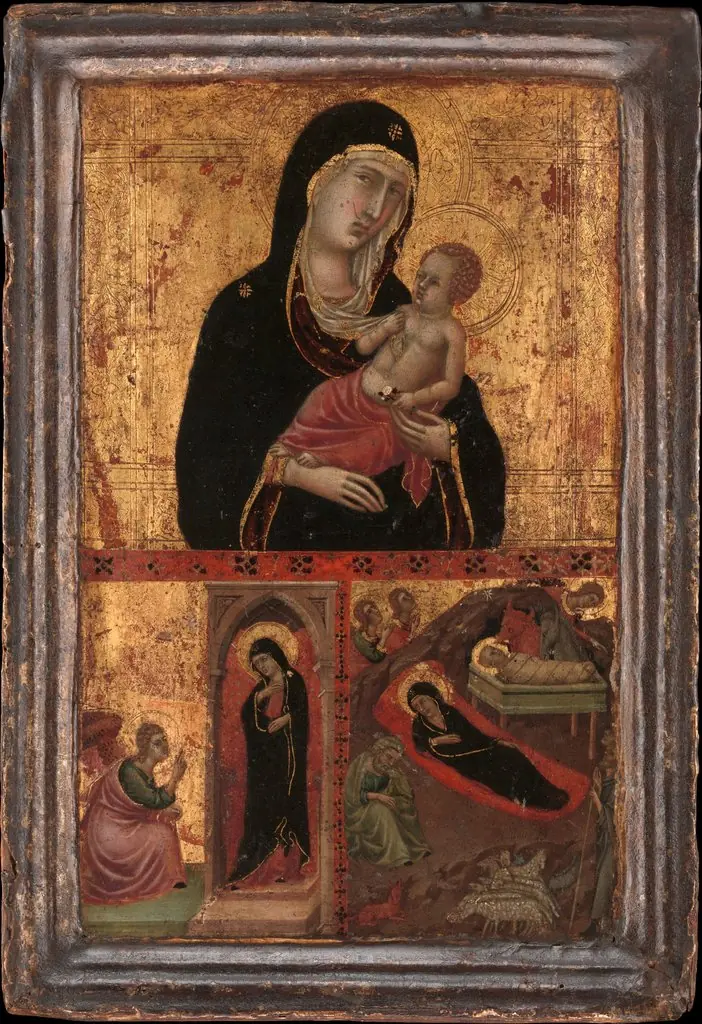 Madonna and Child with the Annunciation and the Nativity
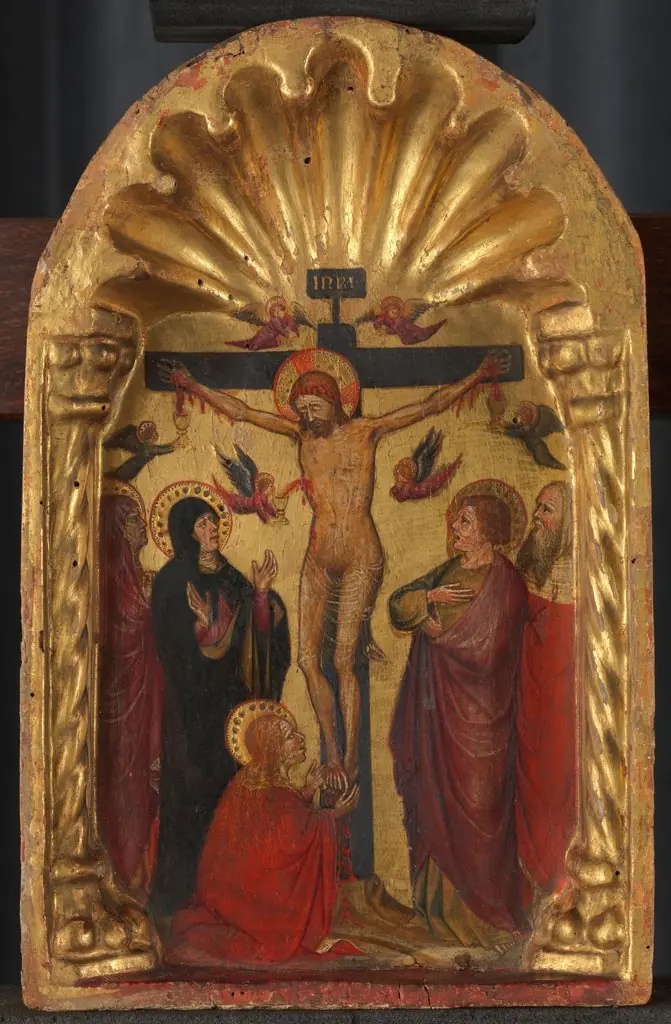 Crucifixion
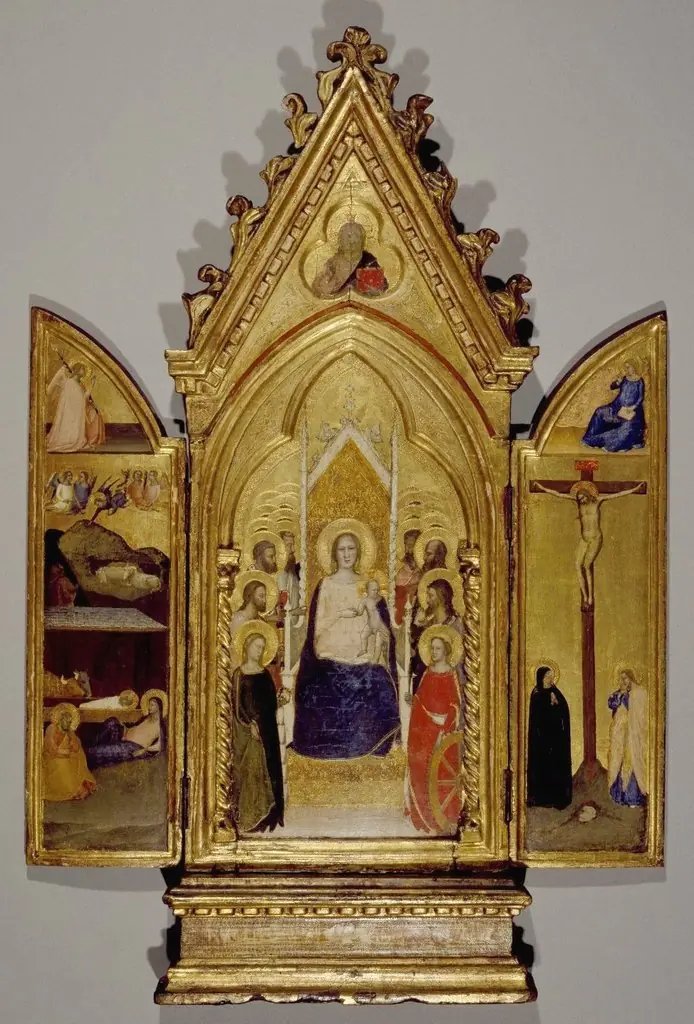 Triptych: Madonna with Saints and Christ Blessing (Center); The Nativity and the Annunciate Angel (Left Wing); Crucifixion and the Virgin Annunciate (Right Wing)
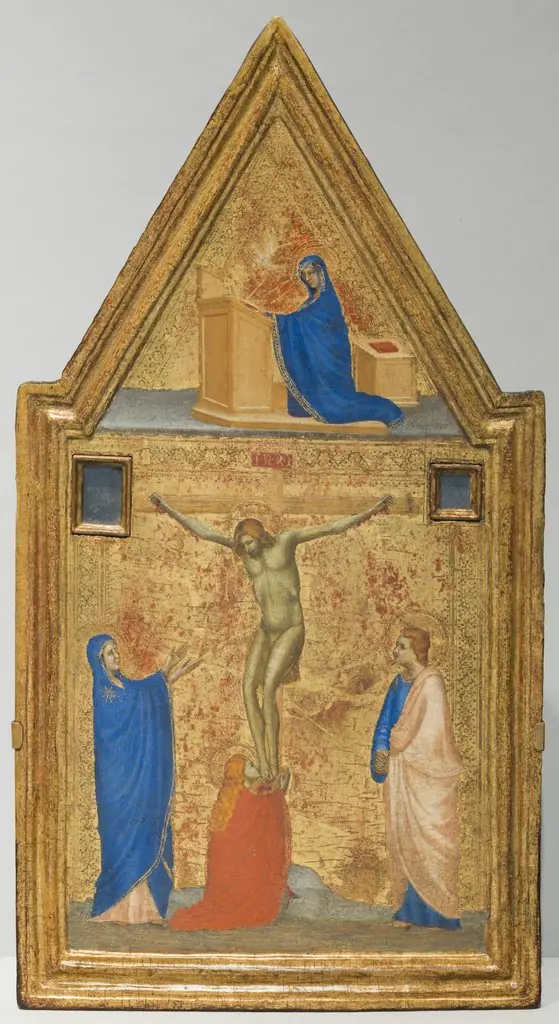 Crucifixion
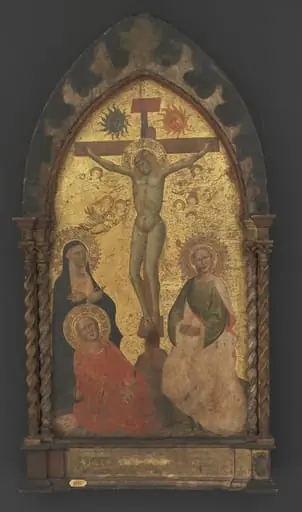 Christ on the Cross mourned by the Virgin Mary and Saints Mary Magdalene and John
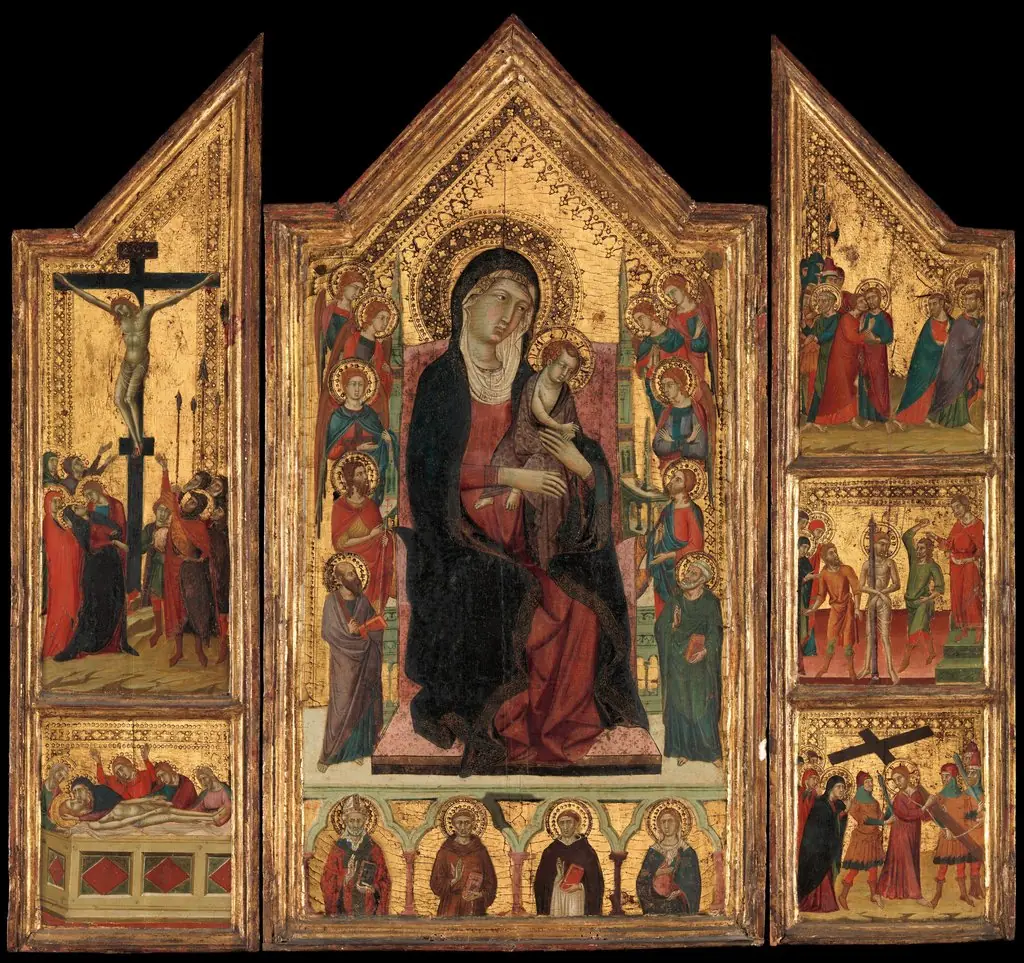 Madonna and Child Enthroned
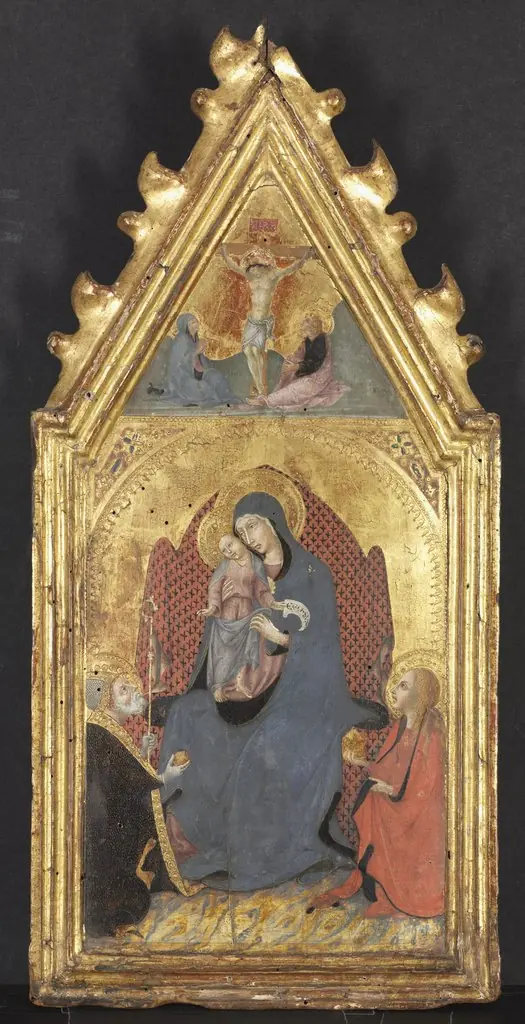 Virgin and Child Adored by Saints Mary Magdalene and Nicolas of Bari; Christ Crucified with the Virgin and Saint John the Evangelist
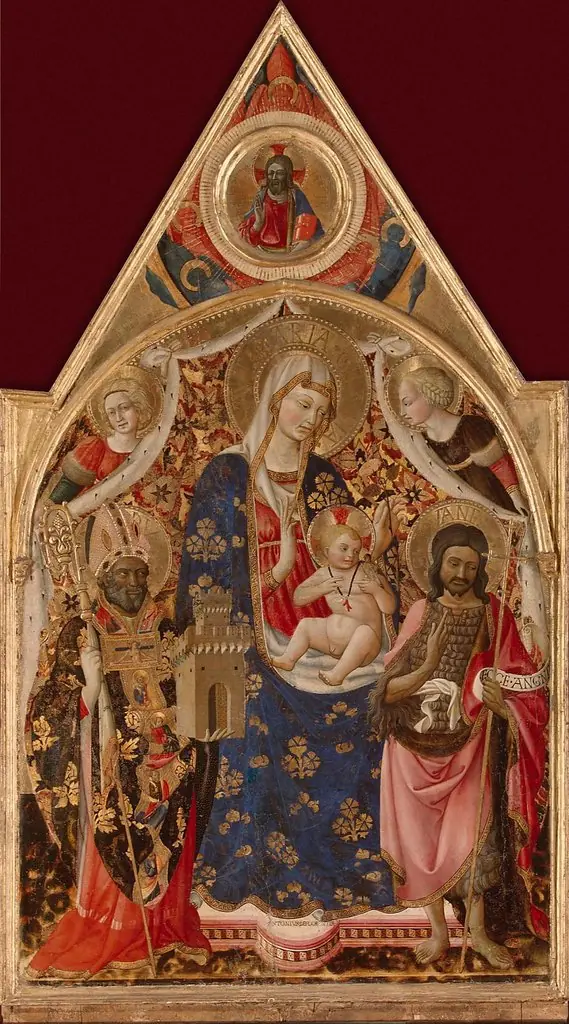 Madonna and Child, with a Bishop, St John The Baptist and Angels
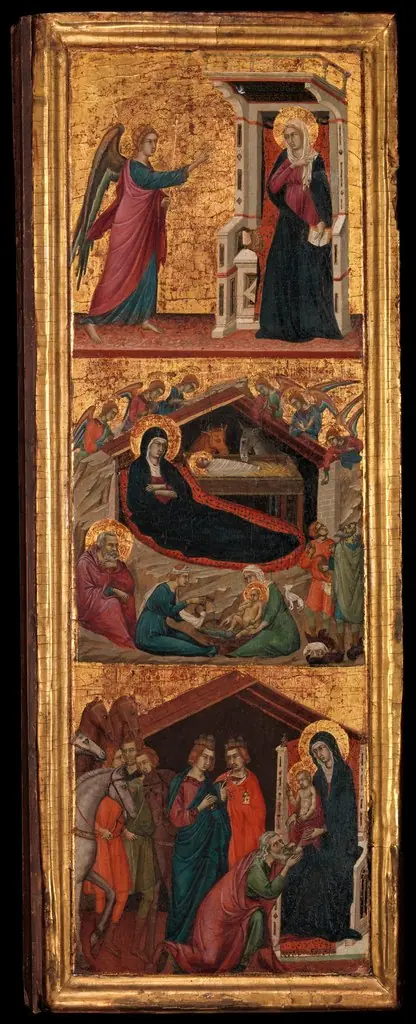 Saints and Scenes from the Life of the Virgin
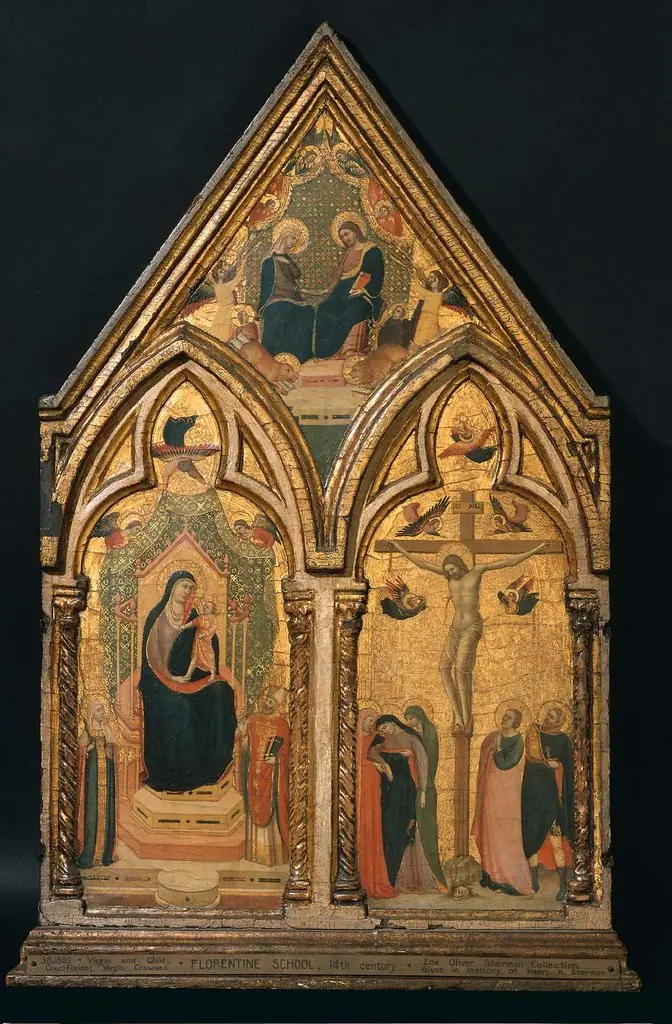 Virgin and Child Enthroned with Saints; Crucifixion; Coronation of the Virgin
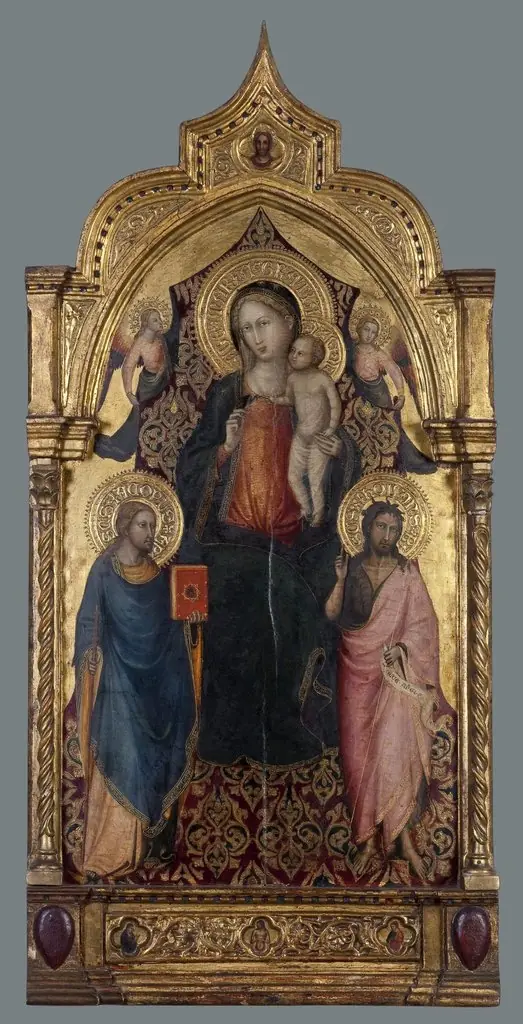 Madonna and Child, with St Jacob the Younger, St John The Baptist and Angels