Artwork
Crucifixion
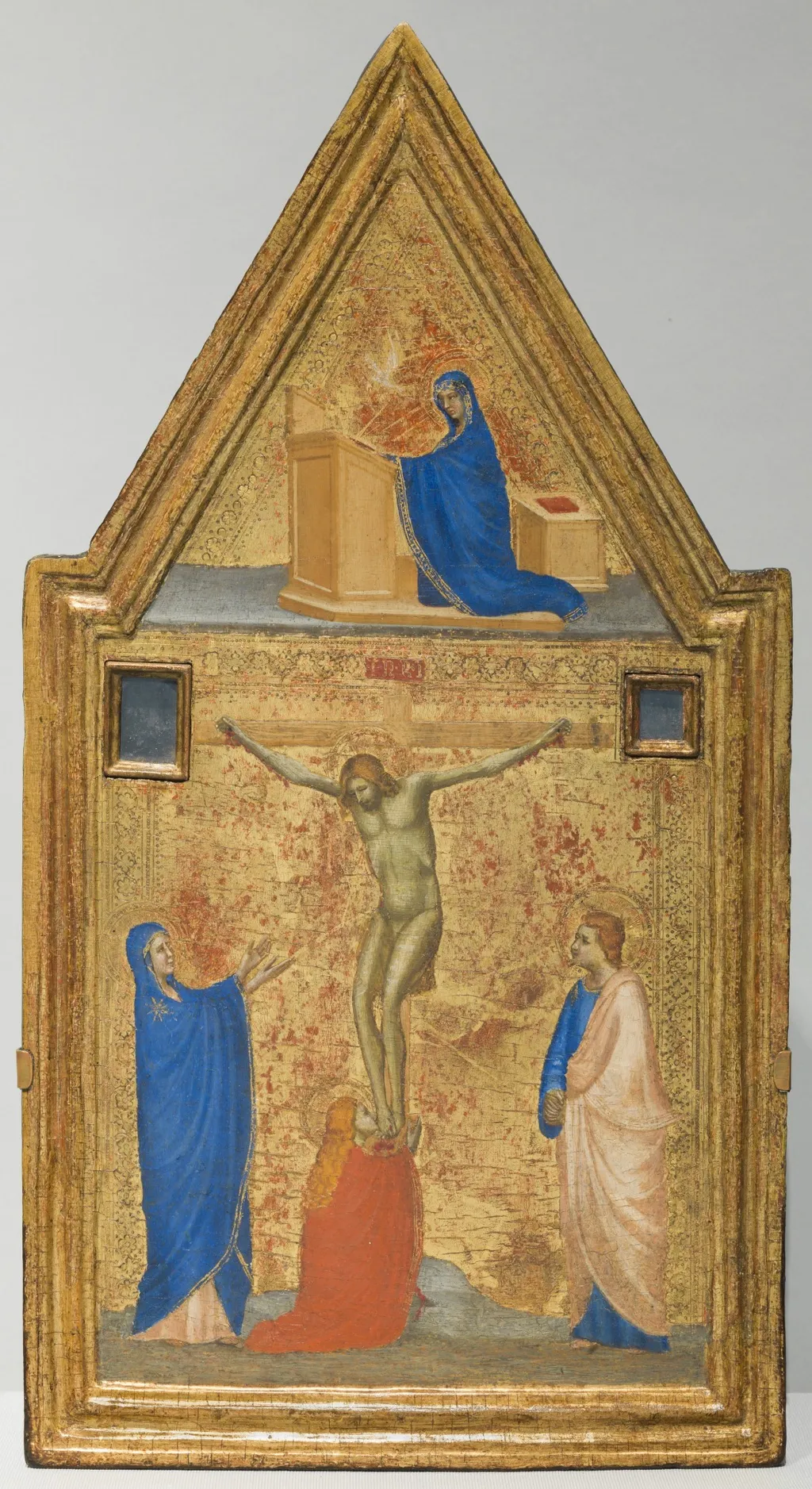
Crucifixion is an unspecified painting by the Early Renaissance artist Master of the Cappella Medici Polyptych. It dates from 1251 and is held in the collection of the Detroit Institute of Arts.
About this work
Overview
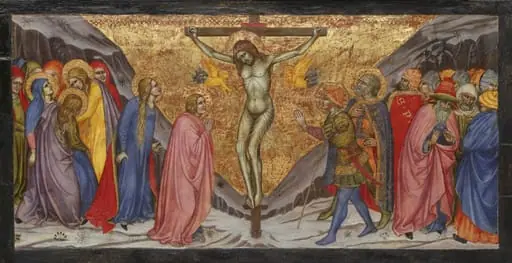
Created circa 1251, the *Crucifixion* is a small panel painting now held by the Detroit Institute of Arts. It portrays the crucifixion of Jesus Christ within a gold‑leaf background that has become partially worn, exposing underlying red and blue pigments. The work is attributed to the anonymous Master of the Cappella Medici Polyptych, an Italian painter active in the early fourteenth century.
Subject & Meaning
The composition emphasizes the emotional response of the surrounding figures to the crucifixion event.
The central figure is a naked Christ nailed to a cross, his arms outstretched. To his left, a woman in blue reaches toward him, while another woman in red kneels at his feet. On the right, a robed figure in pink and blue stands holding an object, and a smaller blue‑clad figure is perched on a ledge above, also gesturing toward the cross. The composition emphasizes the emotional response of the surrounding figures to the crucifixion event.
Technique & Style
The panel employs a flat gold ground typical of medieval devotional images, with bright but partially faded pigments applied in a stylized manner. Modeling of faces is minimal, lacking the gradual tonal transitions of chiaroscuro; instead, the figures are rendered with uniform color fields. The cross itself is rendered simply, without ornamental detail, reflecting a restrained approach to form.
History & Provenance
The artist was identified in the twentieth century by Bernard Berenson and is also referred to as the Master of Terenzano, a name derived from a polyptych dated to the 1320s that originally adorned the Medici Chapel in Santa Croce, Florence. The painting entered the Detroit Institute of Arts collection in the mid‑20th century, though earlier ownership records are sparse.
Context
Produced during the early Renaissance, the work bridges the medieval iconographic tradition and emerging naturalistic tendencies. Its gold background and stylized figures align with Byzantine influences, while the inclusion of emotive gestures hints at the period’s growing interest in human response to sacred narratives.
Artist & collection
Artist
Master of the Cappella Medici Polyptych
The Master of the Cappella Medici Polyptych (sometimes called the Master of Terenzano) was an Italian painter active between about 1315 and 1335.

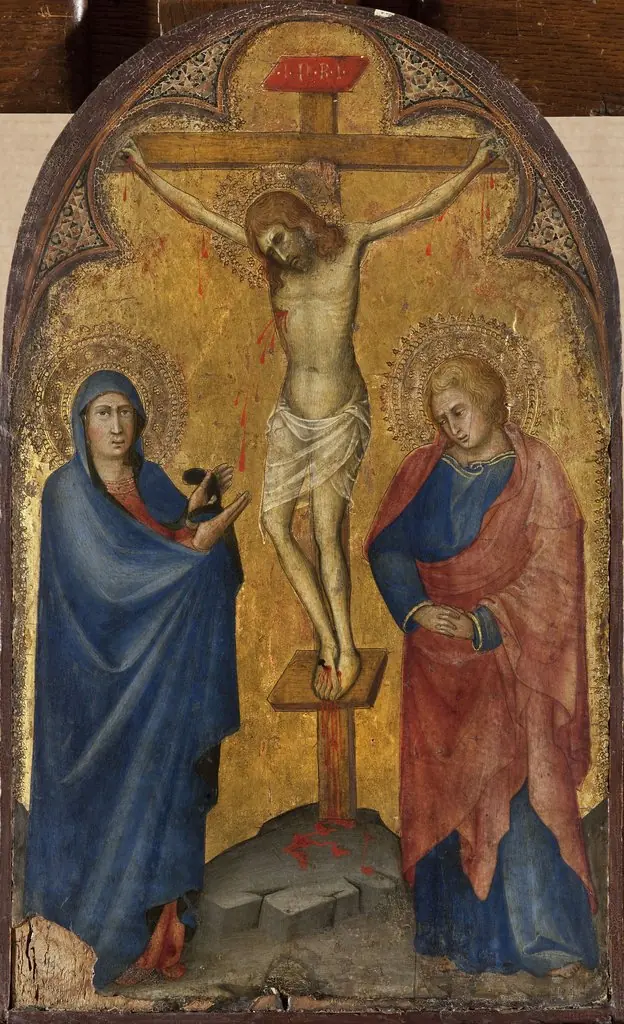 Crucifixion
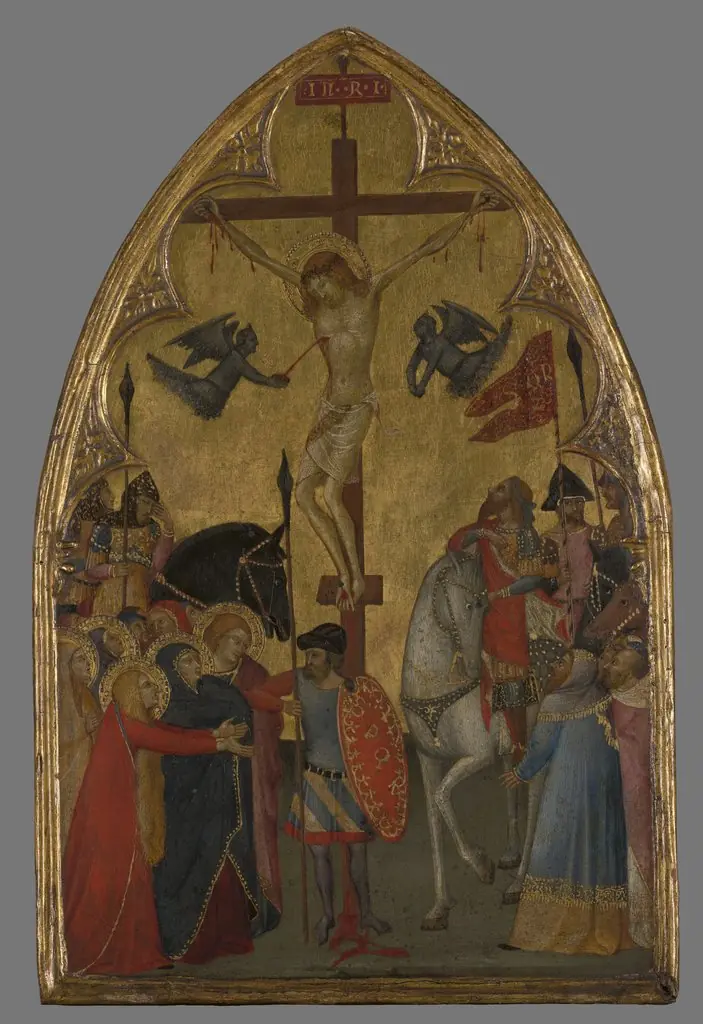 Crucifixion
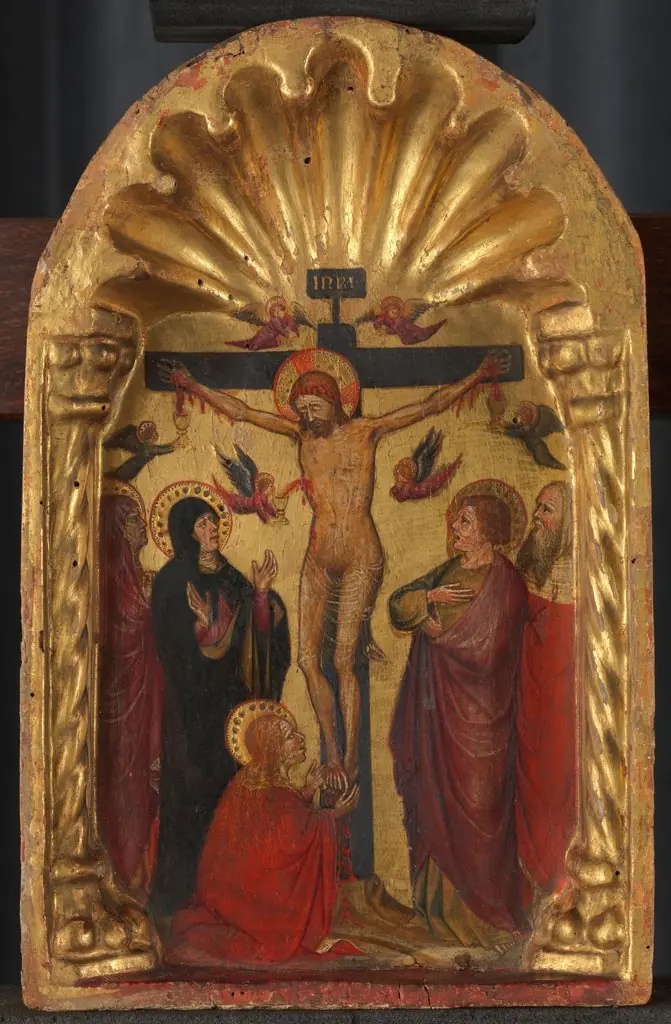 Crucifixion
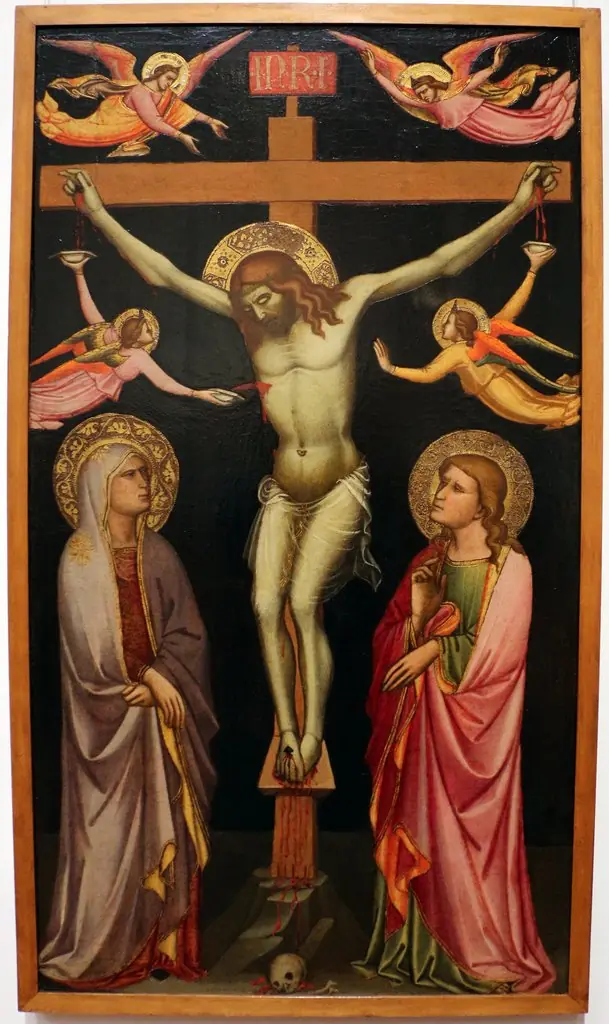 Crucifixion
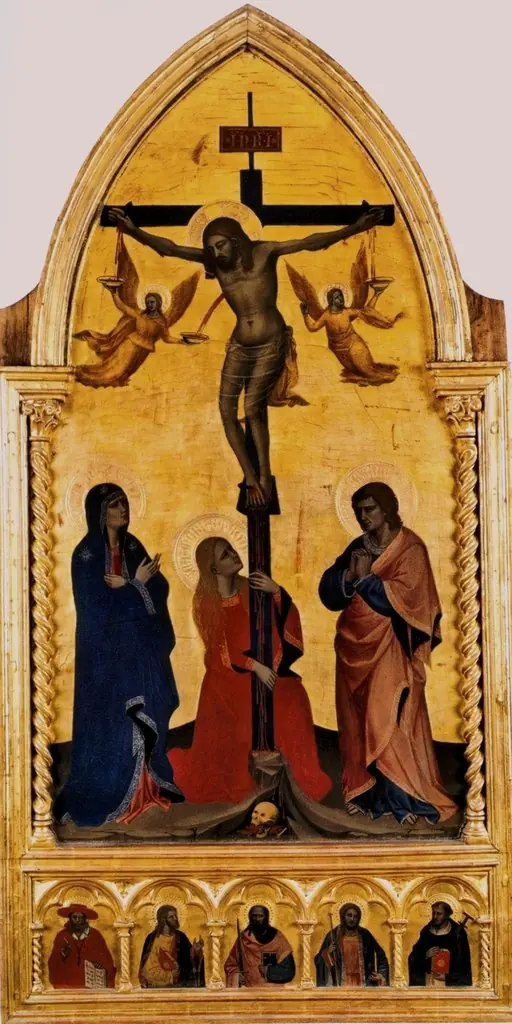 Crucifixion
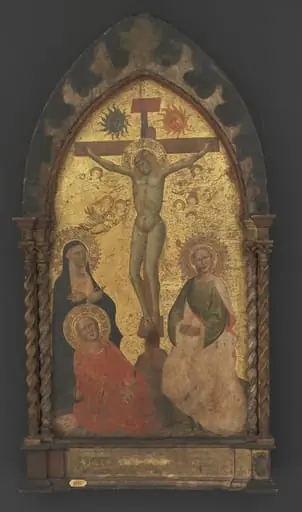 Christ on the Cross mourned by the Virgin Mary and Saints Mary Magdalene and John
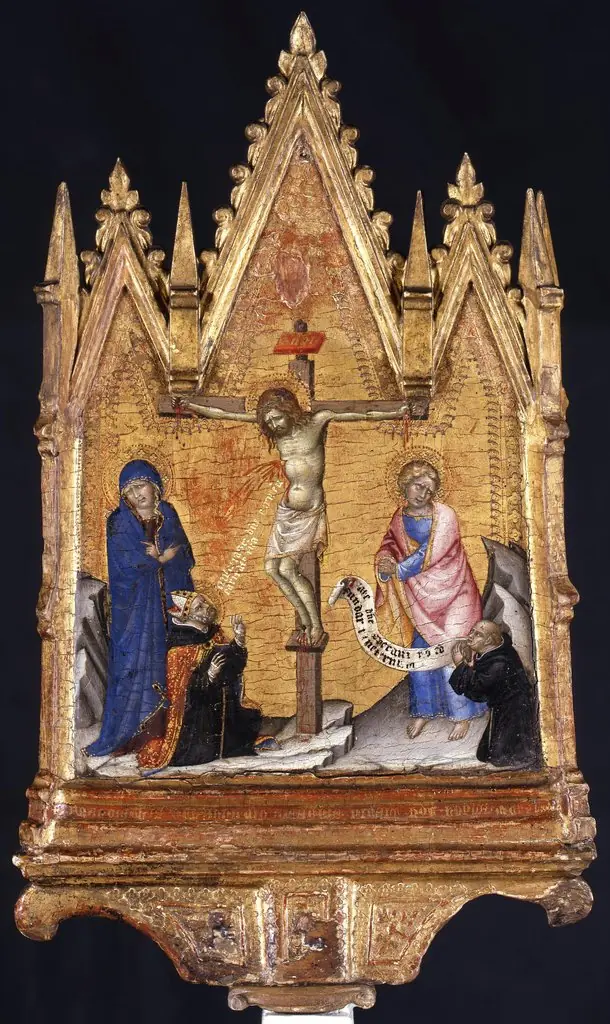 Christ on the Cross between the Virgin and St. John/ Madonna enthroned
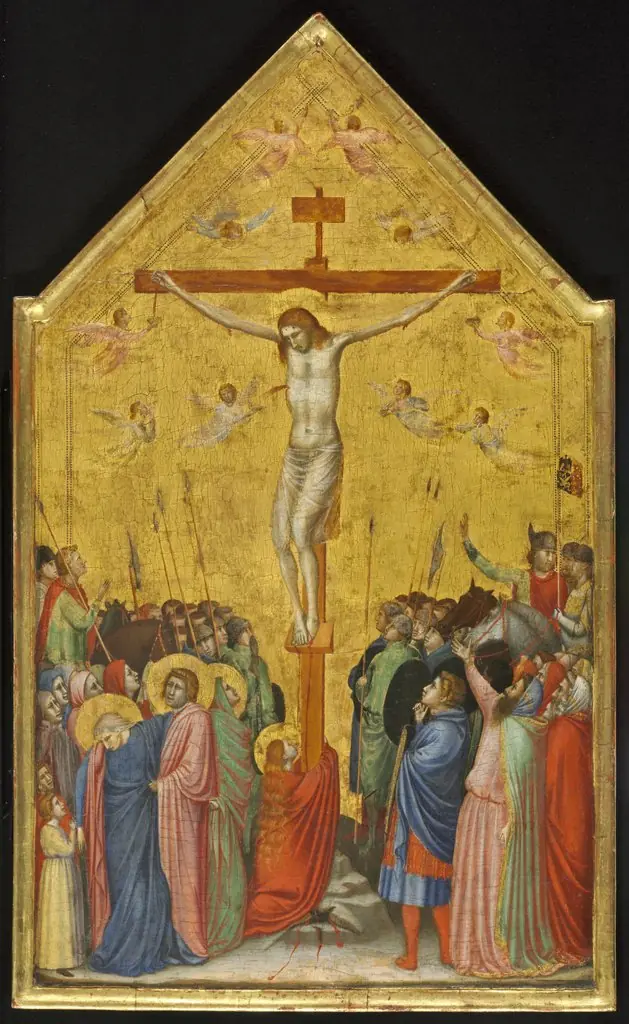 The Crucifixion of Christ
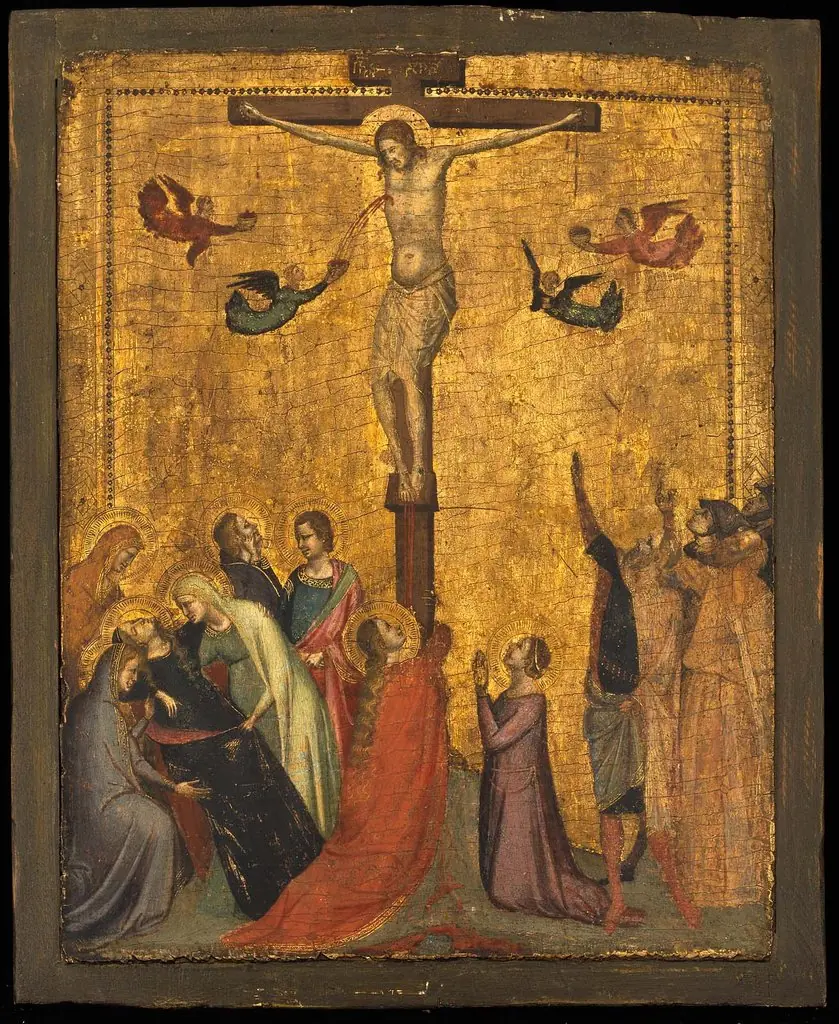 The Crucifixion
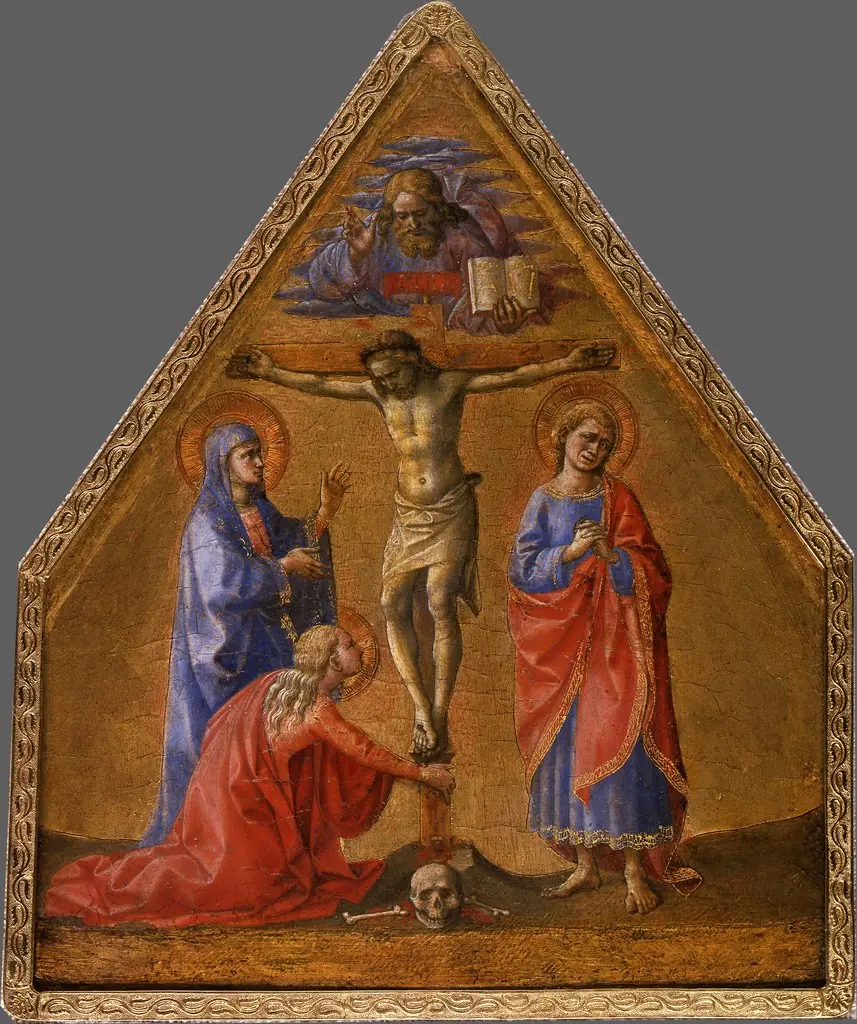 Christ on the Cross with Saints John, Mary and Mary Magdalene
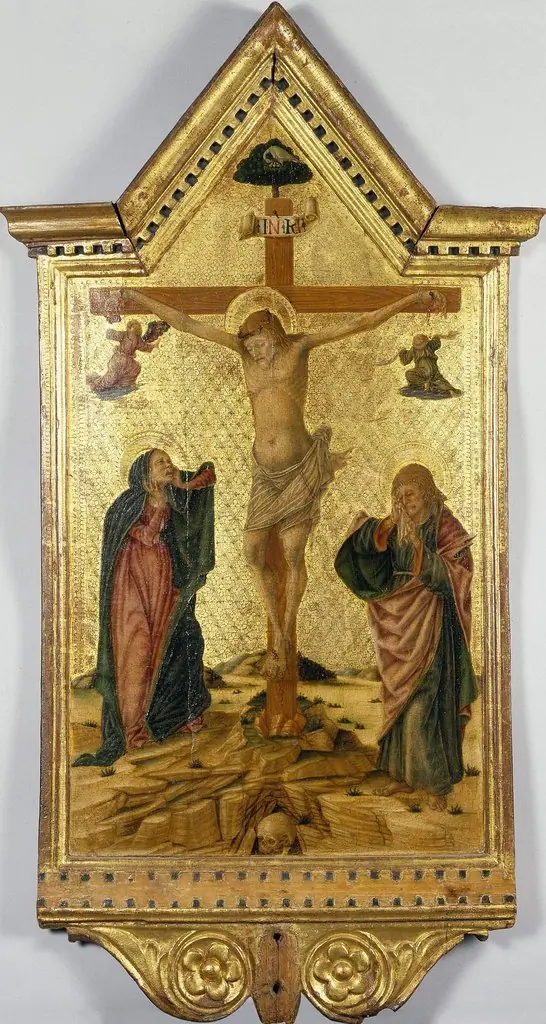 Crucifixion with the Virgin and St John
 The Crucifixion