Artwork
Sítio Sossego, São Luís, Maranhão (atribuído)
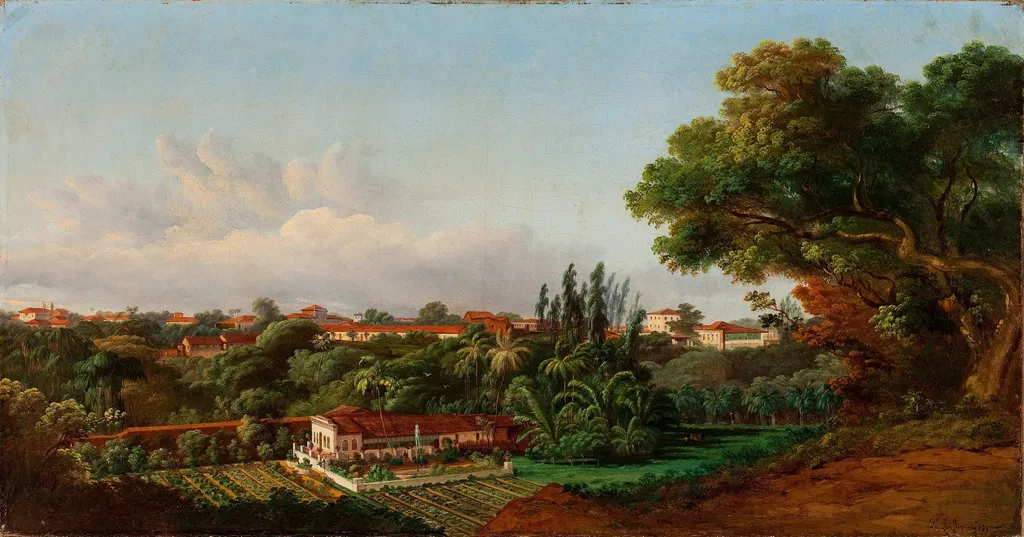
Sítio Sossego, São Luís, Maranhão (atribuído) is an oil painting by Giuseppe Leone Righini. It dates from 1865 and is held in the collection of the Pinacoteca de São Paulo.
About this work
Overview
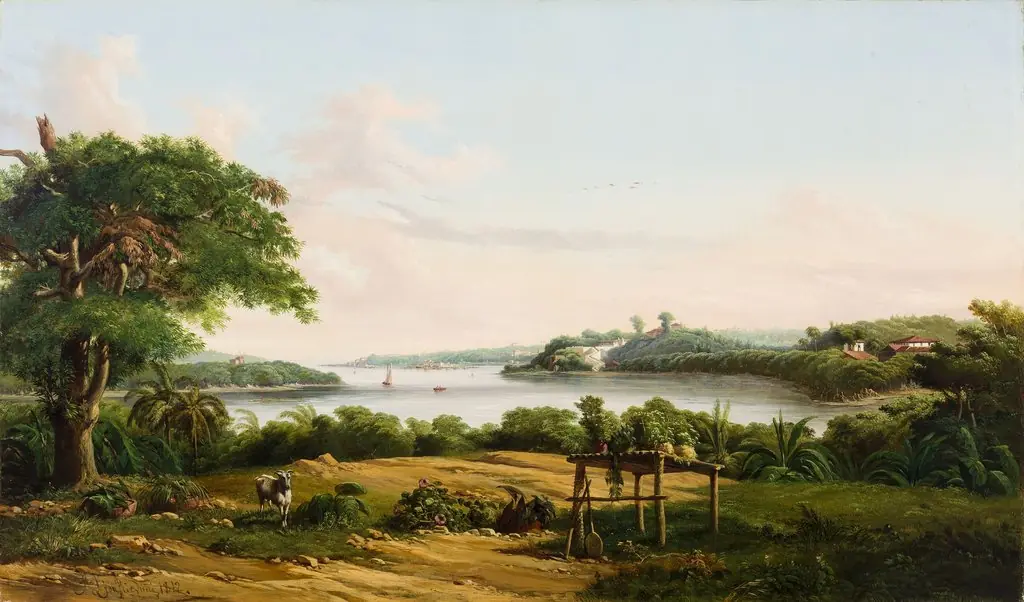
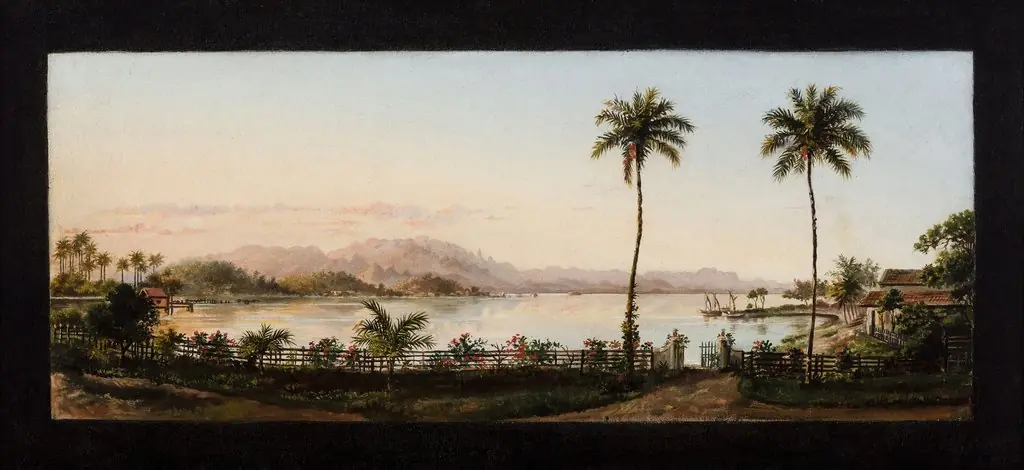
Attributed to Giuseppe Leone Righini, this 1865 oil painting captures a quiet rural estate near São Luís in Maranhão, Brazil.
Attributed to Giuseppe Leone Righini, this 1865 oil painting captures a quiet rural estate near São Luís in Maranhão, Brazil. The work belongs to the Pinacoteca do Estado de São Paulo’s collection and represents one of the few known landscape depictions of the region from the mid-19th century. Its composition emphasizes stillness and harmony, reflecting a colonial-era view of the Brazilian countryside.
Subject & Meaning
The scene portrays Sítio Sossego, a modest agricultural property, framed by a dominant tree on the right and low buildings with red-tiled roofs in the distance. The orderly garden in the foreground suggests cultivated land, while the soft sky and gentle clouds imply calm. The painting conveys no narrative or human activity, instead offering a contemplative portrait of place, possibly reflecting ideals of rural serenity valued by local elites at the time.
Technique & Style
Righini employs soft, blended brushwork to render foliage and architecture with subtle texture rather than sharp definition. Warm ochres and earth tones dominate the foreground, contrasting with the pale blue sky. Light is diffused evenly, avoiding dramatic shadows, which contributes to the tranquil mood. Details like the tree’s branching and roof tiles are rendered with care but without excessive precision, favoring atmospheric cohesion over topographical accuracy.
History & Provenance
The painting entered the Pinacoteca do Estado de São Paulo’s collection in the 20th century, though its early ownership history remains unclear. Attributed to Righini based on stylistic parallels with his other Brazilian works, it lacks definitive documentation from 1865. Its survival as a regional landscape from this period is rare, making it a valuable record of visual culture in northern Brazil during the imperial era.
Context
Created during Brazil’s imperial period, the painting reflects a growing interest in depicting local landscapes, distinct from European models. São Luís, a colonial port city, was undergoing slow modernization, yet this scene avoids urban development, focusing instead on an idealized rural retreat. Such works were often commissioned by landowners or collected by institutions seeking to define a national visual identity through regional scenery.
Legacy
Though not widely exhibited, the painting contributes to the understanding of 19th-century Brazilian landscape painting beyond the more documented southeast regions. It stands as a quiet testament to the visual documentation of lesser-known areas, offering insight into how rural estates were perceived and represented. Its preservation supports ongoing research into regional artistic practices during Brazil’s transition from colony to nation.
Artist & collection