Artwork
Praia de Botafogo com Dois Irmãos, Gávea e Corcovado ao fundo (atribuído)
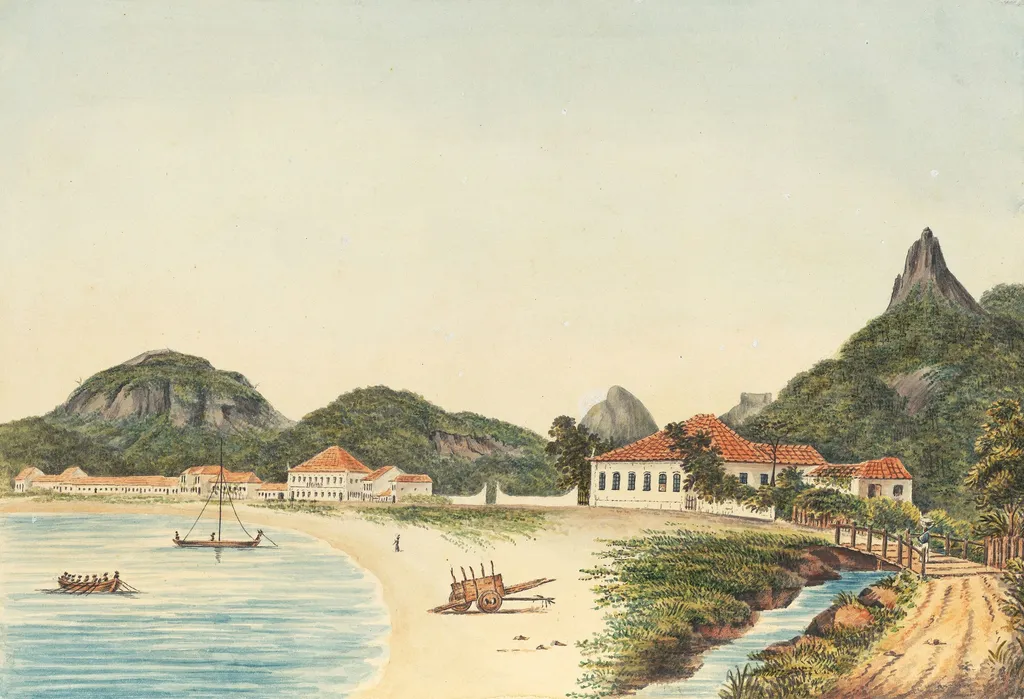
Praia de Botafogo com Dois Irmãos, Gávea e Corcovado ao fundo (atribuído) is a graphite painting by Unknown. It is held in the collection of the Pinacoteca de São Paulo.
About this work
Overview
The composition emphasizes stillness, with minimal human presence and a restrained palette of pale yellows, light blues, and earth tones.
This graphite drawing portrays a quiet coastal view in Rio de Janeiro, featuring Botafogo Beach with the twin peaks of Dois Irmãos and the Corcovado mountain in the distance. The composition emphasizes stillness, with minimal human presence and a restrained palette of pale yellows, light blues, and earth tones. The scene is rendered with delicate lines, suggesting observation rather than dramatic intervention.
Subject & Meaning
The scene captures a tranquil moment along Rio’s shoreline, with two boats—one under sail, the other beached—hinting at local maritime life. The white buildings with orange roofs reflect colonial or early urban architecture, while the lush mountains frame the horizon. The absence of figures or activity reinforces a mood of solitude and natural harmony, possibly reflecting a personal or contemplative response to the landscape.
Technique & Style
Executed in graphite, the work relies on subtle tonal gradations and fine linear detail to suggest form and depth. Soft shading defines the rolling hills and water’s surface, while lighter strokes indicate sky and sand. The lack of color emphasizes texture and light, aligning with 19th-century topographical drawing traditions. The hand is precise yet unobtrusive, favoring clarity over expressive flourish.
History & Provenance
The drawing is attributed but not definitively signed, with no documented exhibition or ownership history prior to modern cataloging. Its style suggests it may originate from the mid- to late 1800s, a period when Brazilian artists and travelers began documenting local landscapes with increasing attention to natural detail. Its survival in private collections indicates it was valued as a personal record rather than a public work.
Context
During the 19th century, Rio de Janeiro’s natural scenery became a subject of growing interest among artists and foreign visitors. This drawing aligns with a broader trend of recording urban and coastal vistas as the city modernized. Unlike grand historical paintings, such works often served as private sketches, offering intimate glimpses of everyday environments amid rapid urban change.
Legacy
Though not widely exhibited or reproduced, the drawing contributes to a quieter archive of Brazilian landscape documentation. It reflects an observational approach that prioritizes quietude over spectacle, preserving a moment in Rio’s coastal geography before extensive development. Its modest scale and medium underscore its role as a personal record rather than a public statement.
Artist & collection

 Domestic Scene
 Giacomo and Cardinal Marco, investing Andrea, Abbot of San Zeno, with his Benefice
 The Nymph of Fontainebleau
 Portrait of a Woman
 Madonna and Child with Saints in the Enclosed Garden
 Venus and Minerva
 Family Group of Four on Sofa
 Wall painting from Room H of the Villa of P. Fannius Synistor at Boscoreale
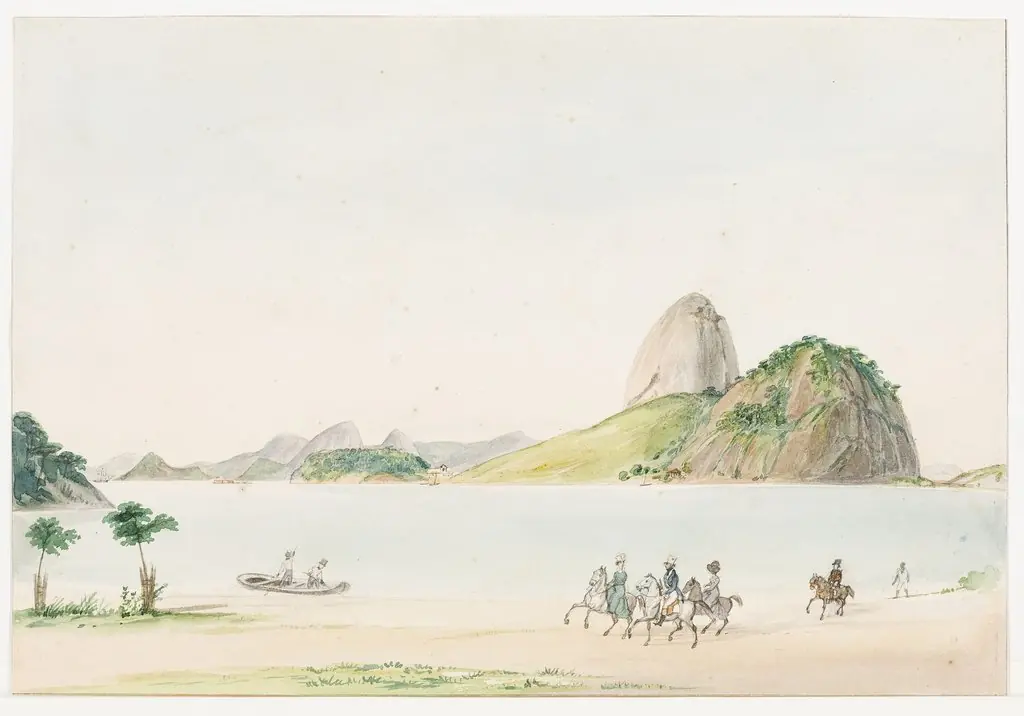 Praia de Botafogo com Pão de Açúcar (atribuído)
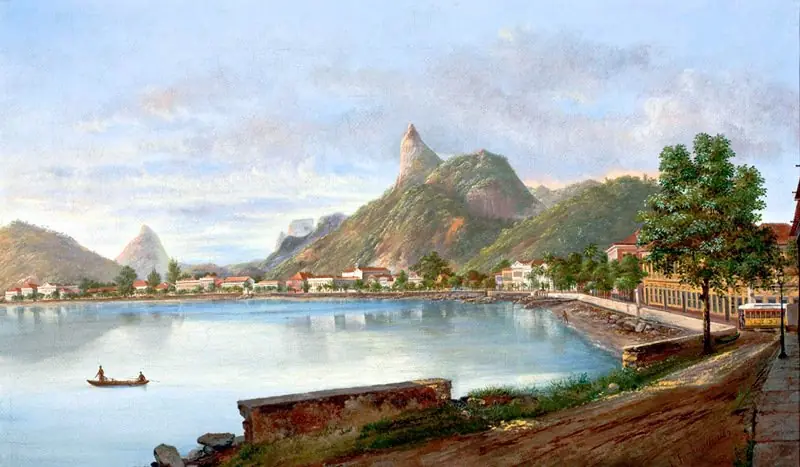 Botafogo Cove
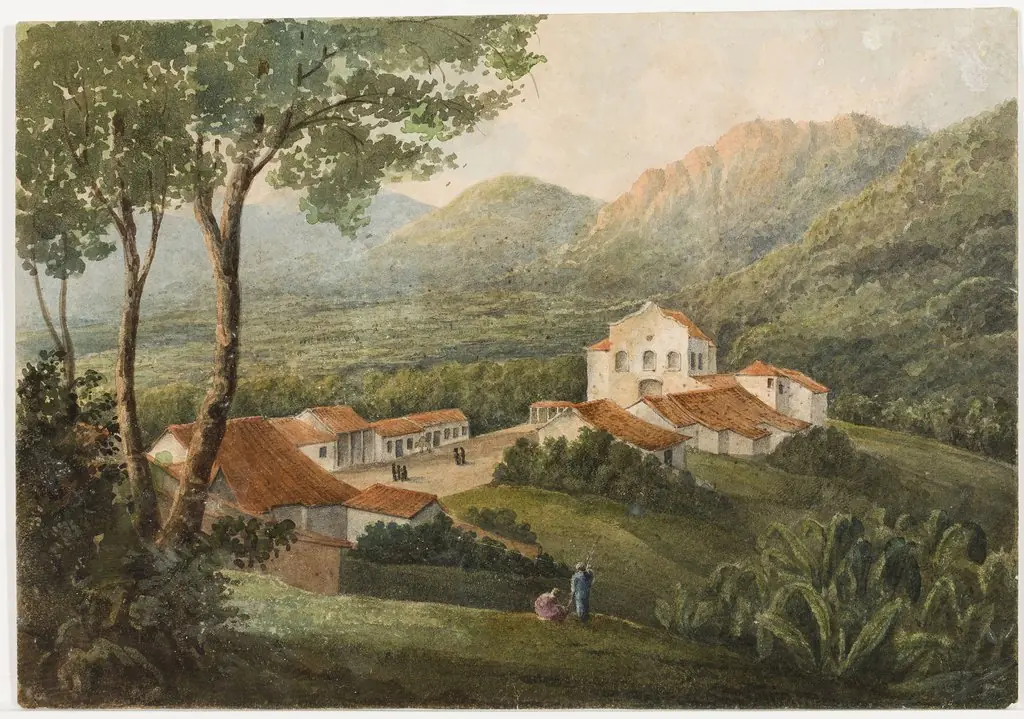 Vila rural e serra (atribuído)
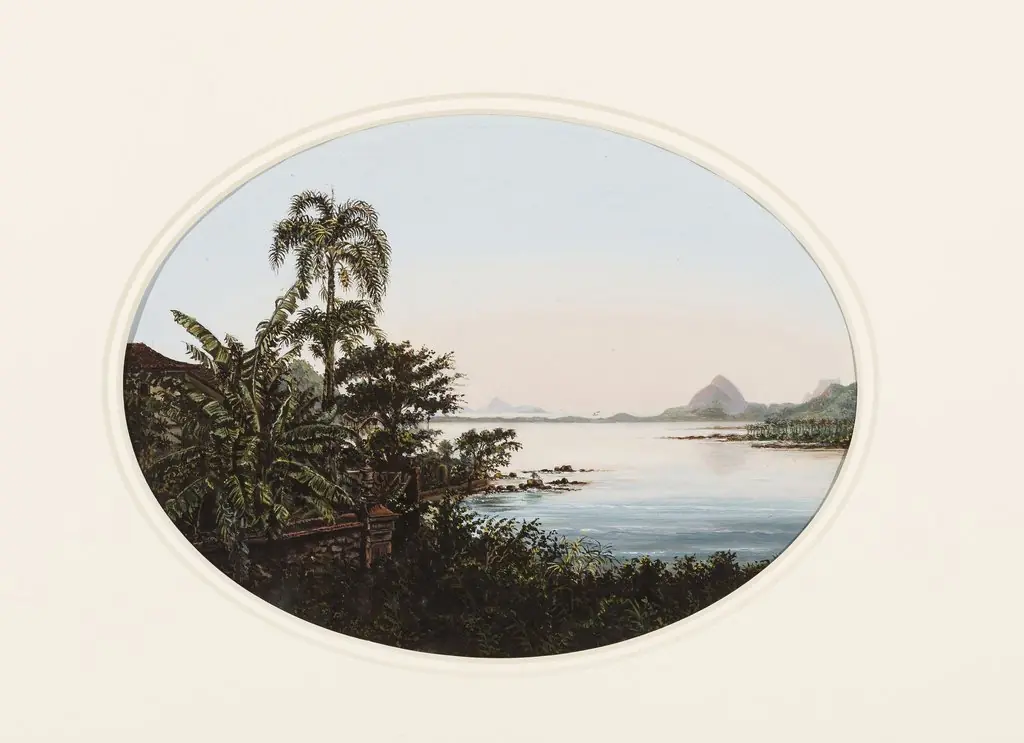 Lagoa Rodrigo de Freitas (Morro Dois Irmãos) (atribuído)
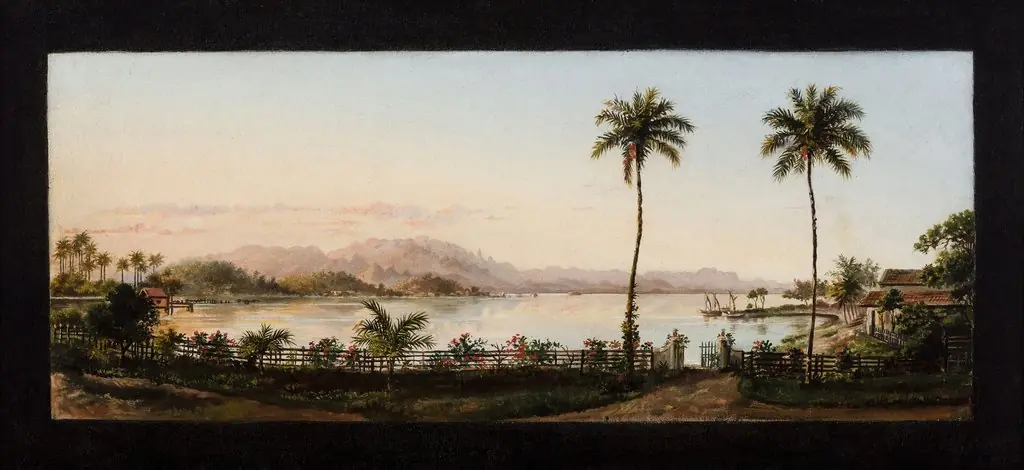 Enseada de Paquetá com Serra dos Órgãos ao fundo (atribuído)
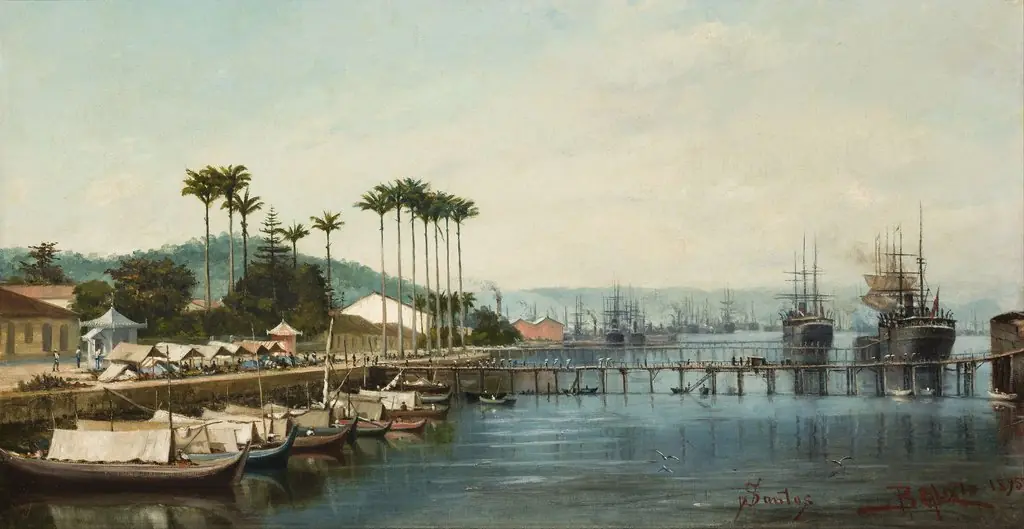 Porto de Santos (atribuído)
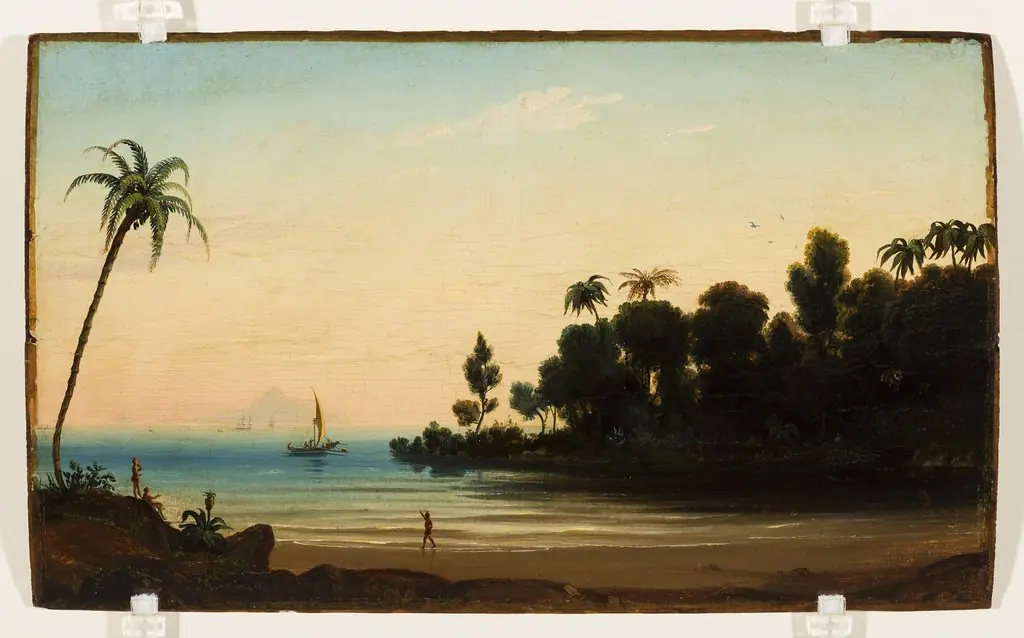 Praia com índios e veleiro (atribuído)
 Fazenda em Teresópolis (atribuído)
 Sítio Sossego, São Luís, Maranhão (atribuído)
 Botafogo. Rio
 Rua Direita, Rio de Janeiro (atribuído)