Artwork
Harvest--The Plain of La Crau
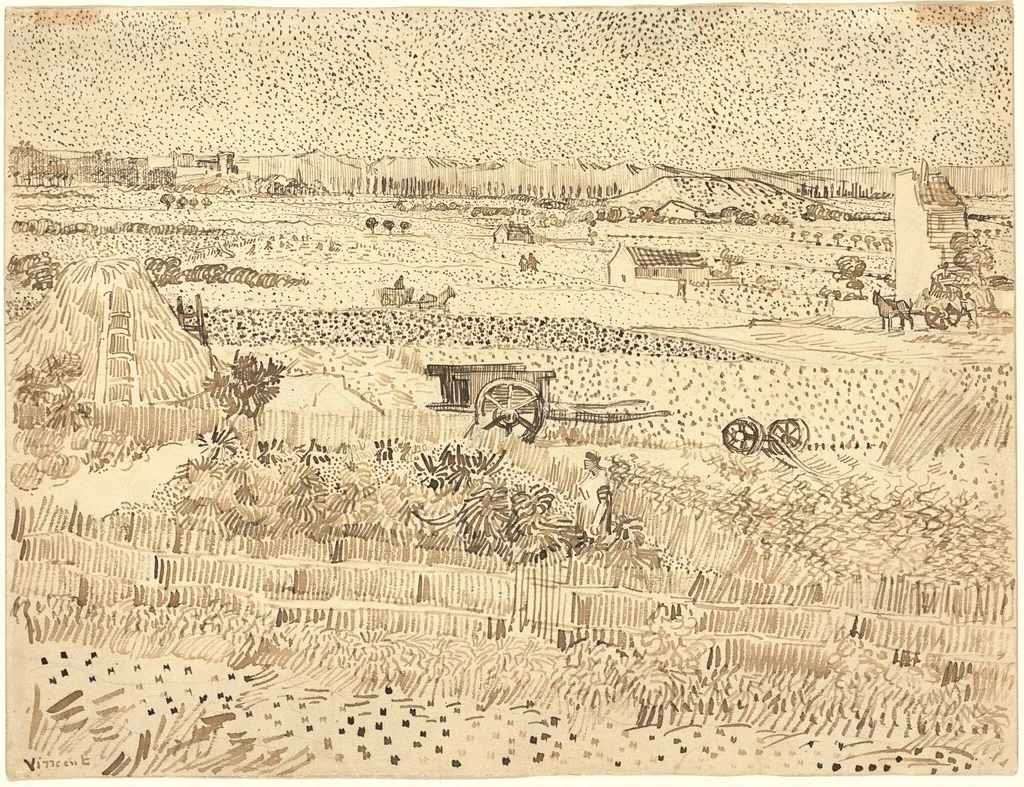
Harvest--The Plain of La Crau is an ink drawing by the Impressionist artist Vincent van Gogh. It dates from 1888 and is held in the collection of the National Gallery of Art.
About this work
Overview
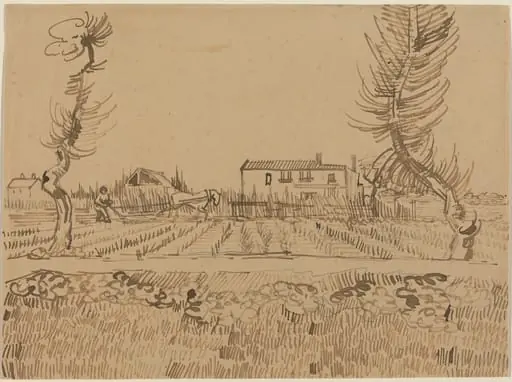
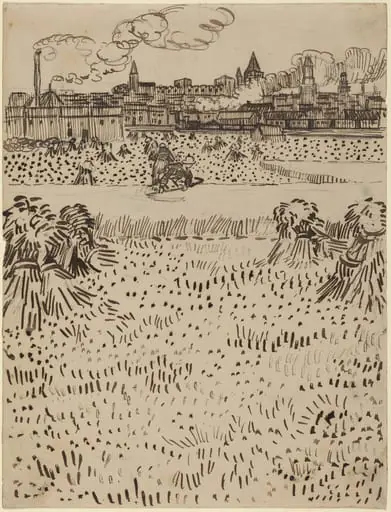
Vincent van Gogh executed the drawing *Harvest—The Plain of La Crau* in 1888 while in the south of France. The work is rendered on wove paper with a reed pen and brown ink applied over an initial graphite sketch. It belongs to the period when van Gogh concentrated on agrarian subjects, documenting the everyday labor of rural life.
Subject & Meaning
The composition presents an expansive, level plain punctuated by a few isolated trees and modest structures. In the centre a small group of figures and a wagon move through a cultivated field, suggesting a moment of harvest activity. The quiet arrangement emphasizes the rhythm of work and the stillness of the landscape.
Technique & Style
Van Gogh employed dense cross‑hatching, layering fine, intersecting lines to model shadows and convey texture on the ground. The ink work builds a subtle tonal range, while the underlying graphite provides a faint structural guide. The restrained palette of brown ink and the meticulous line work contrast with the more vivid colorations typical of his painted canvases.
Context
Created during van Gogh’s Arles period, the drawing reflects his fascination with Provençal scenery and the lives of its inhabitants. Though primarily known for his oil paintings, he produced numerous drawings that served as studies or independent works, allowing him to explore line and form without the distraction of color.
Own this work as a print
Artist & collection
Artist
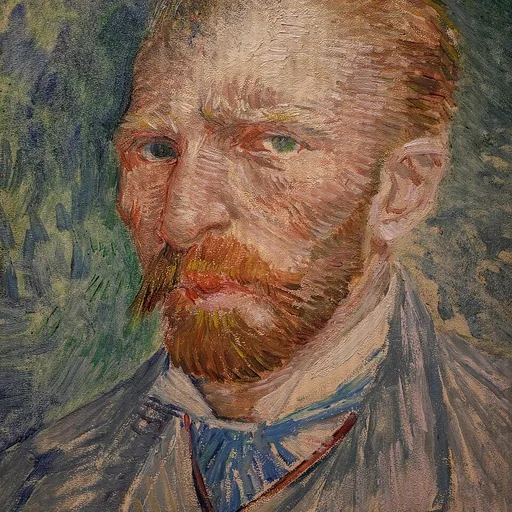
Vincent Willem van Gogh was a Dutch Post-Impressionist painter who is among the most famous and influential figures in the history of Western art.

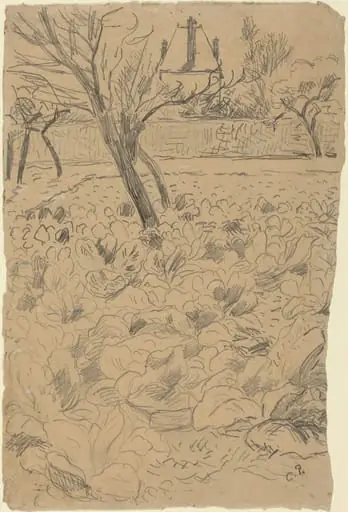 a) The Cabbage Field (Le Champ de choux); b) The Cabbage Field (Le Champ de choux)
 Ploughman in the Fields near Arles
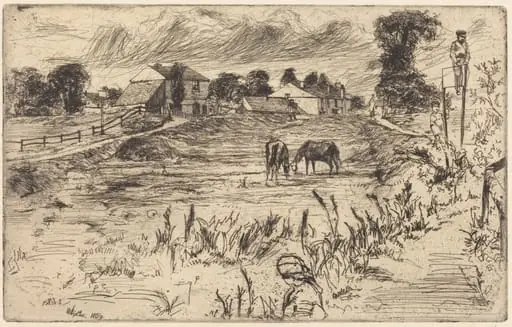 Landscape with Horses
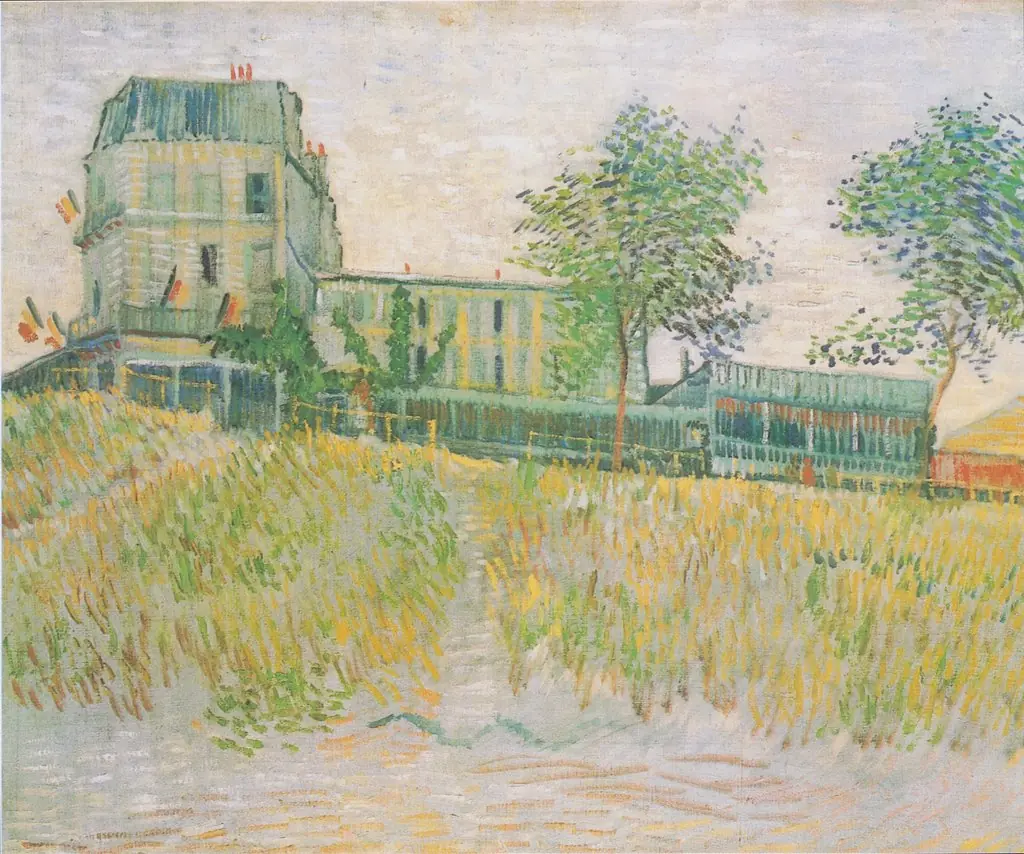 Restaurant de la Sirène at Asnières, The
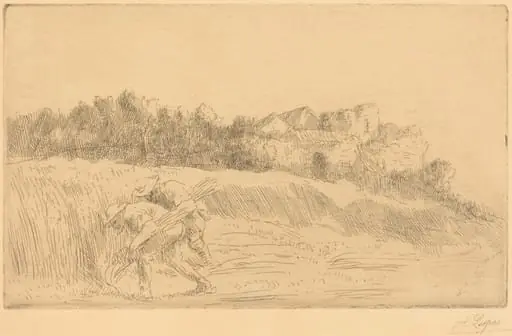 Harvesters (Les moissoneurs)
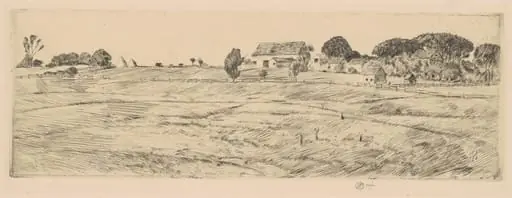 The Jonathan Baker Farm
 Olive Trees
 The Chapel Saint-Michel at l'Estre
 Rain
Rain Landscape with House and Ploughman
 Study for "Landscape with Figure and Houses"
 The Harvest