Artwork
Ploughman in the Fields near Arles
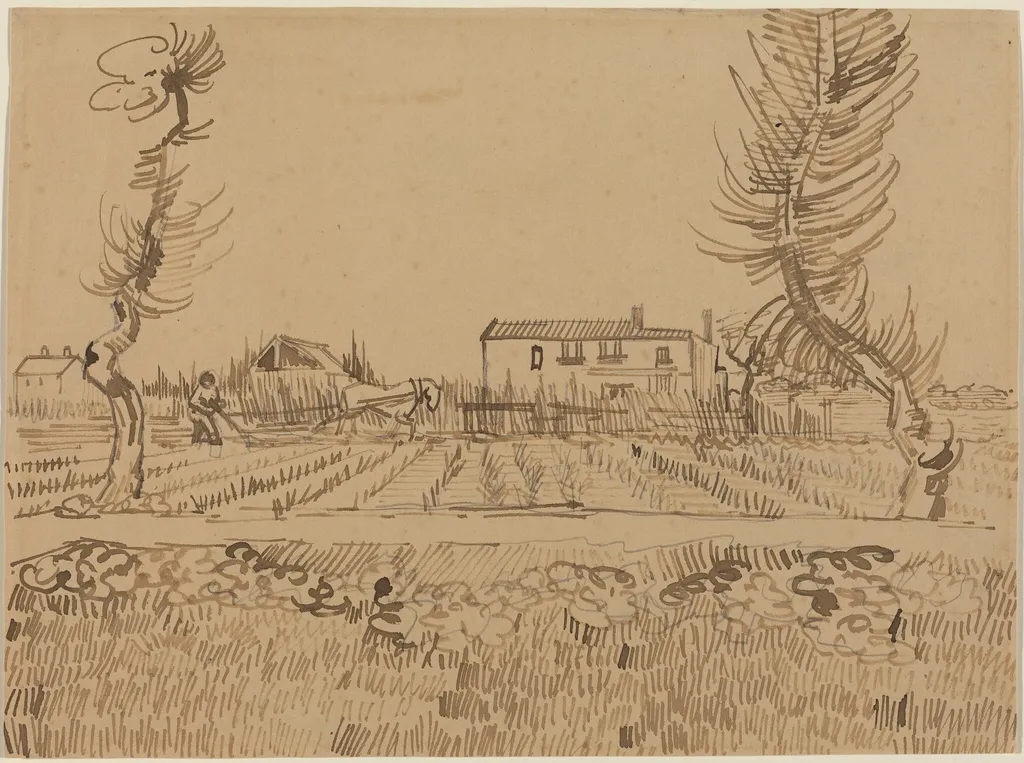
Ploughman in the Fields near Arles is an ink drawing by the Impressionist artist Vincent van Gogh. It dates from 1888 and is held in the collection of the National Gallery of Art.
About this work
Tall trees with twisted branches lean over the scene, and a few small houses sit in the background.
This sketch shows a ploughman guiding a horse-drawn plow through a field. Tall trees with twisted branches lean over the scene, and a few small houses sit in the background. The lines are simple but full of texture, especially in the grass and clouds.
The artist used quick, sketchy strokes to capture movement and light. This was drawn in 1888 with ink and pencil, not paint.
Next, check out cross-hatching to see how artists build texture with lines.
Overview
Created in 1888, this drawing by Vincent van Gogh captures a rural laborer at work near Arles, France. Executed in reed pen and brown ink over graphite on wove paper, it belongs to a series of sketches he made during his time in the south of France. Unlike his painted works, this piece relies on line and texture rather than color, reflecting his practice of observing and recording the landscape directly outdoors.
Subject & Meaning
The figure of the ploughman, bent over his task, is rendered with quiet dignity, emphasizing the rhythm of agricultural labor. The surrounding field, sparse dwellings, and leaning trees frame the scene without idealization. Van Gogh often turned to rural workers as subjects, drawn to their connection with the land and the physicality of their daily existence, which he saw as authentic and grounding.
Technique & Style
Van Gogh used a reed pen to create dynamic, varied lines—some sharp and deliberate, others loose and rapid—to suggest movement in the soil, the sway of grass, and the texture of clouds. Graphite underdrawing guided the composition, while ink strokes build depth through cross-hatching and pressure. The absence of color shifts focus to form and gesture, revealing his mastery of line as a tool for emotional and spatial expression.
History & Provenance
This drawing was made during Van Gogh’s prolific year in Arles, when he produced hundreds of works in rapid succession. It likely served as a preparatory study or a standalone observation, part of his effort to document the southern French countryside. Its survival reflects its importance to him as a record of place and labor, though it remained unpublished and unseen during his lifetime.
Context
In 1888, Van Gogh sought to escape urban life and immerse himself in the rhythms of rural France. He was influenced by Japanese prints and the realism of Millet, both of which informed his focus on peasant labor. His drawings from this period were often made quickly, outdoors, as a way to engage directly with the environment before translating it into painted compositions.
Legacy
Though less known than his paintings, Van Gogh’s drawings are now recognized as vital to understanding his artistic process. This work exemplifies how he used simple materials to convey complex emotion and movement. Its directness and sensitivity have contributed to broader appreciation of drawing as a core element of modern art, not merely a preliminary step.
Artist & collection
Artist
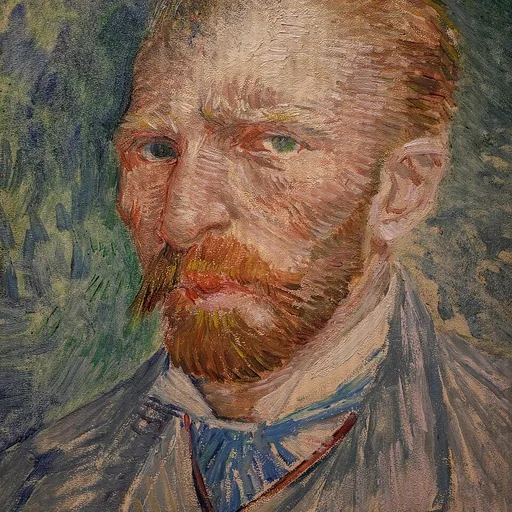
Vincent Willem van Gogh was a Dutch Post-Impressionist painter who is among the most famous and influential figures in the history of Western art.

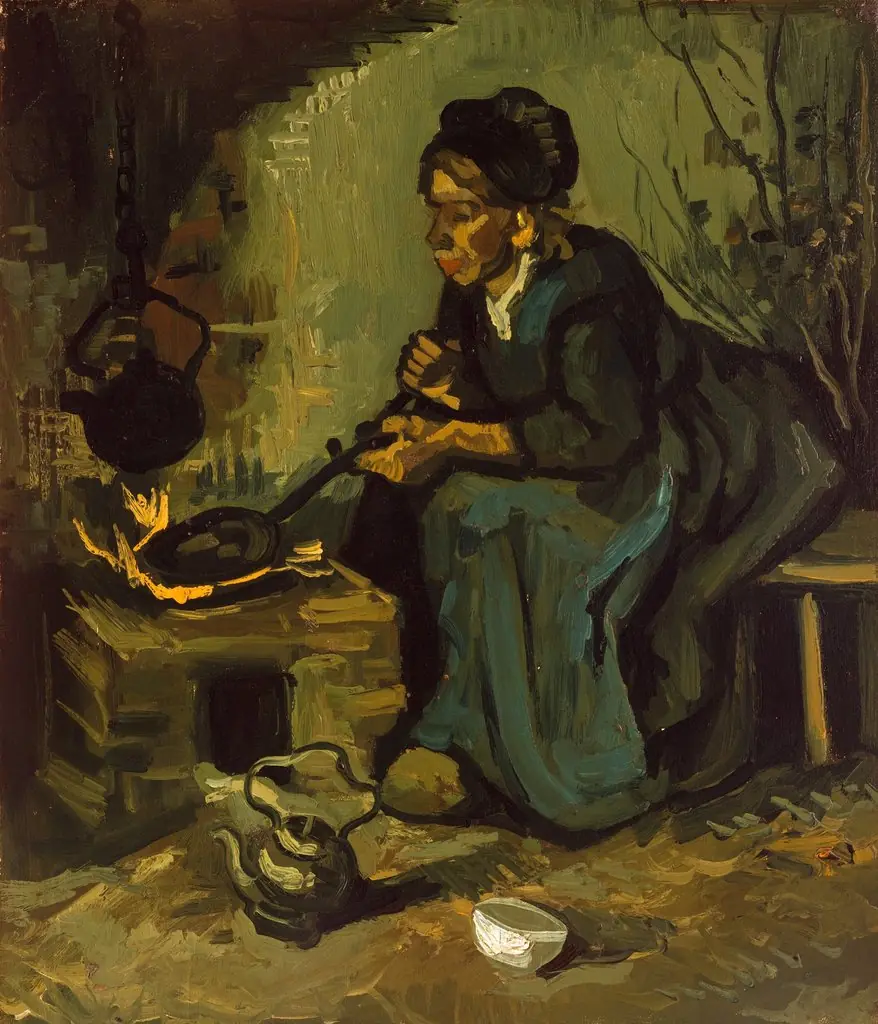
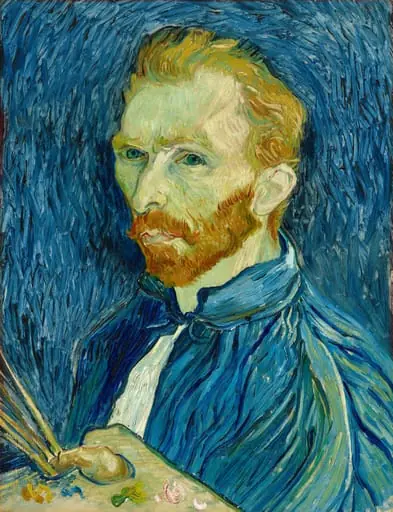
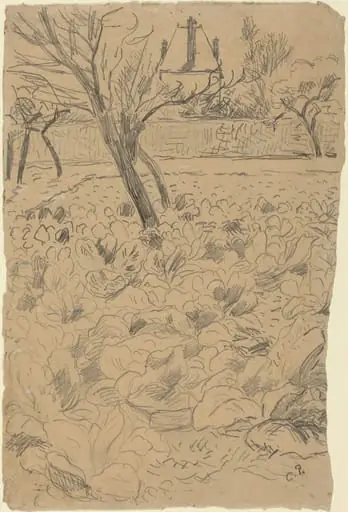 a) The Cabbage Field (Le Champ de choux); b) The Cabbage Field (Le Champ de choux)
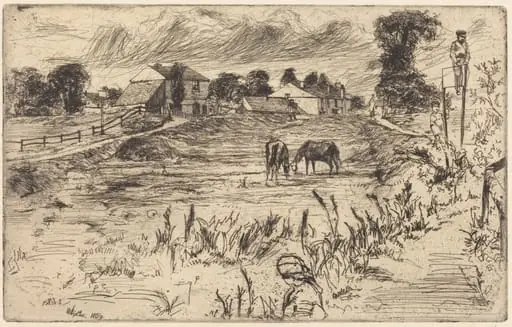 Landscape with Horses
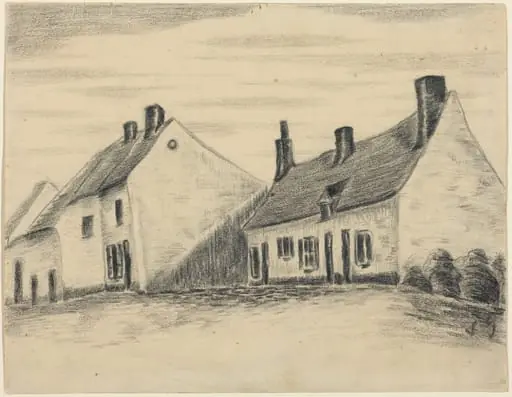 The Zandmennik House
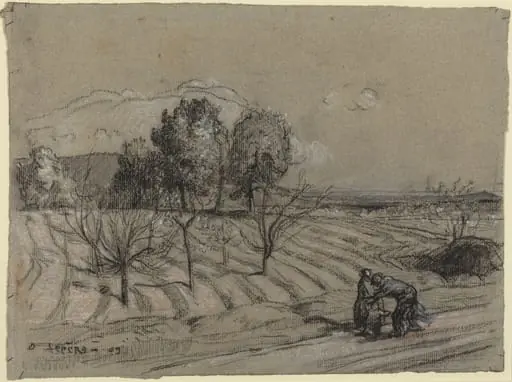 Spring
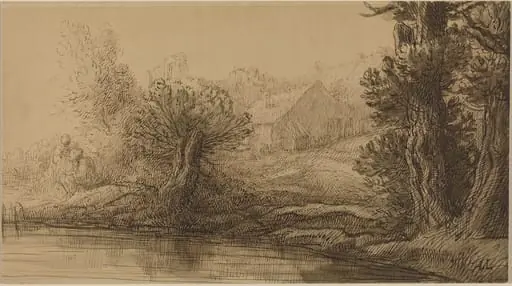 Bank of a River
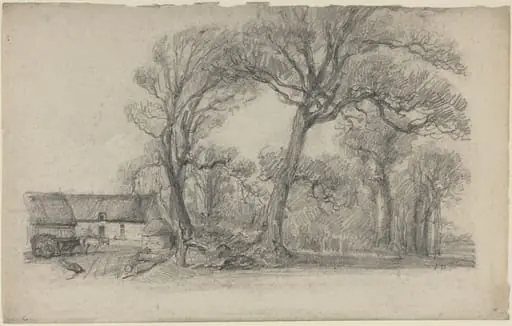 Landscape with Trees, Cottage, and Farm Wagon
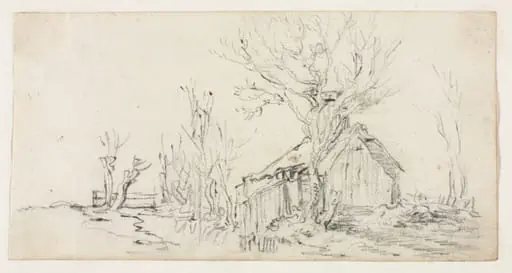 Sketch of Landscape with Cottage
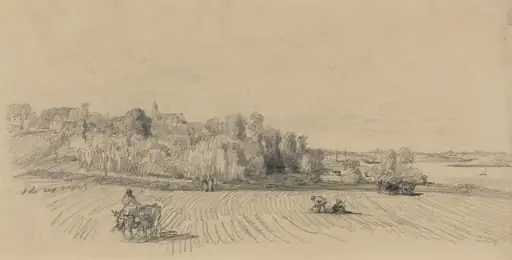 L'Ile aux Moines with Workers in a Field
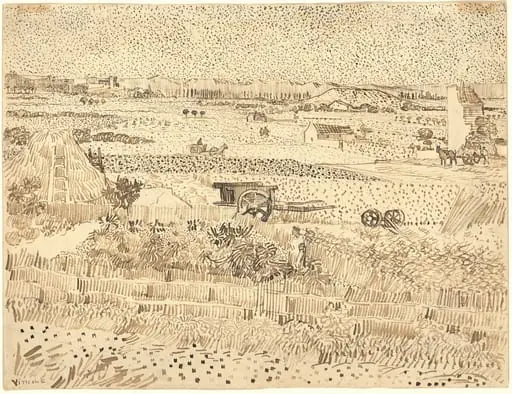 Harvest--The Plain of La Crau
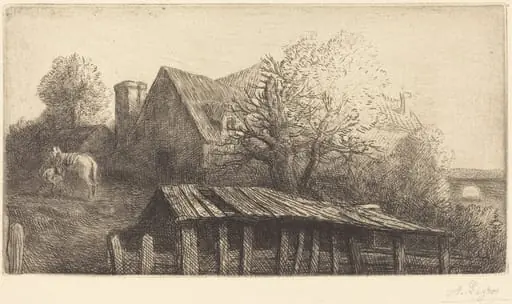 Old Inn (Une ancienne auberge)
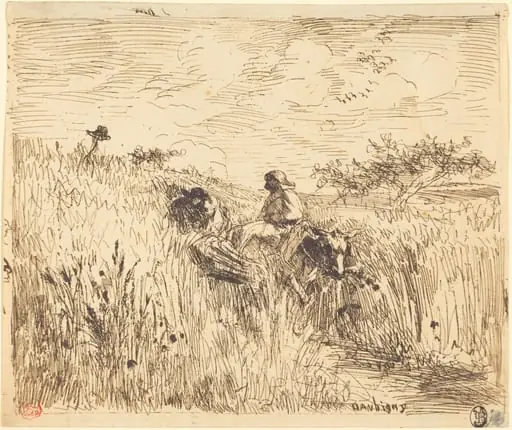 Path through a Wheat Field (Sentier dans les bles)
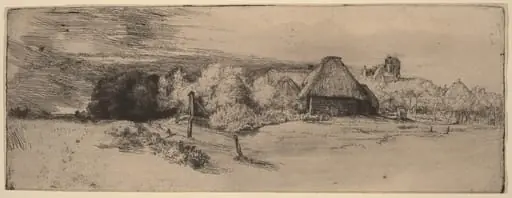 Landscape with Trees, Farm Buildings and a Tower