Artwork
Luare de sânge
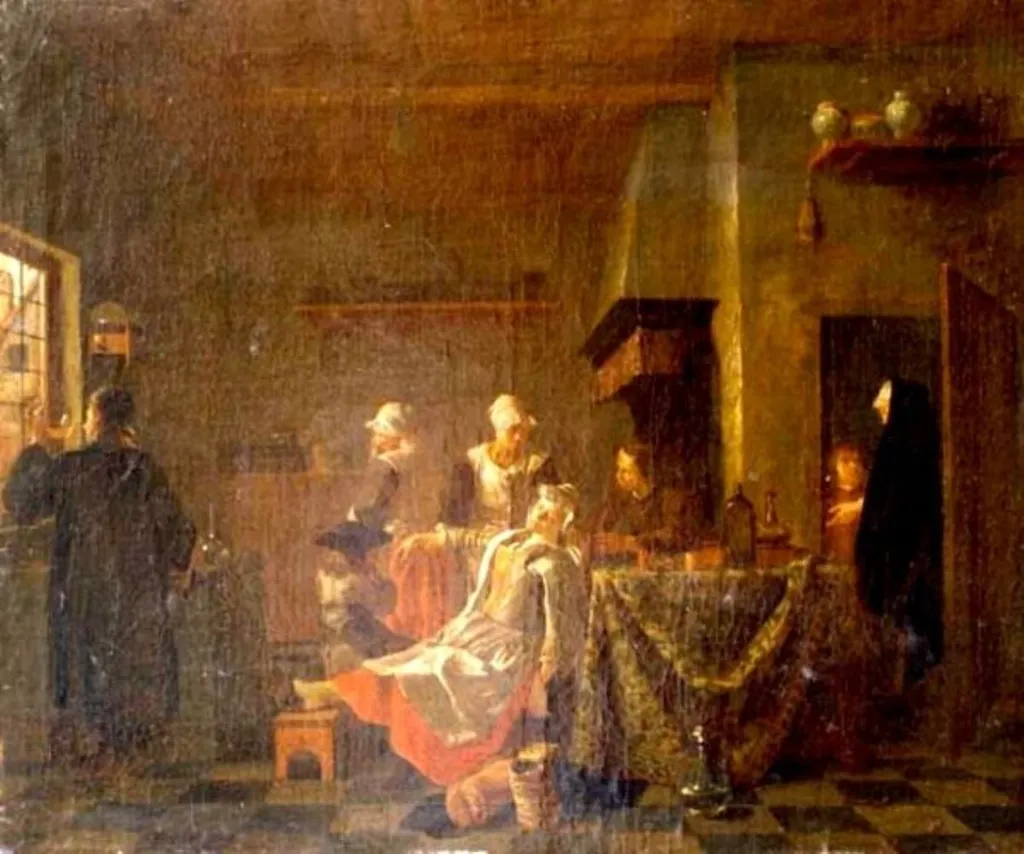
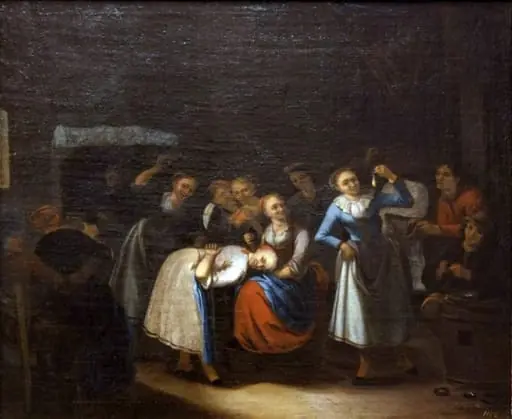
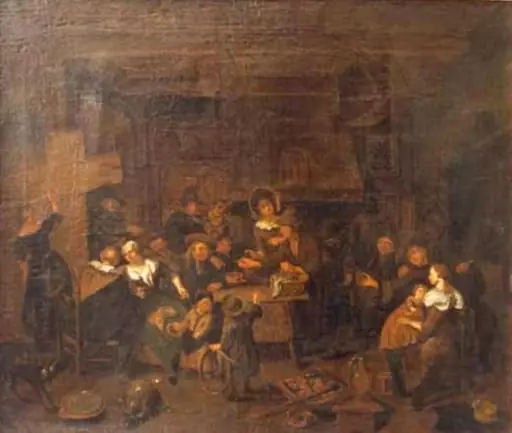
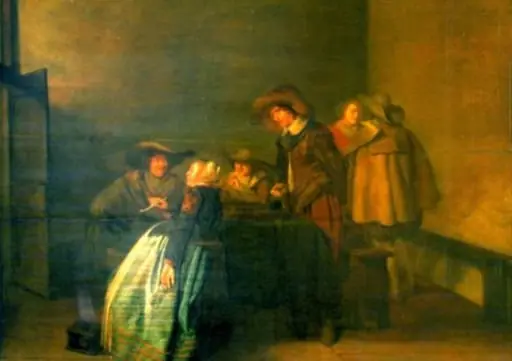
Luare de sânge is an unspecified painting by the Baroque artist Hendrick Goovaierts. It dates from 1707 and is held in the collection of the Brukenthal National Museum.
About this work
Overview
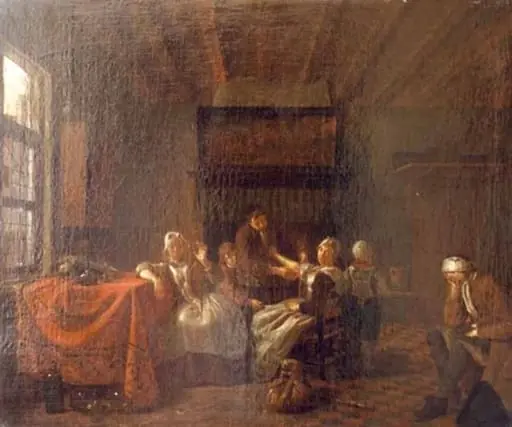
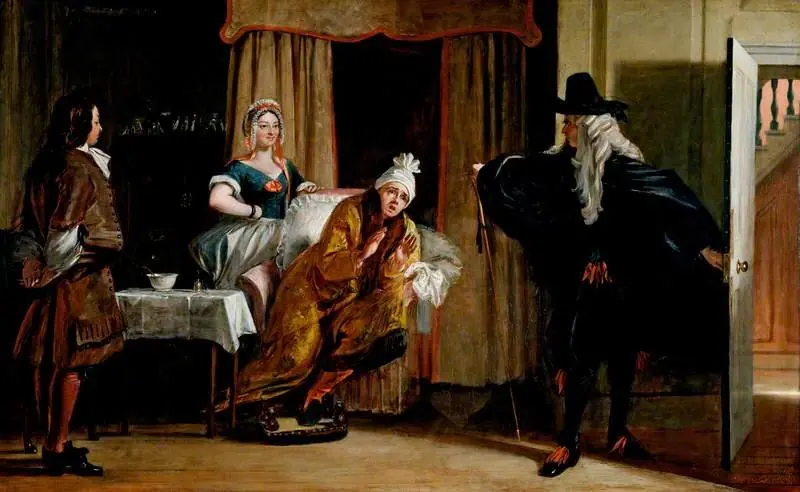
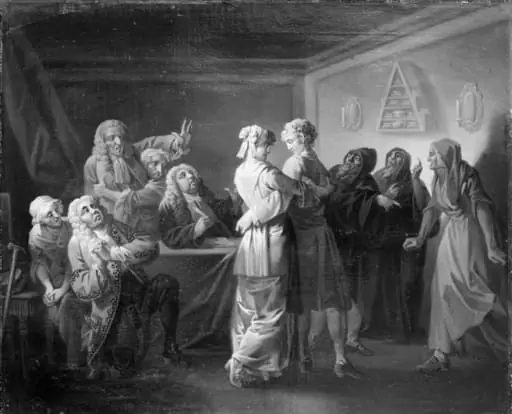
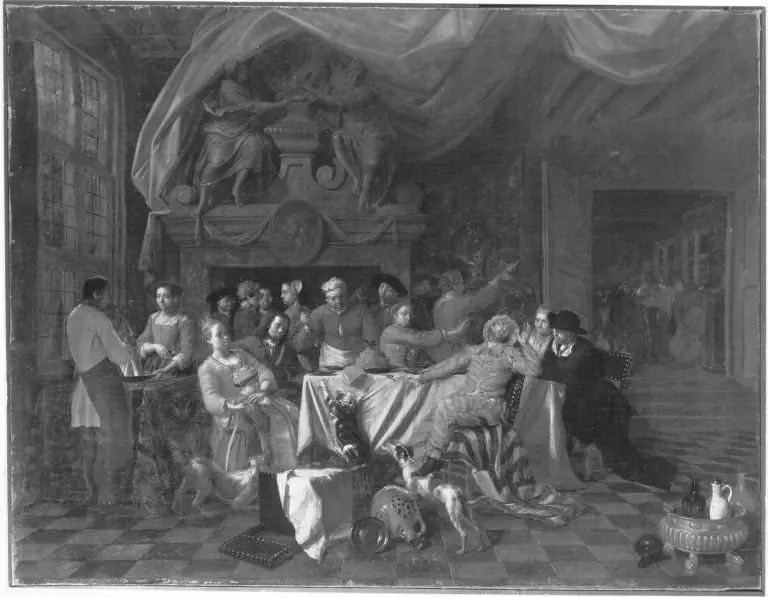
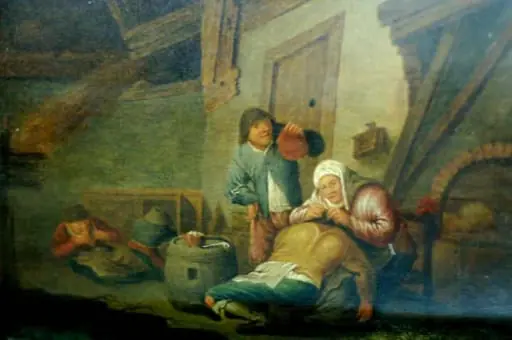
Painted in 1707 by Hendrick Goovaierts, this work depicts a quiet domestic scene centered on illness and care. The composition is restrained, focusing on a single interior space where figures gather around a bedridden individual. The atmosphere is somber, rendered through muted tones and careful attention to the interplay of light and shadow, suggesting a moment of vulnerability and stillness.
Subject & Meaning
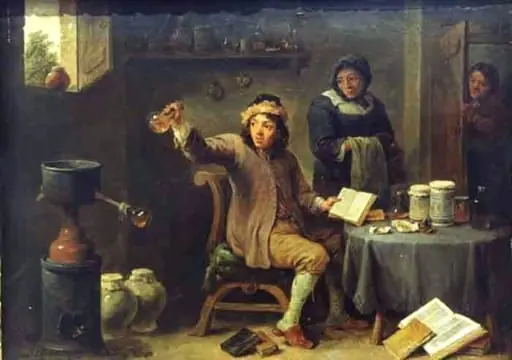
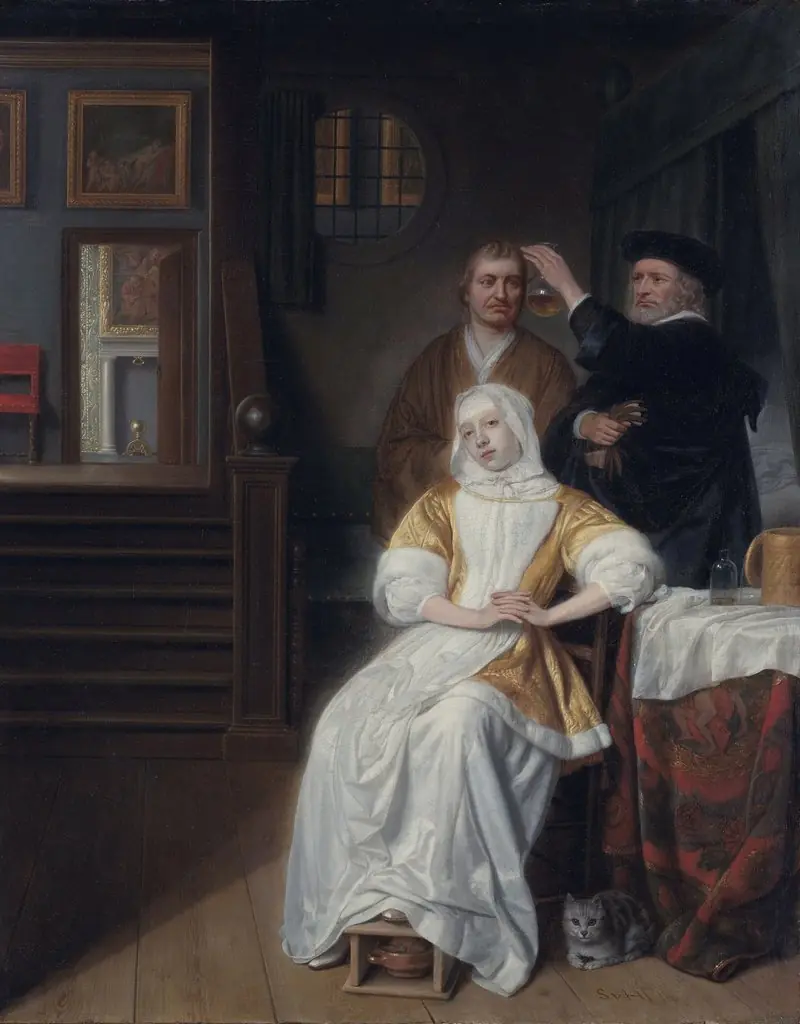
The painting captures a private moment of medical attention, likely within a home setting. A pale figure lies in bed, surrounded by attendants, one of whom holds a small vessel—possibly containing medicine. The absence of overt drama or religious symbolism points to a secular portrayal of care, emphasizing human endurance and the quiet rituals of illness rather than spiritual intervention.
Technique & Style
The lighting isolates the central figures, reinforcing the intimacy of the scene while grounding it in the visual language of Dutch and Flemish genre painting.
Goovaierts employs chiaroscuro to model form and direct attention, using strong contrasts between the warm glow of the hearth and the deep shadows along the walls. The brushwork is precise yet unobtrusive, allowing texture—fabric, skin, wood—to emerge naturally. The lighting isolates the central figures, reinforcing the intimacy of the scene while grounding it in the visual language of Dutch and Flemish genre painting.
History & Provenance
The painting’s early history is undocumented, and its ownership trail remains unclear after its creation in 1707. No major public collections or auction records from the 18th or 19th centuries confirm its movement. Its survival into the modern era suggests it was preserved within private hands, possibly in the Low Countries, though its current location is not publicly verified.
Context
Created during the late Baroque period, the work aligns with regional traditions of domestic genre scenes that emerged in the Netherlands and Flanders. While religious and mythological subjects dominated public art, private patrons increasingly favored intimate portrayals of daily life, including illness and care. Goovaierts’ painting reflects this shift, valuing observation over spectacle.
Legacy
Though not widely exhibited or reproduced, the painting contributes to a broader understanding of how illness was visually represented in early 18th-century Northern Europe. Its quiet realism offers insight into domestic medical practices and the emotional tone of caregiving, distinguishing it from more theatrical or allegorical treatments of similar themes.
Artist & collection
Artist
Hendrick Goovaerts made quiet paintings of everyday scenes in the early 1600s. Two snapshots in this set show doctors at work: one reads a patient’s pulse, the other holds a bloodletting bowl from 1707. His brush kept…