Artwork
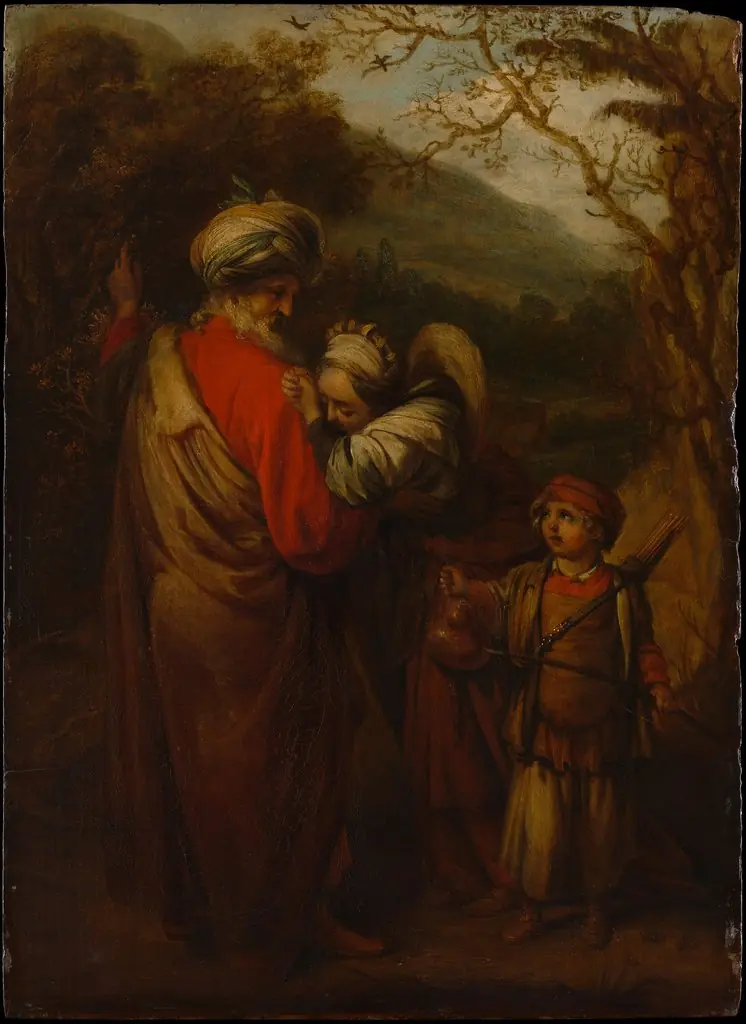
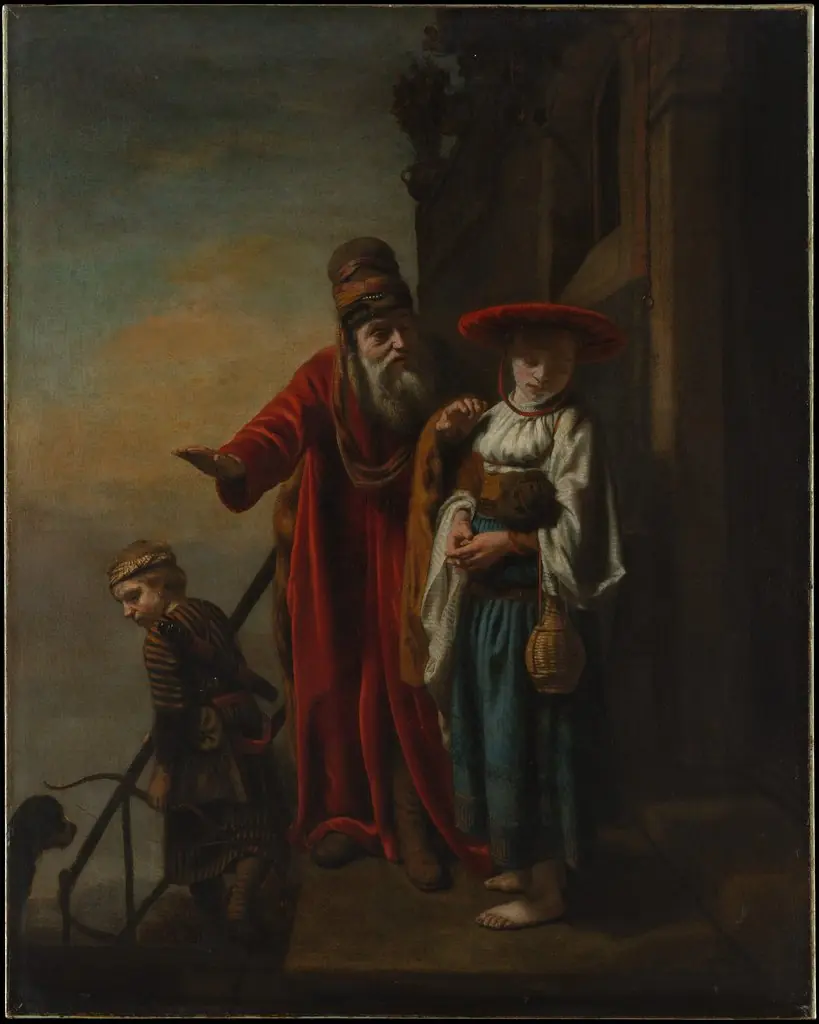
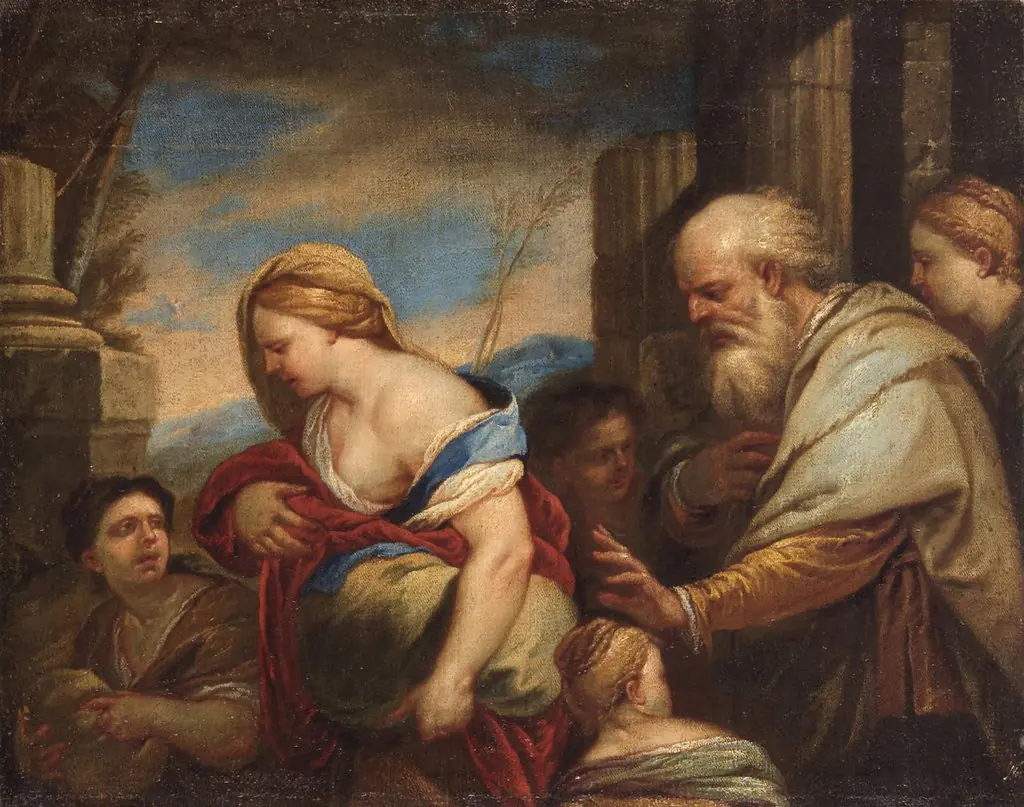
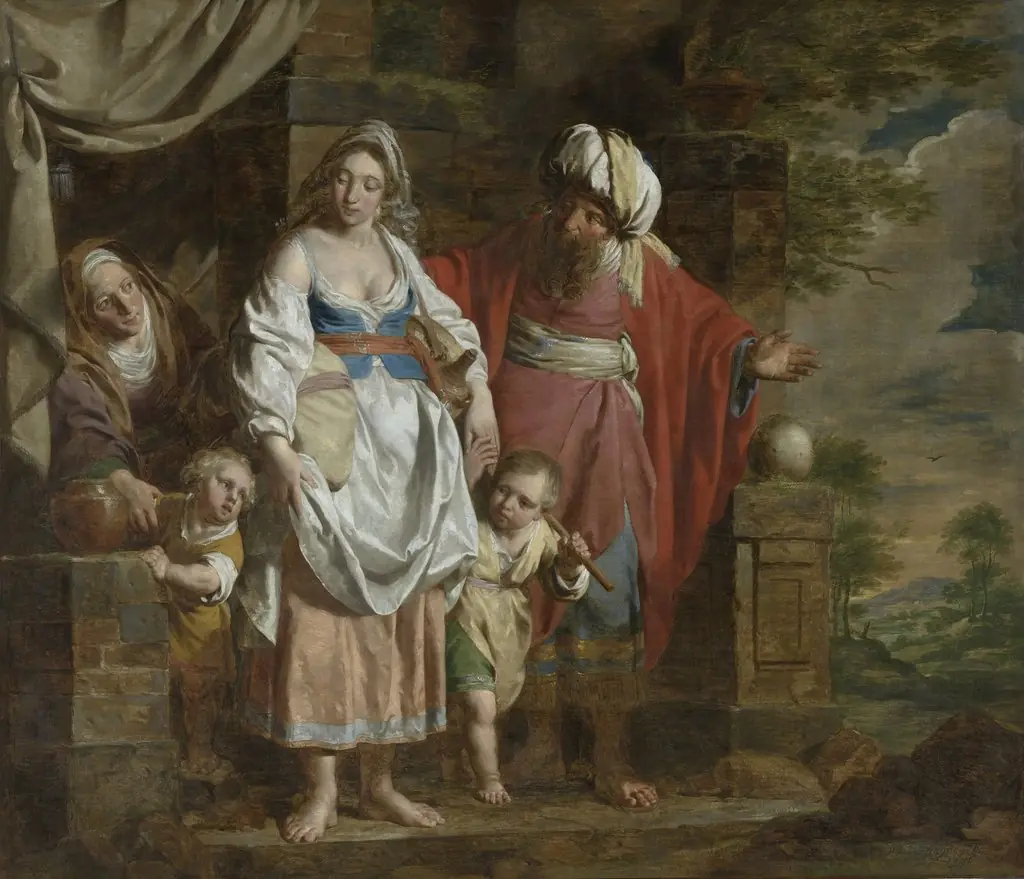
The banishment of Hagar and Ishmael (Genesis 21:14)
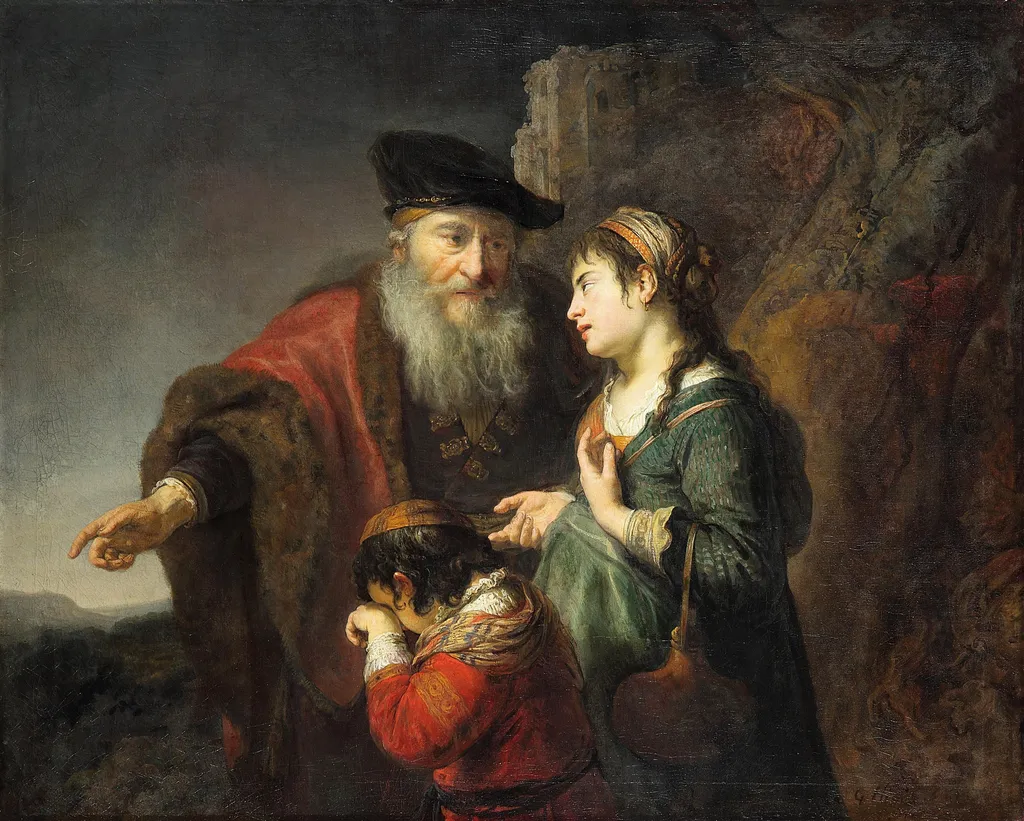
The banishment of Hagar and Ishmael (Genesis 21:14) is a paint painting by the Dutch Golden Age artist Govert Flinck. It dates from 1642 and is held in the collection of the Gemäldegalerie Berlin.
About this work
Overview
It reflects the Dutch Golden Age's engagement with Old Testament subjects, emphasizing human emotion and moral gravity over idealized classical forms.
Govert Flinck's *The Banishment of Hagar and Ishmael* (1642) depicts the biblical narrative from Genesis 21:14, illustrating the moment Abraham sends Hagar and her son Ishmael into the wilderness. The composition centers on the patriarch, distinguished by a long white beard, red robe, and black hat, whose extended right arm directs the viewer's gaze toward the left, indicating the path of exile. Beside him stands Hagar, clad in green, her hand pressed to her chest in a gesture of distress and submission, while the young Ishmael, dressed in red, stands before her. Executed in oil paint, the work demonstrates Flinck's early adherence to the style of Rembrandt, his teacher, characterized by dramatic chiaroscuro and a focus on psychological intensity within a religious context. Painted in 1642, this work belongs to the artist's formative period in Amsterdam, shortly after he established his own workshop. It reflects the Dutch Golden Age's engagement with Old Testament subjects, emphasizing human emotion and moral gravity over idealized classical forms. The painting serves as a significant example of Flinck's transition from Rembrandtesque intimacy toward the more grand mannered style he would later adopt under the influence of the French academic tradition.
Subject & Meaning
At the centre of the composition stands an elderly, bearded figure in a red robe and black hat, gesturing outward with his right arm. He is understood as the emissary of Abraham, delivering the command to depart. Hagar, dressed in green, clasps her chest and gazes toward the older man, while the infant Ishmael, clothed in red, looks downward, embodying vulnerability and exile.
Technique & Style
Flinck employs a pronounced chiaroscuro, juxtaposing illuminated figures against a somber, rocky landscape and a darkened sky. The stark light falls on the faces and garments, enhancing the emotional tension, while the surrounding shadows give depth to the terrain and reinforce the dramatic atmosphere.
History & Provenance
Created in the Dutch Golden Age, the painting entered the Berlin Gemäldegalerie’s holdings in the early 20th century, though its earlier ownership record is sparse. It has remained in the museum’s collection, serving as a representative example of Flinck’s biblical oeuvre.
Context
Flinck, a pupil of Rembrandt, often adopted his master’s emphasis on narrative clarity and dramatic lighting. This work reflects the 17th‑century Dutch interest in biblical subjects rendered with moral gravity, aligning with contemporary theological discourse on obedience and divine providence.
Own this work as a print
Artist & collection

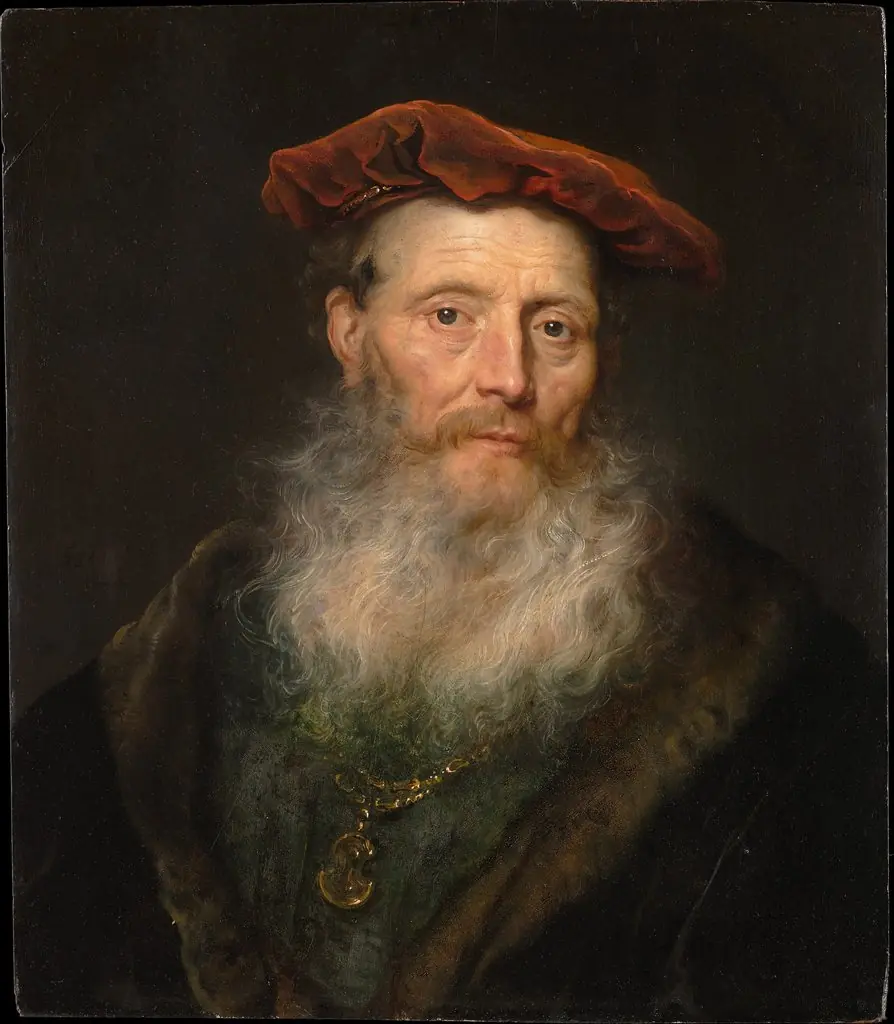 Bearded Man with a Velvet Cap
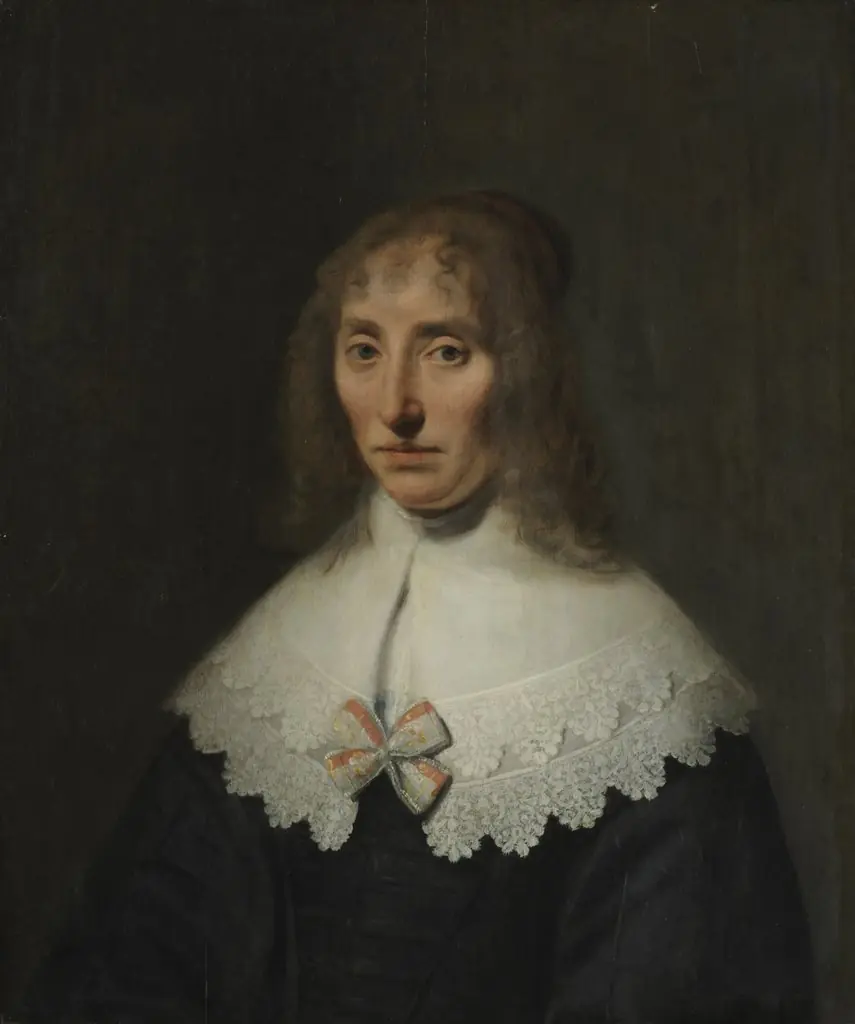 Portrait of a Woman
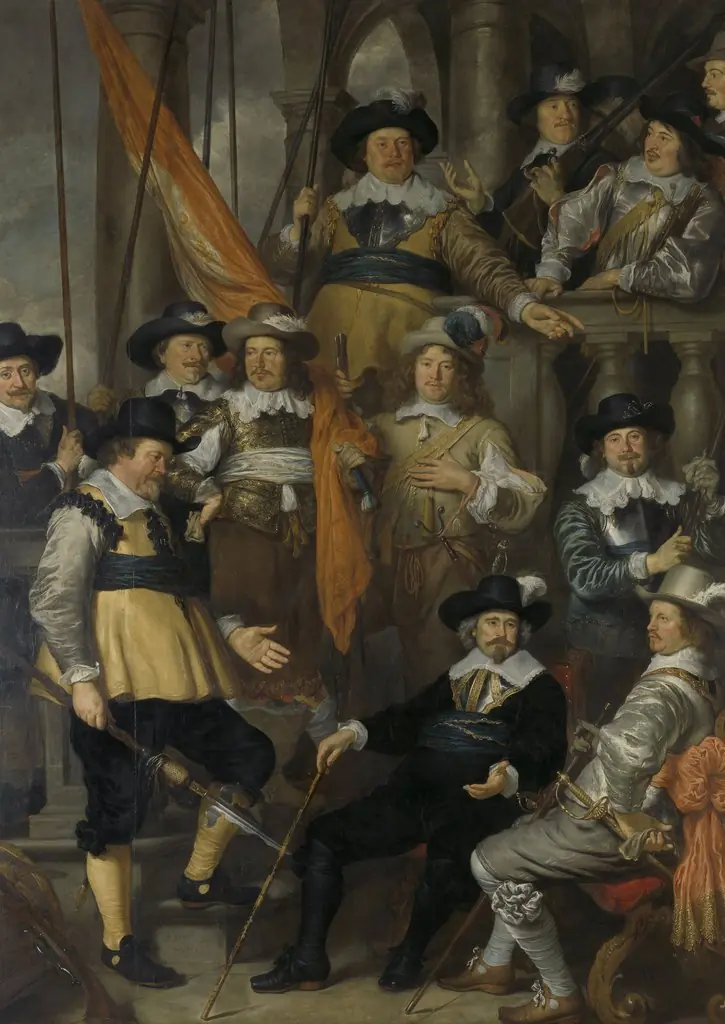 The Company of Captain Albert Bas and Lieutenant Lucas Conijn
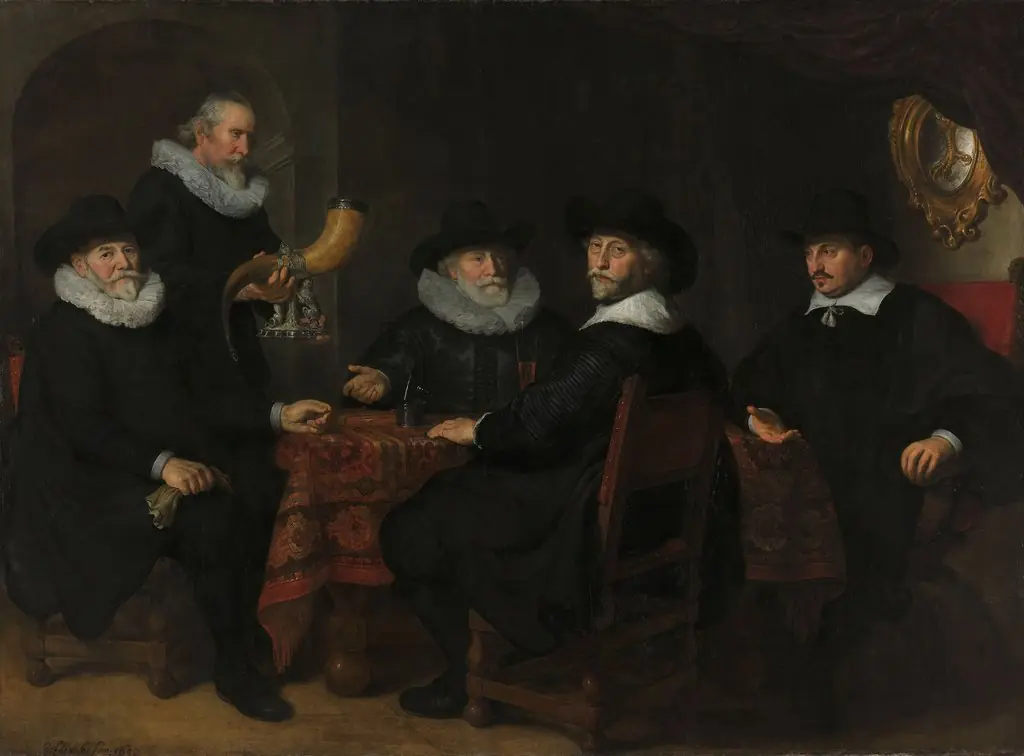 Four directors of the arquebusier's guild, Amsterdam, 1642
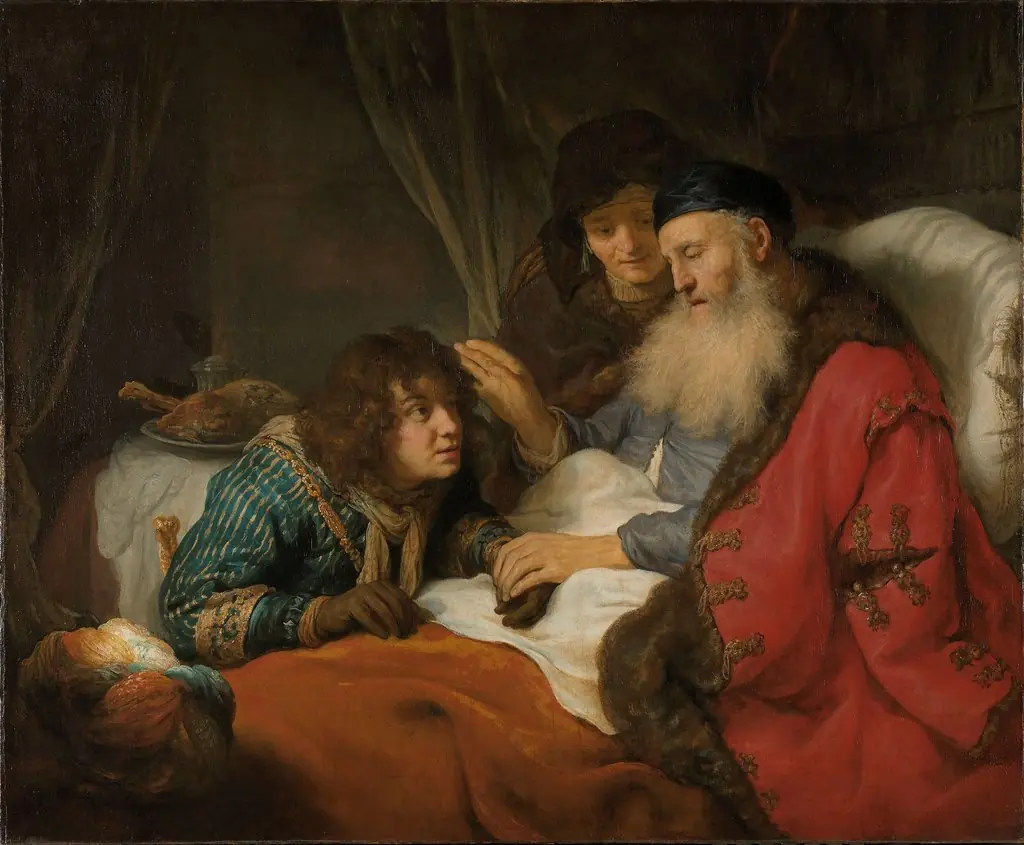 Isaac Blessing Jacob
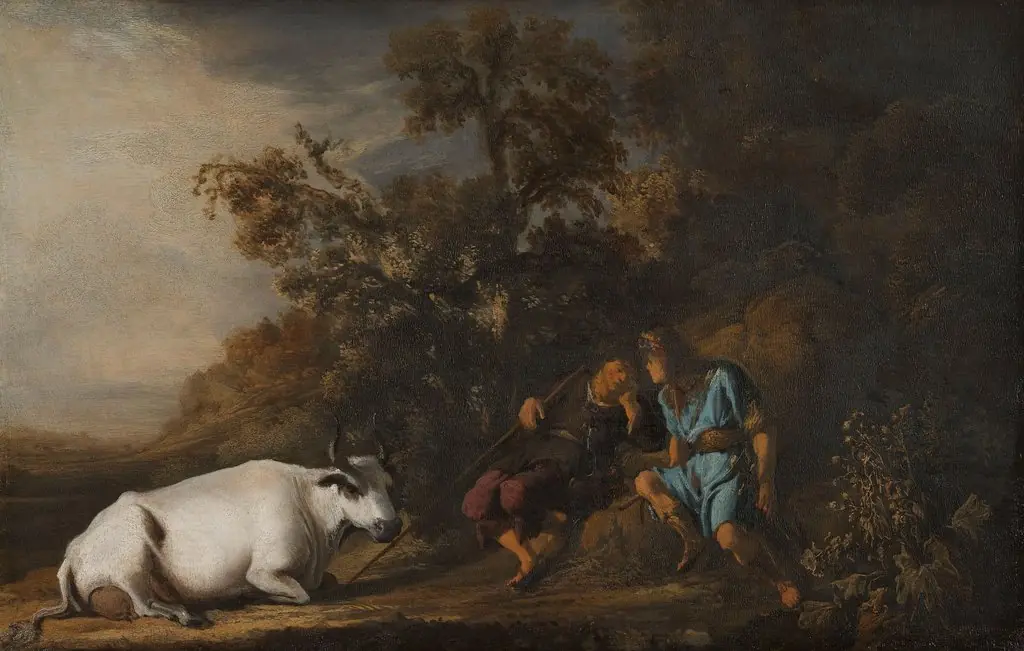 Mercury, Argus and Io
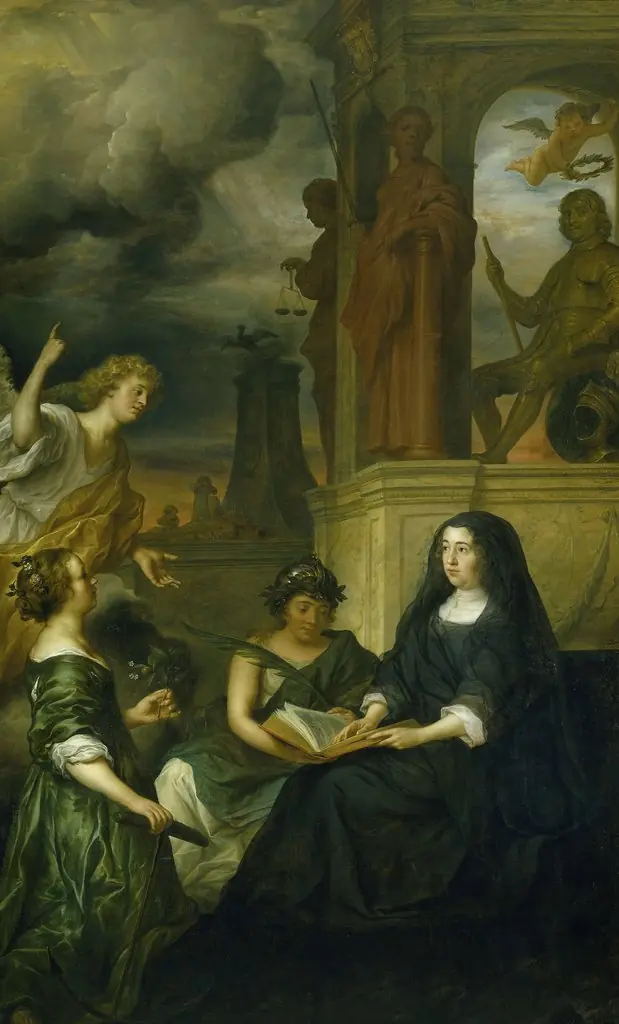 Allegory on the memory of Frederik Hendrik (1584-1647), prince of Orange, with the portrait of his widow Amalia van Solms
 Susanna and the Elders