Artwork
Disparate puntual (Sure Folly)
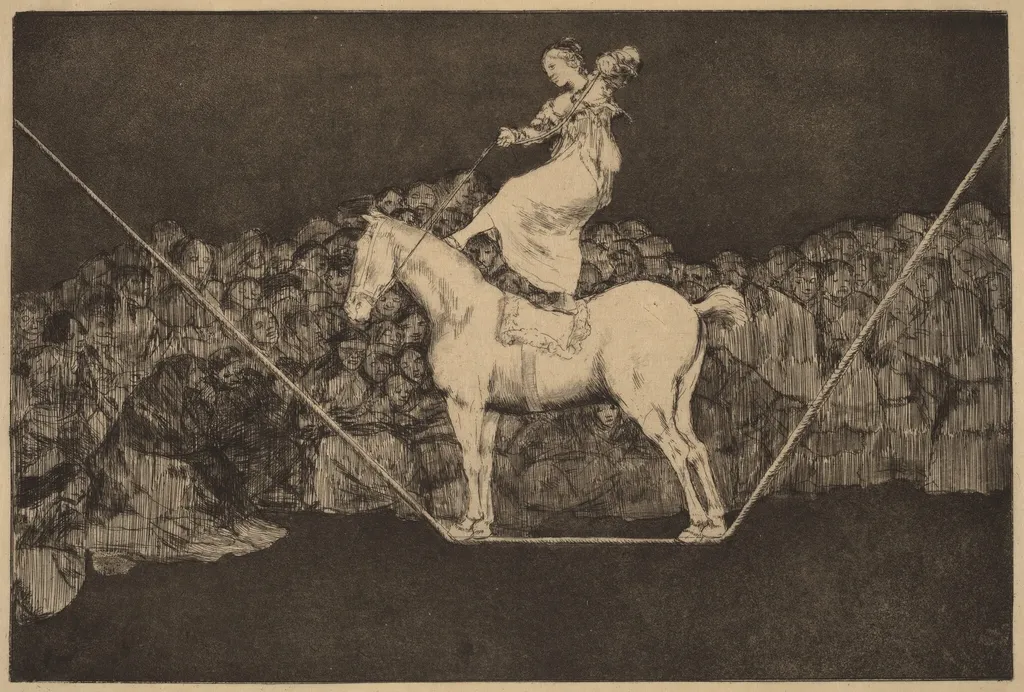
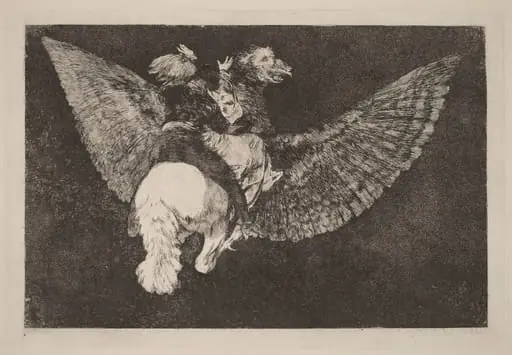
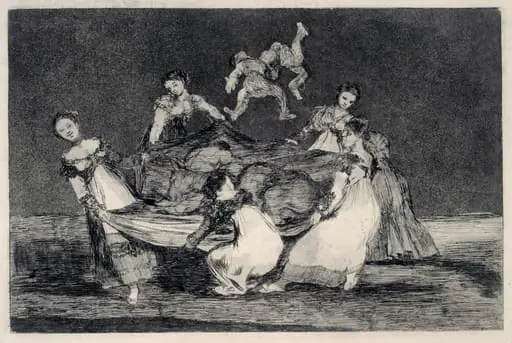
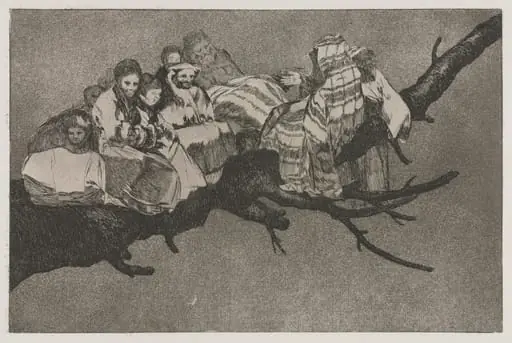
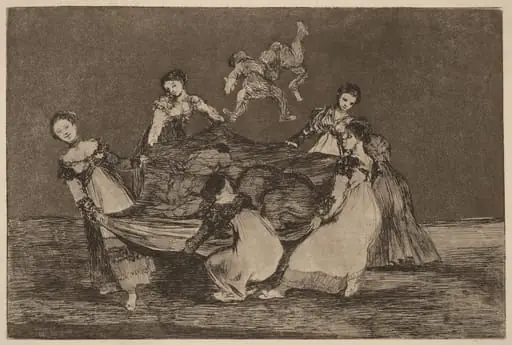
Disparate puntual (Sure Folly) is an ink print by the Romanticist artist Francisco Goya. It dates from 1816 and is held in the collection of the National Gallery of Art.
About this work
Overview
Disparate puntual (Sure Folly), created by Francisco de Goya in 1816, is an etching, aquatint, and possibly drypoint print. Executed during the artist's seventies, amidst personal hardship and political turmoil in Spain, it exemplifies his later explorations of societal critique and human folly.
Subject & Meaning
The print depicts a woman in a long dress, her hair tied up, riding a white horse that appears to walk on a tightrope, set against a darker background with a distracted, multi-directional crowd. The scene conveys tension and precarious balance, symbolizing societal delusions and absurdity through satirical undertones.
Technique & Style
Goya employed a combination of etching, aquatint, and possibly drypoint to achieve a stark, dramatic effect. The dark, muted color palette heightens the sense of drama and tension, characteristic of the Romantic movement's emphasis on emotion and imagination.
History & Provenance
Created in 1816, during Goya's later years marked by deafness and Spain's political upheaval, the work is part of his notable series of etchings and aquatints from this period. Specific provenance details are not provided.
Context
Disparate puntual (Sure Folly) reflects the turbulent late 18th to early 19th-century Spanish context, with Goya using printmaking to comment on the absurdities and delusions of his time, aligning with the broader themes of the Romantic movement.
Legacy
As part of Goya's later works, Disparate puntual contributes to his legacy as a pioneering figure in Spanish art, particularly in the expression of emotional and critical themes through innovative printmaking techniques.
Artist & collection
Artist
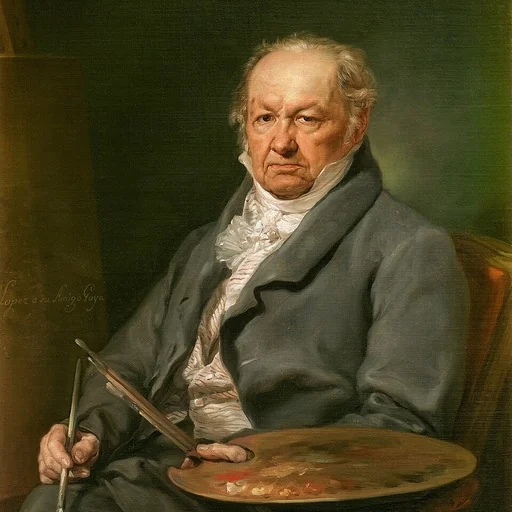
Francisco José de Goya y Lucientes (; Spanish: ; 30 March 1746 – 16 April 1828) was a Spanish romantic painter and printmaker.