Artwork
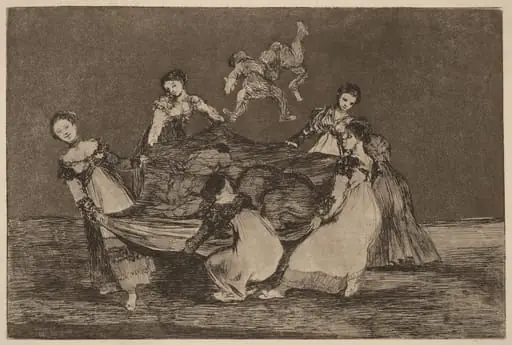
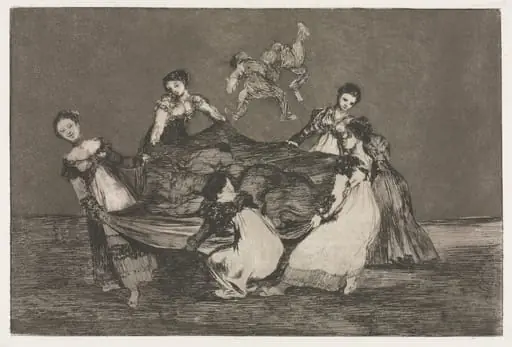
Disparate femenino (Feminine Folly)
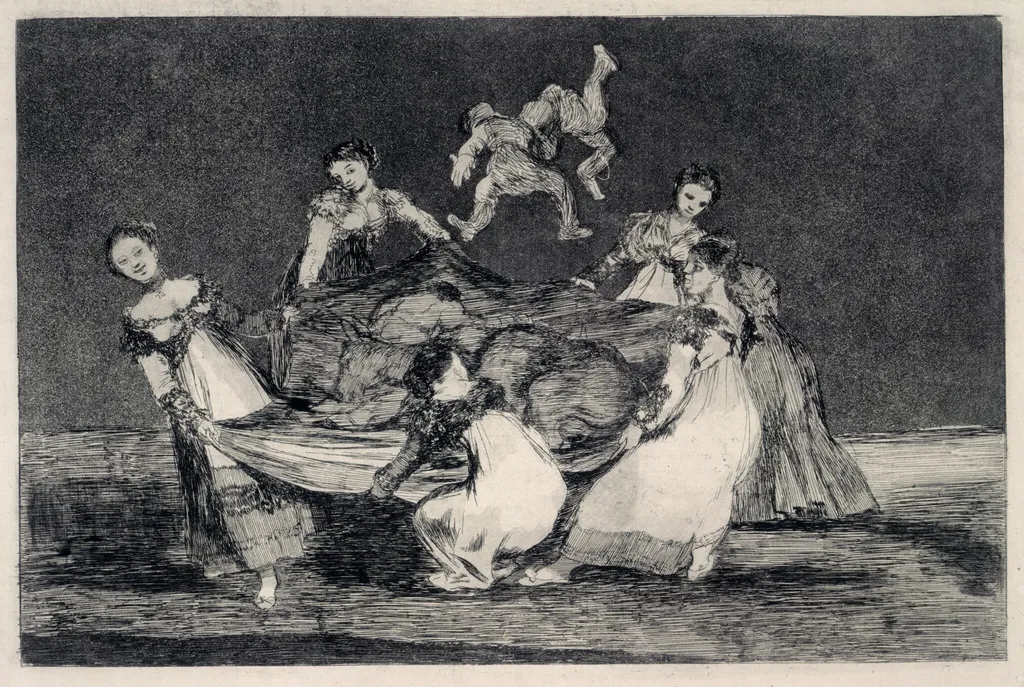
Disparate femenino (Feminine Folly) is an ink print by the Romanticist artist Francisco Goya. It dates from 1816 and is held in the collection of the National Gallery of Art.
About this work
Overview
It belongs to a series of prints that reflect his introspective and critical view of society, rendered with increasing expressive freedom in technique.
Created around 1816, *Disparate femenino (Feminine Folly)* is one of Francisco de Goya’s late graphic works, executed in etching, aquatint, and possibly drypoint. Though conceived during a period of personal isolation and political unrest in Spain, the print was not published until after his death, likely between 1854 and 1863. It belongs to a series of prints that reflect his introspective and critical view of society, rendered with increasing expressive freedom in technique.
Subject & Meaning
The image depicts a group of women in somber, period attire, gathered around a large textile, engaged in quiet, synchronized labor. Their bowed heads and focused gestures suggest a ritualized routine, possibly symbolizing domestic confinement or societal expectations placed on women. The absence of individual expression and the uniformity of posture imply a commentary on conformity, rather than celebration, of feminine roles in early 19th-century Spain.
Technique & Style
Goya employed layered printmaking methods—etching for fine lines, aquatint for tonal gradients, and possibly drypoint for textured shadows—to create a dense, atmospheric composition. The dark background isolates the figures, heightening their physical presence while muting environmental detail. The roughness of the lines and the chiaroscuro effect reflect his move away from polished academic conventions toward a more visceral, emotionally charged visual language.
History & Provenance
The print was produced as part of Goya’s private series, later known as the *Disparates*, which remained unpublished during his lifetime. After his death in 1828, the plates were retained by his family and eventually printed posthumously by the Royal Academy of San Fernando between 1854 and 1863. These early posthumous impressions are rare and represent the first public access to the series, preserving Goya’s unfiltered vision.
Context
Created during Goya’s exile from public life following the restoration of the Spanish monarchy and the suppression of liberal ideals, the *Disparates* series reveals his disillusionment with social norms. *Disparate femenino* aligns with other works in the group that critique superstition, gender roles, and institutional authority, using allegory and ambiguity rather than direct satire to convey its message.
Legacy
The print’s psychological depth and technical experimentation influenced later generations of printmakers and modern artists, particularly those drawn to expressive distortion and social critique. Its posthumous publication ensured its place in the canon of 19th-century graphic art, where it stands as a quiet but potent meditation on labor, gender, and the weight of tradition.
Artist & collection
Artist
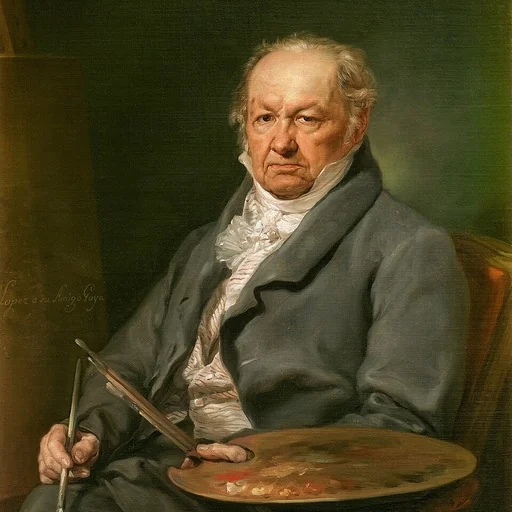
Francisco José de Goya y Lucientes (; Spanish: ; 30 March 1746 – 16 April 1828) was a Spanish romantic painter and printmaker.

 Disparate femenino (Feminine Folly)
 The Proverbs: Feminine Folly
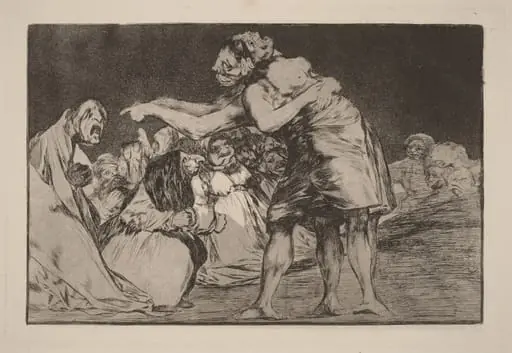 Disparate desordenado (Disorderly Folly)
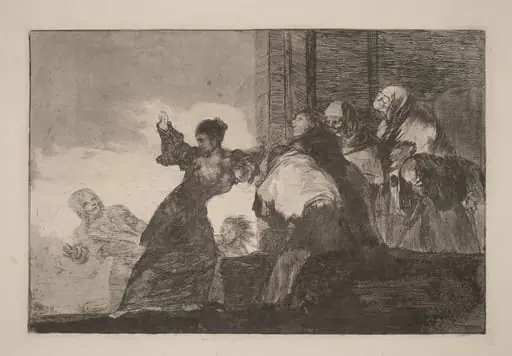 Disparate pobre (Poor Folly)
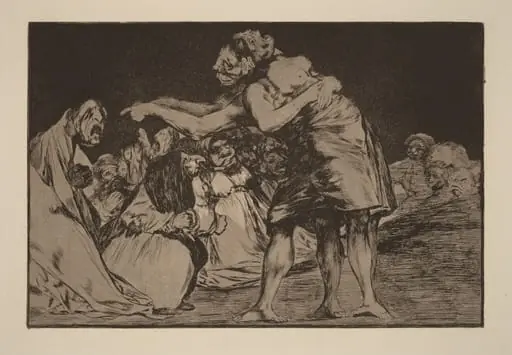 Disparate desordenado (Disorderly Folly)
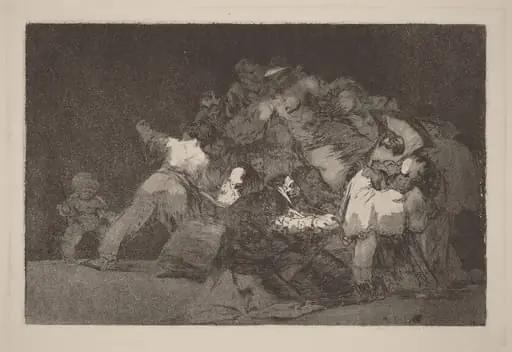 Disparate general (General Folly)
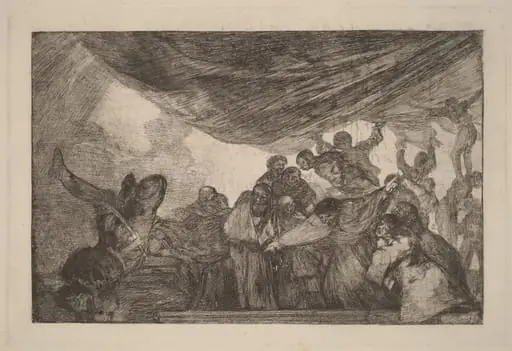 Disparate claro (Clear Folly)
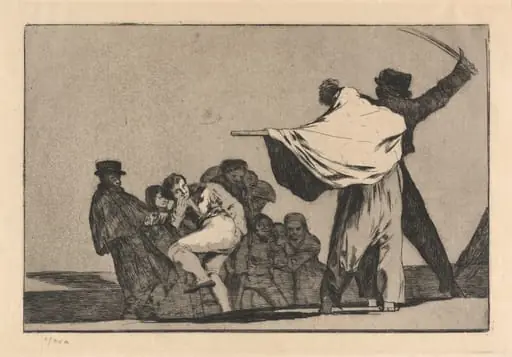 Disparate conocido (Well-Known Folly)
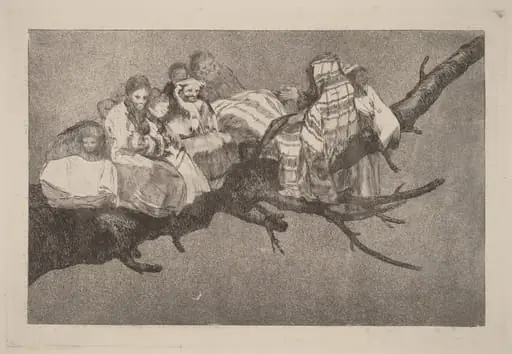 Disparate ridiculo (Ridiculous Folly)
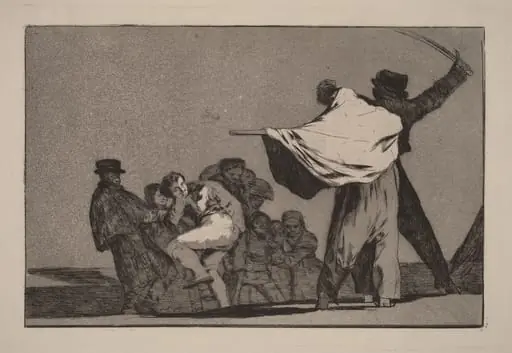 Disparate conocido (Well-Known Folly)
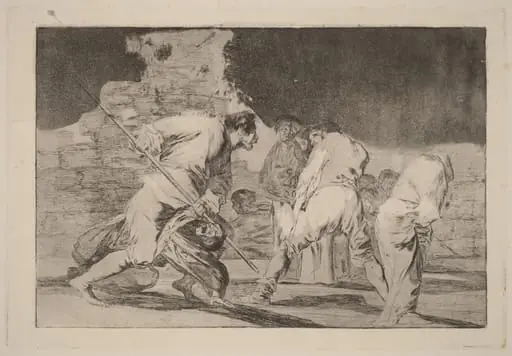 Disparate furioso (Furious Folly)
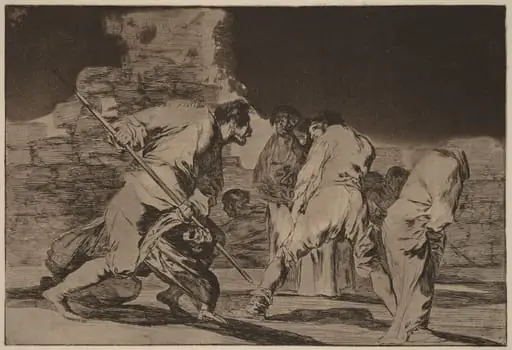 Disparate furioso (Furious Folly)