Artwork
Disparate volante (Flying Folly)
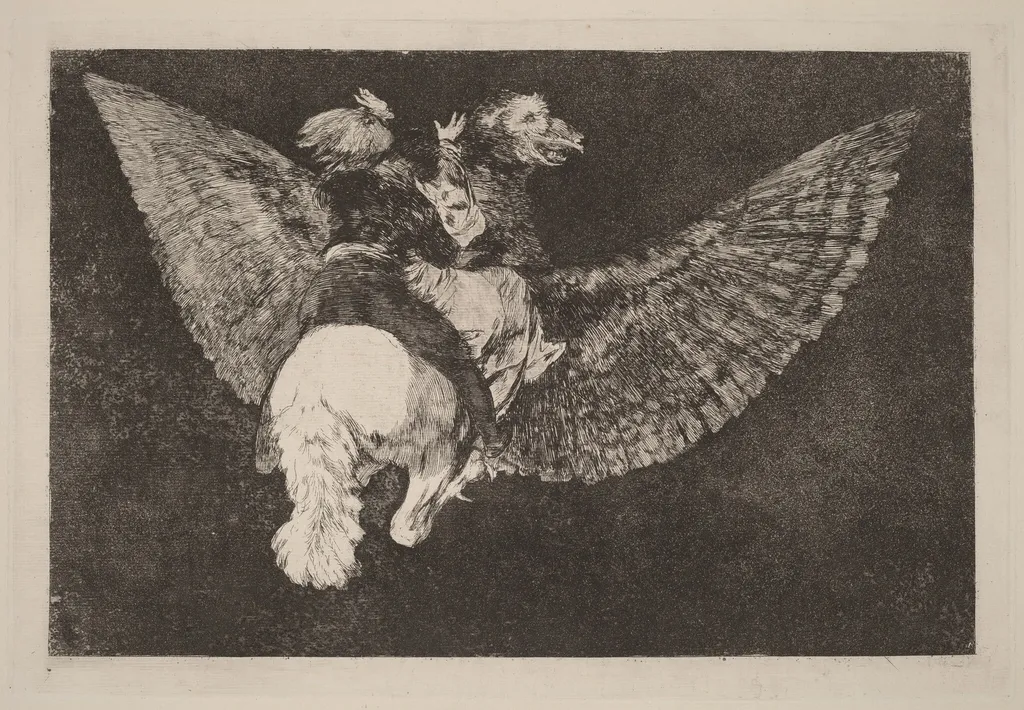
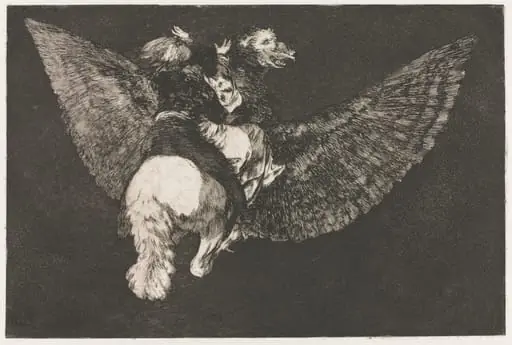
Disparate volante (Flying Folly) is an ink print by the Romanticist artist Francisco Goya. It dates from 1816 and is held in the collection of the National Gallery of Art.
About this work
Overview
Created in 1816, *Disparate volante (Flying Folly)* is an etching and aquatint by Francisco Goya, later printed posthumously between 1854 and 1863.
Created in 1816, *Disparate volante (Flying Folly)* is an etching and aquatint by Francisco Goya, later printed posthumously between 1854 and 1863. It belongs to a series of prints exploring irrational and unsettling themes, produced during Goya’s later years. Though not widely exhibited in his lifetime, these works reveal his deepening preoccupation with psychological and social disarray, using printmaking to bypass official censorship and reach private audiences.
Subject & Meaning
The image depicts a woman astride a winged, equine form, her face twisted in a cry, arms flailing as the creature turns its head toward her. The scene evokes a dreamlike or nightmarish flight, suggesting loss of control, madness, or the collapse of reason. Goya’s title, meaning 'Flying Folly,' implies absurdity or delusion, aligning the image with broader critiques of human folly and the instability of perceived reality in post-Napoleonic Spain.
Technique & Style
Goya employed etching and aquatint to achieve rich tonal gradations and a somber atmosphere. The dark, uneven background isolates the figures, heightening their emotional intensity. The textured shadows and blurred contours convey movement and unease, while the lack of clear detail invites ambiguity. His mastery of printmaking allowed him to manipulate light and darkness with precision, transforming the medium into a vehicle for psychological depth rather than mere illustration.
History & Provenance
The print was not published during Goya’s lifetime but was among the plates retained by his family. After his death in 1828, the series remained unpublished until the mid-1850s, when his grandson arranged for posthumous printings using the original plates. These later impressions, made between 1854 and 1863, preserved the artist’s intent but were produced under different conditions, resulting in subtle variations in ink and paper quality compared to earlier trials.
Context
Created after the Peninsular War and during Spain’s political turmoil, *Disparate volante* reflects Goya’s disillusionment with Enlightenment ideals and the rise of superstition and repression. His 'Black Paintings' and the *Disparates* series emerged from a personal and national crisis, moving away from courtly commissions toward introspective, often disturbing imagery. This work stands as part of a quiet revolution in art, where the inner psyche replaced external grandeur as the subject of serious inquiry.
Legacy
Goya’s *Disparates* series, including this print, influenced later generations of artists seeking to express inner turmoil and societal decay through symbolic, non-narrative imagery. His use of printmaking to explore taboo or irrational themes paved the way for Symbolism and Surrealism. Though initially obscure, these works gained recognition in the 19th and 20th centuries as foundational to modern art’s turn toward psychological and existential themes.
Own this work as a print
Artist & collection
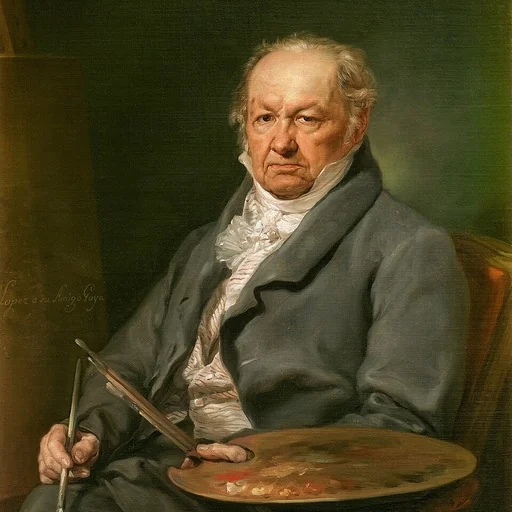
Artist
Francisco José de Goya y Lucientes (; Spanish: ; 30 March 1746 – 16 April 1828) was a Spanish romantic painter and printmaker.