Artwork
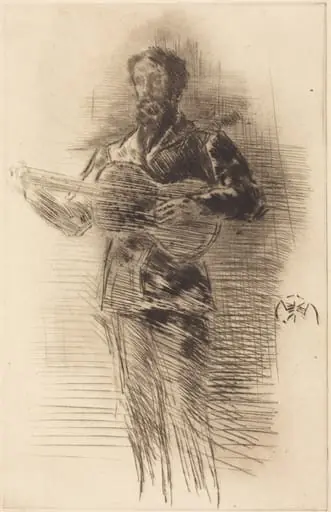
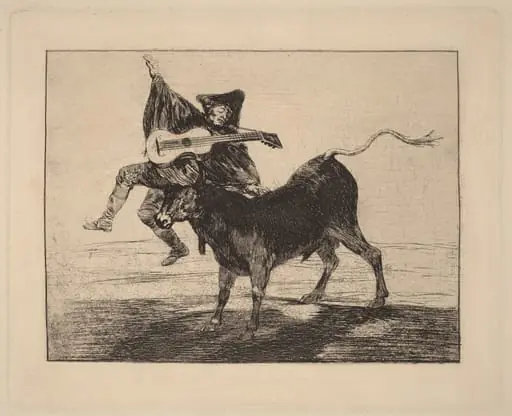
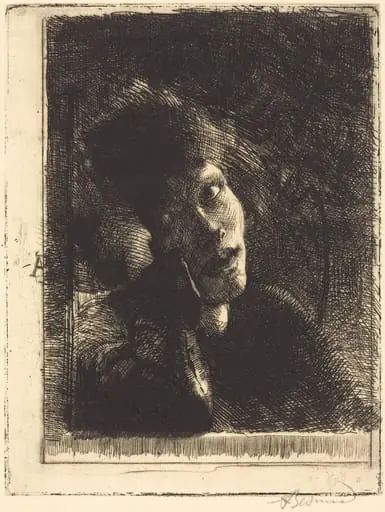
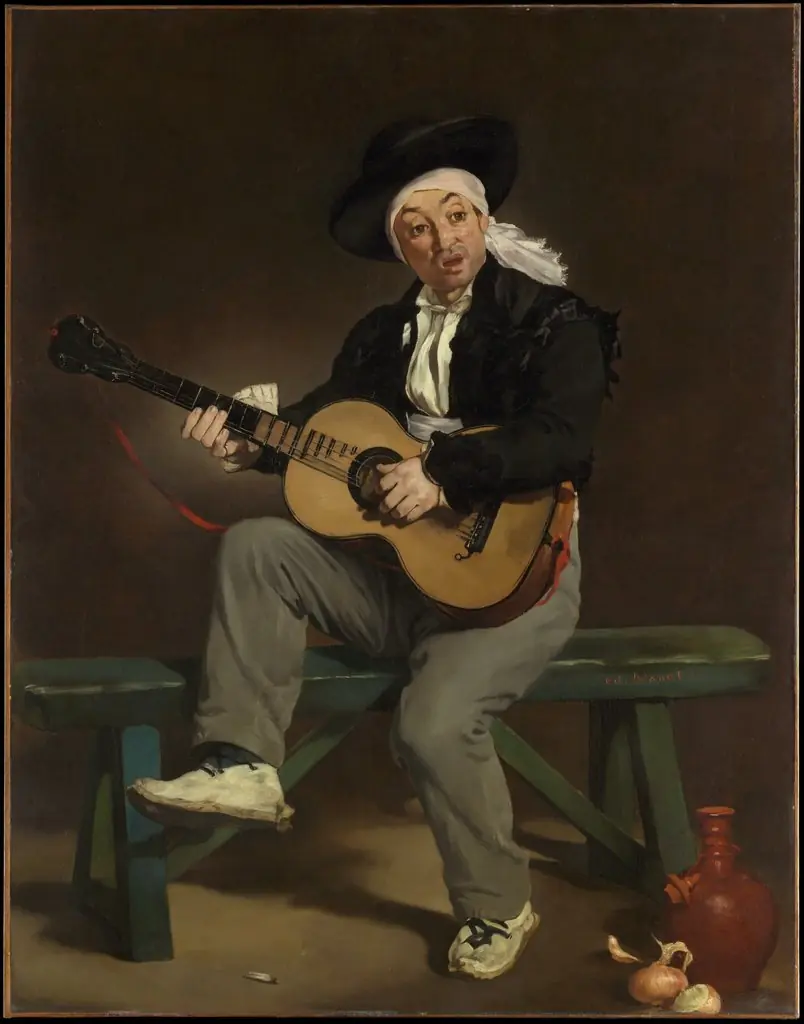
The Blind Singer
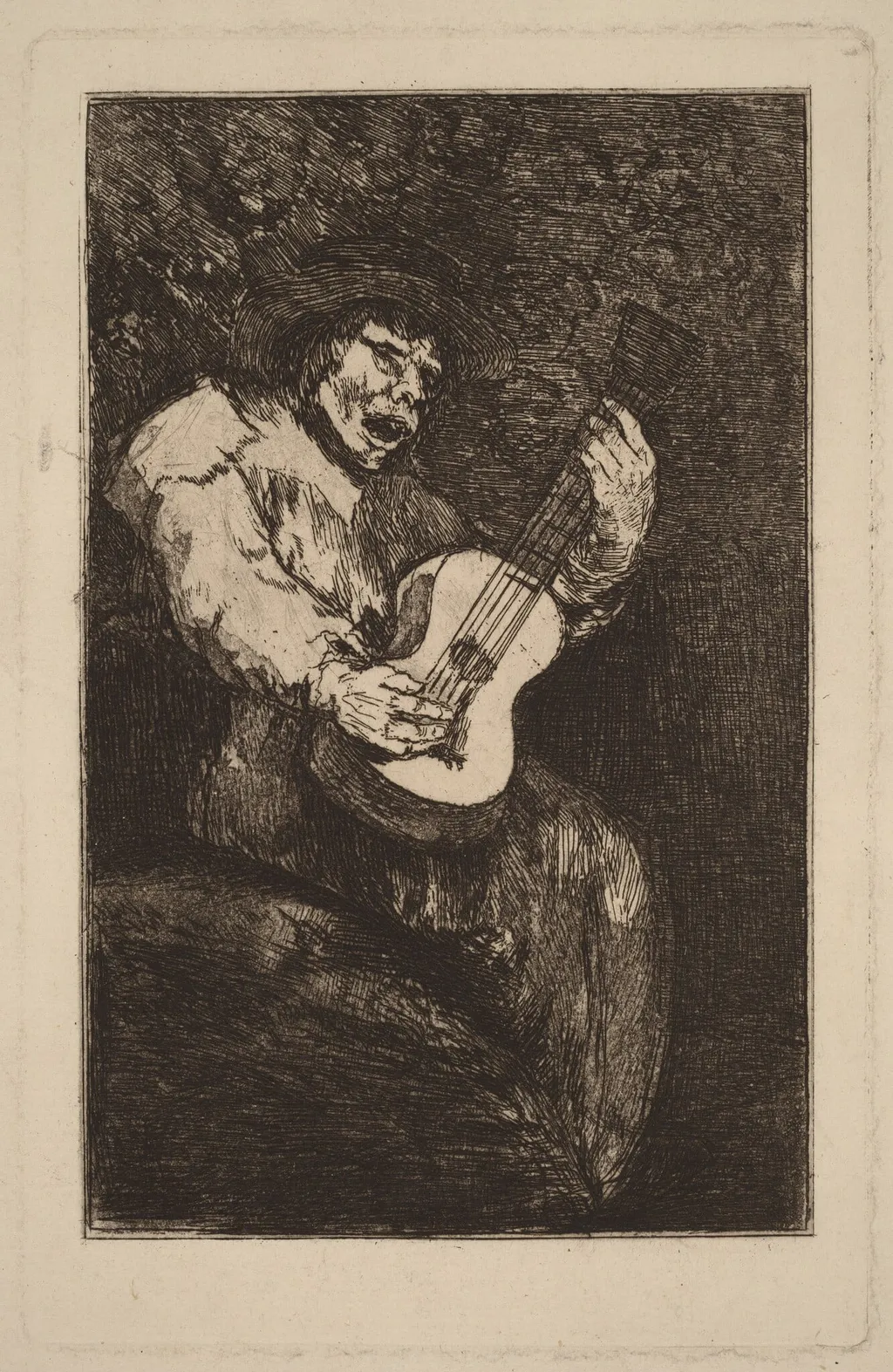
The Blind Singer is an ink print by the Romanticist artist Francisco Goya. It dates from 1826 and is held in the collection of the National Gallery of Art.
About this work
Overview
Created in 1826, *The Blind Singer* is one of Francisco de Goya’s final prints, produced during a period of intense personal and political reflection.
Created in 1826, *The Blind Singer* is one of Francisco de Goya’s final prints, produced during a period of intense personal and political reflection. Executed in a combination of etching, aquatint, drypoint, and burin on laid paper, the work exemplifies his experimental approach to printmaking. Its monochrome palette and textured surface convey a sense of immediacy and emotional weight, distinguishing it from his earlier, more polished works.
Subject & Meaning
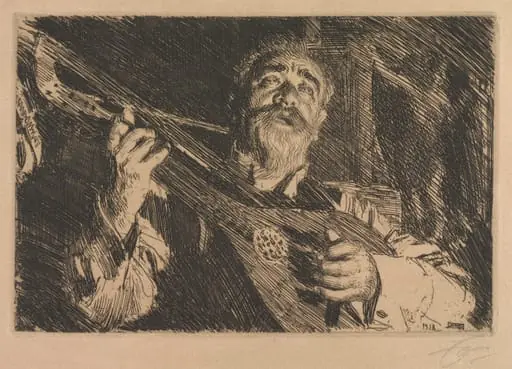
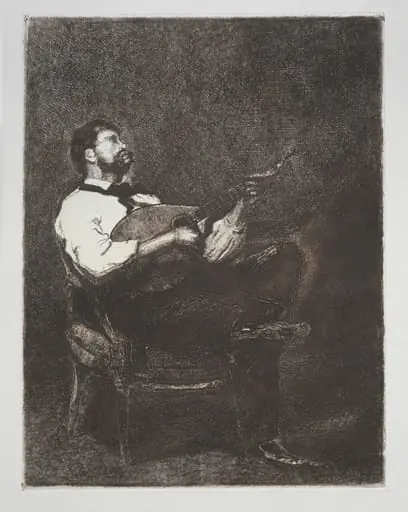
The print portrays a blind musician, head tilted upward, eyes closed, absorbed in playing a guitar. His isolation and vulnerability are emphasized by the absence of context or audience. Goya frequently turned to figures on society’s margins, and here, the musician’s sensory deprivation becomes a metaphor for broader human fragility. The image invites contemplation on perception, resilience, and the quiet dignity of those unseen by the world.
Technique & Style
Goya layered multiple printmaking techniques to achieve a tactile, atmospheric effect. Aquatint and lavis created soft, smoky tonal gradients, while drypoint and burin added sharp, erratic lines that roughen the fabric of clothing and skin. The background, rendered with loose, ink-like washes, dissolves into darkness, isolating the figure. The resulting surface feels scraped and urgent, mirroring the emotional intensity of the subject.
History & Provenance
This print was made during Goya’s self-imposed exile in Bordeaux, following his disillusionment with Spanish politics and the decline of his health. It belongs to a series of private, experimental works produced away from public commissions. Unlike his earlier satirical prints, these later pieces were not intended for broad circulation, suggesting a more introspective, personal purpose.
Context
In the 1820s, Spain remained politically unstable after the Napoleonic Wars and the restoration of absolutism. Goya, once court painter, now viewed society with skepticism. His late works, including *The Blind Singer*, reflect a preoccupation with suffering, silence, and the limits of human understanding—responses to a world he perceived as increasingly fractured and unjust.
Legacy
Goya’s late prints, including this one, influenced later artists seeking emotional depth over formal polish. The rawness of his technique and his focus on marginalized subjects anticipated 19th-century realism and modernist expressionism. Though not widely exhibited in his lifetime, these works gained recognition as profound meditations on the human condition, reshaping the potential of print as a vehicle for personal and philosophical inquiry.
Artist & collection
Artist
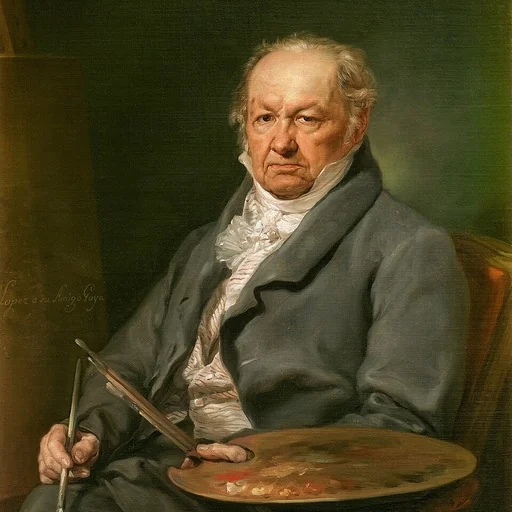
Francisco José de Goya y Lucientes (; Spanish: ; 30 March 1746 – 16 April 1828) was a Spanish romantic painter and printmaker.