Artwork
Dios se lo pague a vsted (May God Repay You)
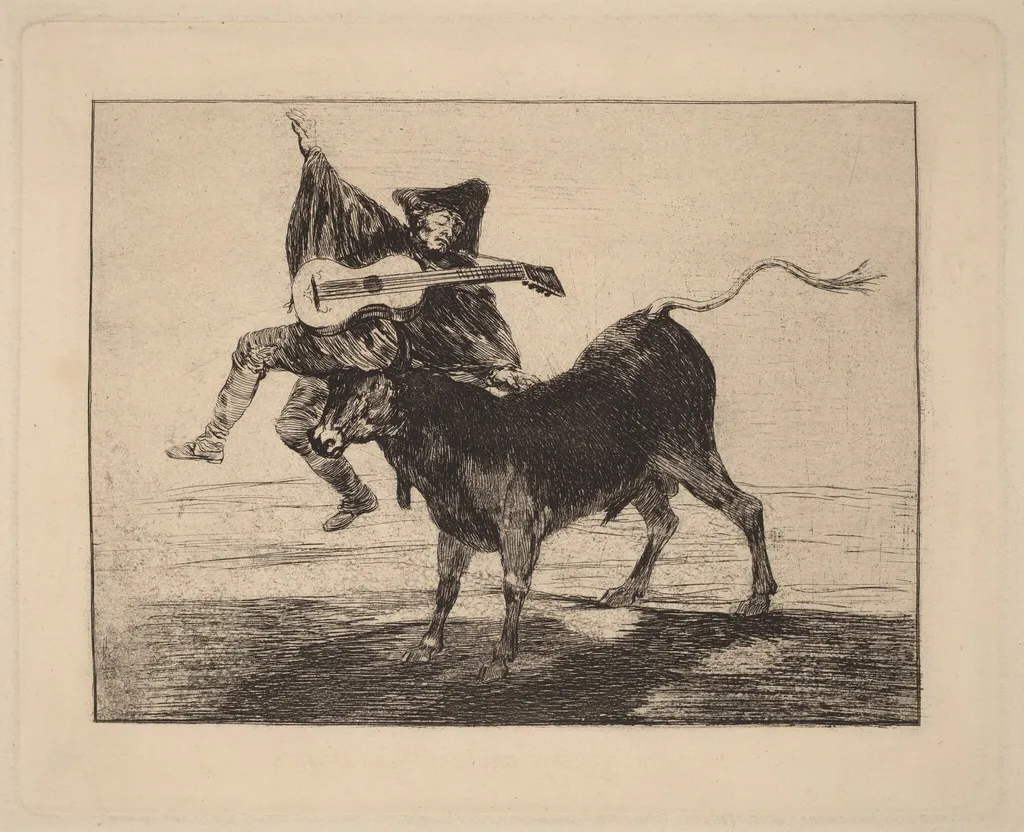
Dios se lo pague a vsted (May God Repay You) is an ink print by the Romanticist artist Francisco Goya. It dates from 1804 and is held in the collection of the National Gallery of Art.
About this work
Overview
Dios se lo pague a vsted is an etching by Francisco de Goya, created circa 1804, during a period of political turmoil and personal struggle in his life. The work was printed posthumously as a trial proof before 1867, utilizing a combination of etching, aquatint, and drypoint techniques on laid paper.
Subject & Meaning
The print depicts a chaotic scene of a man clinging to a charging bull while holding a guitar, conveying a sense of desperate struggle. The absence of a detailed background intensifies the focus on the central, tumultuous interaction, symbolizing the turmoil of Goya’s era.
Technique & Style
Goya employed sharp lines and deep, dark shading to achieve a rough, urgent texture. The integration of etching (for lines), aquatint (for tones), and drypoint (for expressive marks) created a highly expressive and intense visual effect, characteristic of his later graphic works.
History & Provenance
Created around 1804, the print was not released during Goya’s lifetime. It was printed posthumously before 1867 as a trial proof, reflecting the delayed recognition of his later, more experimental works.
Context
This etching reflects the social and political upheavals of early 19th-century Spain, through which Goya’s art often provided commentary. The piece embodies the artist’s ability to capture the essence of his tumultuous time.
Legacy
As part of Goya’s later graphic output, *Dios se lo pague a vsted* contributes to his legacy as a pioneering artist who pushed the boundaries of printmaking techniques to convey profound emotional and social content.
Own this work as a print
Artist & collection
Artist
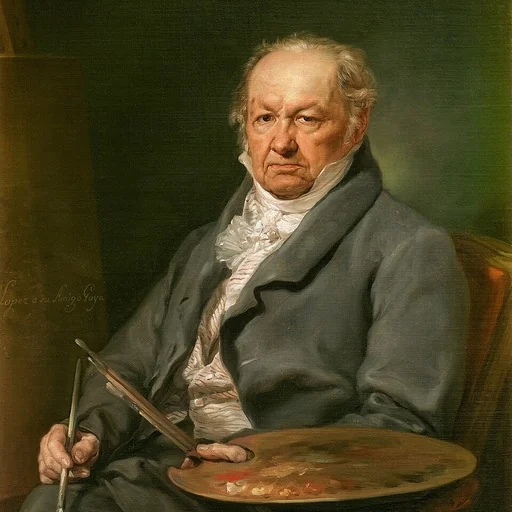
Francisco José de Goya y Lucientes (; Spanish: ; 30 March 1746 – 16 April 1828) was a Spanish romantic painter and printmaker.

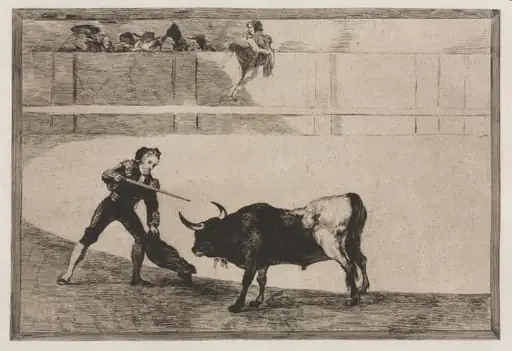 Bullfights: Pedro Romeo Killing the Halted Bull
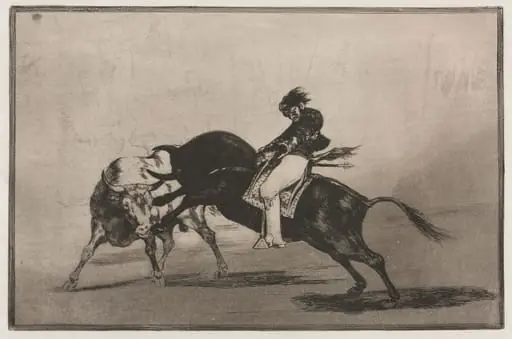 Bullfights: The Same Ceballos Mounted on Another Bull Breaks Short Spears in the Ring at Madrid
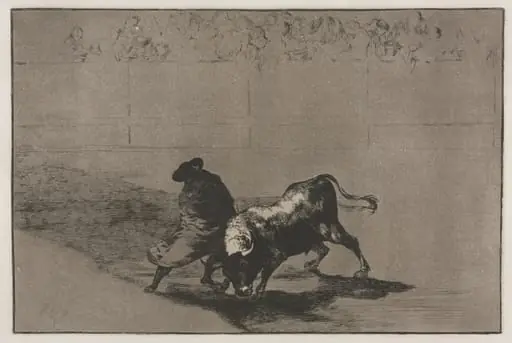 Bullfights: The Very Skilful Student of Falces, Wrapped in his Cape, Tricks the Bull with the Play of his Body
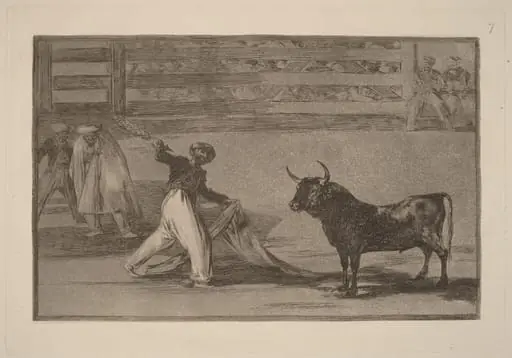 Origen de los arpones o banderillas (Origin of the Harpoons or Banderillas)
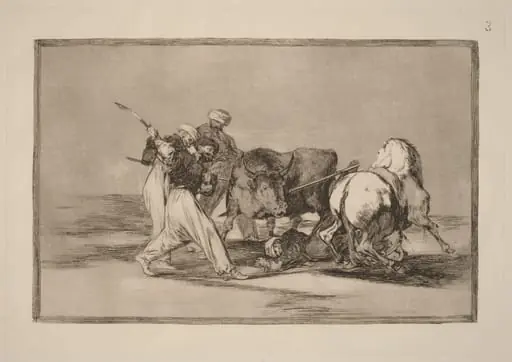 Los moros establecidos en Espana, prescindiendo de las supersticiones de su Alcoran, adoptaron esta caza y arte, y lancean un toro en el campo (The Moors Settled in Spain, Giving up the Superstitions of the Koran, Adopted This Art of Hunting, and Spear a Bull in the Open)
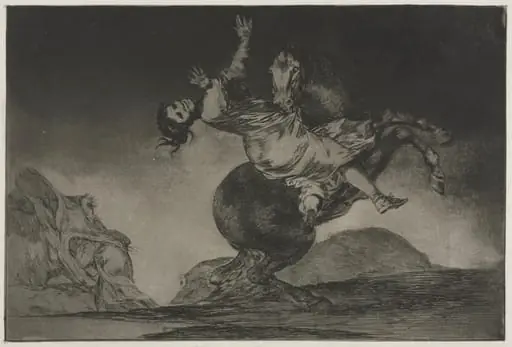 The Proverbs: The Horse-Abductor
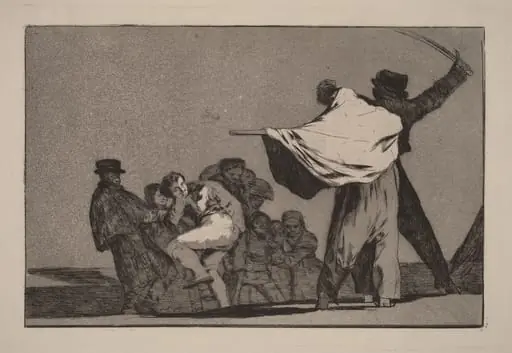 Disparate conocido (Well-Known Folly)
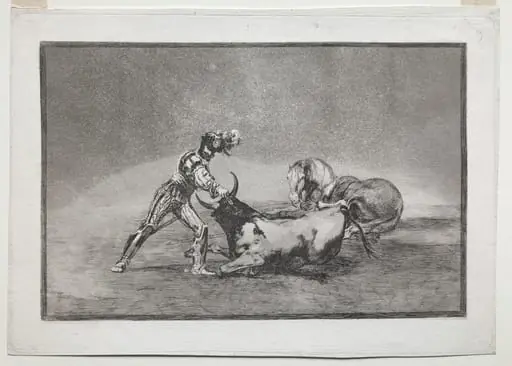 La Tauramaquia: A Spanish Knight Kills the Bull after Having Lost His Horse
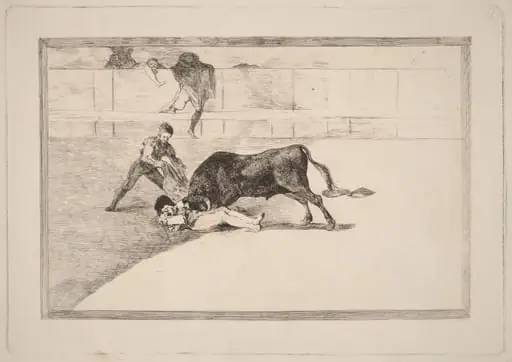 La desgraciada muerte de Pepe Illo en la plaza de Madrid (The Unlucky Death of Pepe Illo in the Ring at Madrid)
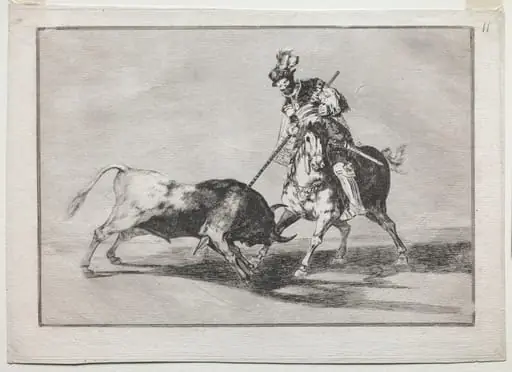 The Cid Campeador Spearing Another Bull
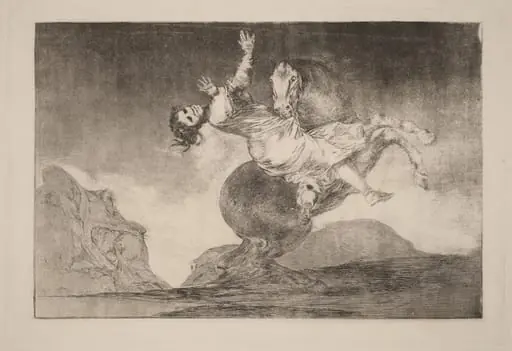 El caballo raptor (The Horse-Abductor)
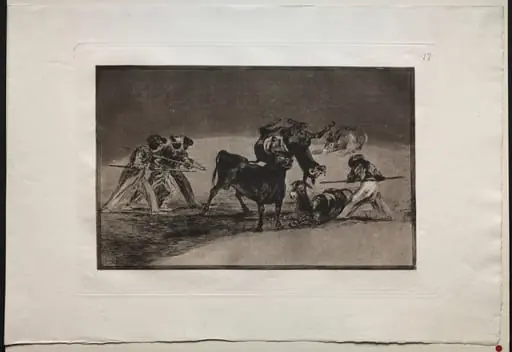 Bullfights: The Moors Use Donkeys as a Barrier to Defend Themselves Against the Bull Whose Horns Have Been Tipped with Balls