Artwork
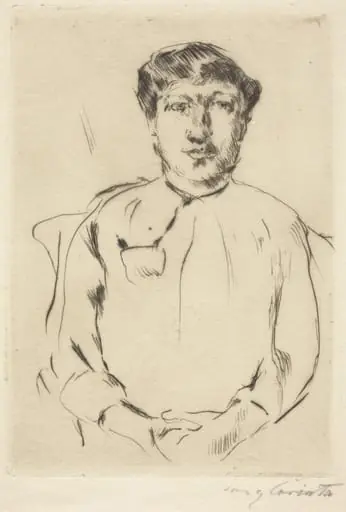
Bildnis Andreas Weissgaerber (Portrait of Andreas Weissgaerber)
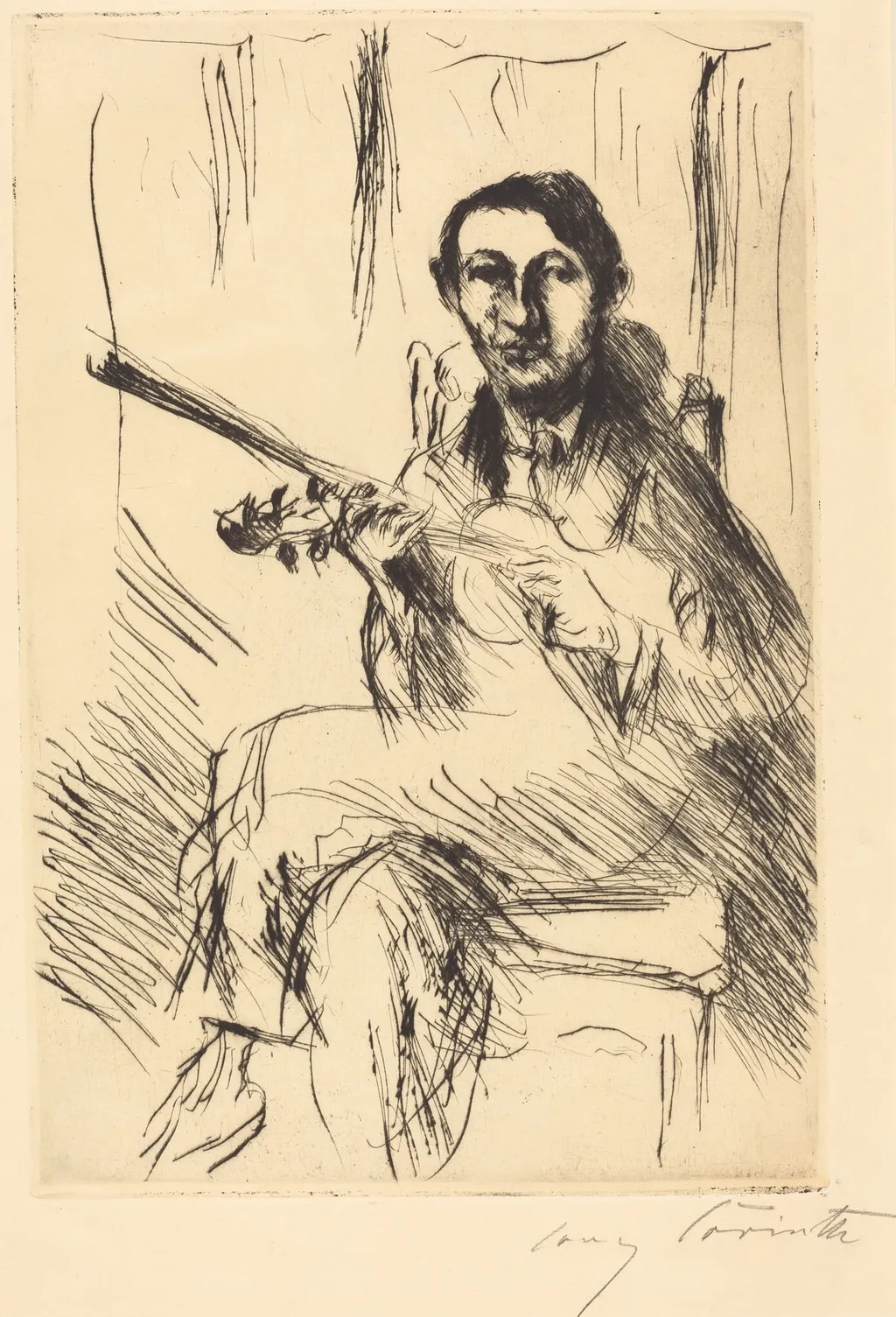
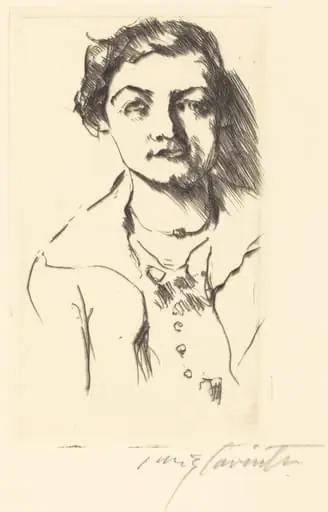
Bildnis Andreas Weissgaerber (Portrait of Andreas Weissgaerber) is an ink print by Lovis Corinth. It dates from 1919 and is held in the collection of the National Gallery of Art.
About this work
Overview
Lovis Corinth produced this drypoint portrait in 1919, capturing the musician Andreas Weissgaerber in a direct, unidealized manner.
Lovis Corinth produced this drypoint portrait in 1919, capturing the musician Andreas Weissgaerber in a direct, unidealized manner. Executed on laid paper, the work reflects Corinth’s mature printmaking style, shaped by years of experimentation and the physical and artistic shifts following his 1911 stroke. The medium’s inherent roughness aligns with his expressive intent, emphasizing immediacy over polish.
Subject & Meaning
Andreas Weissgaerber, a violinist, is depicted with his instrument resting against his shoulder, suggesting a moment of pause between performance or rehearsal. The portrait conveys quiet concentration rather than grandeur. Corinth’s focus on the subject’s gesture and presence, without embellishment, reflects an interest in the humanity of the individual, grounded in observation rather than symbolism.
Technique & Style
Using drypoint, Corinth scratched directly into a metal plate, creating dense, jagged lines that hold ink and print with a tactile intensity. The rough texture of the laid paper enhances the work’s raw quality, amplifying the sense of spontaneity. Facial features and clothing are rendered with rapid, overlapping strokes, avoiding detail in favor of emotional resonance and physical presence.
History & Provenance
Created in the aftermath of World War I, the portrait belongs to a period when Corinth increasingly turned to intimate portraiture and personal subjects. Though specific ownership history is not widely documented, the work is part of a broader body of prints from his Berlin years, many of which entered public and private collections in Germany during the 1920s and 1930s.
Context
In 1919, Corinth was navigating a Germany in political and cultural upheaval. His earlier association with the Berlin Secession had evolved into a more personal artistic language, blending impressionist observation with expressionist energy. This portrait reflects a shift away from academic tradition toward a more visceral, emotionally charged mode of representation common among post-war German artists.
Legacy
The portrait exemplifies Corinth’s contribution to modern printmaking, demonstrating how drypoint could convey psychological depth through gesture and texture. While less known than his paintings, his graphic works influenced later generations of German artists interested in the expressive potential of line and surface, preserving a raw, humanist approach to portraiture.
Own this work as a print
Artist & collection

Artist
Lovis Corinth was a German artist and writer whose mature work as a painter and printmaker realized a synthesis of impressionism and expressionism.