Artwork
Y no hai remedio (And There's No Help for It)
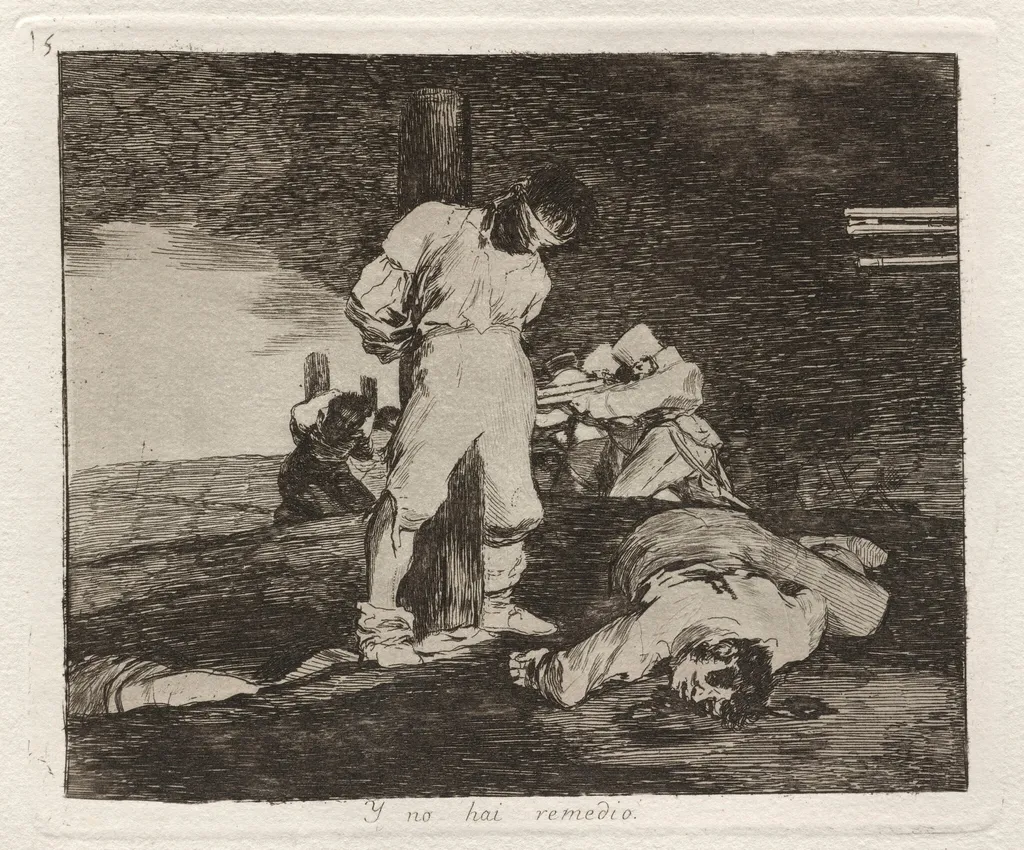
Y no hai remedio (And There's No Help for It) is an ink print by the Impressionist artist Francisco Goya. It is held in the collection of the National Gallery of Art.
About this work
Overview
Created in 1863, *Y no hai remedio* belongs to Francisco Goya’s series *Disasters of War*. The work is a print that combines etching, drypoint, burin and burnisher techniques to render a stark, nocturnal scene. Its title, Spanish for “And there’s no help for it,” signals a resigned tone that pervades the composition.
Subject & Meaning
The image depicts a woman in a loose, antiquated dress, bent over a prostrate man whose head rests on a heap of blankets. She clutches a cross, suggesting prayer or desperation, while the man appears exhausted. The dark, turbulent background amplifies a sense of hopelessness, reflecting the broader suffering portrayed throughout the series.
Technique & Style
Goya employed a layered approach: the primary outlines were etched, while drypoint added soft, velvety lines for texture. A burin sharpened the contours, and a burnisher softened areas to create depth. This combination yields dramatic contrasts between deep shadows and luminous highlights, characteristic of Goya’s expressive printmaking.
History & Provenance
Part of the *Disasters of War* series, the print was produced during Goya’s later years, after the Peninsular War’s devastation. Though the series was not published in his lifetime, it circulated among collectors in the 19th century and now resides in major museum collections, illustrating Goya’s enduring influence on Spanish art.
Artist & collection
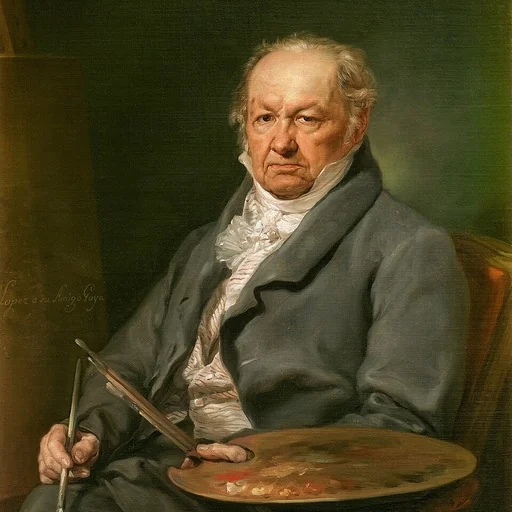
Artist
Francisco José de Goya y Lucientes (; Spanish: ; 30 March 1746 – 16 April 1828) was a Spanish romantic painter and printmaker.

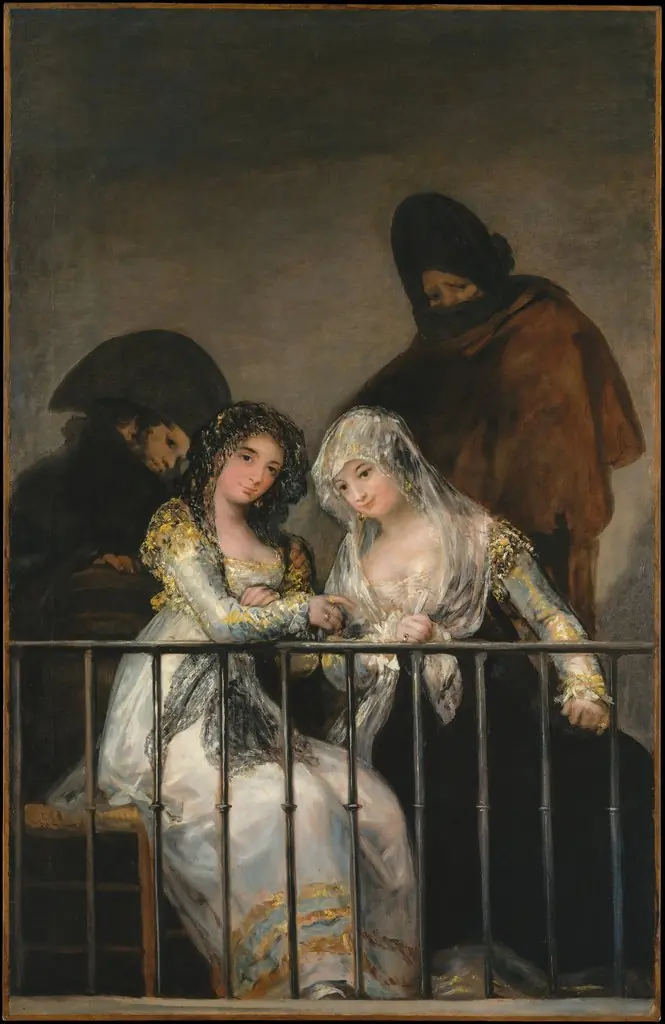
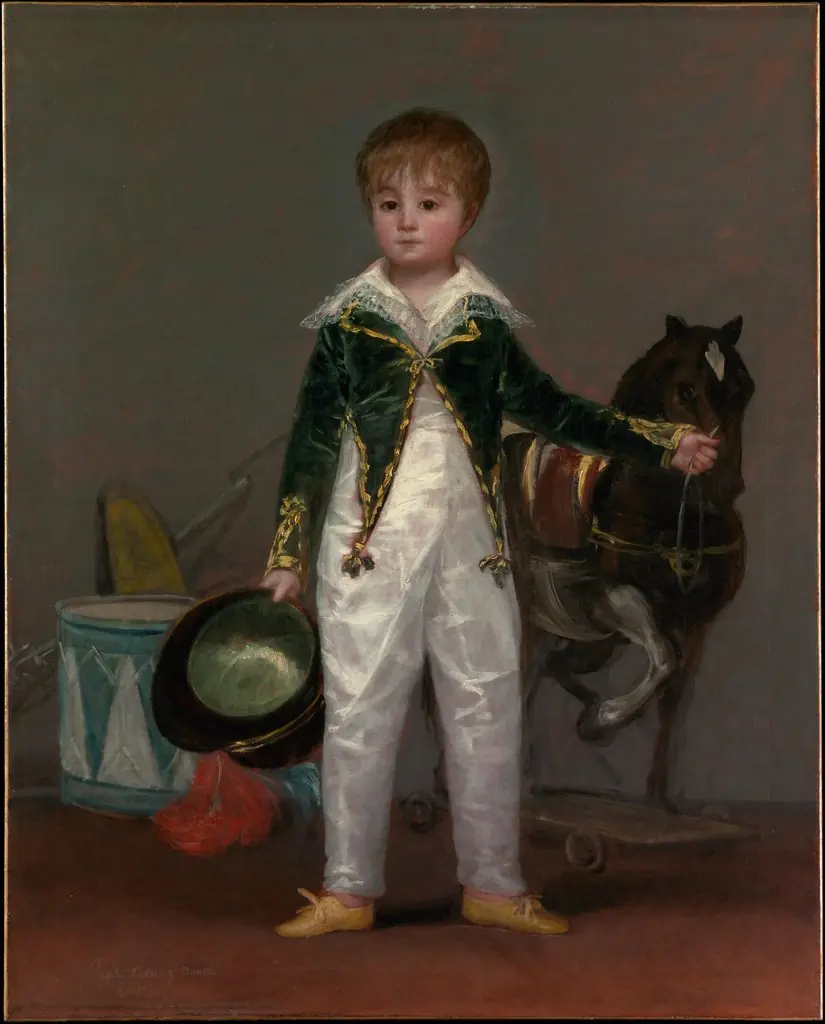
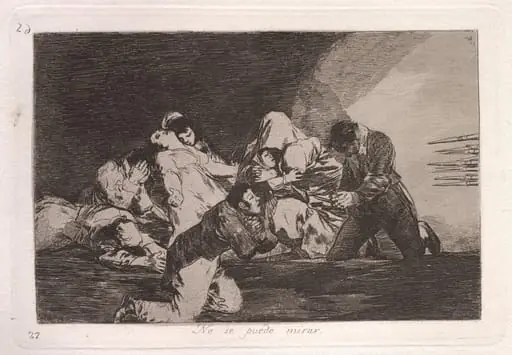 No se puede mirar (One Can't Look)
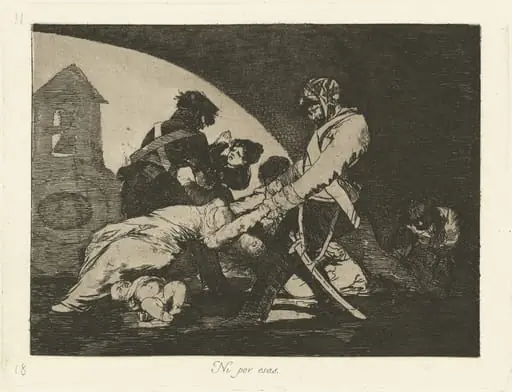 Ni por esas (Neither Do These)
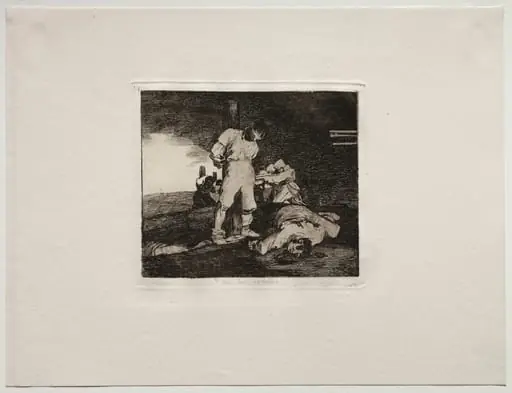 The Horrors of War: And There's No Help For It
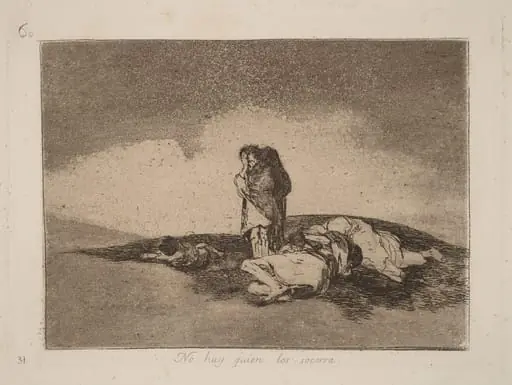 No Hay Quien Los Socorra (Nobody Can Help Them)
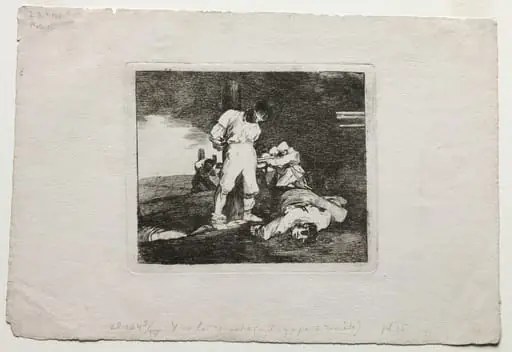 The Disasters of War: And There's No Help for it
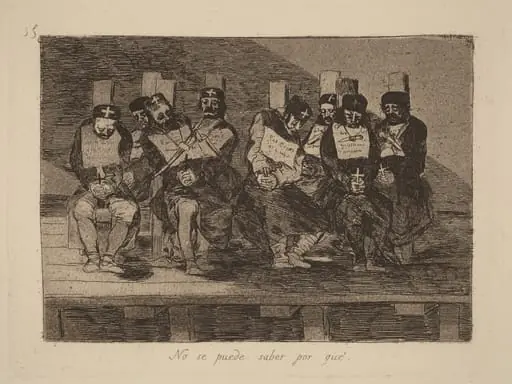 No se puede saber por que (One Can't Tell Why)
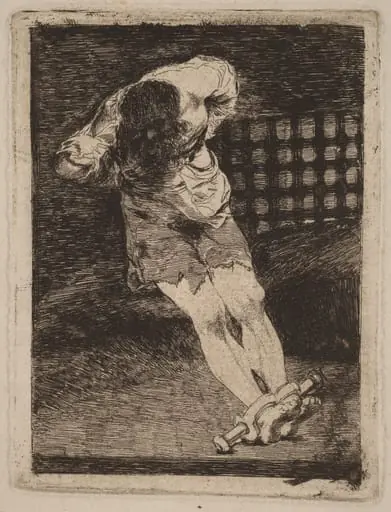 La seguridad de un reo no exige tormento (The Custody of a Criminal Does Not Call for Torture