Artwork
Wayside Inn
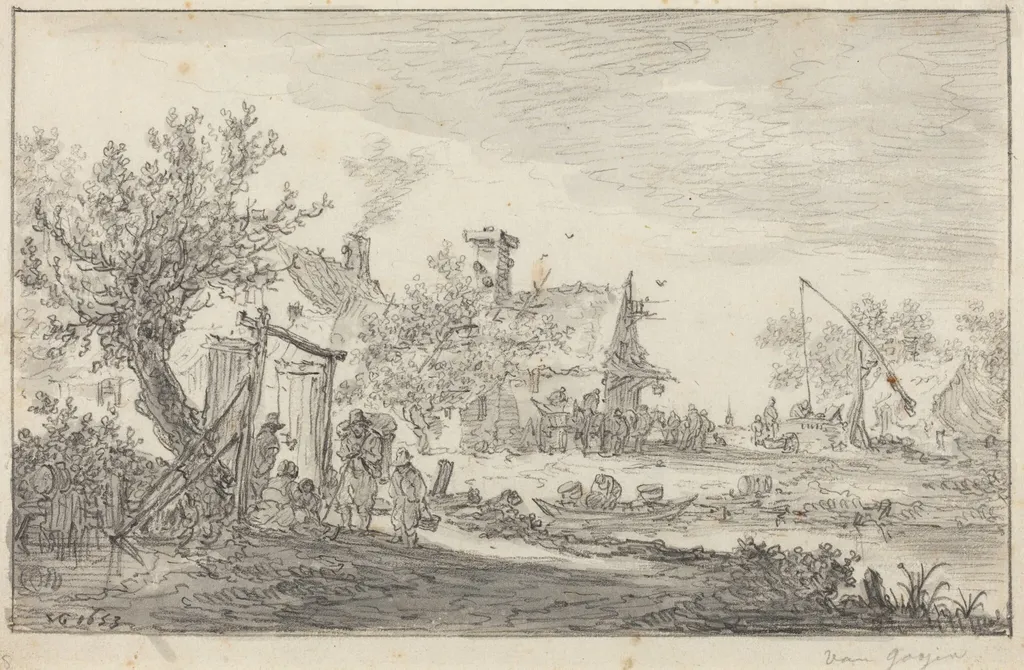
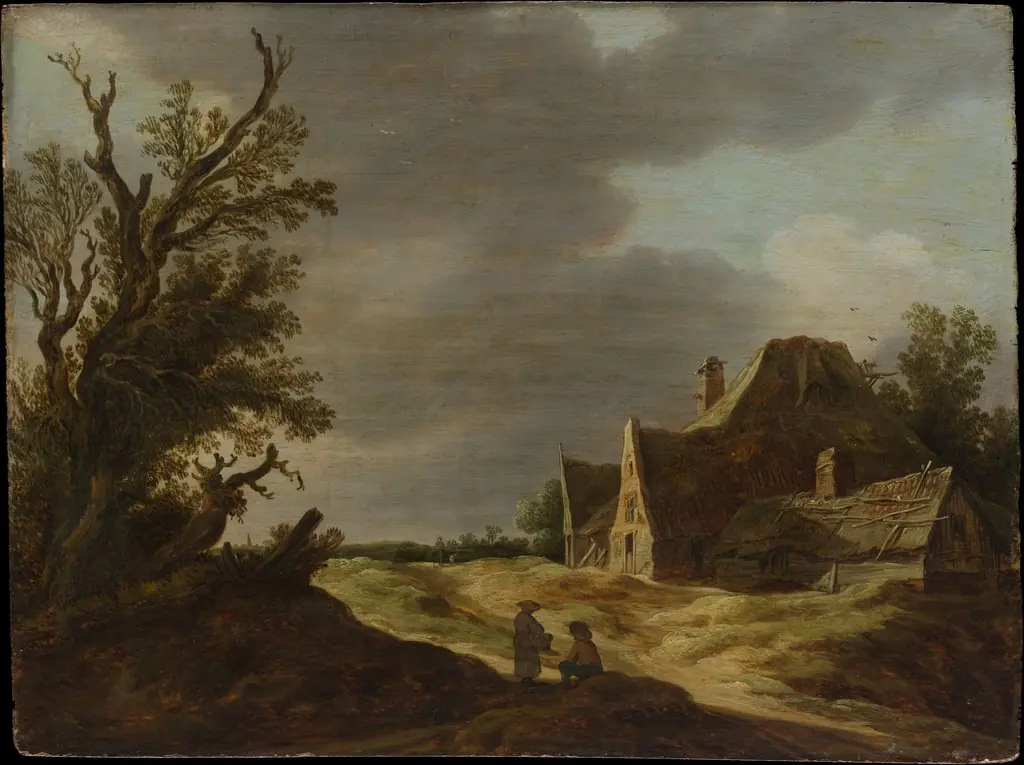
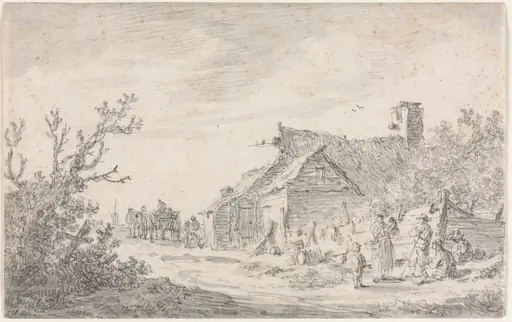
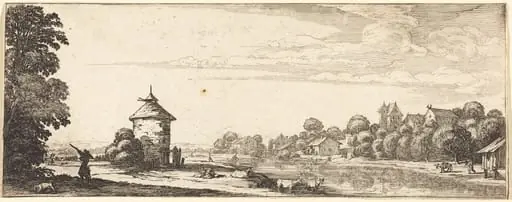
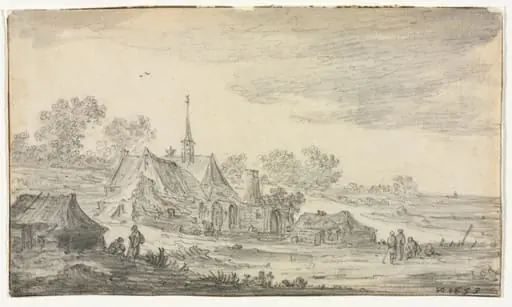
Wayside Inn is a chalk drawing by the Baroque artist Jan van Goyen. It dates from 1653 and is held in the collection of the National Gallery of Art.
About this work
Overview
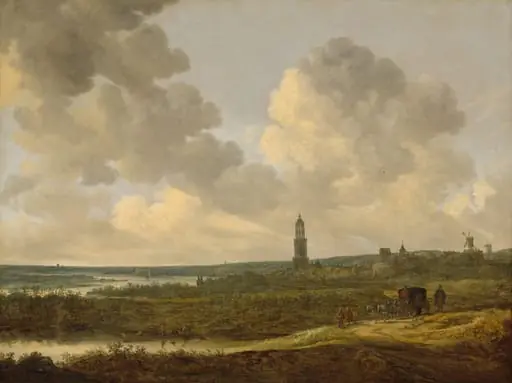
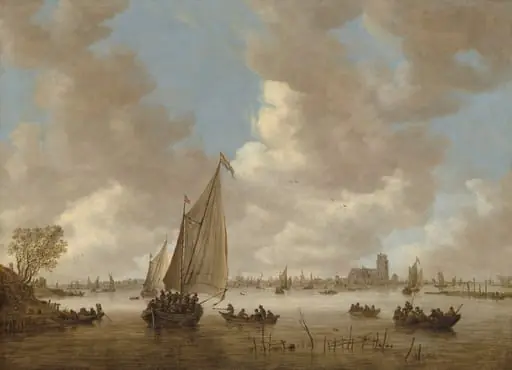
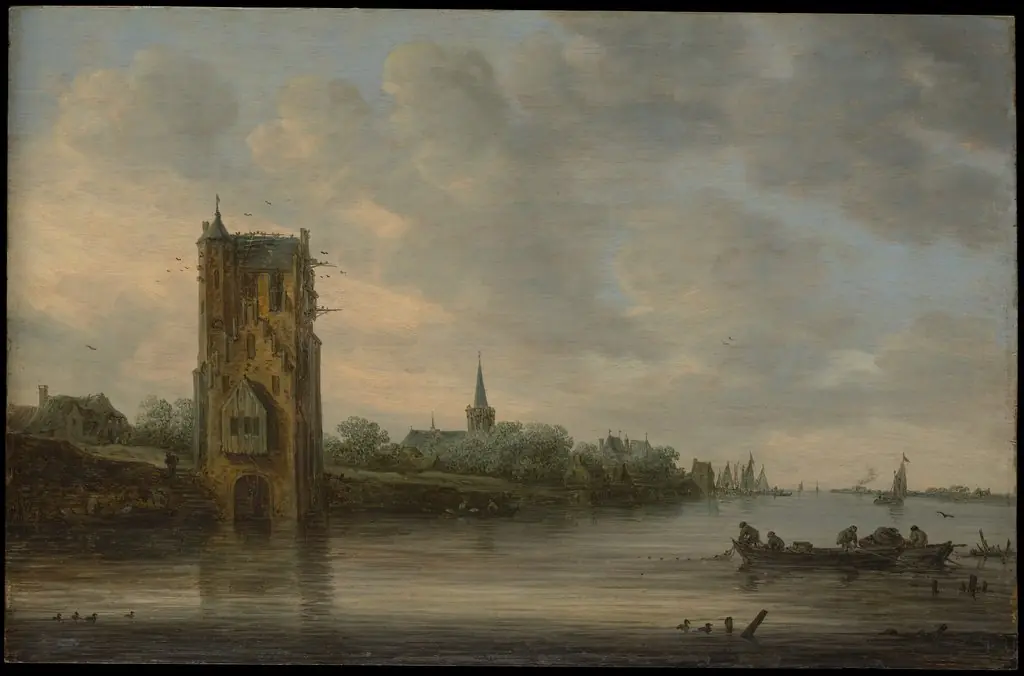
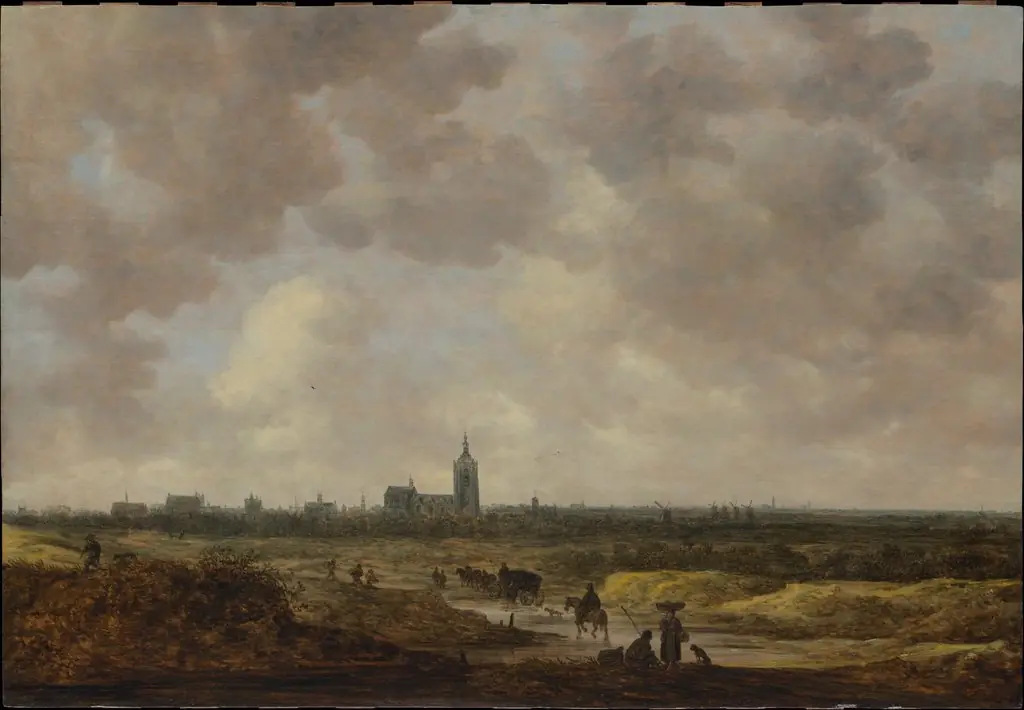
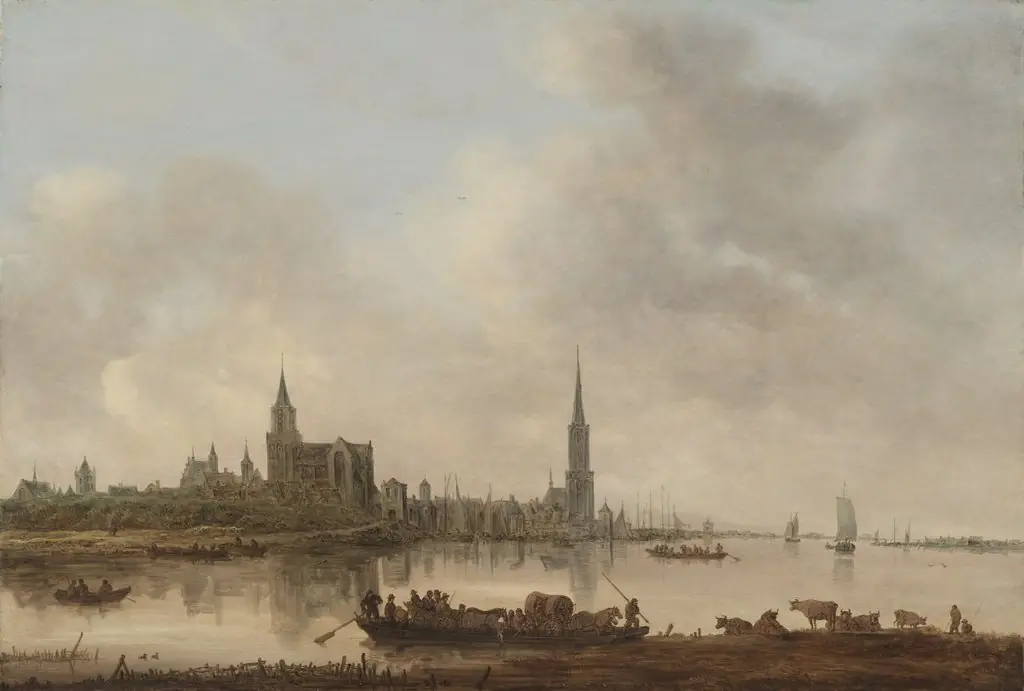
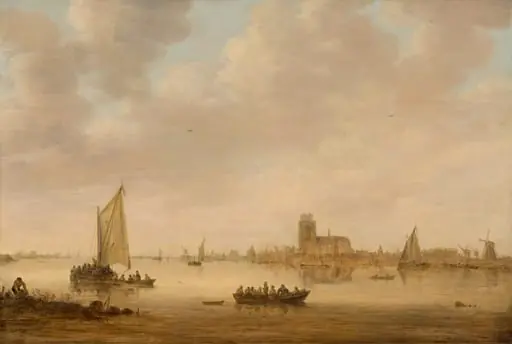
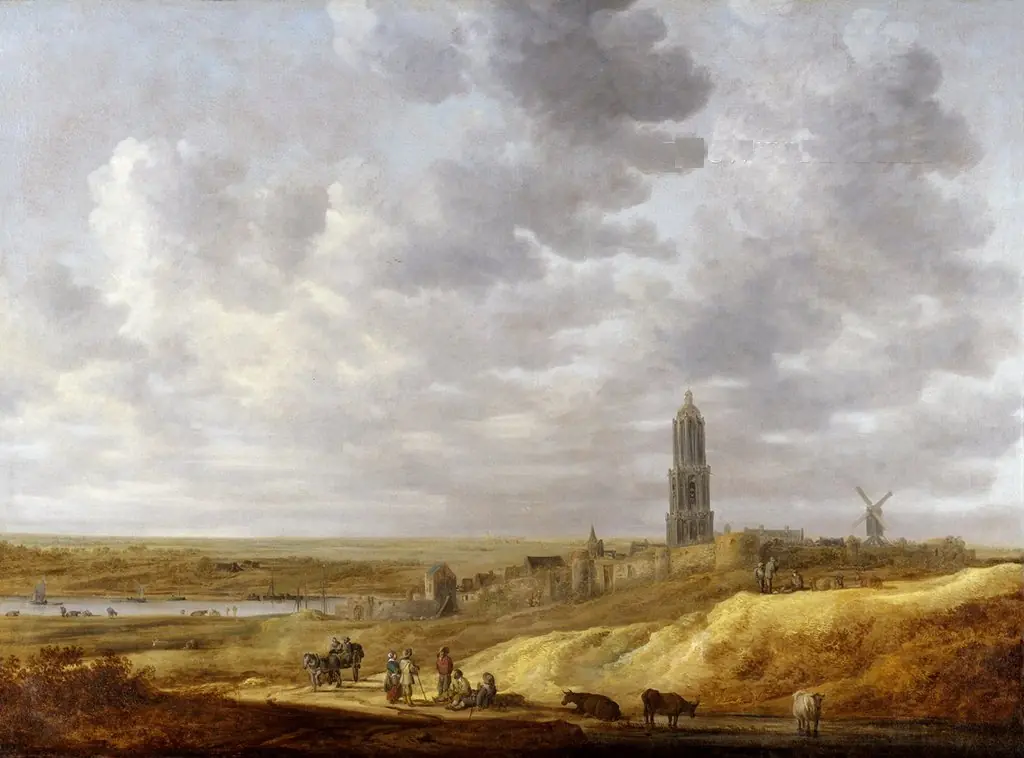
Part of the Dutch Golden Age, van Goyen focused on unembellished landscapes and vernacular architecture, capturing fleeting effects of light and weather.
Jan van Goyen’s *Wayside Inn*, executed in 1653, is a drawing in black chalk heightened with gray wash on laid paper. Part of the Dutch Golden Age, van Goyen focused on unembellished landscapes and vernacular architecture, capturing fleeting effects of light and weather. This work exemplifies his ability to render ordinary scenes with immediacy, favoring observational precision over idealized compositions.
Subject & Meaning
The drawing depicts a rural inn, a common stopping point for travelers and locals alike. Figures congregate near the building, some standing, others seated or reclining, suggesting casual interaction. A large tree dominates the foreground, anchoring the scene, while distant structures fade into the background. The composition reflects the Dutch preference for modest, everyday subjects, emphasizing the quiet rhythms of provincial life.
Technique & Style
Van Goyen employed black chalk and gray wash to achieve a subdued tonal range, lending the scene a soft, atmospheric quality. The medium allowed for both delicate lines and broader, fluid passages, capturing textures of foliage, timber, and fabric. His technique prioritized loose, suggestive strokes over meticulous detail, a hallmark of his mature style that balanced spontaneity with structural clarity.
History & Provenance
Created in 1653, *Wayside Inn* entered the collection of the National Gallery of Art, Washington, where it remains. The drawing’s early history is undocumented, but its survival reflects the growing appreciation for preparatory studies and finished works on paper during the 17th century. It likely passed through private hands before joining a public institution, preserving its condition and context.
Context
During the mid-17th century, Dutch landscape artists increasingly turned to native scenery, rejecting the grand, imaginary vistas favored in earlier European traditions. Van Goyen was a central figure in this shift, producing works that celebrated the familiar—roadsides, villages, and waterways. His focus on light and atmosphere influenced later generations, including the tonal landscapes of the Dutch school.
Legacy
Van Goyen’s approach to landscape drawing helped redefine the genre, demonstrating that ordinary subjects could carry artistic weight. *Wayside Inn* exemplifies his contribution to the development of naturalistic representation, bridging the gap between topographical study and expressive evocation. His work laid groundwork for later artists who sought to capture the transient qualities of light and environment.
Artist & collection
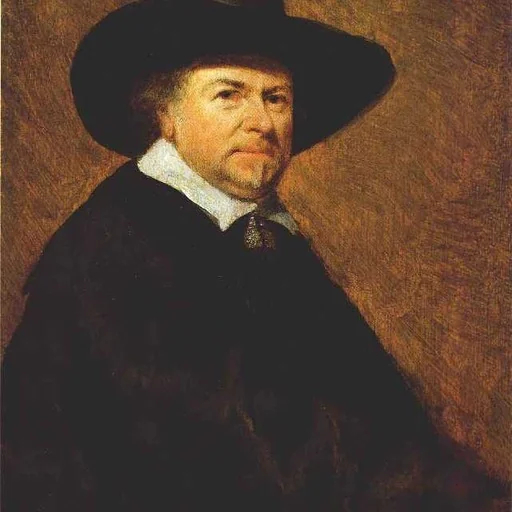
Artist
Jan Josephszoon van Goyen (Dutch pronunciation: ; 13 January 1596 – 27 April 1656) was a Dutch landscape painter.