Artwork
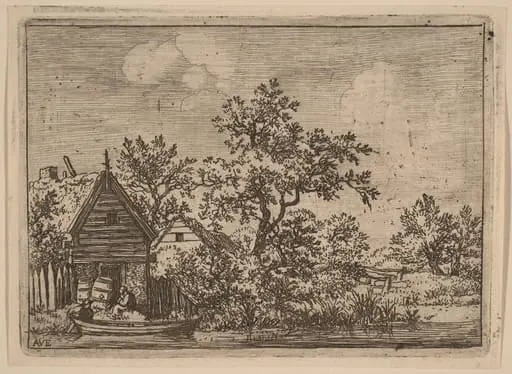
The Dovecot
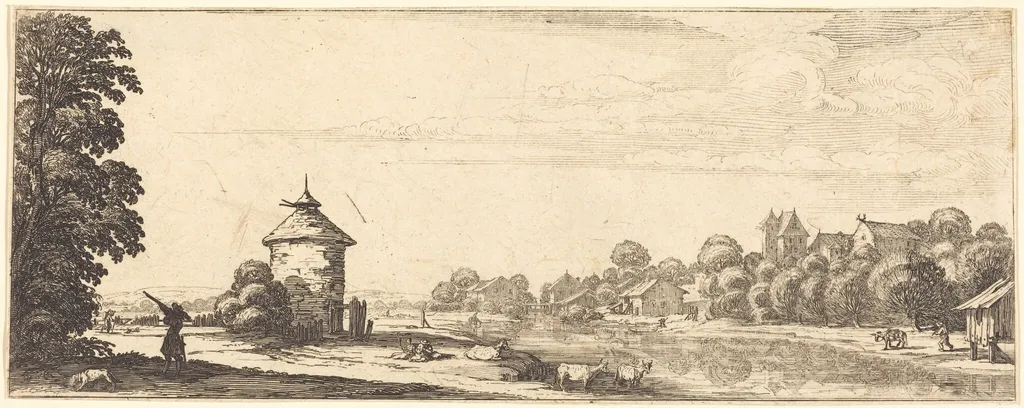
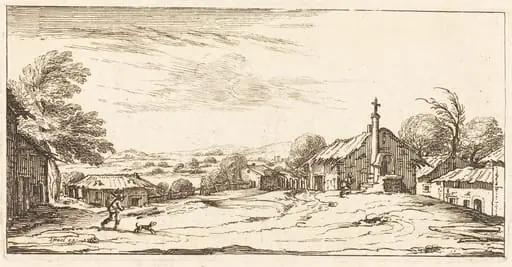
The Dovecot is an ink print by the Baroque artist Jacques Callot. It dates from 1634 and is held in the collection of the National Gallery of Art.
About this work
Overview
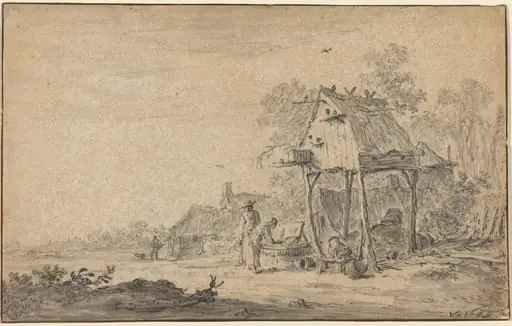
Jacques Callot’s etching *The Dovecot* (c. 1634) presents a tranquil riverside village scene rendered in fine lines on laid paper. A solitary figure gestures toward a modest wooden tower that serves as a dovecote, while cattle graze nearby and simple dwellings line the distant banks. The composition balances human activity with a quiet architectural focus.
Subject & Meaning
The work captures a slice of everyday life in a 17th‑century French village, emphasizing the ordinary rather than the heroic. The central tower, identified as a dovecote, underscores the importance of pigeon‑keeping in rural economies, while the lone observer and grazing livestock suggest a harmonious relationship between people, animals, and built environment.
Technique & Style
Executed as an etching, Callot employed a network of fine incised lines to achieve precise detail and texture. The laid paper’s visible ribbing adds a subtle tonal quality, while the artist’s baroque sensibility is evident in the careful arrangement of figures and architecture within a balanced, almost narrative landscape.
History & Provenance
Created during Callot’s prolific period in the Duchy of Lorraine, *The Dovecot* belongs to a larger series of prints that document contemporary scenes ranging from soldiers to market life. The etching has been preserved in several museum collections, reflecting its role as a visual record of early‑modern French rural settings.
Artist & collection
Artist
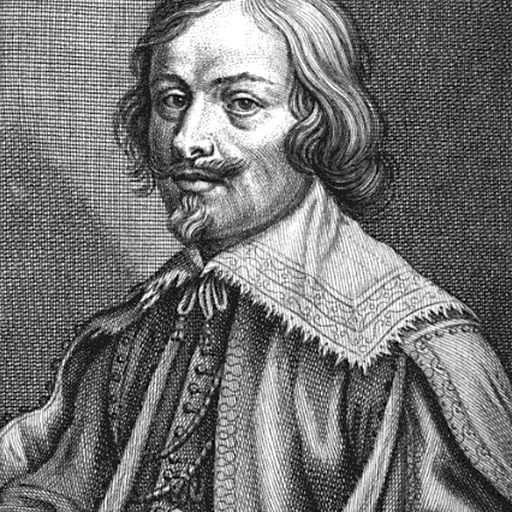
Jacques Callot was a baroque printmaker and draftsman from the Duchy of Lorraine.

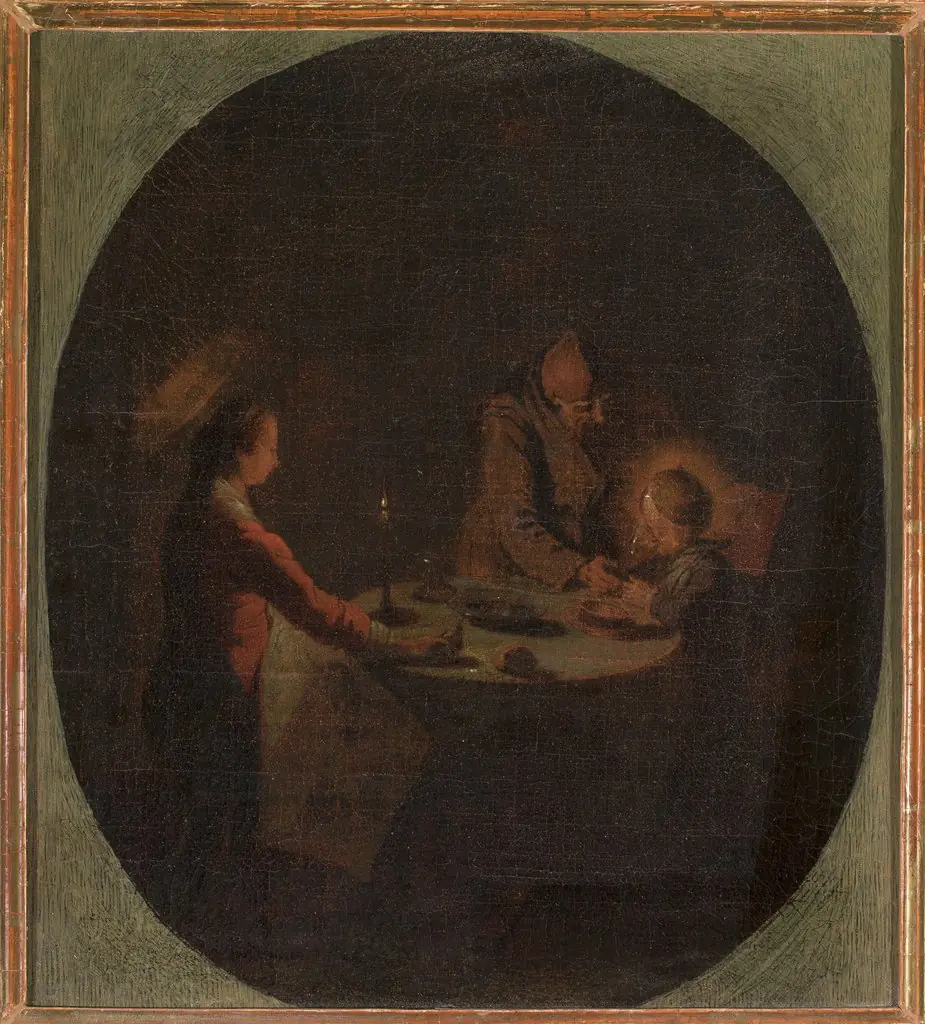 Holy Family at supper
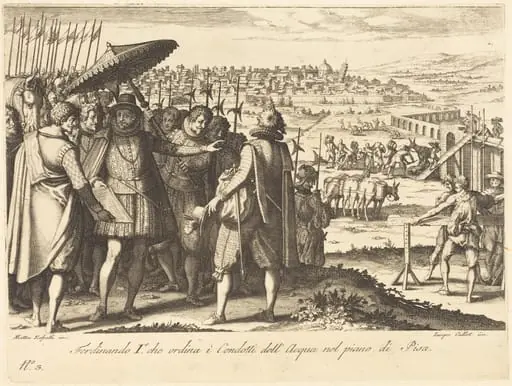 Restoration of the Aqueduct at Pisa
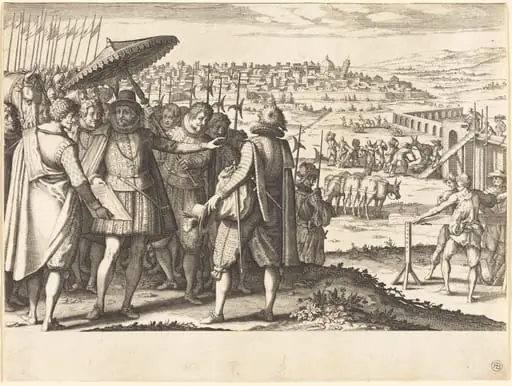 Restoration of the Aqueduct at Pisa
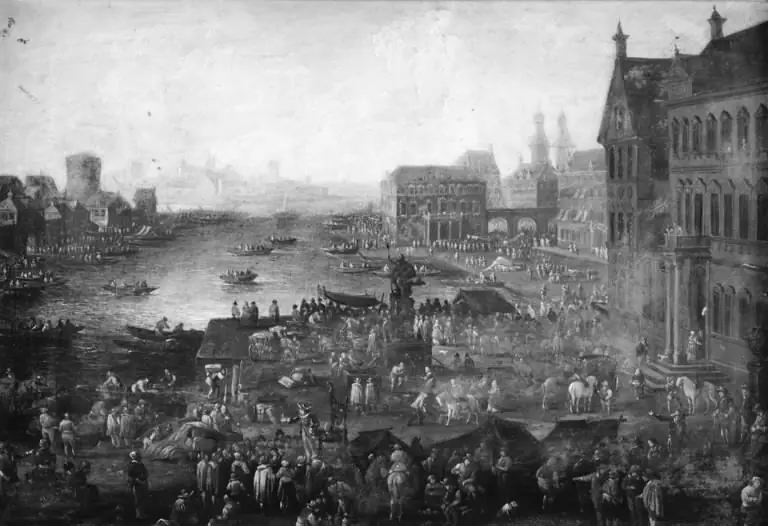 Square in Paris with Many Figures
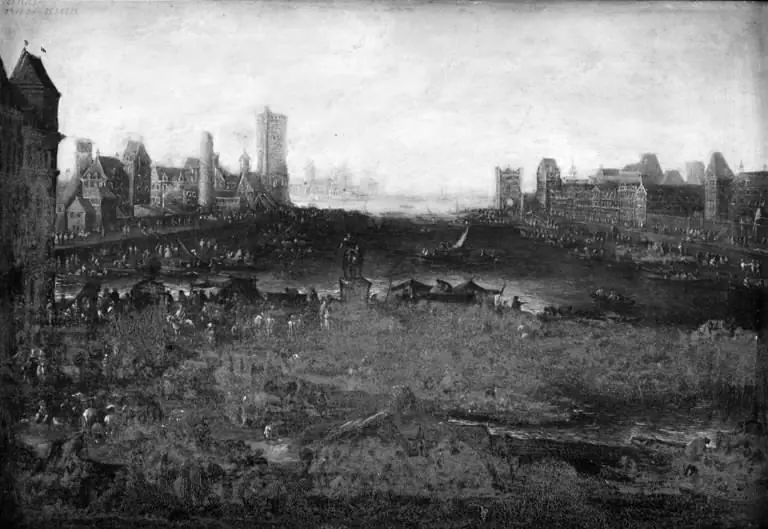 Square in Paris with Many Figures
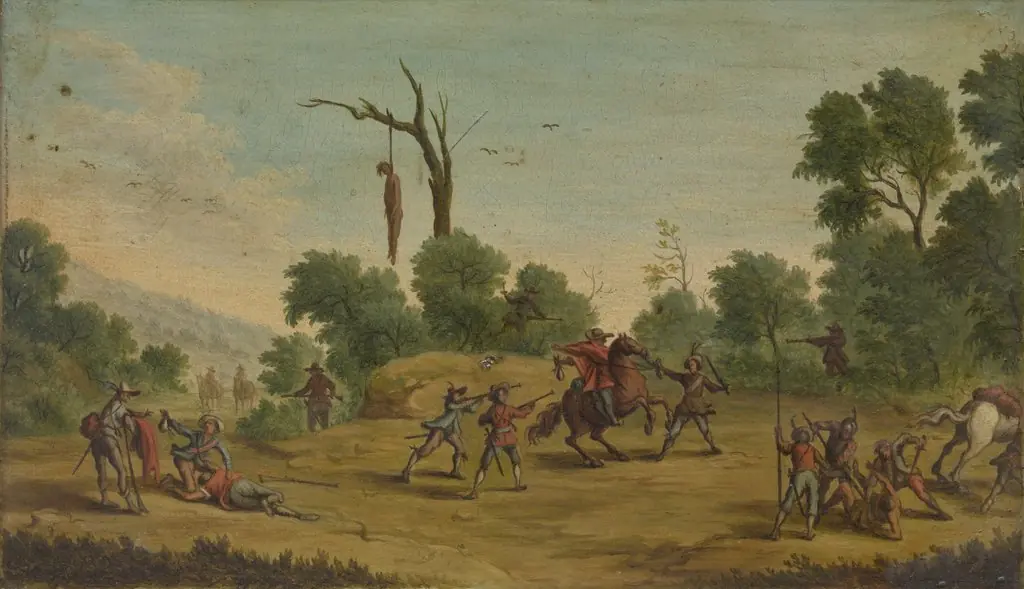 Horsemen Attacked by Robbers
 HOW WILL A COVERED PART BE CORRECTED?HOW WIKA A COVERED HEART DEED CORRECTED?
![Christ Walking on the Water [second plate], by Jacques Callot](https://artifactworldgallery.com/img/jacques-callot--christ-walking-on-the-water-second-plate--2069f3bfe4cb2126-w320.webp) Christ Walking on the Water [second plate]
Christ Walking on the Water [second plate]