Artwork
Untitled
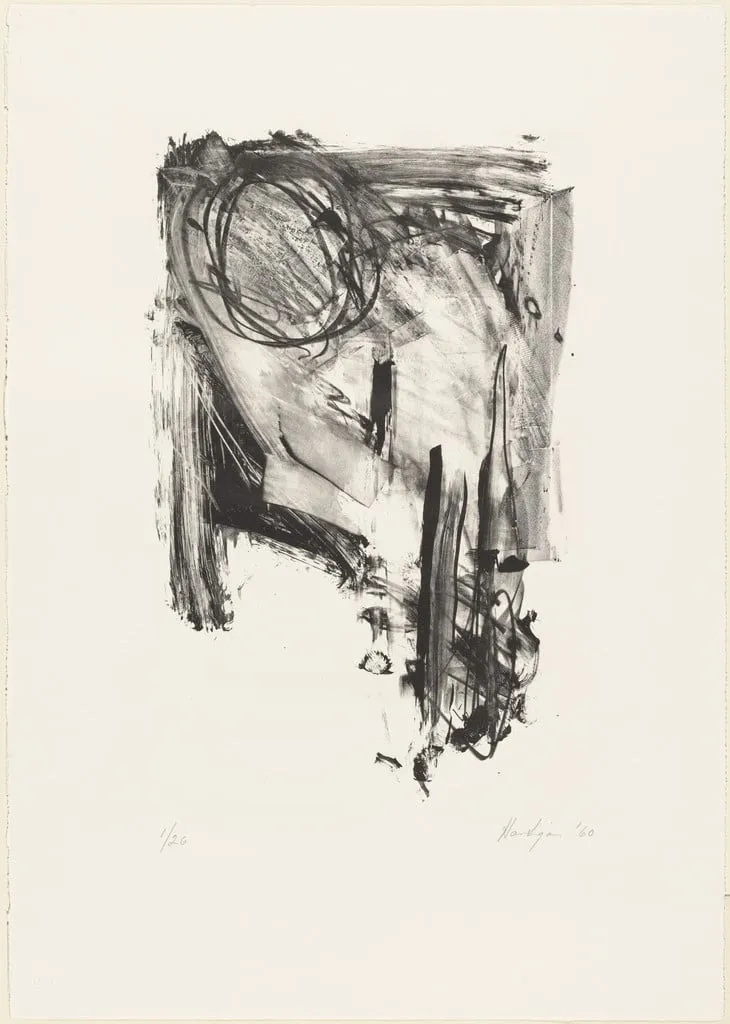
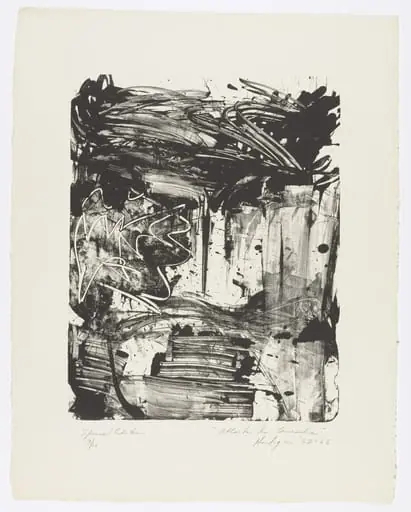
Untitled is an ink print by Grace Hartigan. It dates from 1960 and is held in the collection of the Museum of Modern Art.
About this work
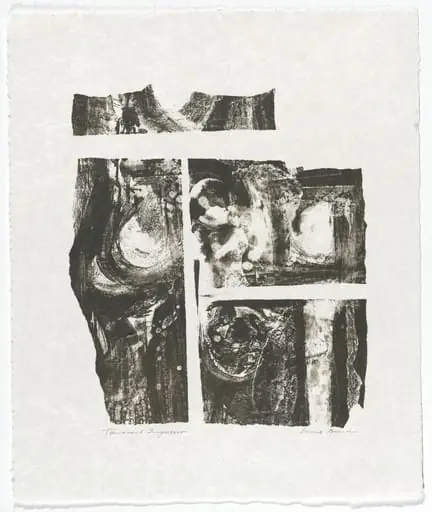
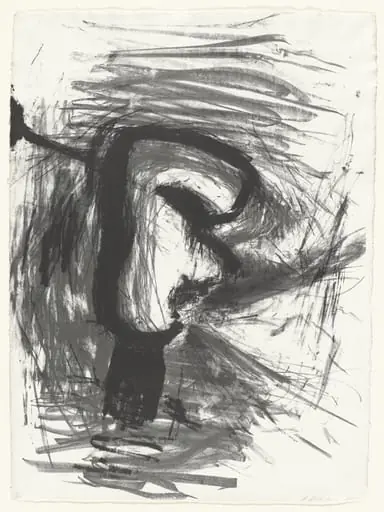
It looks like a rough drawing of a person’s head and shoulders, but the features are blurred and messy.
This painting is mostly black and white with loose, sketchy lines. It looks like a rough drawing of a person’s head and shoulders, but the features are blurred and messy. The background is just more scribbles and smudges, with no clear shapes.
The artist signed it "Hartigan '60" in the corner, which tells us it’s from 1960. The lines feel quick, like they were made fast—no careful details.
If you like this style, check out lithography to see how artists print images this way.
Overview
Created in 1960, this lithograph is one of four in a series by Grace Hartigan. It is part of The Museum of Modern Art’s collection and exemplifies her engagement with gestural abstraction during the early 1960s. The work is rendered in monochrome, emphasizing texture and movement over detail. Hartigan’s signature and date appear in the lower corner, anchoring the piece to its moment of creation.
Subject & Meaning
The image suggests a fragmented human form—head and shoulders rendered with minimal definition. Features are obscured by overlapping strokes, resisting clear identification. Rather than depicting a specific individual, the figure evokes presence through absence, reflecting Hartigan’s interest in emotional expression over literal representation. The ambiguity invites interpretation without prescribing it.
Technique & Style
Hartigan employed lithography to achieve rapid, spontaneous marks that mimic drawing. The black-and-white palette and loose, smudged lines convey urgency, with no attempt at refinement. Backgrounds dissolve into dense, chaotic scribbles, blurring the boundary between figure and ground. The technique prioritizes physical gesture, aligning the print with the energy of Abstract Expressionist painting.
History & Provenance
The work entered The Museum of Modern Art’s collection shortly after its creation, reflecting institutional recognition of Hartigan’s role in postwar American art. As part of a small series of lithographs, it represents her brief but significant foray into printmaking during a period when she was increasingly focused on abstract figuration. Its preservation underscores its importance in documenting her evolving practice.
Context
In 1960, Hartigan was navigating the tension between figurative and abstract modes within the New York art scene. While peers like de Kooning pursued similar gestural languages in paint, this lithograph reveals her adaptation of those principles to a medium requiring different technical constraints. The work aligns with broader experimental trends in printmaking that valued process over polish.
Legacy
This lithograph contributes to the understanding of how female Abstract Expressionists expanded the boundaries of printmaking. Hartigan’s willingness to embrace imperfection and spontaneity in a medium often associated with precision challenged traditional hierarchies in art. Her approach influenced later generations of artists who valued expressive mark-making in graphic media.
Artist & collection

Artist
Grace Hartigan was an American abstract expressionist painter and a significant member of the vibrant New York School of the 1950s and 1960s.