Artwork
Peisaj deluros cu port
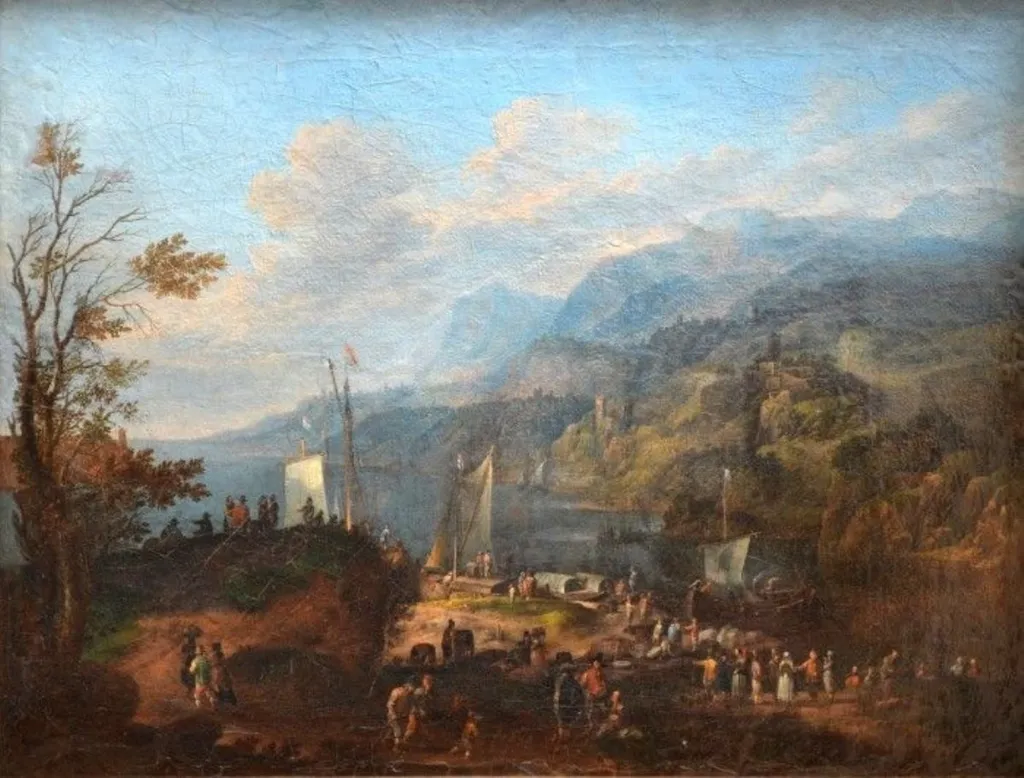
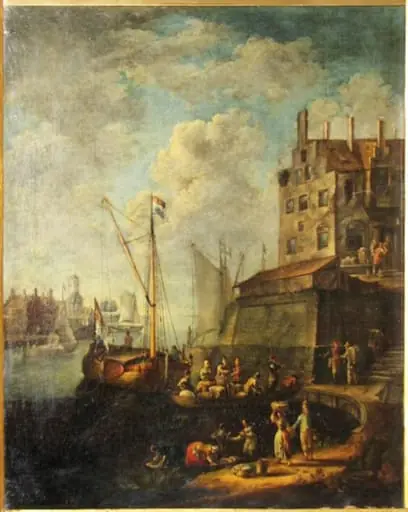
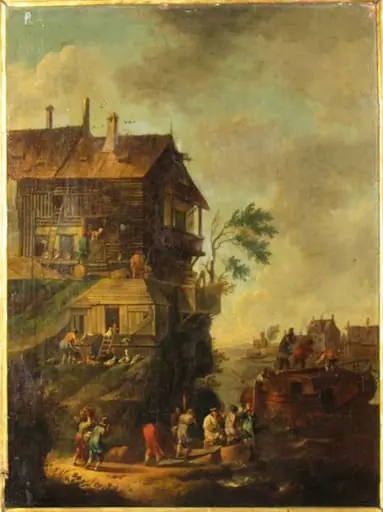
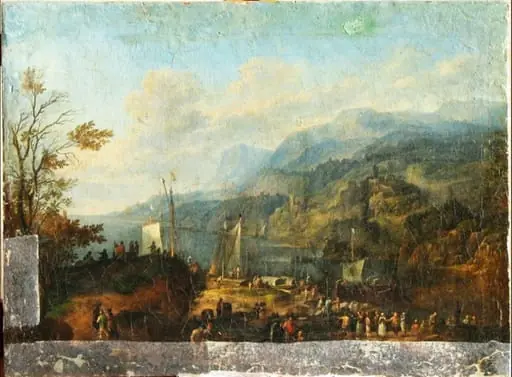
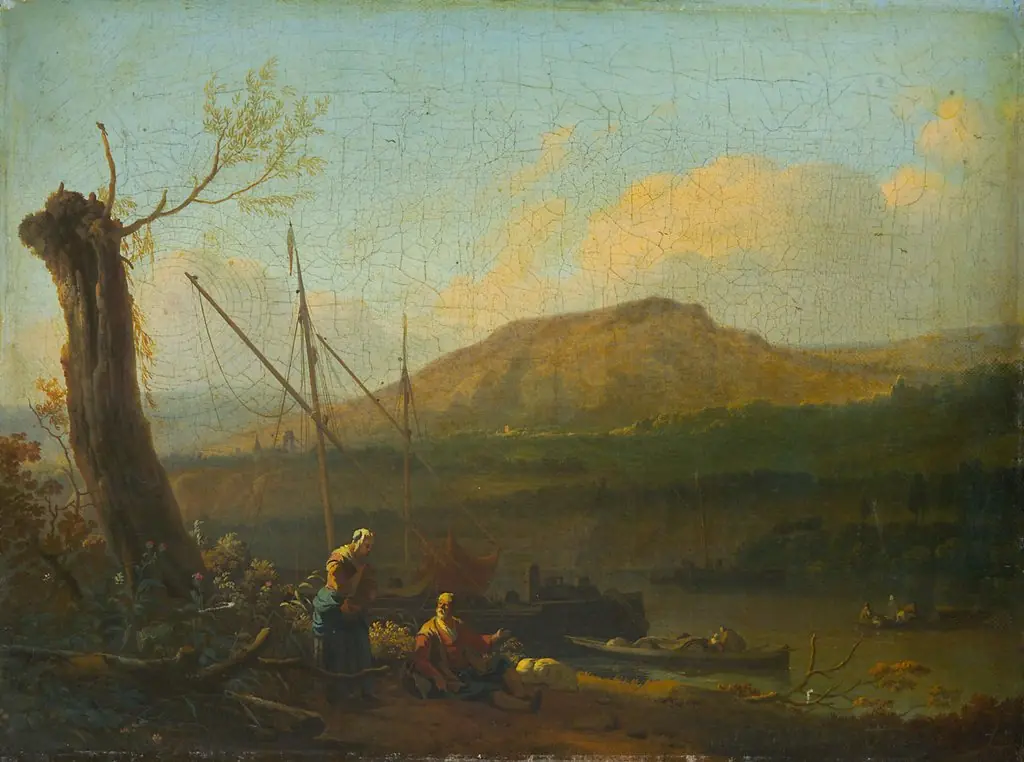
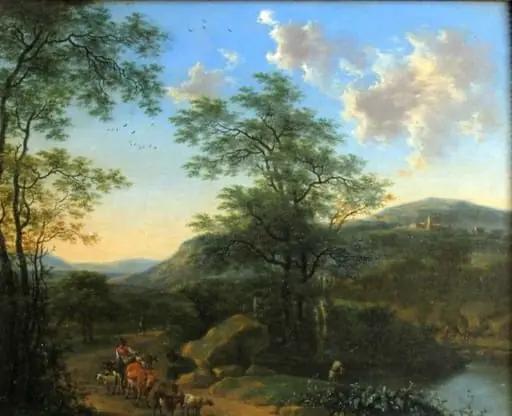
Peisaj deluros cu port is an unspecified painting by the Baroque artist Hans Graf. It is held in the collection of the Brukenthal National Museum. This artwork depicts a tranquil riverside landscape populated with figures engaged in daily activities near small boats.
About this work
Overview
This artwork depicts a tranquil riverside landscape populated with figures engaged in daily activities near small boats. Rolling hills rise behind the scene, dotted with modest buildings, while trees frame the water’s edge. The sky, illuminated by soft daylight and scattered clouds, casts gentle variations in brightness across the land and river, suggesting a quiet, sunlit afternoon.
Subject & Meaning
The scene captures ordinary life along a riverbank—people standing, moving, and working in unison with their environment. There is no dramatic narrative, but the presence of boats and structures implies local trade or fishing. The composition emphasizes harmony between human activity and nature, presenting a quiet, unidealized view of rural existence.
Technique & Style
The artist employs subtle contrasts of light and shadow to model forms and suggest depth, particularly in the hills and water’s surface. Brushwork is restrained, favoring smooth transitions over bold strokes. The careful rendering of atmospheric light, especially on foliage and buildings, reflects an interest in naturalism and the effects of daylight on terrain.
History & Provenance
No documented records of the painting’s origin, artist, or early ownership are available. It is classified as an image without a known date or institutional history. Its title, 'Peisaj deluros cu port,' suggests a regional language, possibly Romanian, hinting at a local or lesser-known artistic tradition.
Context
The scene aligns with 19th-century European landscape traditions that valued everyday rural life over grand historical themes. Similar compositions appear in regional art from Eastern Europe, where artists turned to local topography and vernacular activities as subjects. The absence of overt symbolism points to a focus on observation rather than allegory.
Legacy
Though not widely exhibited or studied, the work exemplifies a quiet, observational approach to landscape painting common in non-central European art circles. Its emphasis on natural light and unembellished scenes contributes to a broader, though often overlooked, tradition of regional realism in 19th-century visual culture.
Artist & collection