Artwork
Recital de pian (după o poezie de Sandu Tzigara-Samurcaș)
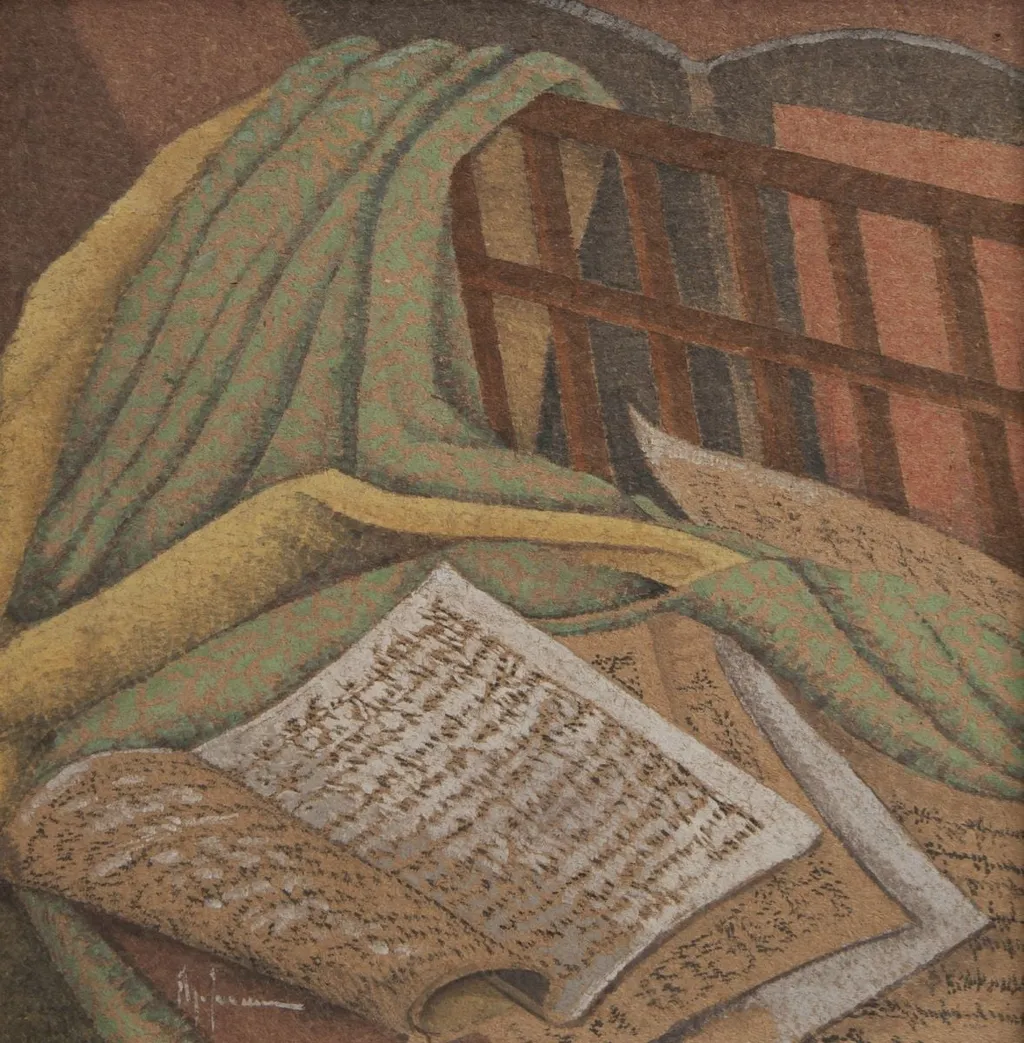
Recital de pian (după o poezie de Sandu Tzigara-Samurcaș) is an unspecified painting by Olga Greceanu. It dates from 1944 and is held in the collection of the National Museum of Art of Romania.
About this work
Overview
It captures a quiet, intimate moment in a domestic space, centered on an abandoned sheet of music and an open piano.
Painted in 1944 by Olga Greceanu, this work responds to a poem by Sandu Tzigara-Samurcaș. It captures a quiet, intimate moment in a domestic space, centered on an abandoned sheet of music and an open piano. The composition avoids human figures, instead focusing on objects charged with implied presence and silence. The interplay of light, texture, and discarded notation suggests a pause in artistic practice.
Subject & Meaning
The crumpled musical score, worn and folded, implies recent use and sudden abandonment. The open piano, its keys exposed, waits in stillness, as if the performer has just stepped away. Sunlight filtering through the window casts colored stripes, evoking time’s passage. The scene conveys solitude and the fragility of creative interruption—music halted, not finished.
Technique & Style
Greceanu employs thick, tactile brushwork, particularly on the piano and floor, creating a pronounced impasto effect that adds physical weight to the objects. The white music paper contrasts sharply against the dark ground, while the brick walls and sunlit stripes are rendered with restrained, directional strokes. The handling of light and texture grounds the scene in realism while deepening its emotional resonance.
History & Provenance
Created during World War II in Romania, the painting reflects the cultural persistence of artistic expression amid national upheaval. Though specific ownership history is not widely documented, its survival suggests it was retained within private or institutional collections in Romania. The work remains a rare example of Greceanu’s engagement with literary inspiration in visual form.
Context
In mid-1940s Romania, artists often turned to introspective subjects as public life became constrained. Greceanu’s choice to illustrate a poetic moment rather than a grand narrative aligns with a broader trend of quiet, domestic symbolism. The painting’s focus on music and silence may reflect both personal reflection and the cultural value placed on artistic endurance during wartime.
Legacy
Though not widely exhibited, the work stands as a significant example of Greceanu’s nuanced approach to still life infused with literary meaning. Its emphasis on texture and subdued light influenced later Romanian artists exploring interiority and material presence. The painting endures as a quiet testament to the residue of artistic labor—what remains when the music stops.
Artist & collection
Artist
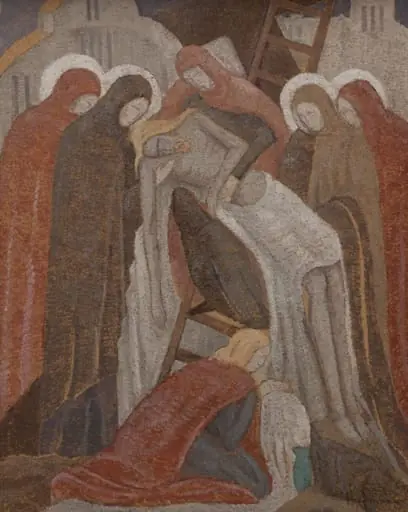
Olga Greceanu made paintings and prints in mid-20th-century Romania. You’ll find her vibrant “Recital de pian” and the bold print “Coborârea de pe cruce” in this set. She belonged to the quiet tradition of Romanian…