Artwork
Coborârea de pe cruce
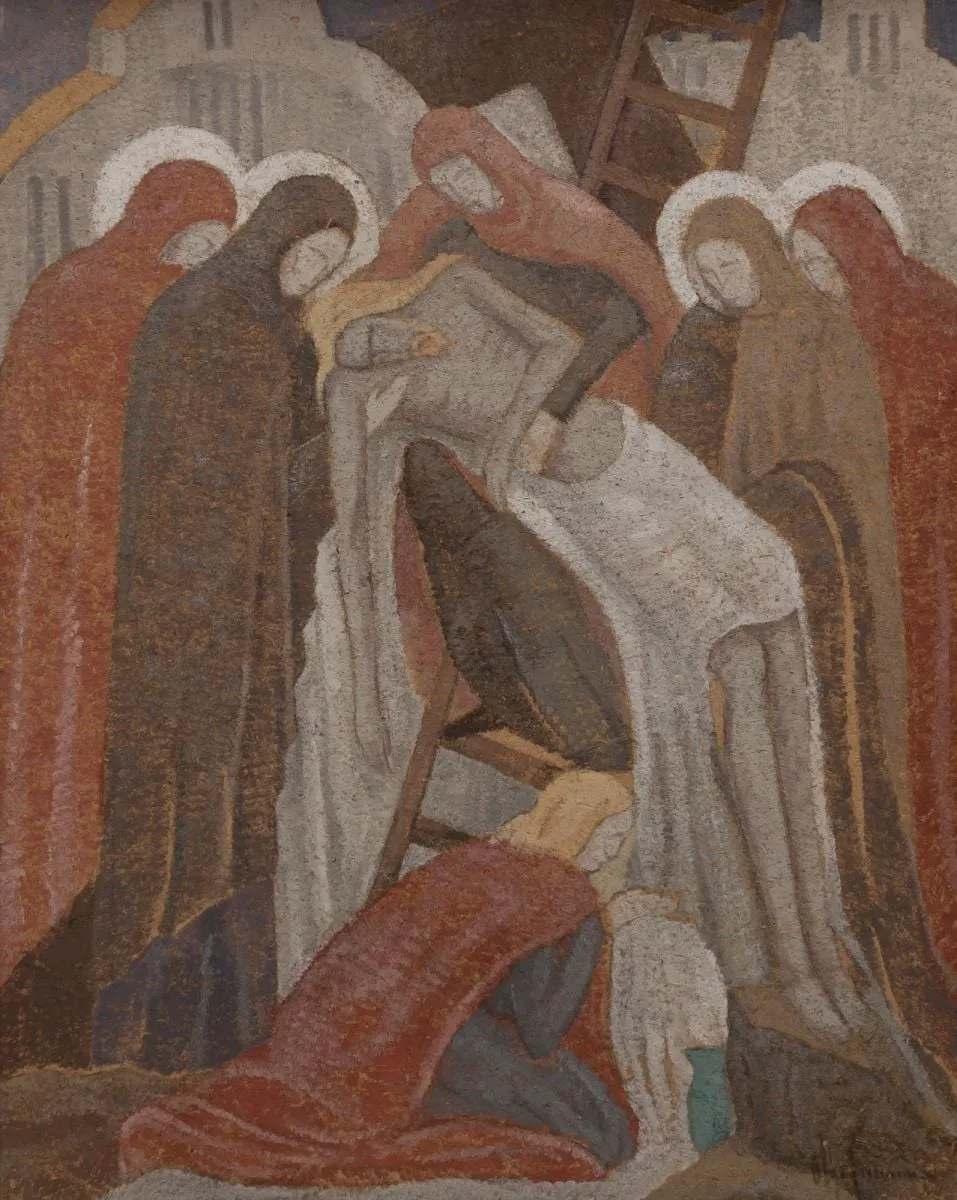
Coborârea de pe cruce is a print by Olga Greceanu. It dates from 1929 and is held in the collection of the National Museum of Art of Romania.
About this work
Overview
The composition centers on a lifeless body surrounded by mourners, their postures conveying grief without overt gesture.
Painted in 1929 by Olga Greceanu, this work depicts the descent of Christ from the cross, rendered in a somber palette dominated by deep reds, blacks, and grays. White highlights trace the halos and edges of garments, isolating figures against a shadowed ground. The composition centers on a lifeless body surrounded by mourners, their postures conveying grief without overt gesture. The rough, textured brushwork imparts a sense of age and material weight to the scene.
Subject & Meaning
The painting illustrates the moment after Christ’s removal from the cross, a traditional Christian subject known as the Deposition. Figures in robes surround the body, their expressions subdued and mask-like, emphasizing collective sorrow over individual emotion. The presence of halos identifies them as sacred participants—Joseph of Arimathea, Mary, and other disciples—anchoring the scene in theological narrative while stripping it of ornamental detail.
Technique & Style
Greceanu employs thick, uneven brushstrokes that create a tactile, almost sculptural surface. The limited palette enhances the emotional gravity, while stark contrasts between dark tones and pale halos suggest chiaroscuro without classical refinement. Faces are simplified, reducing individuality to symbolic forms. This deliberate crudeness distances the work from academic realism, aligning it with expressive, early 20th-century tendencies that prioritized spiritual intensity over naturalism.
History & Provenance
Created in 1929 during a period of renewed interest in religious themes among Romanian artists, the painting emerged from a cultural context seeking spiritual expression beyond political upheaval. Its early 20th-century origins place it within a generation reinterpreting Byzantine and folk traditions through modernist lenses. While specific ownership history remains undocumented, its survival suggests it was preserved within ecclesiastical or national collections in Romania.
Context
In interwar Romania, artists often turned to religious subjects as a means of cultural affirmation amid rapid modernization. Greceanu’s approach reflects a broader trend of blending Orthodox iconography with expressive, non-traditional techniques. Unlike formal icons, her figures lack gold backgrounds and rigid symmetry, yet retain symbolic clarity. This synthesis points to a localized modernism rooted in spiritual heritage rather than Western avant-garde models.
Legacy
Though not widely exhibited outside Romania, the painting stands as a quiet example of how religious themes were reimagined in early modern Eastern European art. Its raw aesthetic and emotional restraint distinguish it from both academic religious painting and later socialist realism. It contributes to a lesser-known lineage of artists who used simplified forms and somber tones to convey sacred narratives with psychological depth.
Artist & collection
Artist
Olga Greceanu made paintings and prints in mid-20th-century Romania. You’ll find her vibrant “Recital de pian” and the bold print “Coborârea de pe cruce” in this set. She belonged to the quiet tradition of Romanian…

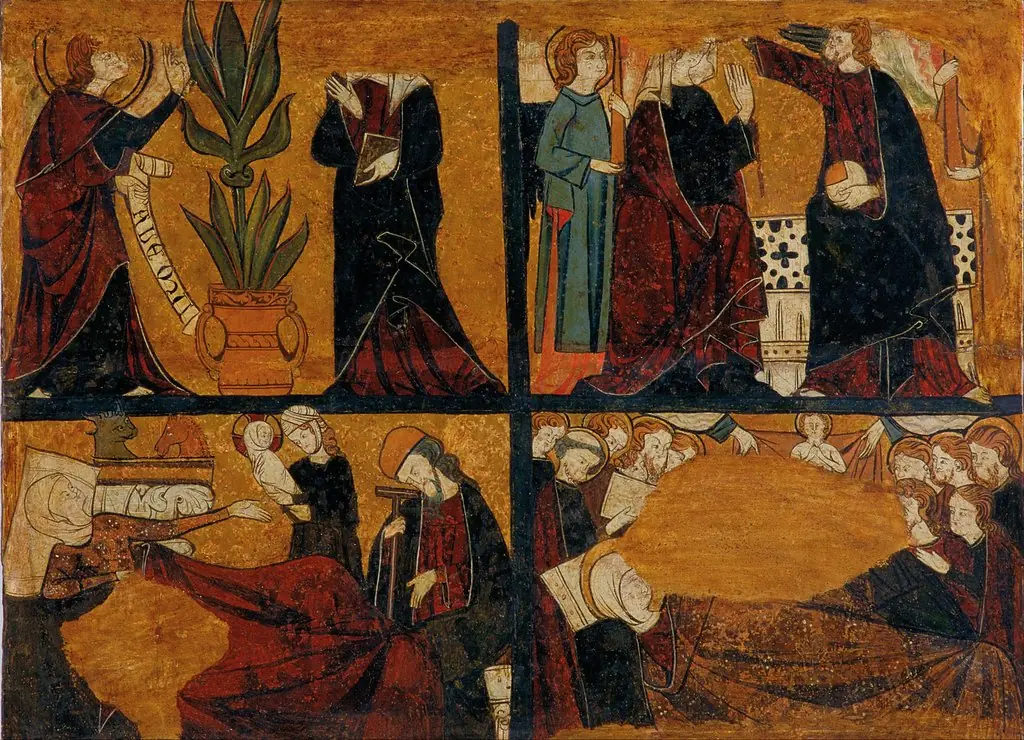 Annunciation, Nativity, Dormition and Coronation of the Virgin
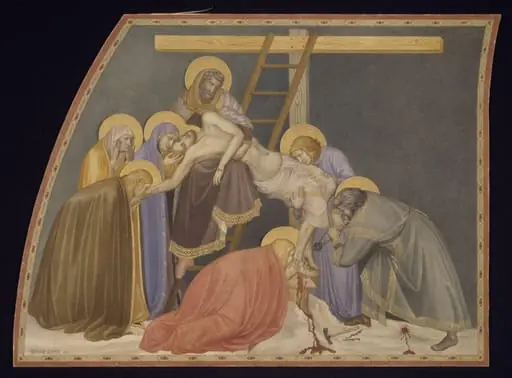 Copy after the painting Deposition from the Cross by P Lorenzetti in the Lower Church, San Francesco, Assisi
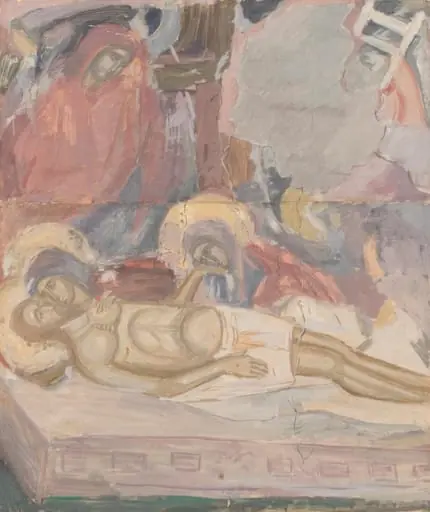 Interment
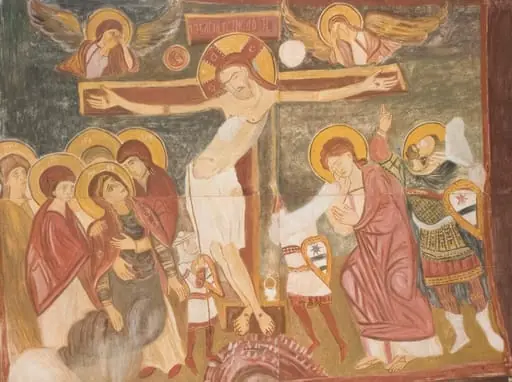 Crucifixion
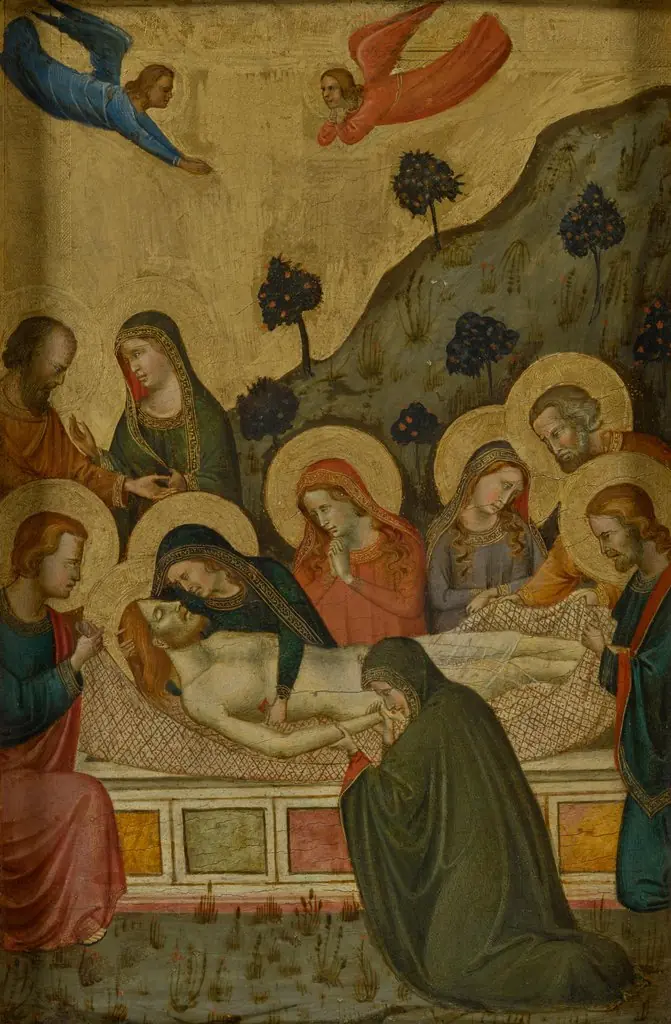 Entombment
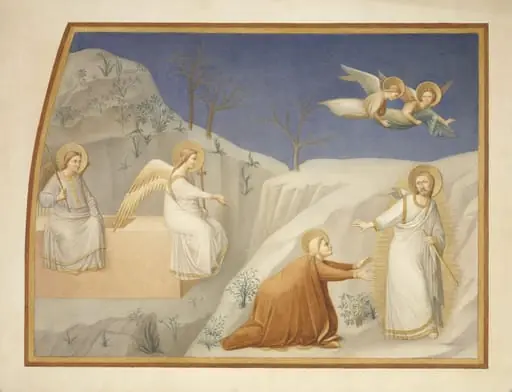 Noli Me Tangere
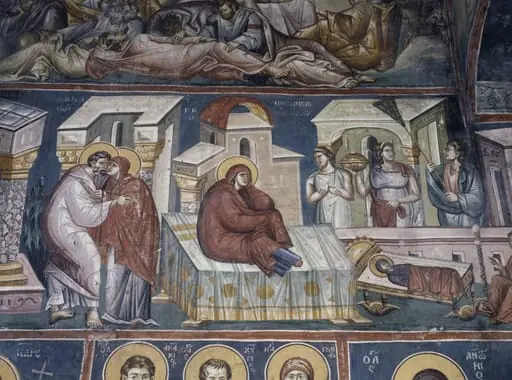 painting
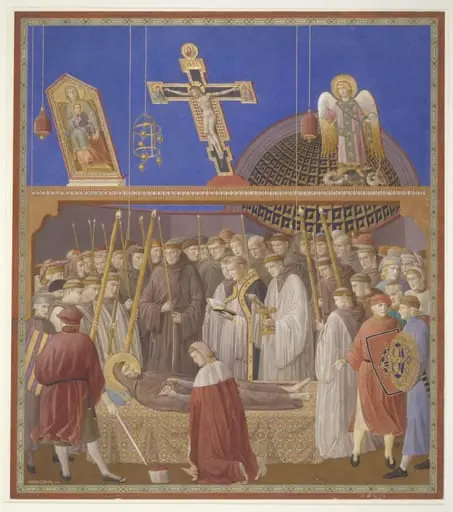 Copy after the painting Death of St Francis by the Master of the St Francis cycle in the Upper Church, San Francesco, Assisi
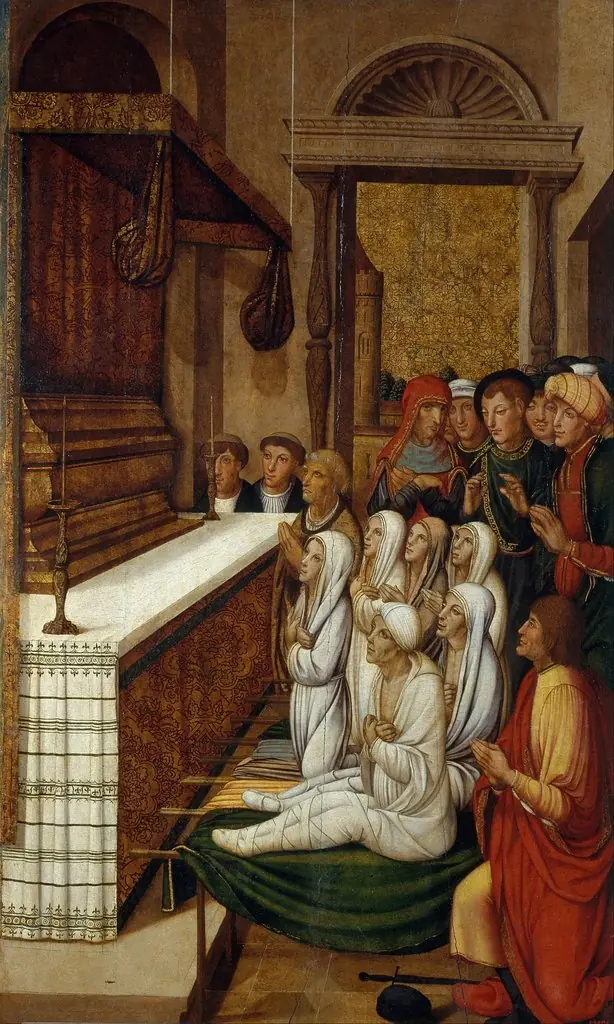 Six Resurrections before the Relics of Saint Stephen
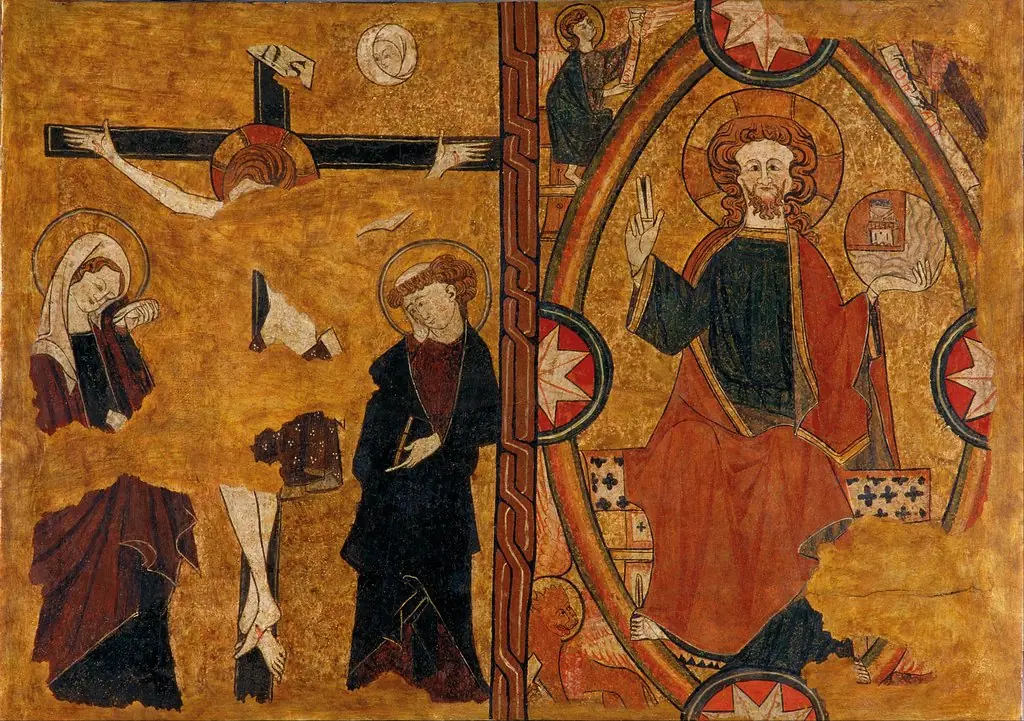 Calvary and Christ in Majesty
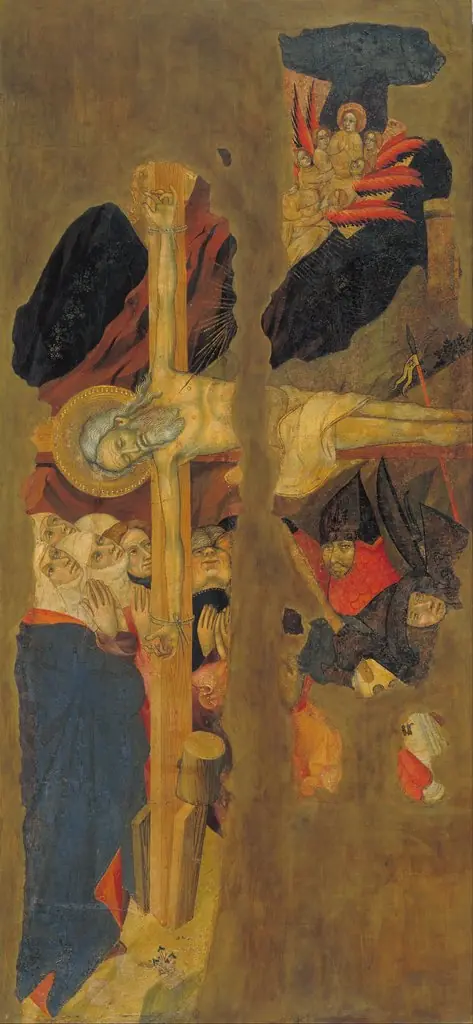 Crucifixion of Saint Andrew
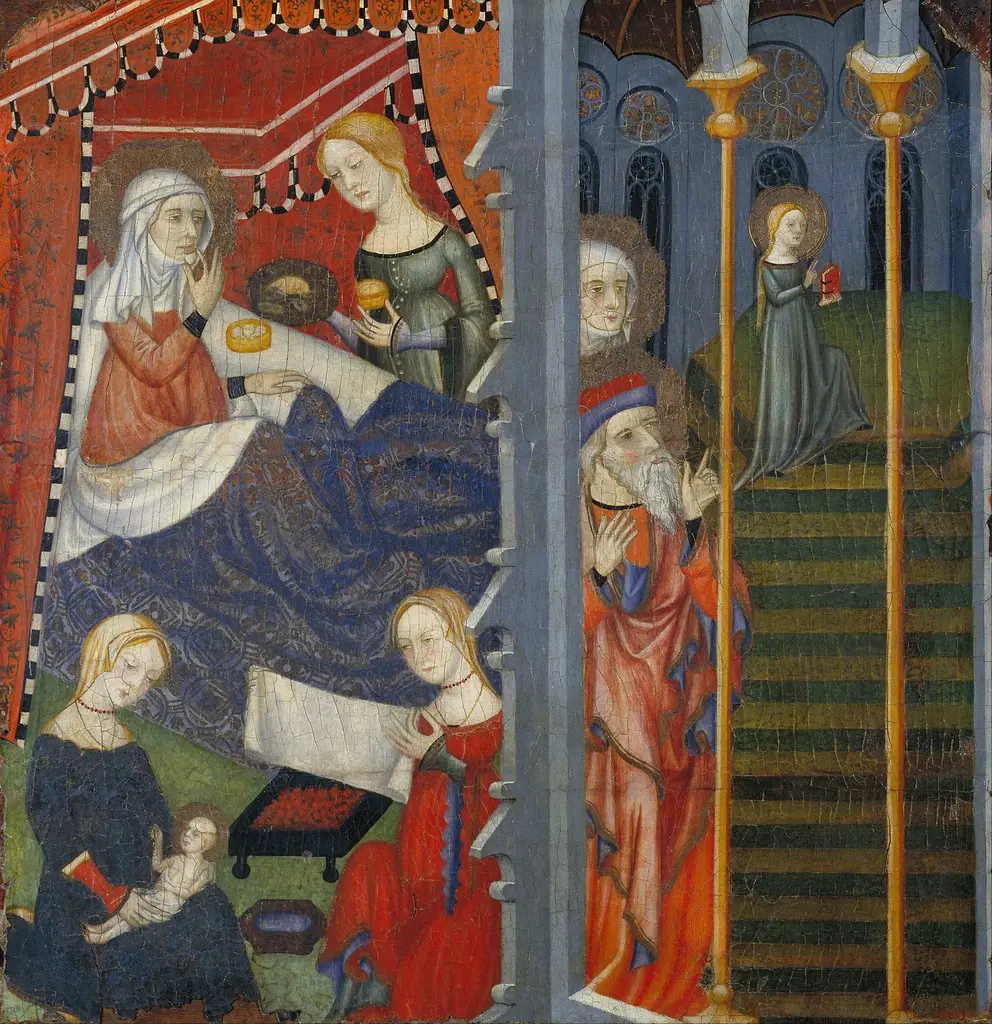 Birth of the Virgin and Presentation at the Temple