Artwork
Print Collection
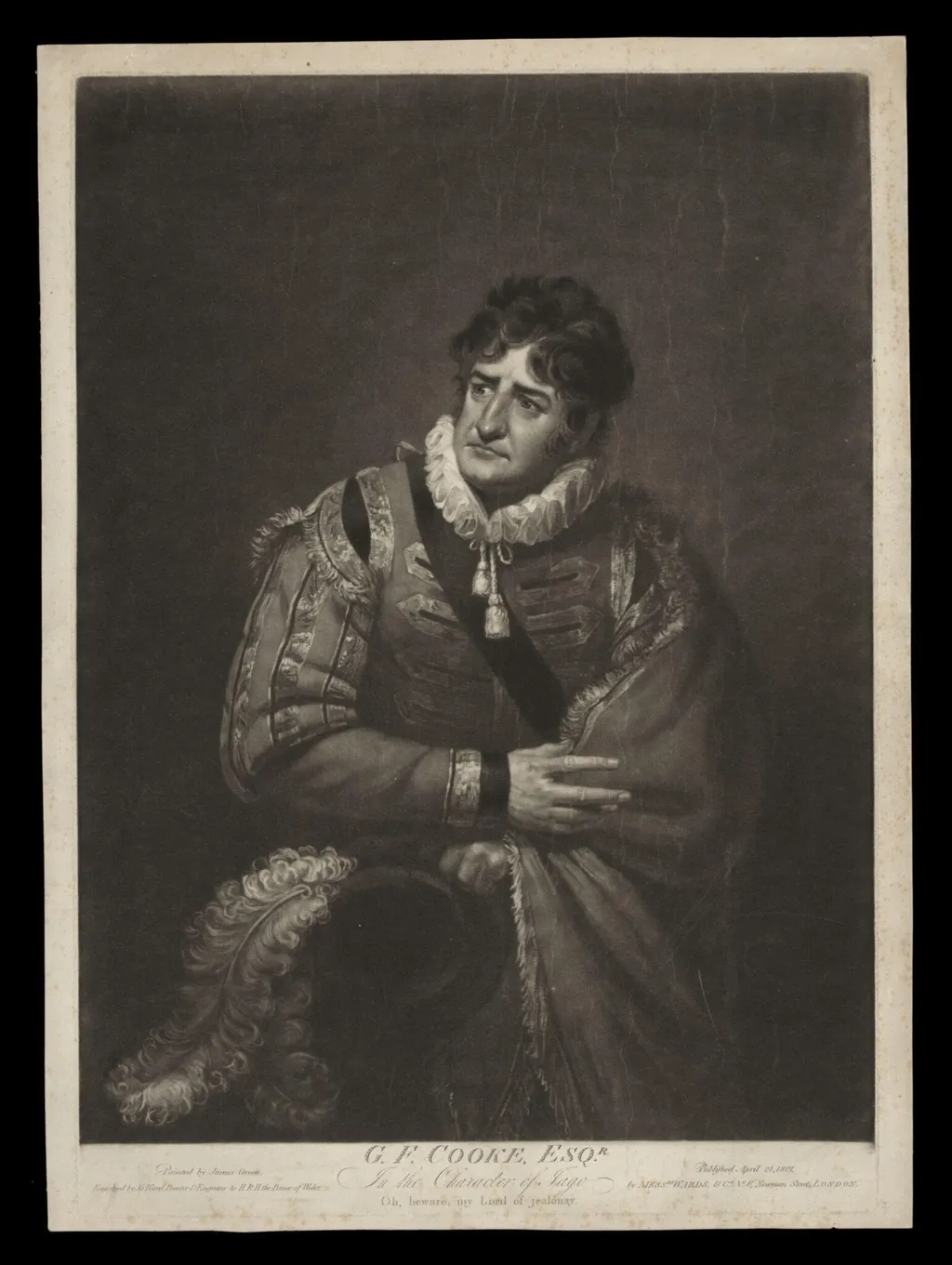
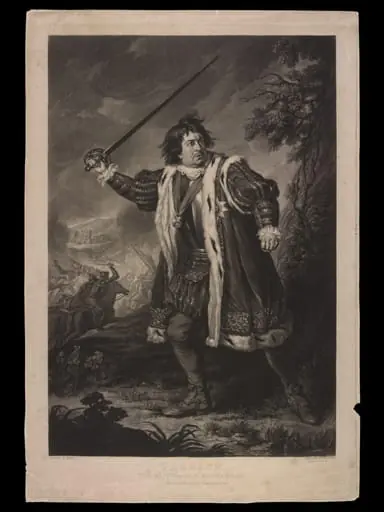
Print Collection is a print by the Romanticist artist James Green. It dates from 21 and is held in the collection of the Victoria and Albert Museum. This 1801 print portrays actor George Frederick Cooke in the role of Iago from Shakespeare’s Othello.
About this work
This print is a portrait of George Frederick Cooke as Iago in Othello.
The artist, James Green, created this work in 1801, a time when theater and literature were highly influential. This print was published by Messrs Wards & Co, which suggests it was meant for a wider audience.
You can learn more about this style by looking into the movement: Romanticism.
Overview
This 1801 print portrays actor George Frederick Cooke in the role of Iago from Shakespeare’s Othello. Created by James Green and published by Messrs Wards & Co, it was produced as a commercial engraving intended for public distribution. The work reflects the era’s interest in theatrical performance as a subject worthy of visual documentation, bridging stage and print culture.
Subject & Meaning
Cooke’s portrayal of Iago captures the character’s cunning and psychological depth, a role he was renowned for on the London stage. The print emphasizes his intense expression and commanding posture, inviting viewers to contemplate the moral ambiguity of the character. It functions not merely as a likeness but as a visual interpretation of dramatic tension central to Shakespeare’s tragedy.
Technique & Style
Executed as an engraved portrait, the print employs fine linear detail to render texture in costume and facial expression.
Executed as an engraved portrait, the print employs fine linear detail to render texture in costume and facial expression. The composition is tightly framed, focusing attention on Cooke’s upper body and gaze. The style aligns with early 19th-century theatrical portraiture, prioritizing dramatic presence over elaborate background detail, reflecting the conventions of print reproduction for popular audiences.
History & Provenance
Produced in 1801 by Messrs Wards & Co, a known publisher of theatrical prints, this image circulated among theatergoers and collectors. Cooke’s fame at the time ensured broad appeal. The print’s survival suggests it was widely distributed, though few original impressions remain. Its publication coincided with a surge in demand for images of celebrated actors, reflecting the growing cultural status of the stage.
Context
In the early 1800s, British theater was a central cultural institution, and actors like Cooke were celebrated figures. Print media played a key role in extending their fame beyond the stage. While Romanticism emphasized emotion and individualism in art, this print aligns more with documentary portraiture, capturing a specific performance rather than an idealized vision, yet still resonating with Romantic-era fascination with psychological depth.
Legacy
The print preserves a documented performance by one of the most influential Shakespearean actors of his time. It contributes to the historical record of 19th-century acting styles and the commercialization of theatrical imagery. Though not widely exhibited today, it remains a valuable artifact for understanding how performance was mediated and consumed in the age before photography.
Artist & collection